





Friday, December 15, 2023

My dream car lineup, the last five...

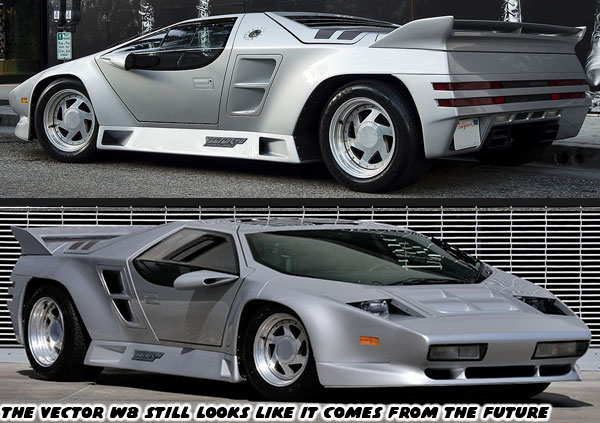
In the previous blog I talked about my favorite Italian exotic. My friend clued me into the only car that was on par with the F40 back in the day. There was an American aerospace engineer that wanted to build the greatest supercar of all time. The Vector W8 (1993) looked even more exotic than the Lamborghini. The engine itself was unique in how it was configured, the eight cylinders were not in a traditional V-formation, but rather a W shape. Hence its name. Also Vector did not consider itself an automobile manufacturer, they were an “Aeromotive” company. Their supercar had a number of technical features that wouldn’t be seen again in cars until almost 30 years later, including cameras, and an electric HUD. The small factory that made them was based in Wilmington CA, not far from where my mom used to work. I would beg her to drive around the building just for a glimpse at one. Sure enough one day we were fortunate to pass by when they had their gate open, and saw them assembling a car. Please read this amazing history of the Vector from Supercars.net. As well as when Car and Driver tested almost all of the functionality of the Vector in 1991. This was by far the most futuristic car I had ever seen, and still looks like the future that Cyberpunk promised us.

Between the GNX, Superbird, Ferrari F40, and Vector W8 you would think that my desire for fast cars was satiated. I still wanted a sporty head turner. Something in my garage that was unlike any other exotic. I had to be very careful with my selection. The McLaren F1 (1994) was considered to be the pinnacle of supercar design. In fact here’s the Road & Track article calling the F1 the World’s Greatest Car. It was certainly on my short list, but believe it or not it did not make the cut. Consider it to be number 11 on the list. It would be the first car I add if I expand my fictional garage.

I also considered a Shelby Cobra, and Fort GT40, the American cars that put the Europeans on notice back in the ‘60s. I would have loved the Dodge Viper GTS-R (1998), specifically the 2017 Special Edition. The Dodge V10 was already revolutionary, designed with the help of Carrol Shelby, the father of the Cobra, and GT40 programs. I wasn’t fond of the original Viper RT10 t-top. The hardtop looked much more brutal. The racing tuned version was the peak of performance. Here’s the Supercars writeup on the 2017 GTS-R. The thing was that I don’t think these models were street legal, I think they could only be used on the track. I could have gotten a street legal version of the Viper, but then again, I wanted a different kind of snake.

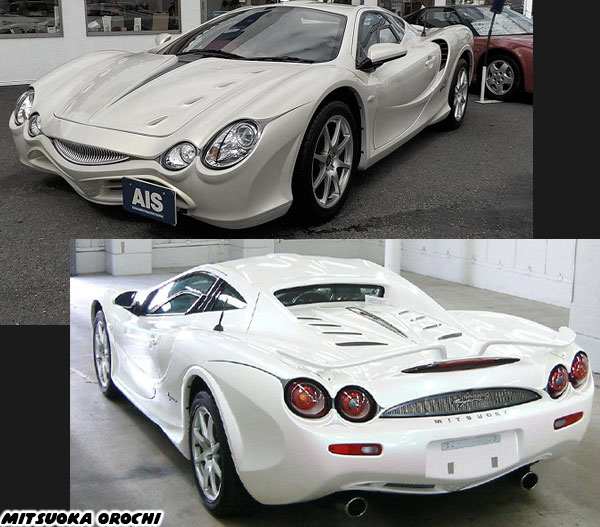
The next car in my garage would come from Japan. I got the same vibe for the Mitsuoka Orochi (2007) that I had from the Vector the very first time that I saw it. It was one of the featured cars, and one of my preferred rides in the Capcom game Auto Modellista from 2002. Here was a supercar way ahead of its time. The luxury exotic concept by Mitsuoka had been touring the car shows for years. It was supposed to have over 600hp, making it one of Japan’s true exotic supercars. The finished version had much less than that, but I would have the best tuners in the business replace the Toyota V6 motor with something much more powerful. More than the advertised performance numbers, it was the look that really sung to me. The Orochi was an eight-headed serpent from Japanese mythology. The car looked like a demon by design. The multiple headlights had thin snake-like lines drawn on them to convey that feeling. You can actually see one of these in the background of Avengers: Endgame. In the scene where Ronin (Hawkeye) is killing yakuza members in Japan, and the Black Widow comes to recruit him there is an Orochi behind them.

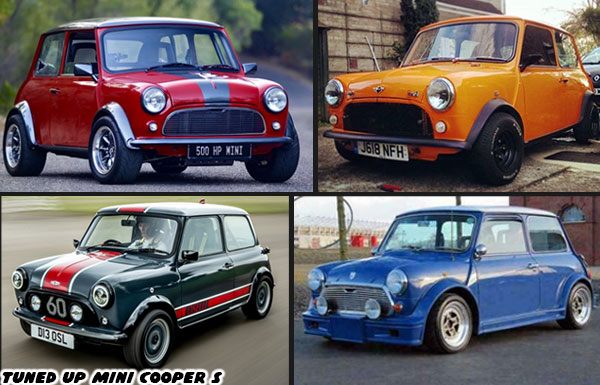
It wasn’t the only Japanese car that I would have in my personal top-10 garage. You might think based on the love that I have for performance cars that my other Japanese ride would be the Nissan Skyline R34 GT-R V-Spec II, Mitsubishi Lancer EVO, or Subaru Impreza WRX. Those are all fantastic cars, but I wanted something less intimidating. I wanted something small, and playful. My original choice was going to be the British Mini Cooper S (2000). I had always had a fondness for the little car from across the pond. When it was properly tuned it was as deceptively fast as the GNX. I wasn’t the only one that had the same feelings for the little car that could. Road and Track got to race one and fell in love. I would absolutely have added a properly sport tuned, and chassis-stiffened ride in my car, if it could fit 20 rides instead of 10 in my fictional garage.

So if I wasn’t going to put a Mini Cooper in my lineup, then what would fit into that tiny spot? I did consider a sport-tuned Subaru 360 from the 1960’s. Or even a Fiat 500 from the same era. They were all fun tiny cars, that could be made into sporty street racers. Ultimately I decided on the Mazda Carol 360 (1964). The millionth car made by Mazda was this micro mini. The look, stance, and shape are unlike anything else out there. The fact that it’s also a 4-seater like the original Mini makes it something functional for the whole family. Although I doubt that we can all fit comfortably in the little car I’d still love to have a tuned up version. The history of the tiny car is celebrated on Mazda’s site

The ninth car in my lineup would be a Porsche. I can imagine many of you nodding in agreement. I have tons of American rides, but not a fine piece of German engineering. I’m split on a properly tuned up Porsche 911, or Porsche 930 circa 1989. Having a modified engine, suspension, wheels, and tires would only be the beginning. I would call on the Japanese body kit maestro Akira Nakai founder, and customizer RWB Rauh-Welt Begriff (Rough World Concept) to give the car the finishing touches. Mr. Nakai flies all around the world with a rolling toolbox, and installs the wide body kits himself. There is a two-year waiting list to get him for a project. You can find out about what he offers on the Rauh-Welt Begriff official website. I’ve seen countless videos of the man putting together a car. Watching him work is amazing. He’s like those hair stylists you read about that charge $700 for a haircut, and celebrities have to wait months for an appointment. When you watch him work you realize that he is on another level. He is completely absorbed in his work, an artist far more than just a tuner. Mr. Nakai seems to live on cigarettes, and Coca-Cola bottles while he cuts, assembles, and shapes the final body pieces during the installation process. This means that no two cars are alike, and in fact, he will only create one car per customer. Getting a unique Porsche RWB would definitely help make my car lineup stand out.

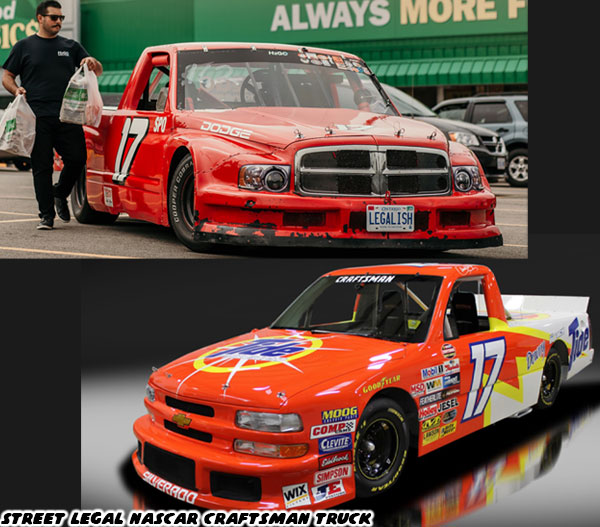
The final car in my garage would be completely custom build from the ground up. Number 10 in my dream list would be a street legal Craftsman NASCAR Truck. These are rare, but they actually exist. There are builders out there that make street legal race cars. I don’t mean they chop up an existing car, and race tune it. I mean they create a roll cage, frame, and engine from scratch. Then they wrap everything in sheet metal, or carbon fiber. These are no frills rides. No A/C, no radio, no sound deadening, no airbags, no side windows, or other amenities. You can read about the amazing Legalish truck repurposed by Richar Caetano, or even see video of Cleetus McFaland checking out Lord Cheyenne’s NASCAR Truck. I would absolutely love to get a truck of my own that defies logic. Something that could snap any other sports car in half. I'd use it to cruise down PCH.

So this what my dream garage would look like. I’d like to hear what your top-10 cars would be if money was no object. Tell me about it in the comments section. As always if you would like to sponsor me please visit my Patreon page and consider donating each month, even as little as $1 would help make better blogs and even podcasts!
follow the Street Writer on Patreon!

Wednesday, December 13, 2023

My dream car lineup, the first five...

I was having a conversation with my niece earlier this year about what my favorite car is. I said I don’t think I have a single favorite, but could come up with a handful of favorites. I asked what she liked, and she’s a huge fan of muscle cars, just like her dad. Specifically she loves the classic 1967 Camaro. Which is a super sexy muscle car. She likes GTO’s, Chargers, Chevelle’s, Mustangs, and the other classics as well. It got me thinking of making a blog post. I could spend the next dozen blogs writing about which cars I love, but instead I want to limit it. I want you to do the same thing. The rules for this thought experiment are simple. Let’s say you won the lottery, and could buy any car in the world, from any era. It could be bone stock, or it could be modified as long as it was street legal. This meant I couldn’t put a monster truck on the list. Although if I won the lottery then I totally would get one built. Also you can only choose 10 cars. None of this warehouse filled with cars like celebs have. These are 10 cars that you could cycle through to act almost as a daily driver. Do you have them in mind? To be honest I wouldn’t fit in most of the cars on my list. Maybe three are actually made for big people. The rest are made for people much smaller than me. Let’s start with one that would look good on me.

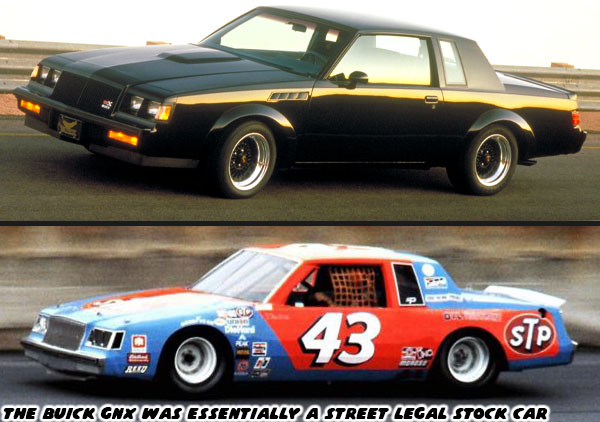
The Buick GNX (1987) is considered to be the last of the great muscle cars. It is the descendant of the grand national model of cars. We’re talking about the Oldsmobile, Fords, and Pontiacs that helped popularize NASCAR in the ‘70s. The Buick Regal T-Type was the base model, but the faster version was the Grand National. Then there was one with even more features, including twin turbos known as the GNX. As first glance it looks like something a grandpa would own in the ‘80s, and maybe drive it to church on Sundays. That is until you realize that it has supercar performance, and could destroy most sports cars on the road. Here’s a breakdown, and comparison between a Grand National, and a GNX. Here’s the Car and Driver review of the GNX from 1987. There was nothing else like it then, and could still beat most cars on the street today.

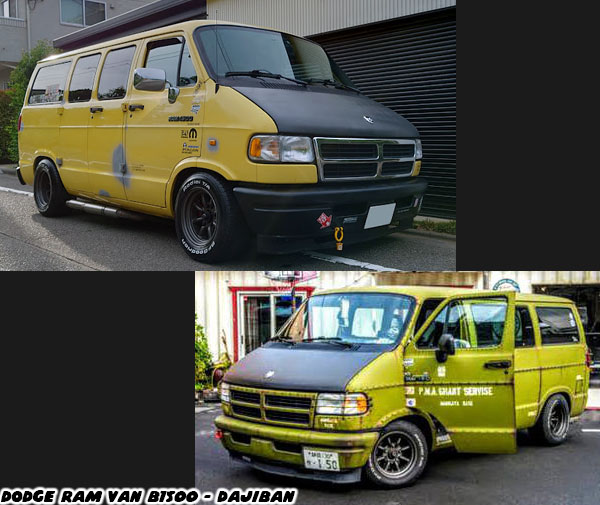
The first completely tuned up car I would buy after the GNX would be a Dodge Ram Van B1500 (1998). These are known as Dajiban in Japan, and they have a cult-like following in the tuning community. Similar to the GNX, it is a sleeper with fangs. To get you up to speed here a Jalopnik article about Dodge van racing in Japan, and also a Road & Track article about Dajiban racing. I used to own a ’97 Dodge Van so I know I could drive it comfortably. It belonged to my parents, my dad had it on sports tires years before the Japanese saw how brutal the stance was. Sadly we sold it, but I long to have a new one absolutely tuned up someday.

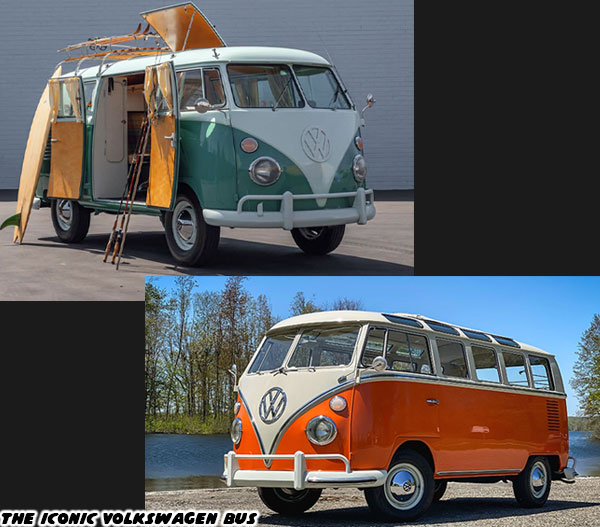
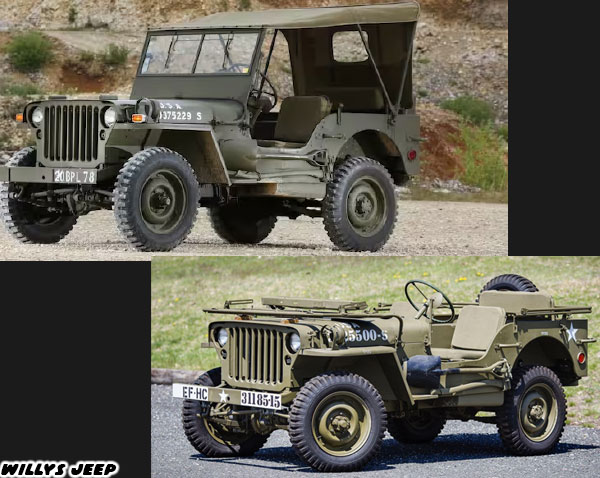
The next car in my garage would be a tough choice, at first I thought about getting a Volkswagen Bus. I’m sure my wife would love one, but I’ll let her make her own list. The VW Bus is far, and wide considered to be a classic Southern California ride after all. I would like to take my family camping, and nothing would make for a more suitable ride. Or would it? I’d like to not only drive to one of the many local campgrounds, but I don’t want to be stuck if the weather acts up. A VW Bus is a durable, but could also be a fickle ride. I’d like something that is tougher, and more reliable. Something with the rugged profile of a Willys MB (Jeep). This was the off road car designed to replace mules for the Army in WWII. To this day there are companies that make reproduction parts for it, and help keep the 80-year-old 4x4’s running in perfect condition. Of course as cool as a Jeep is there is no way that I could take my family camping in one, that is if I could even fit behind the wheel.

There are plenty of modern campers that have 4x4 capability, but I do want something that has a classic look. Since money is no object then I could get a retro-looking bus, and have a modern diesel, or diesel-hybrid engine, transmission, and suspension put into it. That is why the third vehicle I would have in my garage would be a Volvo Laplander (1966). Four Wheeler took a look at the military vehicle many years ago. The European 4x4 is as tough as they come. Newer versions are retrofitted for rally racing. I’d give this boxy-looking beast a complete makeover from the inside-out, and turn it into a reliable camper bus, with off road capability.

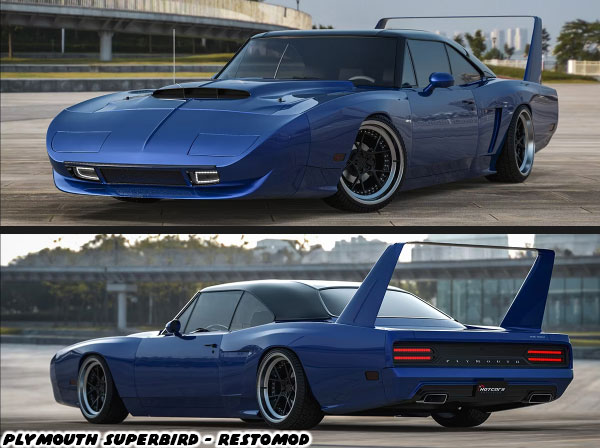
This isn’t the only retro car that I would love to have a restomod of. Restomod is a relatively new trend of car builders that goes beyond factory-accurate restorations. Instead of sticking with OEM parts they rebuild a car using modern engines, suspension, transmissions, parts, and technology. They have a classic, but updated look at the same time. Not everyone likes those rides, and I understand that some rides deserve to be accurately restored. There are so many possible classic muscle cars that I’d love to have in the garage. At the same time I don’t necessarily want them to all be stock. The GNX itself was already tuned up before it left the showroom floor. The biggest, most obnoxiously American muscle cars of all time were the Dodge Daytona, and Plymouth Superbird. Nothing screams ‘MURICA like a 20-foot-long, 200mph, boat with an enormous wing, room for four, and groceries in the trunk. That is why if I could only have one classic muscle car it would be one of those. Because of Richard Petty I’d lean towards a Plymouth Superbird (1970) restomod. Hotcars featured a concept restored of the Plymouth Superbird. It just looks too good. Of course I’d have the brightest paint job on it that I could. Too much excess is never enough.

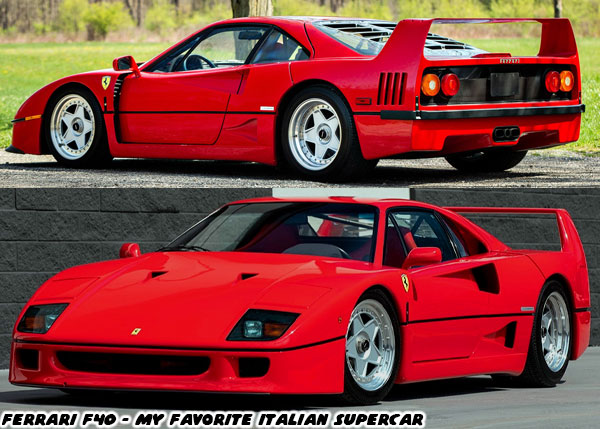
There are many supercars that I would love to own, but the list of exotics that have a special place in my heart is very small. Of all the Italian supercars there’s only one that I consider my absolute favorite. In the ‘80s many of my friends were all about the Lamborghini Countach, or the Ferrari Testarossa. I thought they were amazing-looking cars, but had been featured in so many movies, music videos, and television shows that I thought some of their exotic appeal had worn off. All of that changed when I was in high school. The Ferrari F40 (1991) was the car that completely rocked my world. It was as if Ferrari had turned one of their track cars into a street car. It looked so brutal that nothing else could compare. If you want to know what it feels like to drive one here’s when Car and Driver tested the Ferrari F40. Sadly I’m certain there’s no way I could ever fit comfortably in this car. A guy can still dream right?

These are the first five cars in my dream garage. Do you have any of these in your lineup? We will look at the remaining five in the next blog. I’d like to hear what your top-10 cars would be if money was no object. Tell me about it in the comments section. As always if you would like to sponsor me please visit my Patreon page and consider donating each month, even as little as $1 would help make better blogs and even podcasts!
follow the Street Writer on Patreon!

Monday, December 11, 2023

Power Drift and Mario Kart, racing becomes fun - A 1UP classic from April 27, 2009

Power Drift by Sega was an attempt by AM2 to make realistic 3D tracks out of 1988's 2D technology. Yu Suzuki and company used a series of scaling sprites, one right after the other to achieve the desired effect. They did something similar with the helicopter game Thunder Blade. It was odd and cumbersome, with lots of clipping problems given the high speed circuits of Power Drift. However the game play was something new and fresh.

For the first time arcade goers were treated to 3D tracks which dipped and banked. Arcade gamers had seen some similar tracks but never to the extremes that Power Drift delivered them. Courses were compact and the changing elevations were extreme. The tracks here have been rightfully compared to roller coaster tracks. The deluxe version of the arcade cabinet was a very memorable. It was on hydraulics so it would pitch the players up and down, left and right to further immerse them into the experience.
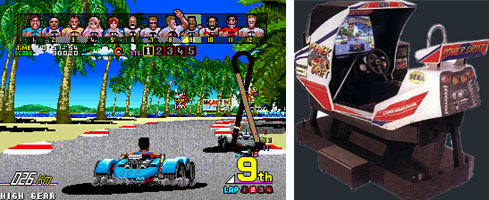
The best part of this game was in the diversity of racers. Each had their own car and personality. Yelling at rivals or taunting opponents on the multiple courses. The cars themselves were very unique. No two looked alike and they were all highly-stylized and low to the ground so we could clearly make out the virtual driver. In order to race on the tracks the team at AM2 invented an ultra-compact, short car, more like a super-powered go kart for the game. These karts were loads of fun. They turned out were the perfect format to bring the arcade experience home.

In 1992 Super Mario Kart gave the masses the first taste of kart racing. A kart is the closest thing a person could get to a bare-bones racing experience. Many professional Formula-1 racers get discovered via kart racing because the focus is more on skill than horsepower. With the addition of the popular characters from the Mario series, each with their own strengths and weaknesses and Nintendo would be swimming in success (and money!).

Nintendo did the genre one better and incorporated weapons and power ups to the experience. Damnable shells that would knock you out of contention on the final lap or power ups that would boost you past the finish line a hair in front of the computer. There was no real "random" quality to the power ups but we saw past that and enjoyed the experience. The multiplayer modes were fantastic and have always been among the best party titles ever. There have been many updates to the Kart series but for most on 1UP the SNES version was the gateway experience. Fantastic tracks, different vehicle classes and an absurdly demanding race AI kept players on their toes. When combined with the frenetic combat element then the races became much more memorable than just about every arcade racer ever. Mario Kart even accomplished this on a flat track, the technology to create Power Drift-style 3D tracks was still a ways off for consoles.
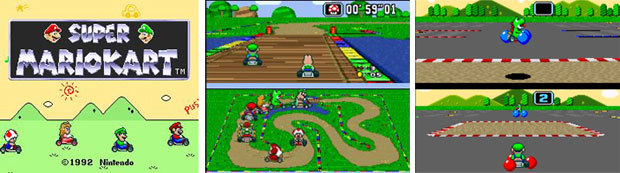
As memorable as the kart games were they were sadly few and far between. The last notable kart series with cartoonish graphics was the decent Street Racer series which saw a release on the SNES which many likened to Mario Kart, as well as on the Genesis / Mega Drive and a polygon version on the original Playstation. The combat kart racing would continue via the Nintendo series, but to many this type of game was too chaotic. They preferred something a little more sensible and realistic. In the arcades they wouldn't find it. Next time we'll look at two racing titles, one from Japan and one from the USA, that redefined what reality meant to the arcade crowd.

Are you a fan of Kart racing games? Did you have a favorite? Let me know in the comments section please. As always if you would like to sponsor me please visit my Patreon page and consider donating each month, even as little as $1 would help make better blogs and even podcasts!
follow the Street Writer on Patreon!

Friday, December 8, 2023

The racing fan that started a revolution - A 1UP classic from February 22, 2013

Sega has been featured many times on this blog for the various racing games they created. The company actually got into the arcade market before the video screens were integrated into the cabinets. In the early days of the arcade the electronic machines had mechanized components and moving parts, these were known as electro mechanical games. One of their first arcade racing hits was Moto Champ. The title from 1973 featured scale motorcycles on an illuminated track. The opponents moved via magnets under the game screen while the player controlled their own bike via a wire frame attached to some handlebars.

The mechanical games gave way to full video screens not long after. Developers that did not change with the times were forced to shut down. Sega would quickly change from mechanical to digital entertainment. Their first breakout racing game was Monaco Grand Prix in 1980. The game was set with a top down perspective, similar to what Atari had done in their Sprint racing games. It was memorable for the use of color as well as day and night transitions. Racers could only see the portion of the track illuminated by the car headlights, making for some very harrowing action. The game was difficult but rewarding. A year later they created a game that was featured in the film Wreck-it-Ralph. Sega Turbo from 1981 did not actually feature a racer named Turbo, nor did it involve any plot but it did set the template that would make the company famous. The game used a behind the racer POV and followed players through road courses, rewarding them with points as players passed opponents. The game was one of the first to use scaling sprites to create the effect that players were racing bast buildings and countrysides. A few years later Sega used that same technique on more powerful hardware. They created a new legacy with the 1986 game OutRun.
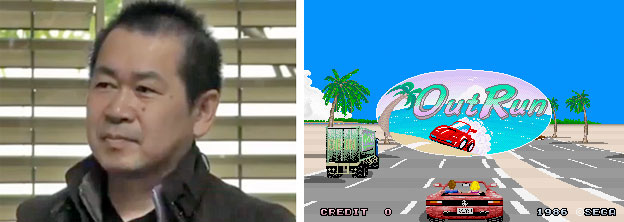
The brains behind the game was Yu Suzuki, the head of Sega's R&D unit AM2. His studio would develop an amazing streak of hits. The games could be seen as a celebration of his love of cars, especially the Ferrari. Suzuki, like so many other Japanese men grew up idolizing the racing cars from the West. They were celebrated on film and television, car enthusiast magazines sprung up and gave a nation cause to debate and discuss the ultimate driving machines. The auto industry in Japan had to increase their pace to help the nation recover from World War II. In order to do that the manufacturers had to try and replicate the things that made the Western companies successful and then improve upon them. They looked at the daily drivers from Europe and the USA and found ways to make small, economical cars for young families. They studied British and German sports cars and began developing contemporary models all their own. Both the family sedan and sports cars would be made more appealing if they could be made domestically and cost less than an import. To help raise their profile the large manufacturers began investing in racing R&D. Toyota formally entered professional motor sports in 1957 but it was Datsun (later renamed Nissan) that got the ball rolling in 1936. Other companies, including Mazda got noticed by building light but powerful engines. The companies began to change the local and international perception of Japanese made autos.

Mr. Suzuki's formative years were during the transition of Japan's auto industry from domestic to international powerhouse. He was around to read about the most innovative racers from Italy, Germany and Britain as they visited the Suzuka Racetrack during the Formula-1 season. He was able to see how well Japan was at recreating the sports cars and duplicating the success of the legendary designs and designers. Take Todd Green's racing Datsun for example. His VQ 35 Datsun roadster was originally created by the Japanese to be a less expensive answer to the Porsche racers. Mr. Green pushed the capabilities of the car and even design to challenge the legendary British AC Cobra.
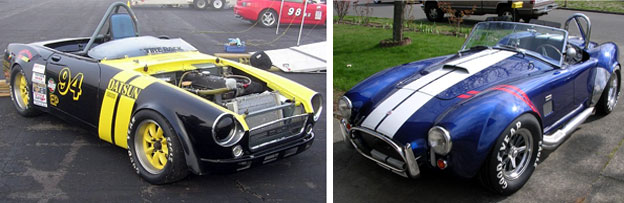
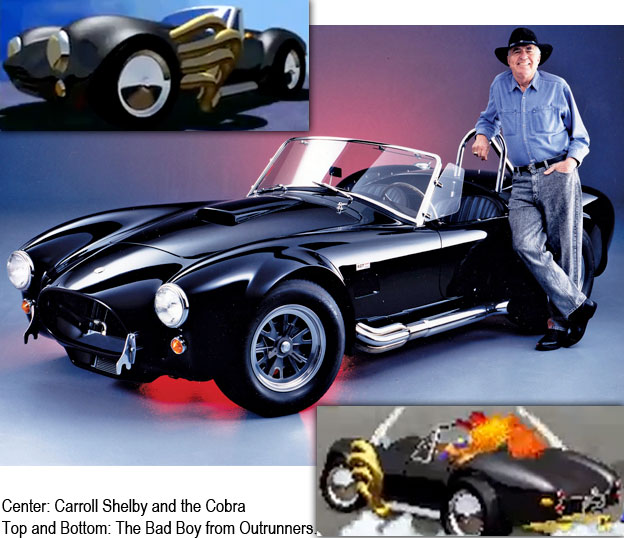
The Cobra was considered one of the ultimate sport cars. Texan Carroll Shelby (RIP) shoehorned a Ford racing engine into the light frame. The power-to-weight ratio that Shelby had unlocked in the Cobra and later Ford GT-40 went on to capture numerous racing victories and set plenty of speed records. The renamed Shelby Cobra was the envy of car fans around the world. Its styling and bold curves were copied numerous times. The Japanese did not have the Hot Rod revolution that changed car culture in US through the 50's and 60's, they however earn their own driving legacy. The Datsun VQ 35 was joined by the more famous Fairlady Z as cars that would shape post-war Japanese youths and turn them into car fans. Mr. Suzuki and the young designers at Sega were not immune to what car culture was doing to the nation. When Suzuki started he almost instantly began developing a legacy of racing games. OutRun was his most famous contribution but his team never stopped pushing the genre. A spiritual successor to OutRun appeared in 1993. Outrunners was actually developed by sister team AM1 and not by Suzuki. It featured a whole new slew of cars in addition to the trademark Ferrari Testarosa from the original game. The Bad Boy was added to give the Italian car a run for its money. Those that knew of Shelby recognized the inspiration behind the car. The blonde driver wearing a cowboy hat was a clever nod to the Texan.
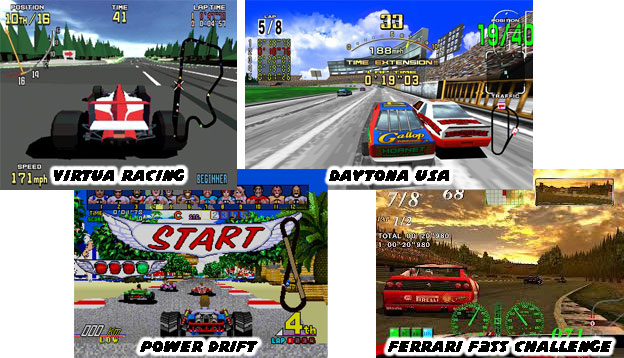
AM2 did not always focus on realistic racing games, one of their most memorable entries, Power Drift was based on the silliness of go-cart racing. Another, Rad Mobile, demonstrated that storytelling elements could be incorporated through the race itself. The game had players driving in the dark and through the rain in a first person perspective, they actually had to turn on the windshield wipers and lights in order to see the track! The publisher had evolved quickly from the old electro mechanical cabinets they used to make. In fact they began pushing the technology for digital developers. They were among the first to move games away from 2D sprite based graphics to 3D polygons. You can learn how Sega Rally and Virtua Racing changed the genre on my older blogs. The studio had a unique take on the great American pastime of stock car racing with Daytona USA. By the time Super GT was released it could be considered the peak of Yu Suzuki's legacy.
Yu had created a template that defined the arcade racer. The cars were always bright and colorful, they seemed to glide over the road and could be nuanced by drivers into impossibly fast power slides. The control for the majority of the Suzuki-produced racers was nuanced. It was the result of years and years of refinement to bridge the gap from realistic driving to stunt racing. Those that had played through the majority of the games knew that they could be difficult but rewarding as well. The road rockets raced on tracks that would be the envy of the Disney Imagineers. Nothing would have killed a Suzuki racer more than strict realism, his games were gorgeous spectacles. In fact if more tracks in the real world looked liked the ones featured in the Sega racers then there certainly would be no shortage of supporters. The level design of each track had more in common with theme park design and urban planning than driver safety. In some levels towering spires of crystal and steel were the eye-candy off in the distance while roller coasters wound around the track itself. As former 1UP boss guy John Davidson said the races in the Sega games took place on the most utopian day ever. The cities that hosted the races were more breathtaking than any real world city and set a standard that would be hard to top.

The goal of one recent Kickstarter campaign has been to recreate the feel of the Suzuki-produced gems for modern PC gamers. I think that the '90s Arcade Racer did the job well.

The Japanese contributions to the auto industry could not be disputed. From the daily driver to the record breaking racer there was nothing that the nation did not help improve upon. The people had also built a unique car culture over the past century. They embraced foreign cars, sub cultures and icons with sincerity while adding their own unique spin to everything. Manga and animé titles celebrated vehicles and shaped the entertainment industry. Video games did more than their fair share to help popularize driving. Sega went from pioneering electro mechanical games to actual video racing games. Unfortunately not everything that the Japanese did was embraced by the global, or even local community. Even the best laid plans could not save some ambitious games. The next blog will look at one of the most unique racing games ever produced.

Let me know in the comments section please. As always if you would like to sponsor me please visit my Patreon page and consider donating each month, even as little as $1 would help make better blogs and even podcasts!
follow the Street Writer on Patreon!

Wednesday, December 6, 2023

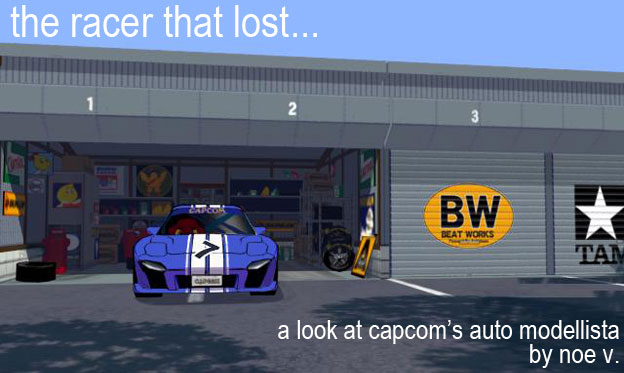
The racer that lost... a look at Capcom's Auto Modellista. A 1UP classic from Feb 25, 2013

Auto Modellista, a console title game from 2002 was an attempt for Capcom to get a franchise racing game established. The studio was better known for their fighting and adventure titles more than their racing games. Their previous high-profile title MotoGP was actually started by Polyphony Studios, the people that created the Gran Turismo series for Sony. Before that Capcom had not made a serious effort to get a racing game in their library since Slipstream, an arcade racing game from 1995. At that time Capcom was a little late in trying to jump on the racing bandwagon. Slipstream used pixels instead of polygons for their graphics engine. By 1995 the two major arcade racing developers Namco and Sega had long since moved away from sprites to 3D textured polygon models. Slipstream looked like a better version of Namco's Final Lap, the 1987 spiritual successor to Pole Position 2. By 1994 Namco had released the all-polygon Ace Driver a year before Slipstream. Although crude when compared to modern 3D racing games it was years ahead of the technology used by Capcom.
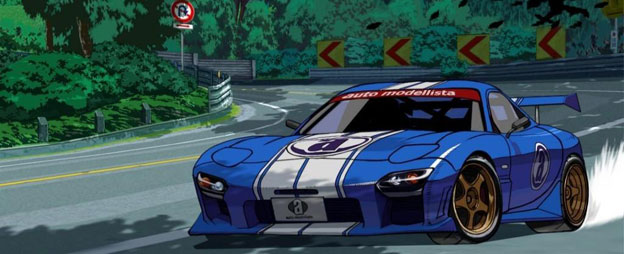
Racing leagues including Formula-1, NASCAR and GT had already been done by other publishers. Genres like kart racing, rally racing, boat racing, monster truck racing, combat racing and even science fiction racing had also been explored on various consoles as well. Capcom would have to come up with something unique to stand out from the glut of racing games on the market. The wanted to have several things that no other racing game offered, the defining feature would be the graphics. The game used cel-shading to help give the cars an animé quality. Not many games have been released using the graphics technique and very few of them, like the 2001 arcade sleeper Wild Riders were racers. 

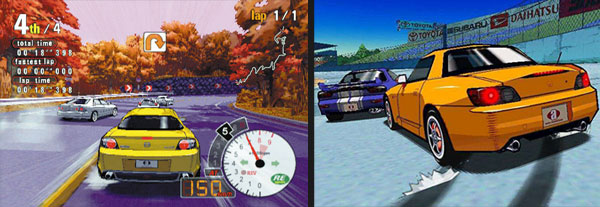
By going with cel-shading Capcom was able to make great use of lighting, shadows, colors and even textures on the track. The high contrast between the cars and environments made for a game which looked good from every angle. Small details like the brakes heating up and changing color could be made out behind the spinning wheels. The engine even rendered "speed lines" like an illustrator would to convey movement on the edges of the frame while players raced. The faster they went the more speed lines they would get. To put it succinctly no other console racer looked like Auto Modellista.
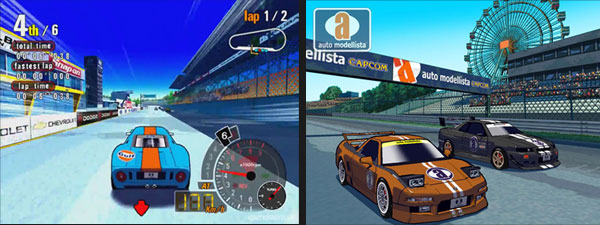
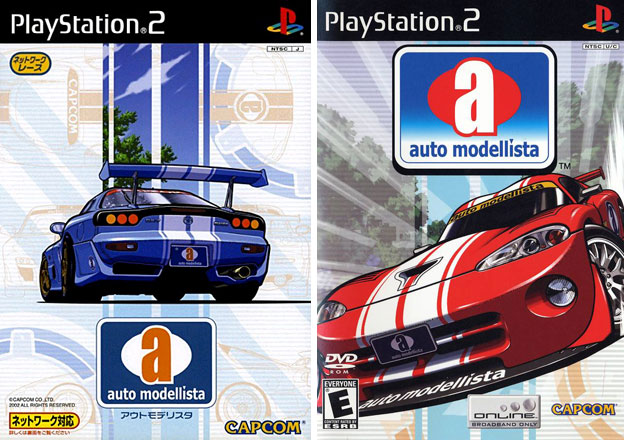
The cars featured in the game were licensed from real world rides. Most of the major manufacturers from Japan and the US were represented. The game did not have the hundreds of makes and models from a title like Gran Turismo, instead it focused on the sportier cars from the major companies. In Japan the legendary street racer the Mazda RX-7 was the poster child for the game. In the US it was the Dodge Viper. The game actually had a couple of releases in Japan because not all the licensed cars were in the original release. After the US and UK got their versions with a few more rides then Japan got the full version with online support. The game was one of the rare PS2 racing games that supported 8-player online play. Some bundles in Japan included a special network adaptor for the PS2 to try to get more players interested in the release.
There were only a handful of courses in the game but they were all based on real Japanese locations. There were several mountain stages from rural areas and big city circuits. The Suzuka raceway was the most high-profile track in the game. The city circuit tracks were set at night and offered players a chance to drive the circuits in the rain. This meant carefully tuning each car for maximum efficiency and changing the tires from racing slicks to radials. There was a bonus track for players that completed all of the challenges. The Tamiya Kakegawa Circuit was the site of many remote control car racing championships. Once a player had unlocked this track then they could take any car to it. The car would be miniaturized and made to look and sound like an actual R/C car. Players could see the pins holding down the body kit as well as the antenna sticking out of the frame. Even the sound of a tiny electric motor would replace the usual engine sounds. It was a treat watching the world pass by from the POV of a toy on the road.

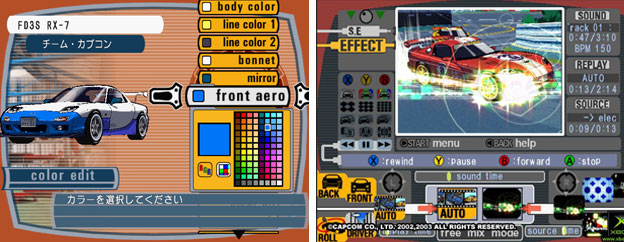
To make the game even more unique it offered players the chance to personalize cars in the Garage Life mode. The body kits, tires and aftermarket parts were all licensed from real companies. Players could not only assemble their ideal rides, they could also tune it up, paint it and even cover it in real or created stickers if they wanted to. To help further set this game apart from the other racers on the market there was a Video Mode as well. Before Auto Modellista there had been games that allowed players to save and edit replays of races. Auto Modellista allowed players to add music, filters and video effects in addition to the usual editing tools. Players could make replays that were as dazzling as music videos and save them to their memory cards.
The music featured in the game was composed by Tetsuya Shibata and Isao Abe. It was an eclectic mix of jazz, electronica and trip-hop that did not rely on any licensed music. Some people would argue that the music was actually the best part of the game. The two-disk soundtrack is actually one of the rarer Capcom albums sought by collectors.

The game had a distinct visual look, a great soundtrack, a decent lineup of cars, customization and online support but it was missing something very important. It lacked solid control, the most crucial element to any game. The cars did not handle realistically, nor did they handle in an exaggerated arcade style. For a game that featured numerous mountain stages the absence of drifting or sliding the cars around corners was shocking. It was seemingly impossible to get the cars to even commit to a slide. Players could choose the most powerful car in the game, give it slick tires and put it on a rainy track and it would still not drift more than 10 feet without coming to a screeching halt. Even the R/C cars that players could race on the Kakegawa circuit did not respond realistically. A remote control car raced and handled much differently than a real world car. At scale the small cars could go over 300MPH and hug turns impossibly close to the edge without losing control. Conversely if the driver wanted to have a drift race with an R/C car then they could also make the small cars race completely sideways at command. That lack of detail for the real and R/C physics broke a game that was filled with tremendous possibilities as much as it was filled with style.
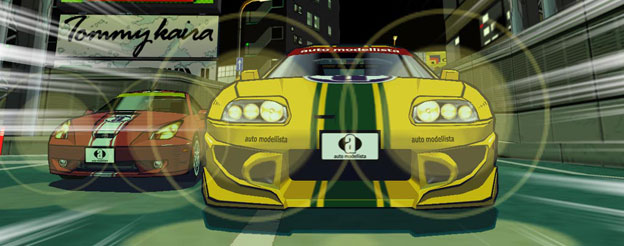
Perhaps it was the focus on style rather than substance that ultimately lead to the game being panned by critics and players alike. The courses were well done but players were expecting more locations. Instead Capcom offered an uphill and downhill version of the two mountain stages and a clockwise and counter-clockwise version of the city circuits. The great visuals exploited on each track were done in by the lack of diversity. The novelty of the graphics wore off once players had mastered the tracks. There was little else to do than play dress-up with the cars a player had unlocked. Perhaps this was the greatest strength that the game had overlooked by most players and editors.

Auto Modellista means car designer in Italian. It does not mean racing simulator. The focus on the game was more on the look and design of the cars rather than racing. It never aspired to be taken as seriously as Gran Turismo. The game was designed to make car enthusiasts slow down and appreciate the cars and car culture. If ever there was a videogame that required players to approach it differently than other titles in the same genre then this was it. I would compare the experience of Auto Modellista to the Japanese concepts of food preparation and presentation. 
The nation of Japan was known for their elaborate tea ceremonies however they were also known for creating sophisticated but inexpensive box lunches. The bento box put different but complimentary food choices into small compartments. By doing so none of the flavors would cross contaminate the others. This also allowed crisp food and moist food from spoiling each other. The bento boxes and ekiben or bento boxes for train commuters evolved to include a number of unique food combinations that would stay fresh for travelers. Some of the boxes, especially the ceramic kind were designed to be saved, collected and reused. Even the plastic boxes were designed with some forethought. They were sometimes decorated with sumi, or ink wash style paintings. Those that slowed down from their busy schedule to enjoy each meal appreciated the flavor combinations and even the preparation that went behind the meal. Every facet of Auto Modellista was compartmentalized and meant to be savored individually. The unlocking of cars and tracks. The customization of the tires, engine, suspension and body. The ability to paint and cover the car with sponsor stickers. The ability to remix race videos. All of these things were well done individual components. The whole could then be appreciated especially when compared to the other racing games on the market.
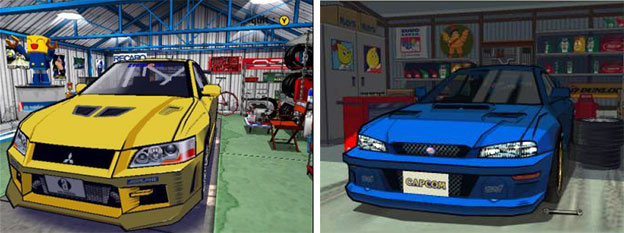
Garage Life Mode was used to hold the attention of players and help them acknowledge the differences in the title. Gamers could choose from three types of garage, the racing, contemporary and tudor styles. Each garage could then be decorated with items collected by winning races. Trophies and plaques were the obvious choices to hang on walls but beyond that players could set up their space any way they wanted to. They could put down and organize cabinets, tool boxes and machine parts. Players could unlock vintage tin signs, old cans of oil and antique radios to put on shelves. Posters from real world locations and billboards could be hung along the walls. Even the Servbots from Mega Man Legends could be displayed as trophies. Layer after layer could be built up in each garage. The items placed and displayed would tell something about the racing fan as much as the car featured in the room. It was very much like assembling a bento box suited to the tastes of the gamer. The minutiae provided by Auto Modellista were often overlooked in other racing games. Players rarely, if ever, had the time to spend simply appreciating the cars they had unlocked. Assembling a virtual collection of car memorabilia was unheard of, as was making music videos out of saved races.

The majority of the cars in the game were fairly well known to car circles; the Corvette, Mustang, Cobra, RX-7, 350Z and even Skyline had great racing reputations. Some of the other choices for the game had never been featured in a racing game. The Jiotto Caspita by Dome Co. was a very rare Japanese exotic car that could actually give the other supercars in the game a genuine challenge yet was virtually unknown to most gamers. The other, the Orochi by Mitsuoka was described by the hosts of the British show Top Gear as the ugliest car ever made. I think the Top Gear commentators were a bit full of themselves when they came to that conclusion. The lines and styling on the Orochi were very bold, as bold as those from the Italian Ferrari or Maserati designers. To me the car looked aggressive and even threatening. If it were not the perfect Interceptor from the game Spy Hunter brought to life then I wouldn't know what other car would fit the bill. Placing these two rare cars into the game was like adding a complex taste, if my bento box metaphor were appropriate. They might not be appreciated or even acknowledged by gamers but they were unique choices that helped make the game stand out.

Auto Modellista offered tremendous originality, glimpses at courses and experiences that were uniquely Japanese. Like most gamers I was put off by the controls and lack of realistic physics applied to the cars. Once I beat the game I went back through it to see what details I had overlooked. It was at that point that I discovered how much work Capcom had put into the title. Little by little I began unlocking items for my garage. I began spending more and more time setting up my dream layout. Deciding the exact placement of my stereo, toolbox and air compressor. Making sure my trophies were displayed not too discreetly. The various batteries and oil cans sorted into their own shelves. Classic tin signs framing the old racing gloves and helmets on my wall of fame. The garage suddenly had a lived-in feel. Whenever I parked a car in the garage it seemed to fit just right.

Then I went back to the roads and began driving the courses again. I noticed the high speed train running over the bridge in Osaka, as well as the low flying jet in Tokyo. The LOVE sign in Shinjuku. At night the streets belonged to the racers. There were no fans obscuring the sidelines, especially not in the rain. The lens blur effect from the headlamps, small rooster tails shot up by wheels and speed lines applied by the graphics engine made the experience feel more intimate. It was about the cars and the road, not the spectacle of professional racing. It was the experience of driving reduced to the most important components. A player that was in tune with their car knew how hard they could push it on turns, where the best lines were on the road and how to move through the gears. They could appreciate the experience of driving, absorb the details from the environment and the challenge of overtaking opponents in the middle of a race. Players were expected to live in these moments and internalize them, to make the races as individual as Garage Life mode.
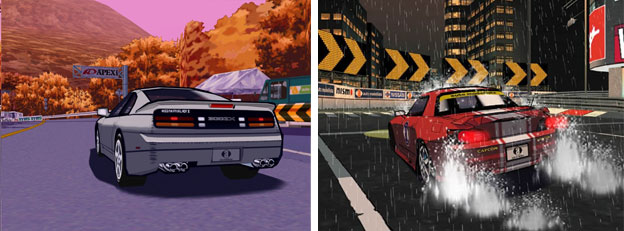
None of the courses were more inspiring than Akagi Hill. Going from sea level to almost 5000 feet in elevation in just over 12 miles Mt. Akagi had been the site of numerous road races, bicycle races and trail marathons. It had been featured before on games like Initial D and other racing games based in Japan. It never looked as memorable as it did in Auto Modellista. The eternal autumn that painted the mountain orange. The strong shadows cast on the road by overhanging trees. The bright leaves on the ground that could be kicked up by the cars. The setting sun that blinded some of the turns. This course was like a snapshot, a moment frozen in time. These were the best sports cars of a generation on one of Japan's most memorable roads. The beauty of car and course would be preserved forever in Auto Modellista. Only those that took a moment to appreciate the splendor of the course would understand what Capcom was trying to capture.
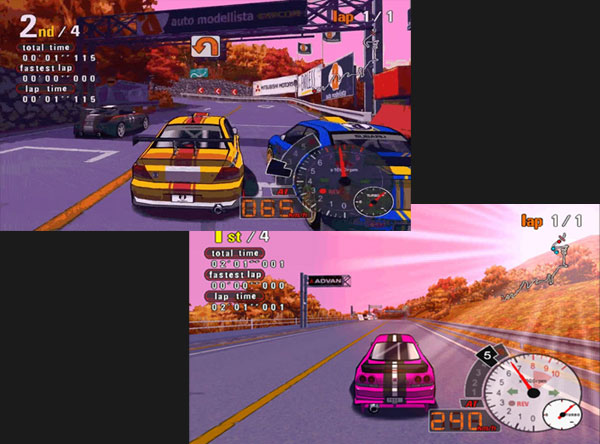
Auto Modellista never became the franchise that Capcom wanted it to be. Who knows where the series would have taken players if only it had done better? In the rush to complete the title as fast as possible most gamers never gave it a fair chance. The experience of Auto Modellista was more esoteric than players were used to. They tuned cars, raced them and won trophies as they had dozens of times earlier. Because of the brevity of courses and lackluster gameplay the entirety of Auto Modellista was panned. Playing as a car designer was what gamers missed. To appreciate the beautiful coexistence man and machine the player had to be willing to put more time into the game. Passing through the title was simply not good enough. To grasp the experience that Capcom was going for a player had to invest more time in the garage and more miles on the road. The only thing that would be remembered by gamers were the visuals. No racing game before or since had colored the genre so profoundly. The look of the original PS2 and Xbox release continued to inspire, even at the dawn of the PS4 and Xbox 720. The gamer that gave up on Auto Modellista without giving the entire experience a thorough chance was ultimately the racer that lost.

Were there any racing games, or other video games that failed with critics, and audiences that you still find joy in? Tell me about it in the comments section. As always if you would like to sponsor me please visit my Patreon page and consider donating each month, even as little as $1 would help make better blogs and even podcasts!
follow the Street Writer on Patreon!

Monday, December 4, 2023

The Best There Ever Was, Part 3 - A 1UP classic from March 16, 2005

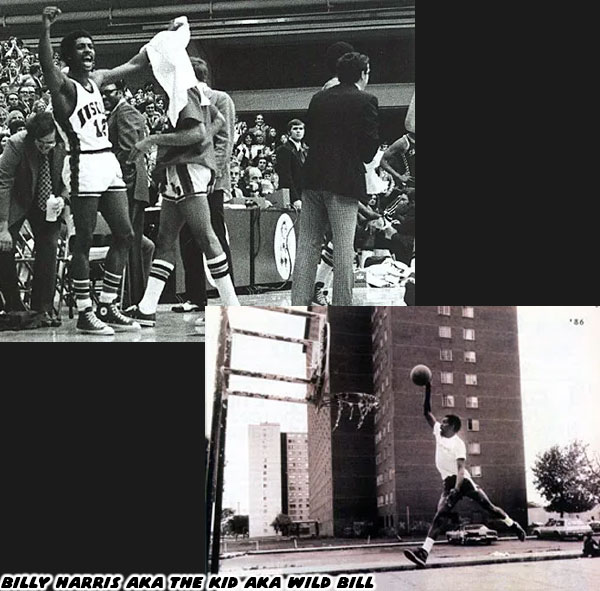
More like Wild Bill than Billy the Kid.

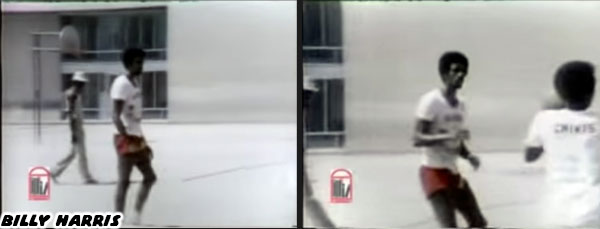
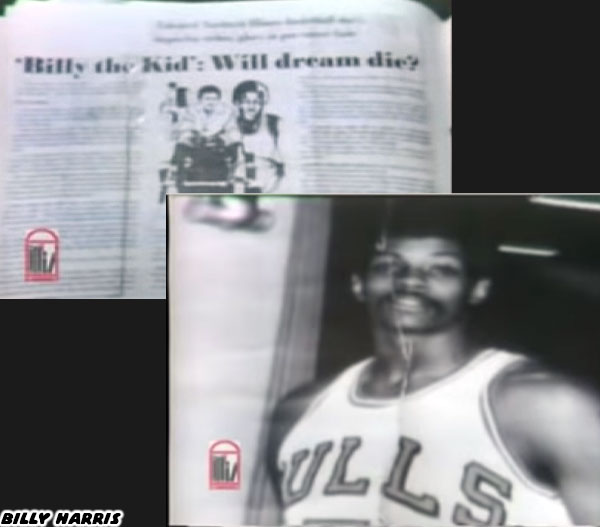
Billy Harris is "the one." Billy Harris is the final legend among Legends. Billy Harris is the greatest playground legend ever. Some would go so far as to say that he was the greatest basketball player, period.

"They used to have jump ball. Muthafucka throw that shit up, I jumped up and grabbed that bitch and shoot it in. They stopped the fucking game! They don't know what the fuck to do! Is this shit legal or what? Y'all figure this shit out. When y'all get it figured out I'll finish whopping y'all ass."
- Billy Harris in Nike Battlegrounds.

The best basketball journalist of our time, Scoop Jackson, did the homework so I didn't have to. Scoop separates fact from fiction in SLAM #30 with the help of Bhatie Demus, Courtney Goldwire and Chicago Sun-Times reporter Lacy Banks. Billy's life is so extraordinary that is really does tell that many writers working for the common goal. Breaking down Billy's life, understanding what happened and separating fact from fiction proved to be a hard undertaking.

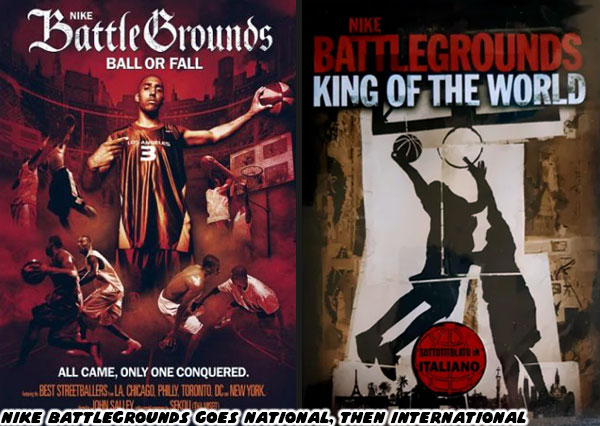
I've added some text from the SLAM article as well as dialogue from the Battlegrounds DVD in which Billy shares some of his stories. The text is uncensored. Billy and Fly Williams were snuck in the early part of the DVD, introduced by the poet SEKOU (THA MISFIT), yeah I've never heard of him either and I'm sure Nike threw him in there to try and be hip and "urbane." That whole DVD would have worked better without the cages, hype, narrator and circus atmosphere, but I digress. This is the story of Billy Harris, not a two-minutes and bleeped-out like it was on the DVD, you have been warned...

Billy has seen every possible aspect of the playground to pro back to playground life that any legend has ever had. Scoop illustrated that wonderfully in SLAM. The life of Billy Harris was not an easy one. Billy had the most potential and carried more of the ghetto on his shoulders than any other playground legend mentioned in this article. Every game he played was a battle for more than himself. It was a battle for the hood; it was the one thing that kept his community going. Billy had become bigger than a legend. He was a god.

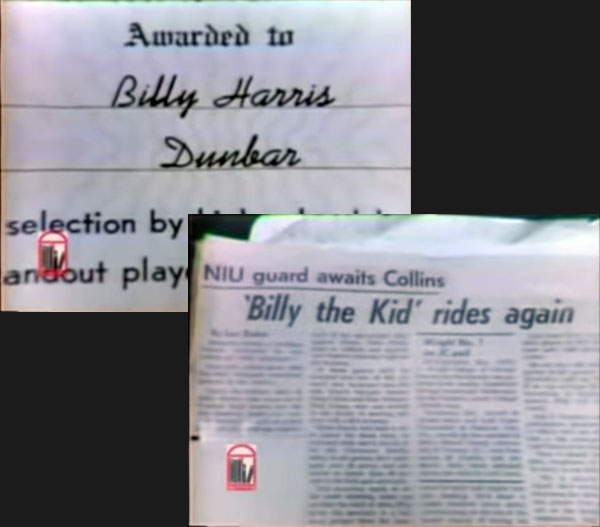
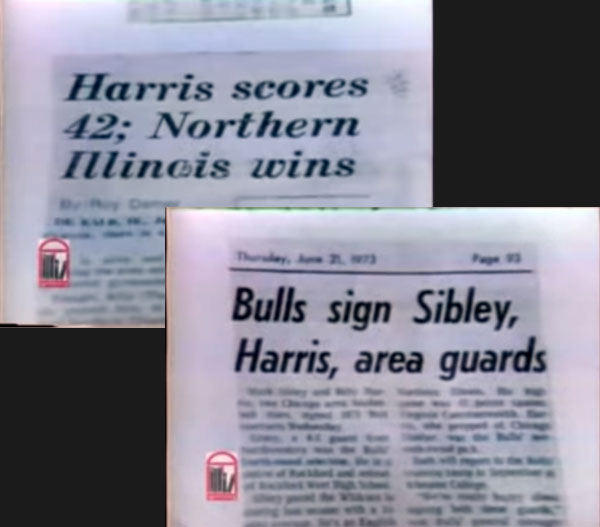
Accomplishments mean nothing compared to the life Billy had. This life included drugs, women, cash for favors, pimping and dependency. However Billy would redirect our attention to the game, he would say, "Check the books" and they would prove that he was right. Billy had nothing to hide. His ability to play the game so incredible that it scared coaches and opponents alike. He was too much for one team, too much for one city to contain. Billy was drafted and then cut by the Chicago Bulls. Although he was the best draftee on the team (and apparent that he was the best player period) he was still cut.

"The fact that Billy didn't make it had nothing to do with talent. Politics and many other aspects made it impossible for him to make it. If they had a three-pointer when he was playing, he'd average 60 or 70 points. Easy. Because most of his points came right as he came across half-court. He had character, but was outspoken. Like Muhammad Ali said, 'It's not bragging if you can back it up.' Billy always did. Honestly, I don't think the league was ready for him."- Sonny Parker, NBA and playground legend as told to Scoop Jackson.

Billy could foretell his fate and knew that he was not cut out for professional basketball. His game proved to be too much for a league not ready for change. It was enough that the ABA was radical enough for the NBA to incorporate. Billy's all-around ability would have pushed the league into the 22nd century.
 
Sadly very few people realize or acknowledge the sacrifices that Billy, and many legends like Fly Williams and Earl Manigault made in order to bring the playground game up to the prominence it is now. A lot of cats today assume that the street game has always been big and that the money that is out now has always been around. Get it straight. It was people like Billy that brought the game up and more people should praise the names that came before like Chicago University coach, Marquette University and NBA star Bo Ellis, "If I leave here without saying what I have to say, I will feel awfully bad. I want to say thank you to this man sitting on my right, Billy Harris. Bill Harris is by far the best basketball player I've ever been associated with. I don't consider this man a playground legend, though. Because when we were coming up, playground legends were young men that didn't really go to high school, didn't graduate, didn't go to college. This man has a degree. He played in the ABA. He worked downtown in suits. So I don't consider him a playground legend, because he's accomplished things. But I do consider him one of the coldest players I've ever seen coming out of Chicago-on the court and mentally. Because without his direction and guidance, [a lot of things] would have been non-existent to me. The reason I've had a lot of success in my life is because of people like Billy Harris." (Jackson 114)

I will begin to put down the numbers. Each statistic gets more unbelievable than the previous. These are not myths or fables, there is proof for all of the claims and the four journalists that brought Billy's story to SLAM will testify that this is the truth the whole truth and nothing but the truth.

Billy was an amazing scorer, averaging no less than 30 points per game in high school in college. He never played a team game for less than 30 points, period. His shooting was deadly accurate, somewhere in the 65-70% range from anywhere on the court. However Billy was more than a shooter. He could drive, he could dish and he could dunk. He could defend the basket and more than any other legend he could read his opponents. Billy's athleticism matched every mental aspect of his game and vice versa. Billy understood how to score and how to utterly destroy his opponents.

"You know it's a curse. People think it's a good thing to be able to read other people, being able to smell bullshit. But it's not. Because what happens when you sense that bullshit inside your family? When it's right next to you every day? What do you do then? (Jackson 110).

This is all hyperbole without telling you who gave Billy Harris competition. In the mid 60's every playground, college and high school legend in Chicago and the surrounding cities was gunning for Billy.

This is not myth but fact: Billy never lost a game of 1-on-1 in his life. For the 14 years he was in his prime. From the age of 16 to 30 he never lost a game of 1-on-1. Period. At his peak Billy would handicap himself. He would play a game to 24 and give his opponents 22 points. "West side" rules so possessions would alternate after every basket. If they made one basket from the three-point line then the game was over... Billy never lost. Billy would even give opponents a half point if they could touch the backboard with their shot. Hit the backboard four times and the opponent would win? Even with those odds Billy never lost.

"Nobody knows these stories. Nobody. You wanna know why? Cause I ain't told them."
- Billy in Nike Battlegrounds.

Scoop tested Billy, asking him if he would give Dr. J, Jordan, Magic and Bird those same odds. Defiantly Billy answered, "I'd give them 22 and the game's 24. They would never beat me? Ain't no motherfucka alive, walking around, that can say that they beat Billy Harris one-one-one. You can put it on the radio, TV, whatever. Ain't nobody ever going to step up and say that they beat me. They are not going to win. You don't understand-I played against n*ggas that would rather kill you than let you beat them. And I figured out a way to destroy those n*ggas."

In team games no one ever put any number of points on Billy. Billy says it with conviction. He never played a bad game in his life. Each and every game he played was nothing but his best. "I played basketball like it meant life or death. Pressure? Where the fuck does pressure come from? The pressure is on me. I'm playing against me! I'm searching for the perfect game. That's what I did." (Jackson 112)

It sounds too good to be true. A player this good could never have existed. Scoop went searching for proof of the claims. Billy's friends, coaches and family all backed up the stories. More incredible were the enemies that also supported Billy's claims. People that hated Billy could not bring themselves to lie against his game.
 
Still Scoop went on a hunt for just one bad game, the missed shot for all the money, the crack in the armor. Ed Curry, fellow Chicago playground tournament champion and spokesperson told Scoop, "You won't find it. That son of a bitch never had a bad game, and he didn't lose. I can say that I've seen every great ballplayer that's ever played in this city-played against most of them-and there was no one like Billy. There's no one in the pros today like Billy. He was one of a kind, and he didn't care. He didn't care about the other four players that played with him, and he didn't care about the five guys that used to try to guard him. People think Michael Jordan is one of a kind? No. Billy Harris was one of a kind." (Jackson 110)

Every playground legend is grounded in reality. Up until now every playground legend had a rival, a peer. The playground legend was never perfect. There was always that one bad game, the shot missed with money on the line. This made every legend real. Scoop could not find it in the case of Billy Harris. The further Scoop dug, the more witnesses and record books would back up the claim.

"I go play now and I get a little tired now, but I'm real slick, ya dig? Play a little bit. Chill. Fuck you up a little bit. Chill. You understand what I'm saying? Because I know how to orchestrate this. My shit's that tight." Billy in Nike Battlegrounds.

I am not going to talk about why or how Billy was blacklisted from professional basketball. Lacy Banks, a reporter at the Chicago Sun-Times lost his job (and went to court to get it back) for writing an article about Billy and posting the conspiracy subject that contradicted the Chicago Bulls reasons were for cutting Billy after drafting him in 1973. Scoop writes that the conspiracy was to keep him out of the NBA because Billy would not conform.
 
"What these people don't understand is the very things that if they do now they can sign a 80-million dollar deal. That's bullshit! They got n*ggas crossed out. I'm the n*gga that took that shit to Division 1 and made it work! You understand me? All this shit, crossover, behind the back when I'm going on a muthafucka, one hand jumper coming with the spinnin' fuck. [gestures as if he's doing basketball tricks] All of that. I did all that shit dude? I pick up a paper, here's a bunch of muthafuckas talking about they're street legends. Man, fuck you, you ain't shit, and if somebody believes that shit, so be it."
- Billy in Nike Battlegrounds.

30-years later a new generation of streetball players and "legends" (some with only a few years experience) get shine on TV, shoe contracts, national tours and earn street cred for the NBA all because some fat rappers, businessmen and promoters can cash in on the talent. That is phony. Billy Harris is real.

Billy deserves respect for everything he has ever done for the game. Billy deserves recognition as the greatest playground legend ever. Just because there aren't mix tapes featuring people like Fly and Billy doesn't mean they weren't real or their games weren't as good if not far better than the best we have today. In the NBA they said that nobody would ever be able to create better highlights than Bob Cousy backindadaze. Eventually Pistol Pete came around... Years later the legacy of greats came and evolved the game, Dr. J, David Thompson, Magic Johnson, Michael Jordan and (injuries notwithstanding) LeBron James. Many, many more have come and gone in the playground. But it doesn't matter much. NBA or playground Billy would have balled them all up. Believe it.

Addendum: Months after writing this series Lang Whitaker wrote of another ballplayer named Jesse Dunn in the second issue of Streetball by SLAM magazine. If reports are to be believed (Lang has never lied before) then we may have discovered the Angel to Billy's Devil. But that story is for another day...

Were there any street legends that you heard of in any discipline that were better than the pros? Let me know in the comments section please. As always if you would like to sponsor me please visit my Patreon page and consider donating each month, even as little as $1 would help make better blogs and even podcasts!
follow the Street Writer on Patreon!

Friday, December 1, 2023

The Best There Ever Was, Part 2 - A 1UP classic from March 15, 2005

Skip to My Lou, a Professor and a Bone Collector.

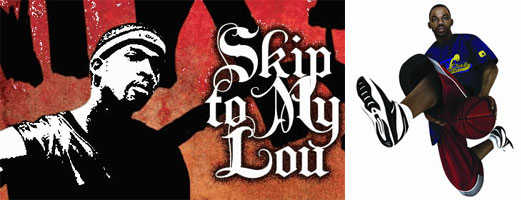
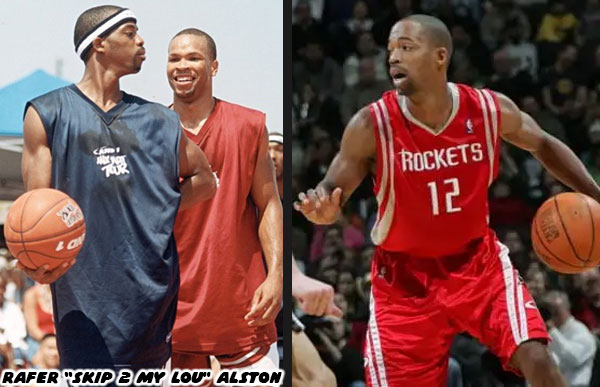
Rafer "Skip to My Lou" needs no introduction. He was 12, barely 13 when he began competing at the Rucker. He was the first real street phenom in a long time. With skills so blessed it would only be a matter of time before the tapes his coach and family recorded found their way to the offices of upstart company AND 1. The rest as they say is history.

Skip did it all, playground, high school, college, pro... There are so many self-proclaimed legends that don't have a fraction of the experience and reputation that Skip has (remember that when I mention a certain Bone Collector a little later). Below are some of his many thoughts taken from the first Season of ESPN Streetball:
"Volume one was just a guy just trying to show who he belongs out there playing with the bigger guys, and before you know it everybody's anticipating every game I had to play.
When I walk on court on the playground, they view me as the best one out there. If I'm going into and NBA arena I'm just an ordinary player. I'm just another guy in an NBA uniform.

Bone Collector said that the only person he really wants to play against is Skip. He wants to throw between my legs; I'm going to let him throw between my legs so he can get his ooh and ahh. Cause after that I don't see nothing else spectacular he's going to do.
Reporter: How about he try and stop you?
Skip: Impossible. [Laughs]

Streetball, everyone is still sold on this one-on-one ability. Headache, Main, they have a lot of ability, these guys can play ball. I play those guys over here. They think it's simple. They don't understand how hard it is to be the last man on the bench in the NBA.
In fact everybody's trying to get it, everyone wants it, most people come out their try to take it from somebody that already has it. You know, people tend to come out there, thinking you're supposed to automatically give them respect just because they're out there playing with you. But they're not, they have to earn it.

As I'm getting older, you know, sooner or later you're going to have to walk away from the playground game and just, you know, let it go. When do you walk away? I found myself taking a back seat most every summer now just to let those guys get more shine. Because I'm being seen during the winter and I'm being seen during the summer. So I'd rather let them shine as much as they could during the summer because that's their thing.

On the other hand I watch these guys every summer and I don't think they grasp what's going on. You know. You think it's all about them. They're supposed to be there. AND 1 is supposed to do this. They're supposed to take 'em in you know. And I'm trying to tell them that there's guys out there better than them. Every last one of us on that AND 1 Mix Tape Tour. There's a guy that's better than Skip to My Lou, there's a guy better than Hot Sauce, there's a guy better than Dribblin' Shane and Sik Wit It and AO. Every open run that I've been to and every place that I've gone. I've seen guys better than us. AND 1 can take those guys, come up with a new game. And that's what I'm trying to tell them that. You know, enjoy this moment. Enjoy this time. And enjoy what AND 1 is doing for us and what we're doing for AND 1.

These guys never asked me about the proper way they should take. They never asked me the things they should do. The more they just let those questions stay in the air, I can't really help them with that, you know. They think it's simple, they think I got there, just someone placing a call. What they do is look at me and just say 'you made it through streetball, why can't we?'
 
Playground legend is a person that holds his own summer after summer after summer. And he's consistently just destroying everybody that they put in front of him. A streetball player, he's more of a guy that has a lot more flair, a lot more tricks. You know, he's like a person that's going to put on a show all by himself.

Reporter: Which one is going to the NBA?

Skip: None of them made it. None of them made it."

For everything Skip's done for the game and AND 1 he was rewarded with his very own signature shoe during the 2002 And 1 Mix Tape Tour. It was the first signature shoe for a playground legend and a testament for all his hard work and years of sacrifice. However some of that shine would disappear two years later. In 2004 AND 1 would release a special color-way version of the Ballistix Mid for the Professor.

The Professor played exactly one summer with the AND 1 crew, won the sponsorship contest and was added to the team. Now he has his very own signature shoe! Note that none of the other mix tape players (that have been touring around the country for years and years) have had a signature shoe. It was almost as if all the hard work that Skip and the other players had endured for years and years adds up to one lucky [white] boy named the Professor. A kid that never made any type of college or high school name for himself was now some sort of playground hero? What is the world coming to?

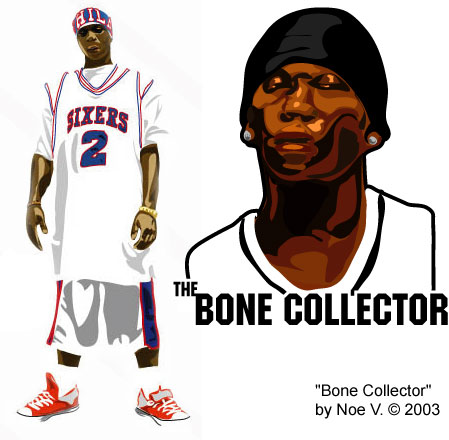
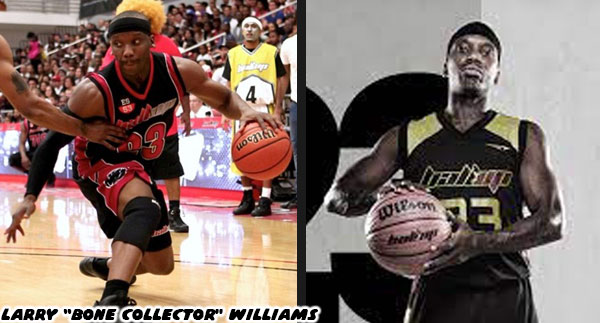
As long as I'm riding this wave of controversy it's time to do some comparisons between Skip and the Bone Collector. Those that think I'm hating need to relax. I'll admit that BC is a talented player, great handle and court presence and a very clever entertainer on the playground. But real, solid, all-around basketball skills? That still hasn't been established.
 
Larry "Bone Collector" Williams was born in Texas but raised in part in Pasadena California. He says that his life growing up was very hard. He had a lot of obstacles to overcome, what exactly he had to face growing up is unknown.

His rise in the playground circuit has been very quick. Seemingly overnight. BC started playing high school basketball as a freshman in Pasadena but stopped because he and his father determined that the coaches were going to hurt his chance to get college attention.

He did play some with Chaffey College in Rancho Cucamonga, California. Then moved to the Globe Institute of Technology in Lower Manhattan. His grades being his biggest weakness in college. Big schools like Providence and Florida A&M have shown interest in him, however his grades still needed improvement before they could offer him a scholarship.

On the court he was okay for Globe, averaging 9.5 points and 2.5 assists per game. Not quite the stellar numbers that you would expect for a "legend?" His then coach didn't have much praise for him, calling him the "Turnover Collector" for the number of times BC would lose the ball in games.

Eventually BC got a better hold on that handle and became an overnight sensation at the Rucker and EBC tournaments, winning the 2002 MVP in the process. His ego seemingly grew as quickly as his name, often times saying things like "I'd like to think that right now I'm the best player in this whole league." The whole league including NBA, college, high school, streetball and even playground legends.
 
His self-glorification doesn't end there. "I'm the 50 of this shit right now, plus Eminem and Hova. All on the same label."
 
BC on AO from mix tape fame: "All I got to tell this dude is that you are a pussy. I played you in Philly. AO is from Philly and he quit. First half. Nigga had three fouls, got mad at the ref and threw the ball at him. I was averaging 40 out there. He knows, ask AO how much I had. That is the only reason he knows me."

Now BC has announced that he is ready to go pro. He hired the SBA sports management group to help him prepare and they are taking him on a European trip with the SBA All-Stars and helping him get to play in the USBL so he can have scouts judge his game and rank him for the draft.
 
In a world where then 16-year-old man-child LeBron James was already anointed as the "Chosen One" before his high school junior prom, it should make you wonder how far BC will go in the league. At 24-years-old BC could have been aided in his development if he had gotten into a Division 1 college, and would have graduated by now. Instead he is competing in the draft with high school phenoms, NCAA champions and international players of all shapes and sizes. It is almost enough to make you wonder if BC should have stayed on the playground.

More realistically streetball fans, wanna-be legends and streetball players should at least have chastised all the people that hyped his game while not helping him look at the bigger picture. Those selling tapes and DVD's, those using him in commercials. They throw some money his way and convince him he's as good as he thinks he is. A couple of good summers at the Rucker? A DVD appearance? A television commercial? Where are the Bone Collectors real credentials? Does he qualify to be a playground legend?

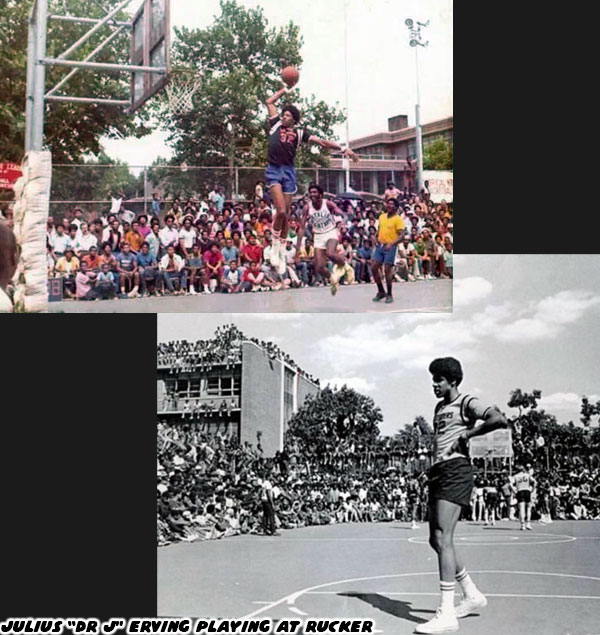
The real legends held down the Rucker for a decade, they scored 40 in a half on Dr. J, they stacked nickels on the tops of backboards to show their vertical. Skip began his reign at the Rucker when he was 12 and 13. Even Rory "Disaster" Grace from the Notic and AND 1 open-runs or the "Computer Chip" from the AND 1 open-runs didn't really get into streetball until recent, and even then both would have gotten steamrolled by the competition at the Rucker. Skip didn't just entertain, he produced points along with his assists. He had a jumper and could lay-up with both hands from all sides. Skip and many of the other legends did well in high school and college. Some got a chance to shine in the pro ranks. None thought that they could simply make themselves eligible for the draft because they had a couple of good summers at the Rucker, called out a pro player and talked shit the entire time.

Yeah BC will still become rich and famous. Maybe he'll release a hit-single as a rapper and "retire" from the game. But it should make you wonder how it got to this point. Where does a streetball player get all this money? How many unknown ballers had to come before BC? How many ballers had to get used by the system and not see anything in return? How many kids are being sold the game instead of told the game? In the universe of playground legends Bone Collector is still a child. I don't know if he will ever grow up and be ranked among the men that came before and the men that will come after.
If you want to read more about the Bone Collector check out these links:

BC Link 1
BC Link 1
BC Link 1

So if it isn't Skip 2 My Lou or the Bone Collector then who was the best ever? That remains to be seen! If you think you know who the greatest streeball legend was then let me know in the comments section please. As always if you would like to sponsor me please visit my Patreon page and consider donating each month, even as little as $1 would help make better blogs and even podcasts!
follow the Street Writer on Patreon!