Showing posts with label turbo. Show all posts

Wednesday, December 13, 2023

My dream car lineup, the first five...

I was having a conversation with my niece earlier this year about what my favorite car is. I said I don’t think I have a single favorite, but could come up with a handful of favorites. I asked what she liked, and she’s a huge fan of muscle cars, just like her dad. Specifically she loves the classic 1967 Camaro. Which is a super sexy muscle car. She likes GTO’s, Chargers, Chevelle’s, Mustangs, and the other classics as well. It got me thinking of making a blog post. I could spend the next dozen blogs writing about which cars I love, but instead I want to limit it. I want you to do the same thing. The rules for this thought experiment are simple. Let’s say you won the lottery, and could buy any car in the world, from any era. It could be bone stock, or it could be modified as long as it was street legal. This meant I couldn’t put a monster truck on the list. Although if I won the lottery then I totally would get one built. Also you can only choose 10 cars. None of this warehouse filled with cars like celebs have. These are 10 cars that you could cycle through to act almost as a daily driver. Do you have them in mind? To be honest I wouldn’t fit in most of the cars on my list. Maybe three are actually made for big people. The rest are made for people much smaller than me. Let’s start with one that would look good on me.
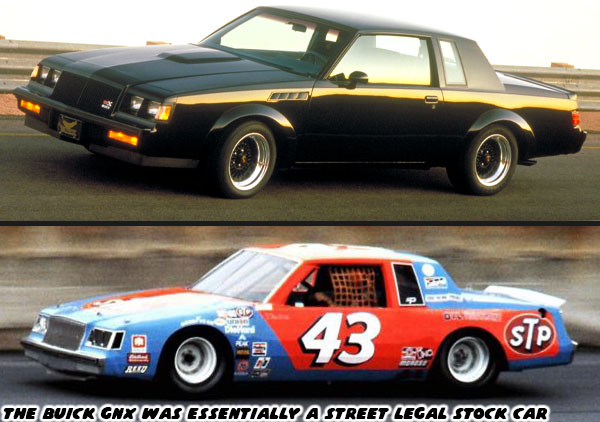
The Buick GNX (1987) is considered to be the last of the great muscle cars. It is the descendant of the grand national model of cars. We’re talking about the Oldsmobile, Fords, and Pontiacs that helped popularize NASCAR in the ‘70s. The Buick Regal T-Type was the base model, but the faster version was the Grand National. Then there was one with even more features, including twin turbos known as the GNX. As first glance it looks like something a grandpa would own in the ‘80s, and maybe drive it to church on Sundays. That is until you realize that it has supercar performance, and could destroy most sports cars on the road. Here’s a breakdown, and comparison between a Grand National, and a GNX. Here’s the Car and Driver review of the GNX from 1987. There was nothing else like it then, and could still beat most cars on the street today.
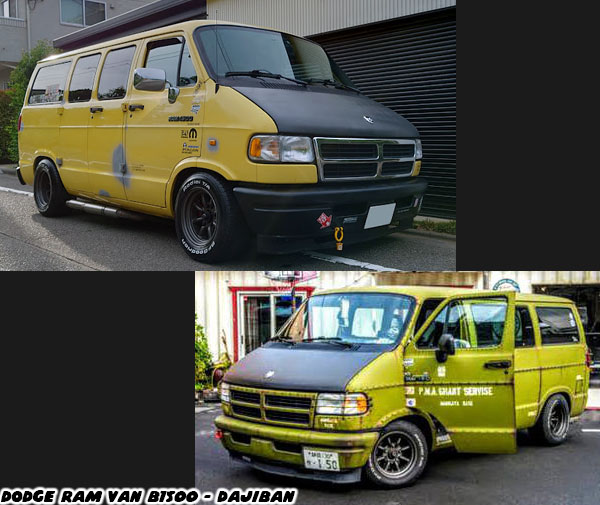
The first completely tuned up car I would buy after the GNX would be a Dodge Ram Van B1500 (1998). These are known as Dajiban in Japan, and they have a cult-like following in the tuning community. Similar to the GNX, it is a sleeper with fangs. To get you up to speed here a Jalopnik article about Dodge van racing in Japan, and also a Road & Track article about Dajiban racing. I used to own a ’97 Dodge Van so I know I could drive it comfortably. It belonged to my parents, my dad had it on sports tires years before the Japanese saw how brutal the stance was. Sadly we sold it, but I long to have a new one absolutely tuned up someday.
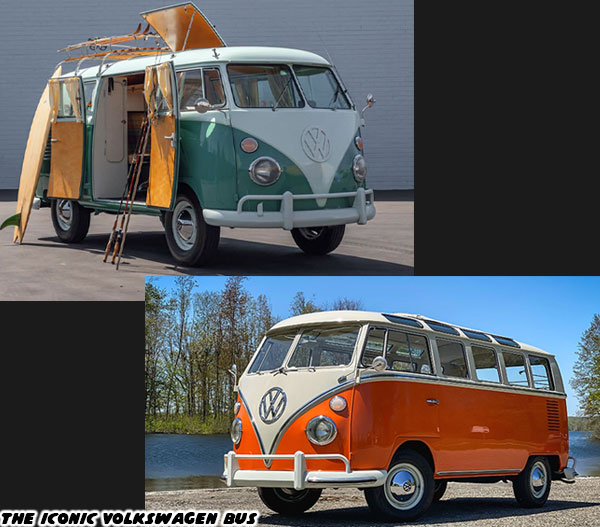
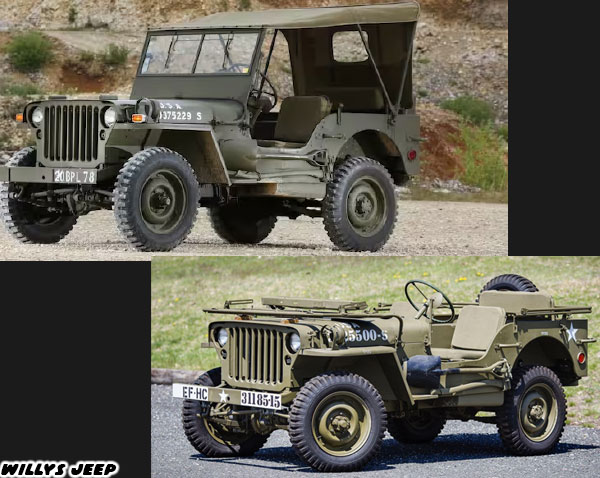
The next car in my garage would be a tough choice, at first I thought about getting a Volkswagen Bus. I’m sure my wife would love one, but I’ll let her make her own list. The VW Bus is far, and wide considered to be a classic Southern California ride after all. I would like to take my family camping, and nothing would make for a more suitable ride. Or would it? I’d like to not only drive to one of the many local campgrounds, but I don’t want to be stuck if the weather acts up. A VW Bus is a durable, but could also be a fickle ride. I’d like something that is tougher, and more reliable. Something with the rugged profile of a Willys MB (Jeep). This was the off road car designed to replace mules for the Army in WWII. To this day there are companies that make reproduction parts for it, and help keep the 80-year-old 4x4’s running in perfect condition. Of course as cool as a Jeep is there is no way that I could take my family camping in one, that is if I could even fit behind the wheel.
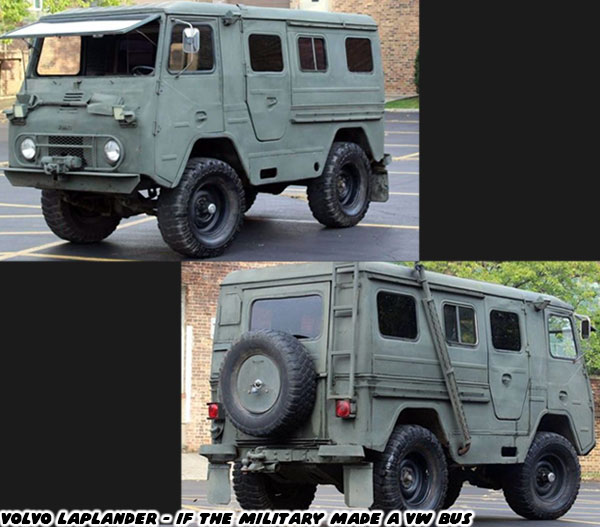
There are plenty of modern campers that have 4x4 capability, but I do want something that has a classic look. Since money is no object then I could get a retro-looking bus, and have a modern diesel, or diesel-hybrid engine, transmission, and suspension put into it. That is why the third vehicle I would have in my garage would be a Volvo Laplander (1966). Four Wheeler took a look at the military vehicle many years ago. The European 4x4 is as tough as they come. Newer versions are retrofitted for rally racing. I’d give this boxy-looking beast a complete makeover from the inside-out, and turn it into a reliable camper bus, with off road capability.
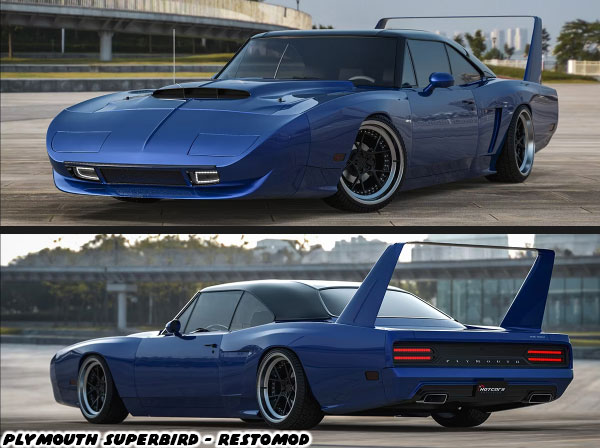
This isn’t the only retro car that I would love to have a restomod of. Restomod is a relatively new trend of car builders that goes beyond factory-accurate restorations. Instead of sticking with OEM parts they rebuild a car using modern engines, suspension, transmissions, parts, and technology. They have a classic, but updated look at the same time. Not everyone likes those rides, and I understand that some rides deserve to be accurately restored. There are so many possible classic muscle cars that I’d love to have in the garage. At the same time I don’t necessarily want them to all be stock. The GNX itself was already tuned up before it left the showroom floor. The biggest, most obnoxiously American muscle cars of all time were the Dodge Daytona, and Plymouth Superbird. Nothing screams ‘MURICA like a 20-foot-long, 200mph, boat with an enormous wing, room for four, and groceries in the trunk. That is why if I could only have one classic muscle car it would be one of those. Because of Richard Petty I’d lean towards a Plymouth Superbird (1970) restomod. Hotcars featured a concept restored of the Plymouth Superbird. It just looks too good. Of course I’d have the brightest paint job on it that I could. Too much excess is never enough.
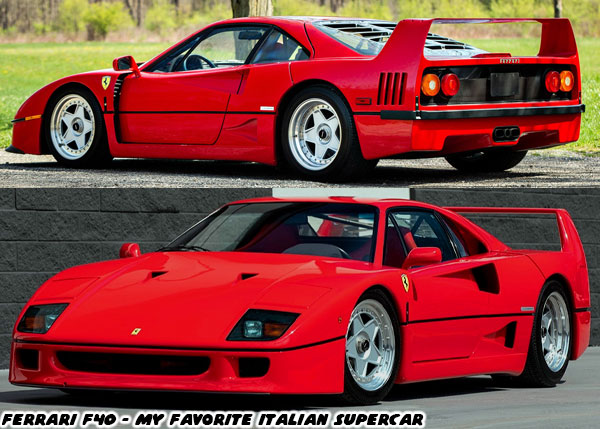
There are many supercars that I would love to own, but the list of exotics that have a special place in my heart is very small. Of all the Italian supercars there’s only one that I consider my absolute favorite. In the ‘80s many of my friends were all about the Lamborghini Countach, or the Ferrari Testarossa. I thought they were amazing-looking cars, but had been featured in so many movies, music videos, and television shows that I thought some of their exotic appeal had worn off. All of that changed when I was in high school. The Ferrari F40 (1991) was the car that completely rocked my world. It was as if Ferrari had turned one of their track cars into a street car. It looked so brutal that nothing else could compare. If you want to know what it feels like to drive one here’s when Car and Driver tested the Ferrari F40. Sadly I’m certain there’s no way I could ever fit comfortably in this car. A guy can still dream right?
These are the first five cars in my dream garage. Do you have any of these in your lineup? We will look at the remaining five in the next blog. I’d like to hear what your top-10 cars would be if money was no object. Tell me about it in the comments section. As always if you would like to sponsor me please visit my Patreon page and consider donating each month, even as little as $1 would help make better blogs and even podcasts!
follow the Street Writer on Patreon!

Friday, June 13, 2014

The Sega / Namco Rivalry, part 1...

I read a YouTube comment where a person likened the rivalry between Sega and Namco to a high profile rap battle. It was a perfect analogy. One studio would drop a hit in the arcade and the other would answer with an amazing comeback. Through the '80s and '90s no two studios traded blows better than Sega and Namco, especially when it came to the racing genre. Sega came out swinging with Monaco GP, 1979 the top down racing game that I had mentioned previously on my blog. The mechanics of the game, clever use of a headlights in tunnel sections and addition of color were a major improvement to the Atari games released just a few years prior. The top-down view gameplay would not get better until Midway released Spy Hunter in 1983. Namco entered the ring in 1980 with the racing puzzle game Rally-X, which was the first Namco game to feature a bonus round. Namco had proven that they could be successful in the genre by having released Pac Man earlier that same year. Rally-X did not gain much traction in the US, even as it was licensed out to Midway. Sega on the other hand continued to push the boundaries. In 1981 the studio released Sega Turbo. A 3D affect was achieved as sprites scaled past the race cars. The game was one of the first to use that technology. Turbo was a sort of missing link between the top down racer genre and behind-the-car view. It was essentially the ancestor to OutRun.


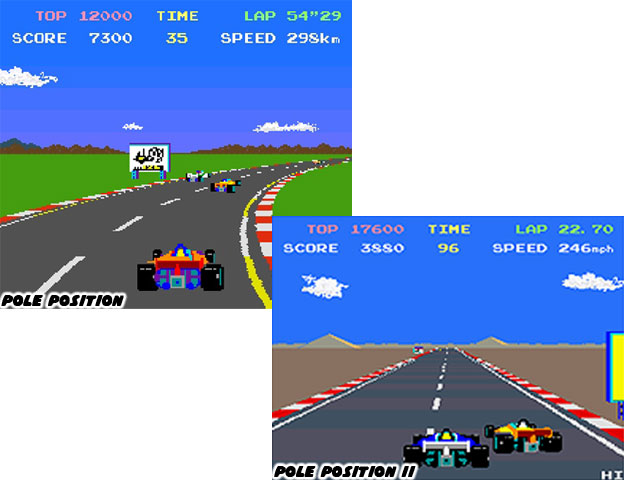
Namco answered back in a big way with Pole Position. It was the first truly iconic racing game. Even non race fans were amazed by the bright graphics and digitized audio, featuring a voice calling out "Prepare to Qualify" along with midi trumpet fanfare. The game was so popular that it was the only arcade racer to also have its own Saturday morning cartoon series.The game was challenging but not cheap. It was hard to keep the cars on the course at high speeds. Players could slide off the track easily and smash into one of the billboards, often advertising another Namco game like Dig Dug. This early bit of gaming promotion was revolutionary. Namco could program different billboards for different regions or sponsors. Domestic arcades might see a billboard with an actual soda brand while international markets might see a tobacco product instead. Beer and tobacco companies were big sponsors in the racing world but not quite welcome in arcades. Even if players managed to stay on the track they were still not safe. Running into other cars resulted in a spectacular explosion where debris shot off in all directions and a tire would go bouncing down the track. It was a far more dramatic effect than the flickering black and white screen Atari had used to demonstrate crashes in their early racing titles. This Namco game and many others were licensed to Atari for US arcades. It would be years before the Japanese arcade publishers would be large enough to set up operations in the US and Europe and distribute their own machines.


Pole Position was based on Formula-1 racing, the most popular racing series from around the world. Yet its roots did not matter in the the US where the Indy / Cart series was more popular. The Formula-1 and Indy cars had very similar shapes and to gamers they were interchangeable. There was only one track in the game and it was based on the Fuji Speedway in Japan. Pole Position debuted in 1982 but did not really get widespread fame until 1983 when it became the highest grossing arcade game of the year. In that year it sold 21,000 machines worth $61 million dollars. Adjusting for inflation that would be over $140 million dollars. It may not sound like a lot but consider the steady source of revenue that arcades were guaranteed. Arcade owners had to get their profit back one quarter at a time and could only afford to get the games that would stay hot for a long while. At almost $3000 per arcade cabinet it seemed impossible that it would be profitable in any reasonable amount of time. Many units made it back within a few months, usually over the summer when students were out of school. Everything after that initial investment was pure profit, some arcades even held onto the machines for years and decades. In most large arcades it was not uncommon to see more than one Pole Position cabinet, proving that it was easily worth the price.


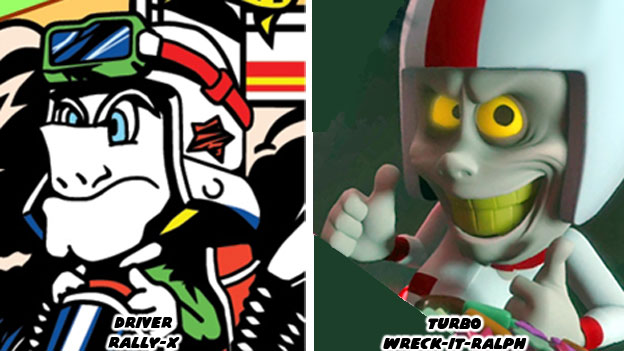
The sequel to Pole Position came out in 1983. The game received a minor improvement in the graphics department but it also added three additional tracks to challenge players. The Suzuka track, which was based on the one in Japan, an oval test track and the Seaside Track which was based on the Shoreline Track from my hometown of Long Beach California. Needless to say the studio had a lifelong fan after doing that. I was not the only kid that became enamored with arcade games thanks to smash hits like Pole Position. The full extent of the influence that Sega and Namco had on an entire generation would not be known for many years to come. The 2012 Disney animated film Wreck-it-Ralph was an homage to videogames, in particular to the classic arcade games that the animators and producers grew up with. The main villain in the game was a bitter race car driver known as Turbo. The character and his game appeared to be an amalgamation of many old hits, but most notably the Rally-X driver and Sega's Turbo. The cult of speed that Sega and Namco had built had undoubtedly become ingrained in both Eastern and Western culture.

Part of the success of those early arcade racing games was due to the innovation that each had brought audiences. Advances in control, graphics and sound were happening at a very rapid pace. A few years prior it was large black and white pixels that were in the most basic shape of a car. That gave way to full color sprites that actually looked like a race car within a few seasons. A title that looked amazing when it debuted could look obsolete by the end of the year. 

Changes were happening at a breakneck pace and the companies that did not keep investing in R&D would find themselves out of the running very quickly. It was difficult for some companies to keep up with arcade technology. New inputs from paddles, to joysticks and steering wheels were constantly being tested and refined in the field. These controls had to work well with the game but also stand up to daily use and abuse from patrons. These were the challenges that the early developers faced on top of the limitations with sound, video and storage on early circuit boards.

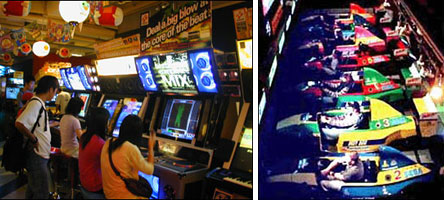
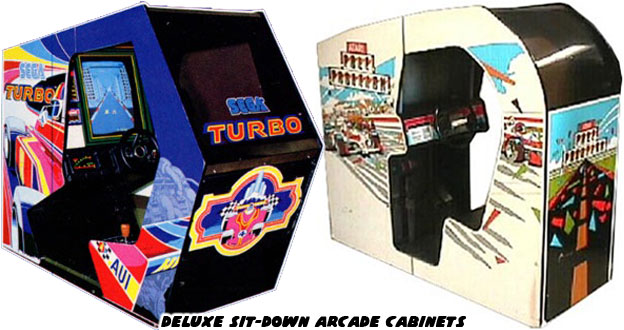
It was a difficult and pricy learning curve for the game industry. Even Steve Jobs and Steve Wozniak cut their teeth engineering boards for Atari before they founded Apple Computers. Those that were ahead of the technology curve still found it difficult to get noticed by gamers. It wasn't as if there was a popular magazine or television show to announce the new crop of titles. The internet was still not in every home, let alone every mobile device. New games were being introduced by Japanese and US developers on a monthly basis and the only way that players found out was by going to the arcade. The biggest publishers sometimes offered arcade owners multiple configurations of their cabinets. The stand up kind required little floor space and could be placed side by side with other cabinets. Stand up cabinets were great for convenience stores and laundromats as well as movie theaters. Yet to the arcades that had the room there was no bigger draw than a deluxe sit down cabinet. The games that made the best use of these innovative shapes were racing titles. Arcades might charge and extra quarter just for the experience of sitting in a fancy sit down cabinet. Actually the larger cabinets came at a premium price and the only way for owners to recoup their cost was by charging players a little bit more.


The early sit down cabinets had enormous vinyl stickers on the side featuring wild colors and bold graphics. The designs of the logos were extensions of the stand up marquee art. Some of the graphics on those early cabinets were as imaginative as album covers and concert posters from the psychedelic rock bands of the late '60s and early '70s. The cabinets stood out for another reason as well. By enclosing the player they added an air of privacy to the experience. Players could focus on the game and not be distracted by a machine on either side. These cabinets also were good at blocking out sound, and anyone that remembers a classic arcade could attest to how noisy they could be. Most deluxe racing cabinets featured tinted windows behind the player. This blocked out the lights from the arcade but anyone that wanted to see the action could peer in without distracting the player. The friendly rivalry between the two studios was quickly becoming a feud. The developers would push the limits on graphics, audio and gameplay in their titles. How far each studio was willing to go to create deluxe arcade cabinets set them apart from every other publisher. The next blog will feature some of the more innovative racing cabinets. As always if you would like to sponsor me please visit my Patreon page and consider donating each month, even as little as $1 would help make better blogs and even podcasts!

follow the Street Writer on Patreon!