Showing posts with label mini cooper. Show all posts

Friday, December 15, 2023

My dream car lineup, the last five...

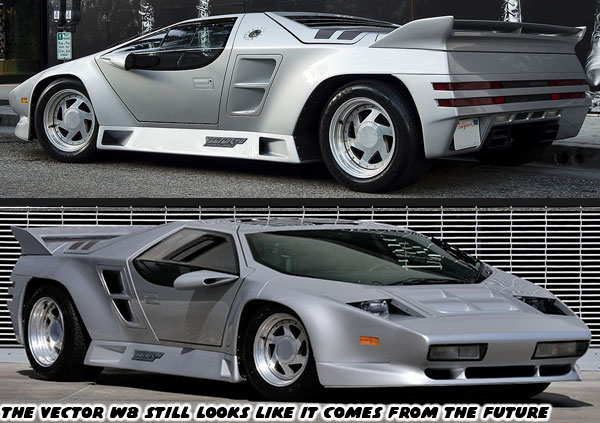
In the previous blog I talked about my favorite Italian exotic. My friend clued me into the only car that was on par with the F40 back in the day. There was an American aerospace engineer that wanted to build the greatest supercar of all time. The Vector W8 (1993) looked even more exotic than the Lamborghini. The engine itself was unique in how it was configured, the eight cylinders were not in a traditional V-formation, but rather a W shape. Hence its name. Also Vector did not consider itself an automobile manufacturer, they were an “Aeromotive” company. Their supercar had a number of technical features that wouldn’t be seen again in cars until almost 30 years later, including cameras, and an electric HUD. The small factory that made them was based in Wilmington CA, not far from where my mom used to work. I would beg her to drive around the building just for a glimpse at one. Sure enough one day we were fortunate to pass by when they had their gate open, and saw them assembling a car. Please read this amazing history of the Vector from Supercars.net. As well as when Car and Driver tested almost all of the functionality of the Vector in 1991. This was by far the most futuristic car I had ever seen, and still looks like the future that Cyberpunk promised us.
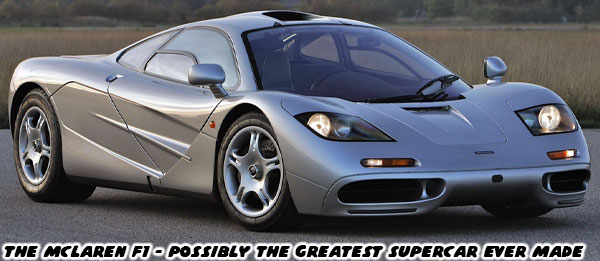
Between the GNX, Superbird, Ferrari F40, and Vector W8 you would think that my desire for fast cars was satiated. I still wanted a sporty head turner. Something in my garage that was unlike any other exotic. I had to be very careful with my selection. The McLaren F1 (1994) was considered to be the pinnacle of supercar design. In fact here’s the Road & Track article calling the F1 the World’s Greatest Car. It was certainly on my short list, but believe it or not it did not make the cut. Consider it to be number 11 on the list. It would be the first car I add if I expand my fictional garage.
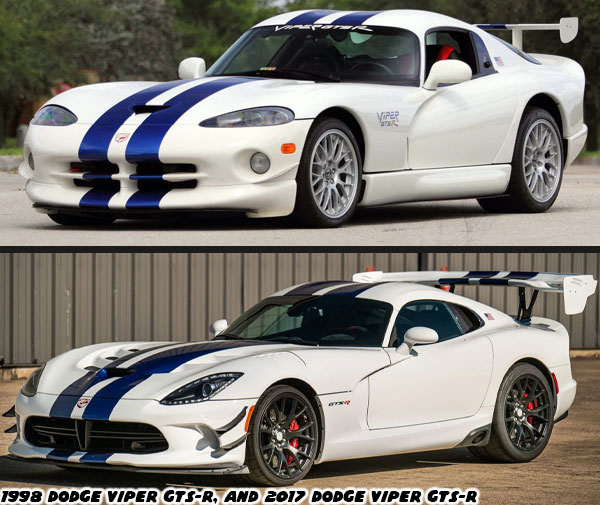
I also considered a Shelby Cobra, and Fort GT40, the American cars that put the Europeans on notice back in the ‘60s. I would have loved the Dodge Viper GTS-R (1998), specifically the 2017 Special Edition. The Dodge V10 was already revolutionary, designed with the help of Carrol Shelby, the father of the Cobra, and GT40 programs. I wasn’t fond of the original Viper RT10 t-top. The hardtop looked much more brutal. The racing tuned version was the peak of performance. Here’s the Supercars writeup on the 2017 GTS-R. The thing was that I don’t think these models were street legal, I think they could only be used on the track. I could have gotten a street legal version of the Viper, but then again, I wanted a different kind of snake.
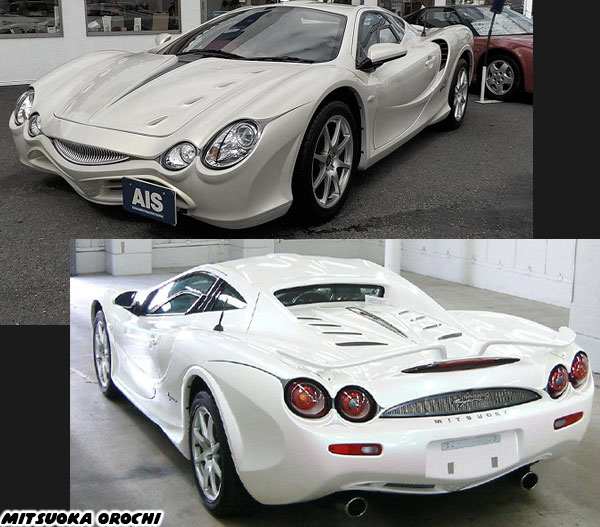
The next car in my garage would come from Japan. I got the same vibe for the Mitsuoka Orochi (2007) that I had from the Vector the very first time that I saw it. It was one of the featured cars, and one of my preferred rides in the Capcom game Auto Modellista from 2002. Here was a supercar way ahead of its time. The luxury exotic concept by Mitsuoka had been touring the car shows for years. It was supposed to have over 600hp, making it one of Japan’s true exotic supercars. The finished version had much less than that, but I would have the best tuners in the business replace the Toyota V6 motor with something much more powerful. More than the advertised performance numbers, it was the look that really sung to me. The Orochi was an eight-headed serpent from Japanese mythology. The car looked like a demon by design. The multiple headlights had thin snake-like lines drawn on them to convey that feeling. You can actually see one of these in the background of Avengers: Endgame. In the scene where Ronin (Hawkeye) is killing yakuza members in Japan, and the Black Widow comes to recruit him there is an Orochi behind them.
It wasn’t the only Japanese car that I would have in my personal top-10 garage. You might think based on the love that I have for performance cars that my other Japanese ride would be the Nissan Skyline R34 GT-R V-Spec II, Mitsubishi Lancer EVO, or Subaru Impreza WRX. Those are all fantastic cars, but I wanted something less intimidating. I wanted something small, and playful. My original choice was going to be the British Mini Cooper S (2000). I had always had a fondness for the little car from across the pond. When it was properly tuned it was as deceptively fast as the GNX. I wasn’t the only one that had the same feelings for the little car that could. Road and Track got to race one and fell in love. I would absolutely have added a properly sport tuned, and chassis-stiffened ride in my car, if it could fit 20 rides instead of 10 in my fictional garage.
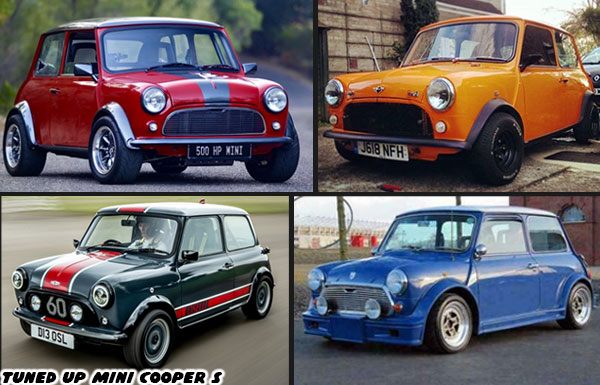
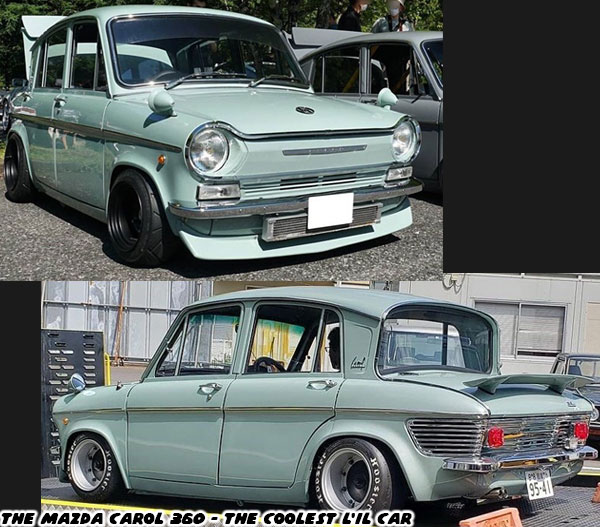
So if I wasn’t going to put a Mini Cooper in my lineup, then what would fit into that tiny spot? I did consider a sport-tuned Subaru 360 from the 1960’s. Or even a Fiat 500 from the same era. They were all fun tiny cars, that could be made into sporty street racers. Ultimately I decided on the Mazda Carol 360 (1964). The millionth car made by Mazda was this micro mini. The look, stance, and shape are unlike anything else out there. The fact that it’s also a 4-seater like the original Mini makes it something functional for the whole family. Although I doubt that we can all fit comfortably in the little car I’d still love to have a tuned up version. The history of the tiny car is celebrated on Mazda’s site
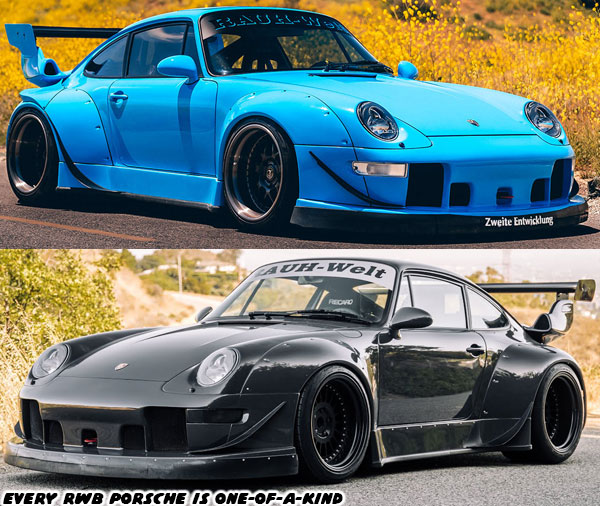
The ninth car in my lineup would be a Porsche. I can imagine many of you nodding in agreement. I have tons of American rides, but not a fine piece of German engineering. I’m split on a properly tuned up Porsche 911, or Porsche 930 circa 1989. Having a modified engine, suspension, wheels, and tires would only be the beginning. I would call on the Japanese body kit maestro Akira Nakai founder, and customizer RWB Rauh-Welt Begriff (Rough World Concept) to give the car the finishing touches. Mr. Nakai flies all around the world with a rolling toolbox, and installs the wide body kits himself. There is a two-year waiting list to get him for a project. You can find out about what he offers on the Rauh-Welt Begriff official website. I’ve seen countless videos of the man putting together a car. Watching him work is amazing. He’s like those hair stylists you read about that charge $700 for a haircut, and celebrities have to wait months for an appointment. When you watch him work you realize that he is on another level. He is completely absorbed in his work, an artist far more than just a tuner. Mr. Nakai seems to live on cigarettes, and Coca-Cola bottles while he cuts, assembles, and shapes the final body pieces during the installation process. This means that no two cars are alike, and in fact, he will only create one car per customer. Getting a unique Porsche RWB would definitely help make my car lineup stand out.
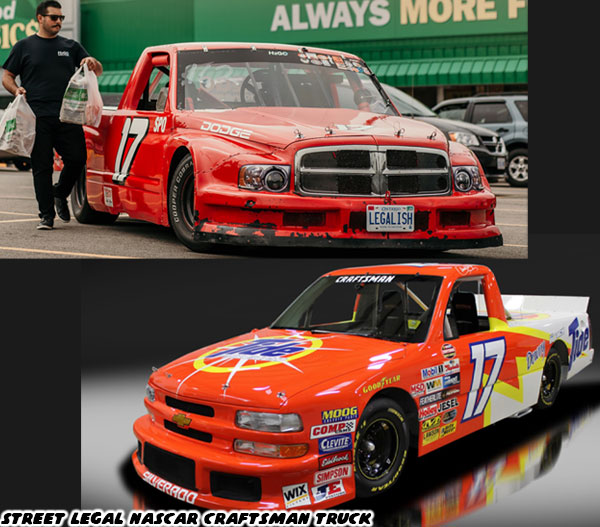
The final car in my garage would be completely custom build from the ground up. Number 10 in my dream list would be a street legal Craftsman NASCAR Truck. These are rare, but they actually exist. There are builders out there that make street legal race cars. I don’t mean they chop up an existing car, and race tune it. I mean they create a roll cage, frame, and engine from scratch. Then they wrap everything in sheet metal, or carbon fiber. These are no frills rides. No A/C, no radio, no sound deadening, no airbags, no side windows, or other amenities. You can read about the amazing Legalish truck repurposed by Richar Caetano, or even see video of Cleetus McFaland checking out Lord Cheyenne’s NASCAR Truck. I would absolutely love to get a truck of my own that defies logic. Something that could snap any other sports car in half. I'd use it to cruise down PCH.
So this what my dream garage would look like. I’d like to hear what your top-10 cars would be if money was no object. Tell me about it in the comments section. As always if you would like to sponsor me please visit my Patreon page and consider donating each month, even as little as $1 would help make better blogs and even podcasts!

follow the Street Writer on Patreon!

Tuesday, June 3, 2014

The Car Tangent, part 9...

Before the IDx was unveiled, before the Challenger was resurrected and well before Fiat and Mini had modern releases there was one company that remade an icon. More important they remade it right. Volkswagen unveiled a car called the Concept One at the 1994 North American Auto Show, the show held in Detroit. It looked very much like a modern interpretation of the classic Beetle. The public fell in love with the car and pushed Volkswagen to pursue it. The following year a revised design was unveiled that looked a lot closer to the final design of the New Beetle. Volkswagen seemed to move quickly to the feedback. The car went on sale in 1997 and became an instant hit.


A generation had passed since the Beetle had last been seen in the US. Although the car continued to be manufactured in Mexico up until 2003 not many of those cars ended up in the USA. Advances in technology, safety and performance made the little car antiquated. People still desired the quirky shape. It was bold compared to the homogenized look of most mass produced passenger cars. But fans also wanted modern components under the body as well. Volkswagen engineers and California designers J Mays and Freeman Thomas collaborated to determine what a modern Beetle would look like and how it would exceed the expectations of drivers. Few could argue that what they came up with was nothing short of inspired.

No sooner did the Beetle hit the road than people began wondering out loud when the VW Microbus would get a remake as well. The "Bus" which we would call a van was almost inseparable to the Beetle in '60s counter-culture America. People seemed to equate the van to hippy culture and early environmentalists. Even the Pixar film Cars featured an organic fuel growing hippy bus named Fillmore. The SUV was a big seller in the US but people were longing for something more unique than the boxy shaped road tanks. Volkswagen was listening and wanted to predict where the curve was headed. The SUV was indeed popular but also a huge gas guzzler. If the Bus were to get a remake then it would have to be far more economical than any SUV. The engineers developed a couple of different concepts that they unveiled publicly.


One remake, dubbed the Bulli focused on hybrid technology, alternately switching between a gas engine and electric motor depending on necessity. The technology was sound and mileage very good for a large passenger car, however the public took exception to the shape. The profile was more aerodynamic than the original Bus and the mileage had been increased but the addition of a hood made it look like an SUV or wagon. The public wanted the Bus to retain its classic shape, similar to how the Beetle had been remade. Volkswagen engineers found that challenge difficult to meet. Both the classic Beetle and early Bus models had rear-mounted air-cooled motors. They were small and out of the way, giving plenty of interior space. Modern engines were water cooled and required more space. The trunk that used to be in the front of the Beetle now had a motor under the hood. The Microbus was given an engine compartment at the front as well and this changed its basic shape. Even the more streamlined all-electric Bus concept still had a bit of a bump at the front. This may have been more aerodynamic design and a better safety feature for head-on collisions but to audiences the concept Bus just did not work. 

German engineers managed to get a revisionist Beetle to work and they also had a hand in bringing back the Mini. Engineers at BMW were looking for a way to relaunch the British Mini but by incorporating everything they had learned over a lifetime of working on performance cars. They developed an engine and platform that would compliment either a BMW model or Mini model. This allowed designers the leeway to create a unique body and interior around the new base. The result was a car that maintained the familiar shape but was actually much larger than the original Mini and larger than most compact cars.


Most people did not seem to mind that the Mini was not that small, especially those in the USA. The car did not originally have a big of a following in the states. It was not mass produced in North America like the original Beetle. This was a second chance for the Mini to become a major player in a big market. Very few car companies would ever get a second chance to make the right impression. A solid ad campaign in print, television and online made sure that by 2001 the Mini was the most desirable new car on the road. People were willing to pay some heavy mark ups for a new Mini rather than put their name on a waiting list because the demand was so high. Both the Mini and the Beetle had managed to make triumphant returns. The tiny cars helped carry their respective nations back from brink of economic collapse following World War II. Both England and Germany had made leaps and bounds with automotive technology for over half a century. They were willing to incorporate all those lessons into their iconic rides and make them the platforms that would move the rest of the world.


The US was learning too, perhaps a little late, that a legacy should always be honored. Great cars defined a nation and helped shape a culture. The Big Three began rethinking what the Mustang, Corvette, Charger and Challenger muscle cars could become to the present era. They managed to meet every expectation and would undoubtedly inspire a new generation of car buffs in the process. There was one little car however that would be joining the relaunches. It would take advantage of the road paved by the Beetle and Mini, and more important from the Big Three during their time of crisis. We shall look at the last but certainly not least of the little cars that moved the world in the next blog. If you would like to sponsor me please visit my Patreon page and consider donating each month, even as little as $1 would help make better blogs and even podcasts!
follow the Street Writer on Patreon!

Tuesday, May 27, 2014

The Car Tangent, part 4...

Picking up from the previous blog which talked about a post-WWII Europe...a now divided Germany was getting on as best they could. The Volkswagen Beetle went into production before the war. In fact at the request of Adolph Hitler who wanted an inexpensive commuter car for the Germans. It was designed by Ferdinand Porsche, of the Porsche car company, whose simple and elegant engineering made it the longest-running car from a single design platform in history, easily eclipsing the numbers posted by the Mini. Thankfully the Beetle outlived Hitler by some 58 years and helped demonstrate German automotive resilience on top of exceptional engineering quality.

 The Germans and the rest of the world actually embraced the Beetle. It became a cultural icon. Like the most popular cars the fans could not wait to customize it, tune it up, chop it down and make it their own. It proved to be every bit as durable if not more so than the Mini at races. It could take on any terrain and come back for more. It helped the German populous get back to work and begin rebuilding their nation. Exports of the car helped mend industrial ties with the rest of the world and helped get the economy of the nation rolling once more. Those that drove the car in North America, some of the first environmentalists, saw tremendous benefit in the car. It used less natural resources to produce than a comparable US passenger car. It also used less gas and oil as well. On top of everything it was also an aesthetically pleasing car and could be considered the peaceful Yin to the aggressive muscle car Yang.


The best cars were not only remembered by the home country but also by the rest of the world. Like a classic song or timeless piece of art, a great car transcended borders. It became part of the driving culture wherever the car ended up. It could wind up covered in stickers like an old suitcase, covered in layers of cracking paint or missing body panels and still retain its identity. In the history of cinema few cars could be argued as scene stealers but those that were would live forever in the hearts of movie goers. The original Italian Job featured one of the best getaway sequences ever committed to film. It would never have worked without three tricked out Mini Coopers. The film became part of pop culture and helped influence a generation of artists. Blur used to play the theme song, the Self Preservation Society before many of their concerts. It always went over huge in England.

Then there was the fable that Disney created with a sentient Beetle in the hippie-laden film Herbie the Love Bug. These diminutive rides were as impressive as the gadget-laden cars from James Bond and had more personality as well. They turned out to be the stars of the pictures and helped carve out a place of social and historical importance.


Similar things were happening in Japan with the Subaru 360 and in Italy with the Fiat 500. They were the little cars that could. The underdogs that people could always count on to come through. These little cars were tremendous fighters on the track. It was thrilling to watch them race in early grand prix footage. These cars were also completely accessible and not some sort of expensive luxury brand. The will of the people seemed to turn these small cars into champions. They helped provide distraction from the horrors of war and restored a sense of pride within each nation. It was the little cars and not the big sedans that got the rest of the world moving again. If only the US had come to this realization much sooner then perhaps the Big Three would not have found themselves in dire straits at the start of the recession. So what were some of the lessons that the US missed while the rest of the world had focused on smaller cars? The next blog will explore this question and offer some answers. If you would like to sponsor me please visit my Patreon page and consider donating each month, even as little as $1 would help make better blogs and even podcasts!
follow the Street Writer on Patreon!