Friday, June 16, 2023

The Drag Race and the Super Bug... - Originally published on 1UP - March 16, 2009

Hello friends, today we'll begin looking at cars in video games. This series will not be a review of every major car game published. I will not talk about motorcycle or even flying car games like F-Zero and Wipeout because they don't meet my criteria. I will miss a lot of major players in the racing genre because of those limitations. Not every game will be about racing, some will be action / adventures, others puzzle games and a few will simply be about driving with no purpose in mind. This series will not move chronologically between the present and the past either. What I will do is try to deconstruct the origins and influences of car titles by finding relationships between them. I will share why these games were important to me. To let you know well in advance there are two titles that I will not mention in the entire series, so don't ask what happened to...

When it comes to cars in gaming I can be a little obsessive compulsive. Perhaps not as obsessive as the people that wrote about every VW Beetle in computer and video games but still pretty obsessive. Of course the same obsessive traits could be said about all my other hobbies. Everything that I am interested in says a little bit about me. If you see all of the things that interest me then you'll get a good idea of who I am. When it comes to racing games I am very particular. Only the best of most unique ideas can hold my attention. Those that get under my skin stay with me for years, or even decades. I talked about my appreciation of Sega's track design aesthetic it a long time ago with the blog Almost Sega good. Finally we'll get around to talking about the games these tracks belonged to.

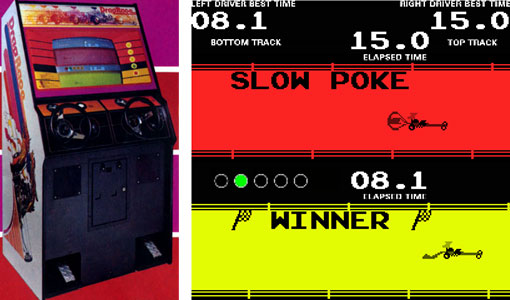
The first two titles come from some of my earliest arcade memories. 1977's Drag Race and SuperBug by Atari and Kee Games respectively. I was barely three-years-old when these games came out. Thankfully like a lot of arcades the late 70's and early 80's was a transition period. The last of the great pinball machines were slowly being weaned out by first generation of videogames. I was fortunate enough to enjoy the best of both worlds during my formative years. By the time I was able to understand the controls of Drag Race it too was being replaced by newer games. However my love of cars blended with this new form of entertainment and I was hooked from then on.

Arcade cabinets were very gimmicky in the early days. Bright colors and unique layouts helped differentiate them from the crowd. Drag Race was one of those cabinets that immediately caught my eye. It had a split screen, in (limited) color, when so many other games were still in black and white. Two sets of steering wheels, gas pedals and a gearshift as well. This was an electronic version of one of my favorite forms of racing, this was the future!

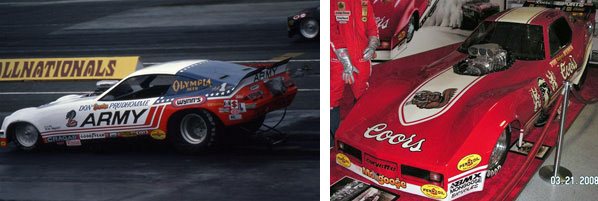
Drag racing has its roots in hot rod culture. For as long as people have had cars they've wanted to go fast. As a kid my obsession was highlighted in the televised rivalries of people like Don "the Snake" Prudhomme and Tom "the Mongoose" McEwen. I was taught to respect women as Shirley Muldowney and her pink dragster put up awesome races against the legend Don Garlits. My collection of Hot Wheels grew exponentially to reflect this newfound love of drag racing.

The magic of the Atari game was in the balancing of all the dragster components. Keeping a careful eye on the RPM's, knowing when to shift and how much gas to give the dragster. Push the pedal too hard or miss a shift and you would get a blown engine. Avoiding the walls through touchy steering also kept arcade players on edge and the races close. This game, like the sport, wasn't for everyone. Often times I would find it alone in the arcade. Atari like the rest of the industry were experimenting will all sorts of arcade games. Experimenting with control schemes and features just to get players interested. While Drag Race was a niche game in a (then) niche part of the entertainment industry, the idea of shifting gears and combining with a gas pedal was a welcome advancement.

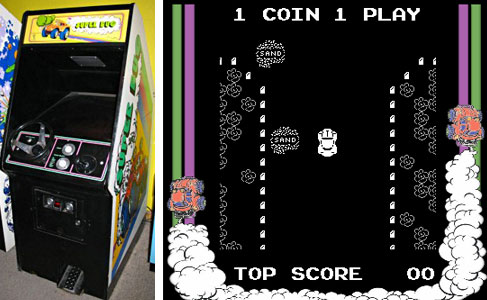
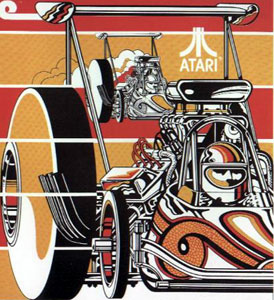
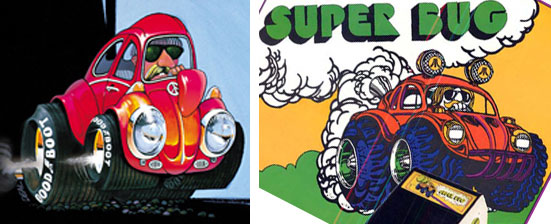
Kee Games came out with a racing game called Super Bug that same year. It used a similar gear shift setup but this was more of a road racing experience. Even as a kid I found it funny that oil slicks and sand were clearly marked in the game. Although the game was in black and white it seemed to attract more players than Drag Race. In addition to driving and racing I was attracted to the cabinets because of the bright graphics. Early arcade cabinets had to compete for attention against the better painted and better illustrated pinball machines. The in-game graphics of arcade machines weren't doing the job so designers had to sell the game with good art. The most memorable cabinet illustrations sold us on a theme or plot. The illustration on Drag Race was very colorful, it had a lot of late 70's / early 80's design aesthetics going for it, helping it stand out from the crowd.

I never thought I'd live to see the day that the in-game graphics were as good or better than the cabinet art. Those days eventually came but there is something to admire in classic arcade cabinet art. The mascot character for the Superbug looked very much like a Dave Deal illustration. Of course I wouldn't learn about Deal until much later, but as a kid I loved the exaggerated proportions on those cartoon cars.

While they lasted in the local arcade I managed to enjoy them immensely. Unfortunately both games didn't remain too long in the arcade as the next round of driving and racing titles were coming in. So where did the legacy of those early driving experiences of Superbug and Drag Race lead to? Come back tomorrow to find out.

Did you ever play any of the first generation of arcade racing games? Let me know in the comments section please. As always if you would like to sponsor me please visit my Patreon page and consider donating each month, even as little as $1 would help make better blogs and even podcasts!
follow the Street Writer on Patreon!

Wednesday, June 14, 2023

Pole Position, king of the Formula-1 racers - Originally published on 1UP - March 19, 2009

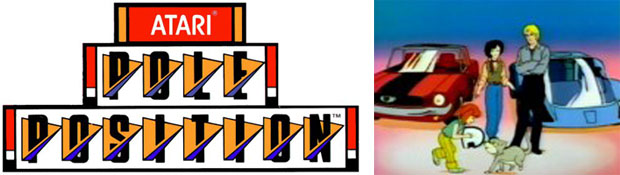
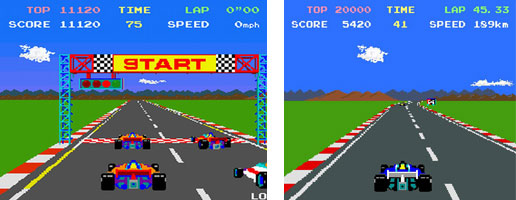
Pole Position, released in 1982 is a legend to gamers. Those that grew up in the arcade could never forget the intro music and line "Prepare to qualify." If ever there was to be a hall of fame for gaming then consider Pole Position to be the first racing game inducted. It's bright graphics, large car sprites and demanding control defined the first great attempt at making a modern racing game. The billboards in Pole Position featured popular Namco characters like Mappy and Pac Man, further ingraining itself onto our young impressionable minds. It was so popular that it even spawned its own Saturday morning cartoon.

The original Pole Position earned many a fan but when the sequel came out it really found its groove. Pole Position II introduced three new tracks, one of which was based on my beloved hometown track of Long Beach. The inclusion of Seaside won over a lot of the people in the southland including my friends and brothers. Both versions of Pole Position were very demanding. The cars were very delicate and the slightest bump would cause them to explode. Like Monaco GP there was a high and a low gear, nothing inbetween. High score runs required amazing reflexes and solid racing strategies, making it a frustrating at times but still a highly enjoyable experience.

Most racing game fans cut their teeth on Pole Position. They will always have a soft spot for the title even with the age of the PS3 and Xbox 360 racing juggernauts.

It comes down to more than nostalgia as the game continues to find audiences with the Pole Position Remix for the iPod / iPhone. I salute this arcade gem for helping push the world toward more realistic racing games. However the Formula-1 game that I played even more than Pole Position or Super Monaco GP was the one that was least realistic. Come back next week to find out what game that was! But be sure to come back tomorrow as I have an extra special interview lined up for you.

Did you ever enjoy this classic arcade game, or did you play it on the home consoles? Let me know in the comments section please. As always if you would like to sponsor me please visit my Patreon page and consider donating each month, even as little as $1 would help make better blogs and even podcasts!
follow the Street Writer on Patreon!

Monday, June 12, 2023

Monaco Grand Prix, remembering a legend - Originally published on 1UP - March 18, 2009

Japan never went through a hot rod renaissance, a whole DIY culture built around hopping up pre-war iron. The topics I spoke of last week with regards to hot rod culture, car caricatures and drag racing were almost completely unknown in Japan. Auto racing they understood and also arcade gaming. The combination of both made for a couple of the greatest arcade titles ever, the Monaco racing series.

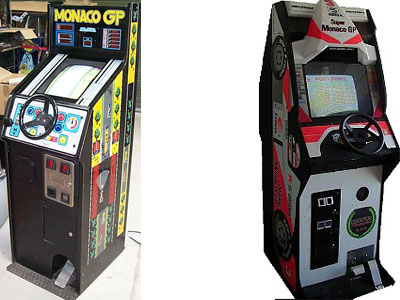
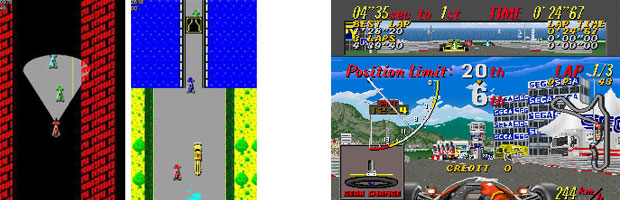
The original Monaco GP released in 1980 was possibly the first racing game that I remember being in color. It was also unique to me in how it played and how the graphics were presented. The steering wheel and pedals were similar to the earlier racing games from the US, but the 4-speed gear shift had been replaced by a 2-speed shift. Like other Japanese racers people could move between low and high and high gear and pray that nothing was in the way while in high gear. Most of the Atari and Kee Games racing hits of the time were from a top down perspective where players saw all of the track and controlled their car as they drove around. Monaco GP continuously scrolled up where paths and opponents would constantly be changing. This game also went into tunnels where drivers could only see opponents that crossed in front of the headlights. This added a very interesting dynamic to the game. However as fun as this game was in the arcade, it was not an accurate reflection of actual Formula-1 racing. This was Sega trying to figure out what the whole racing genre was about, a decade later they had just about perfected the template.

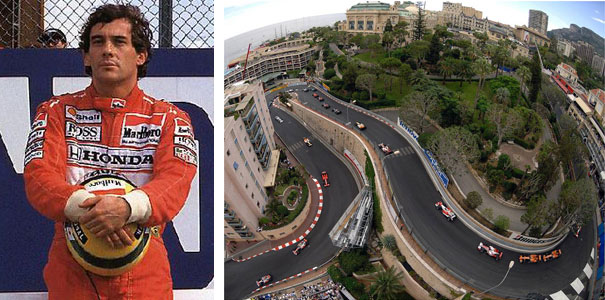
Super Monaco GP was the definitive racing game in the early 90's. Sega capitalized on a great gaming engine and an even bigger name. Ayrton Senna was the racing prodigy from Brazil. His name was growing by leaps and bounds and was on the fast track to surpassing every major sports star ever. He was a charismatic driver with an amazing ability and a big heart. His life was about racing on the biggest stage and fans adored him for it. Sega signed him to be the poster boy of Super Monaco GP, the cap on their F-1 racing legacy. Whereas the original Monaco GP played nothing at all like a real race the new title was extremely accurate. The track was based on the real-world Monaco, one of the most beautiful and challenging courses in the world.

The F-1 car is the pinnacle of racing machines, with a wide stance and a low profile it is the jet fighter of the automobile world, seemingly flying around the track and subjecting the driver to obscene g-forces. If the F-1 is a jet fighter then the top fuel dragster is a rocket ship. For only the dragster can claim to go any faster or push the driver any harder... however that is only in a straight line. Most racers around the world dream of competing on the global F-1 circuit. To achieve a world wide celeb status rivaling any sports or Hollywood superstar.

Sega's new and improved cabinets for Super Monaco GP featured more accurate steering wheels, gas and brake pedals. Where they were superior to every other racer to-date was in the shifting department. Gone was the unrealistic low and high gear from the early Japanese games, gone was the clunky 4-speed from the American games. Super Monaco GP had force feedback steering but that was not its major advancement to the genre. It was the first arcade game to feature the paddle-shifters. These were tabs located underneath the steering wheel where drivers could shift gears by fingertip. Paddle shift technology was just then being introduced into real F-1 racing and had become the next evolution in transmissions. Today we can find paddle shifters on several performance cars and daily drivers, but almost 20 years ago this was cutting edge tech and only available on the most expensive racing cars.

The new Super Monaco GP was also set in a cockpit view with a rearview mirror and gages set up on the display. Races at this level can sometimes come down to microseconds so all of the important information had to be available on screen. The position for the grand prix itself was even determined in qualifying, unlike other racing games where you usually start dead-last. There was some repetitive AI that could be exploited on the circuit but all-in-all this was an amazing game that made a decent transition to the Genesis. This was serious racing and despite the lack of polygon technology Sega managed to capture the look and feel of Formula-1. 

I remember visiting the arcade in the Lakewood mall over and over trying to set new track times. There was a player that frequented it also and we never crossed paths except for seeing our respective names on the leader board. One day I was playing when the other person happened to walk into the arcade. That day I did the impossible, I qualified in the pole position using an automatic transmission. The other player couldn't believe it, he'd never seen a qualifying time that fast and in automatic, he asked if I was the NOE guy. I said "yeah, you must be AARON." He nodded. He told me that I really should switch to manual if I wanted to capture the top times. The auto transmission option prevented players from reaching maximum speeds in the game, it was a baby setting that I had grown used to. Somehow I made it work as Aaron and I battled for the top spot for months. It's a lot harder to beat the game with an automatic transmission but I'd done it time and time again. When I finally got used to the paddle shifter I became unstoppable on the game, pushing myself and the car as hard as Senna seemed to do year after year.

My memories of the original Monaco GP and Super Monaco GP were tempered by the untimely passing of Ayrton Senna. A few years after the game's release he lost control in a race and hit a wall in San Marino, dying on impact. I've never had a racing hero pass away doing what he or she loved. I've seen them get wrecked, catch fire even, yet always walk away. This was a grim reminder of the life they pursue and the ultimate price for living on the edge each and every race. It served to remind me of my own mortality. Someday I would pass on, would I be remembered, and be loved for all-time like Senna or would I fade away into obscurity? I grew up a lot in the mid-90's yet my passion for car games never diminished. Tomorrow I'll look at the game that got the entire planet into Formula-1 racing. Those that have been around for a while should already know what it is. I hope to see you back.

Did you have any favorite race drivers? Or did you ever follow Formula-1? Let me know in the comments section please. As always if you would like to sponsor me please visit my Patreon page and consider donating each month, even as little as $1 would help make better blogs and even podcasts!
follow the Street Writer on Patreon!

Friday, June 9, 2023

Monster Jam versus Double Axle, the monster truck showdown! - Originally published on 1UP - March 17 2009

NOTE: I have the original images for this blog, but I could not find the original HTML files. So I'm rewriting it from memory. I hope you understand.

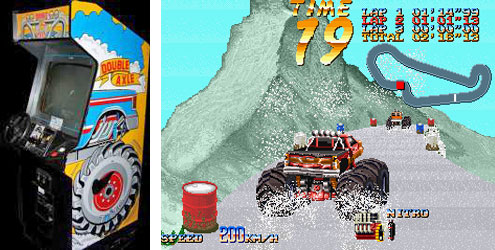
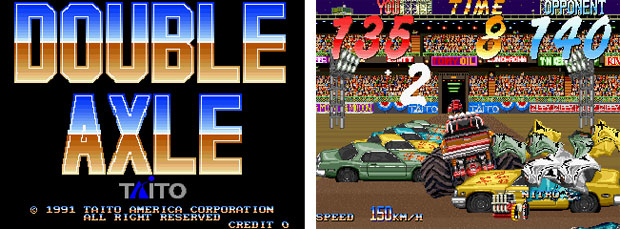
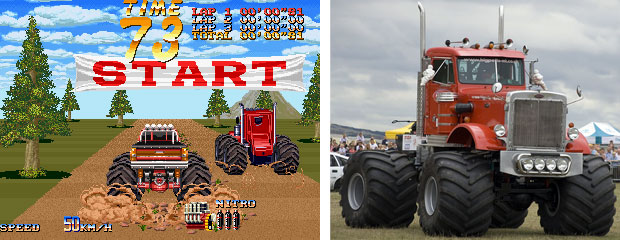
When Bigfoot debuted on the NES in 1990 I was almost certain that there would never be a good monster truck game. All of that quickly changed the following year. I was on a high school trip to Knotts Berry Farm when my friends, and I decided to see what arcade games they had. I almost had a heart attack when I saw a monster truck-themed arcade cabinet. I instantly ran over to check it out. I'm pretty sure no one was playing it, otherwise I would have knocked them down to get my hands on it.  I was surprised to see that it was developed by Taito. I knew they made solid arcade games in many different genres. Arkanoid, Bubble Bobble, Darius, Double Dragon, Rastan, The Legend of Kage, and Superman were just a handful of hits that were well known to seasoned players. Double Axle played like an over-the-top American version of an earlier Taito hit known as Chase H.Q. The controls were very similar in that you had a low gear, and high gear, plus a boost button to run down opponents. 

Double Axle was what every young boy in the '80s had wished a monster truck racing game could be. You took control of an unnamed truck, and entered one of three main races. The Cross Country Race, Icy Road, and Mud Bog Race. You were up against other trucks, and even a monster van, and giant diesel truck as well. The tracks were spread across all sorts of terrain, including dirt, mud, high water, snow, gravel, asphalt, and sand. You could also roll over some boulders, fallen logs, and even plow through trees. The trucks were unstoppable. No other racing up to that point even came close to capturing the raw power of a six ton, 1000 horsepower monster truck. As long as you finished in the top three then you could advance to the next race. Extended plays weren't always the rule in racing games. Even better than that was that there was a bonus race in between each race.

The Night Stadium, High Way, and Sea Side Crushing Race were the bonus stages in between rounds. This time it was a one-on-one challenge where the objective was to destroy as more obstacles than your opponent. These included cars, busses, billboards, tires, barrels, and anything else that was tossed on the track. If you managed to complete all of the races, and bonus stages then you were rewarded with the final challenge. It was labeled Car-Crushing!! but turned out to be a monster truck demolition derby. You could imagine how much that kid in me was losing his mind! You had to destroy nine other trucks in 120 seconds. Including an enormous black cab diesel truck.

I implored my friends to enjoy the rest of Knott's Berry Farm, I had no intention of leaving the arcade until I ran out of money. They asked my older brother if it was okay to just leave me there. He said to trust me. He knew monster trucks were my life, and I would be having a blast all by myself. Surprisingly it didn't take me too long to figure out the stage layouts. I must have spent $6 in total playing, and mastering the game. The only downside was that the cabinet had a bad turbo button, I would have to mash it extra hard to get it to kick in. I had burst a blood vessel in my finger slamming it on the button over, and over. It got swollen, and I spent the rest of the trip with my finger in a cup of ice. Knowing I had beaten the game made the pain worth it. I would see it randomly in other arcades, and if the turbo button was working could beat it on one quarter just about every time. I only wish that Taito had released this on their compilation disks. 

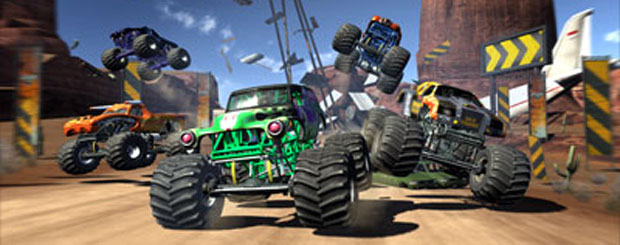
Sadly there wouldn't really be any great monster truck games for the home consoles. At least not to my standards. Monster Jam had taken over the airwaves in the early '90s, and had redefined what monster truck competitions were about. I wrote a little bit about how Feld Entertainment bought out the monster truck organizing body, as well as the rights to many classic trucks on the blog American Daredevils, the monster trucks that changed the world, part 2. They licensed their stadium tour to developers looking to cash in on the craze. Monster Jam: Maximum Destruction was released in 2002 for the Playstation 2, GameCube, and GameBoy Advance. It was a dismal game, the subsequent releases Monster 4x4 Masters of Metal (2003), Monster Jam (2007), and Monster Jam Urban Assault (2008) didn’t do much better with audiences, or critics. Motor Storm Pacific Rift (2008) for the PS3 helped save the idea of monster trucks within a racing game. There wouldn't be a truly great Monster Jam game in my opinion until 2021 with the release of Monster Jam Steel Titans 2. By then I was content with other racing experiences. 

I never stopped being a fan of monster trucks, and I hope to someday find a monster truck game that captures the magic of the early years. Until then I'll keep digging through the archives looking for new experiences. Were you ever a fan of monster trucks, or lesser known racing games? Let me know in the comments section please. As always if you would like to sponsor me please visit my Patreon page and consider donating each month, even as little as $1 would help make better blogs and even podcasts!
follow the Street Writer on Patreon!

Wednesday, June 7, 2023

Power Drive & Bigfoot, the almost great monster truck games - Originally published on 1UP - March 15, 2009

NOTE: I have the original images for this blog, but I could not find the HTML files. So I'm rewriting it from memory. I hope you understand.

I am and have always been a HUGE fan of monster trucks. On this blog I've written extensively about my obsession with them, as well as a general history of the culture. You can read the posts below:  


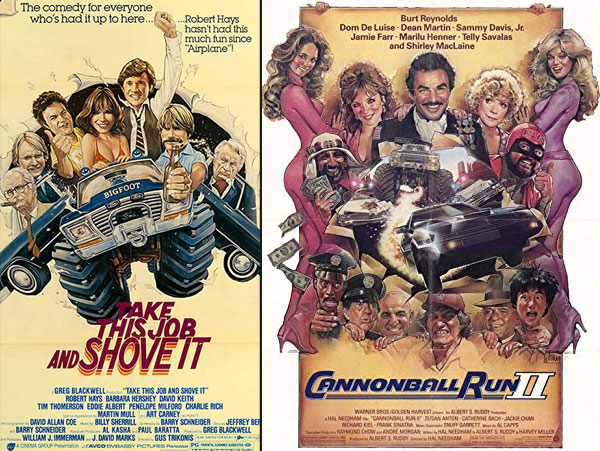
Naturally as a little kid I was drawn to every video game featuring those gigantic trucks, which back in the day were few and far between. To give you a sense as to how little there was for me to enjoy think of it this way. The very first monster truck I ever saw was Bigfoot the King of the Monster Trucks. It was featured in the 1981 film Take this Job, and Shove it. As many young boys could tell you the love was instant. I had never seen a truck as big, and as bad. Unless you were like me, and scouring the 4x4 magazines every month then you wouldn't see it in action again until the television show That's Incredible in 1983, and the movie Cannonball Run II in 1984. 

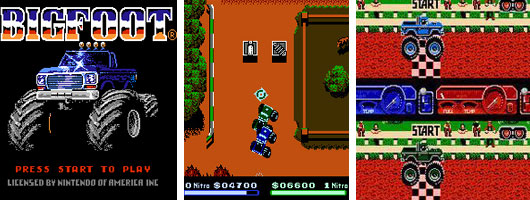
Bigfoot created a new type of off road culture, and when racing against contemporaries like King Kong, and USA-1 had also created an entirely new form of motorsports. It started in the midwest in the late '70s, but would reach global popularity in less than a decade. Yet despite all this Bigfoot wouldn't appear in a video game until much later. I don't think you grasp how painful the wait was for me. I was in elementary school when I first saw Bigfoot, but wouldn't get to play a game featuring the truck until I started high school. When you are young this literally feels like a lifetime has passed. The Bigfoot game was developed by Acclaim Entertainment, and released on the Nintendo Entertainment System in July 1990. By then it seemed to be too little too late. Worse yet it was built on outdated technology. To put it in perspective the Sega Genesis 16-bit console came out in 1988, and the Super Nintendo would debut in November 1990. Games that were coming out for the 8-bit NES were less, and less notable. 

Bigfoot on the NES turned out to be a popular, but ultimately a crappy game. I'm sure if it had come out four years sooner my opinion on it would have been different. The game was split between overhead, and side-scrolling racing. Careful timing of using boosts and weapons helped ensure a victory. I couldn't afford a copy as a kid. Thankfully I could rent it for a buck from the local video store. I got a chance to play it during a sleepover at my friend's house. He knew I was a huge fan of the truck, and made sure that it was one of the games we had rented for the weekend. I managed to destroy all of the levels with a little practice. Visually the game was nice, but limited. After playing for most of the evening I quickly grew bored of it, and looked for other challenges. I was glad I didn't buy it on day one. I might pick it up for much less today just to have it in my collection. 

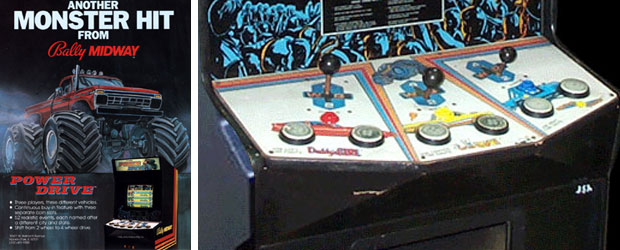
It would take a long time for a decent monster truck game to appear. The first one of any merit was Power Drive by Bally Midway. It was a mildly successful arcade game from 1987. There was actually one at my local bowling alley arcade. After playing it a few times I was disappointed in the execution of it. It showed how little developers knew about monster trucks, or how they could work in video game form. You could tell something was wrong with it by just looking at the cabinet. There was a gear shifter, and two buttons, but no steering wheel, or gas pedal to control the action. It wasn't like the technology to steer video game cars didn't exist. Atari had introduced that into arcades in 1974 with the game Gran Trak 10. 

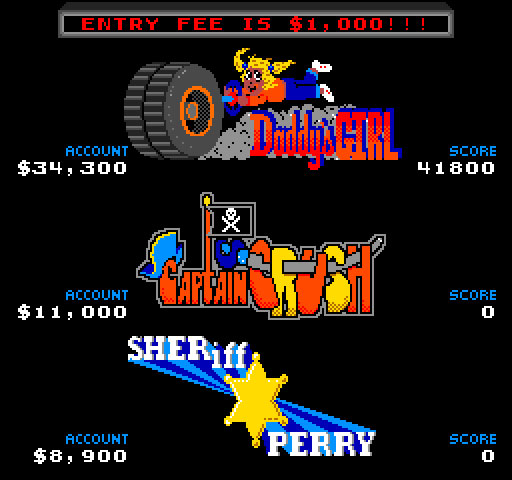
As with other Bally-Midway 84-86 arcade titles, Power Drive was designed to separate you from your quarters as fast as possible. You earned credits by winning competitions, but also had to spend credits paying entry fees, and fixing up your truck. So no matter how good you were you would eventually run out of money, and had to put in another quarter to continue. This game was just about pushing the buttons as fast as you could, and executing timed boosts. Sort of like Konami's classic Track and Field. Only this time you were crushing cars, instead of jumping over hurdles. Power Drive featured the staples of early monster truck competitions, these included car crushing, sled pulling, wheelies, and long-distance jumps. It was fun but you would wear out against the ruthless computer within a couple of rounds. 

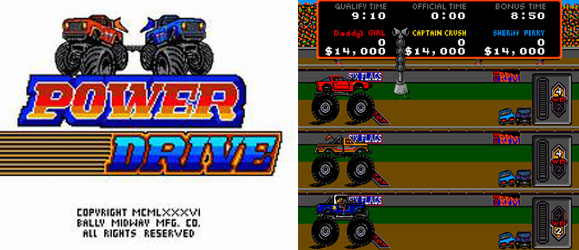
The thing I enjoyed the best were the graphics, and three playable monsters. There was a red corvette nicknamed Daddy's Girl, a yellow truck named Captain Crush, and a blue Jeep named Sheriff Perry. The computer controlled truck was called Black Lightning. They reflected the imagination that went into early monster trucks. They were all unique. In the early days there was no template to work from. The builders of the first generation of monster trucks were experimenting with different frames, engines, tires, and building techniques. No two looked alike, and I was grateful for their creativity. After the disappointment of Bigfoot I had just about given up hope that there would ever be a good monster truck video game. That literally changed one year later when an amazing game appeared out of nowhere. I'm going to talk about it in the next blog.

Were you ever let down by a video game you were waiting on? Let me know in the comments section please. As always if you would like to sponsor me please visit my Patreon page and consider donating each month, even as little as $1 would help make better blogs and even podcasts!
follow the Street Writer on Patreon!

Monday, June 5, 2023

The origins of the Monster Truck - Originally published on 1UP - March 14, 2009

I wasn't fortunate enough to have lived through the early hot rod era. My only exposure to those pioneers and their radical rides came from model kits and Hot Wheels. Sometimes I'd catch a car show on TV or see the rare rod on the street. Still, I longed for the days of do-it-yourself car culture. Where mechanics were breaking new ground and creating cars that were unlike anything before. Where the horsepower was in excess and the rods were making a real statement. I thought those days were long gone, especially during the era of Le Car. But in the midwest there was something brewing. The big city boys had their day in the sun and those in the heartland were making advances on their own time.

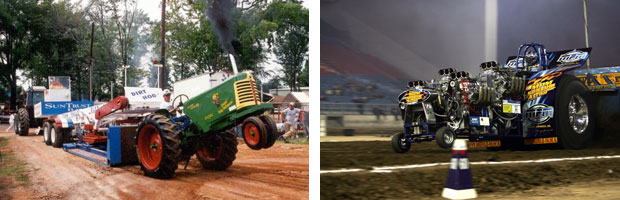
The mechanics on the farms didn't have the luxury of perfectly paved roads or a cruising scene. They, like most guys, were still drawn to the call of horsepower. The heartland was not without its own variation of D-I-Y hot rod culture. So they began tinkering and modifying their own rides or farm equipment. The natural tendencies towards competition led to the creation of the tractor pull. A contest where dragster-like horsepower was harnessed to have the tractors dig into the soft earth and pull a weighted sled the furthest distance. This was a show of power rather than a contest of speed. The modern tractor pull contests started around the same time as hot rods were warping the minds of pop culture. Rules, classes of tractors and distances were agreed upon leading to the formation of a National Tractor Pullers Association, a contemporary to the National Hot Rod Association. The tractors would begin mutating and becoming freaks with multiple engines, bright graphics and sponsors. In a way they looked like stocky cousins of dragsters, made big and strong by working on the farm while their slim big city cousins got all the attention. It was the subsequent innovation to hot rodding that caught the world's attention.

For those that lived in the hills horsepower was better put to use in making trucks and buggies that could crawl through the mud, climb over rocks and still get people to work. The D-I-Y mentality went into making rides with plenty of horsepower, greater ground clearance, a tighter turning radius and large tires that when combined made a statement to counter the low-slung rods of the west coast. At car shows and tractor pulls these modified trucks would show off for the crowd. Mechanics would try to find ways to one-up each other. Trucks with bigger engines, tilting cabs, wild suspensions or some other gimmick. The man that would become a god to young boys all across the USA was named Bob Chandler. His truck was named Bigfoot.

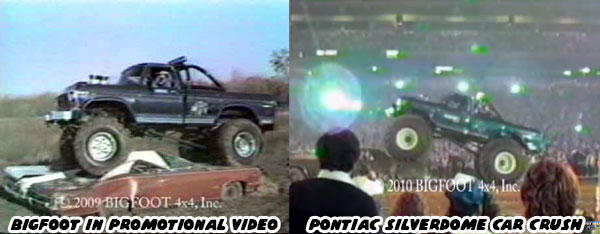
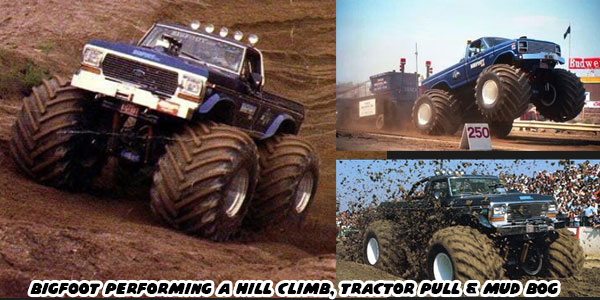
Before it became a legend it was one of those trucks shown off at tractor pulls. It ran courses of mud bogs and tractors pulls at the shows. It had large tires but not the massive ones. It did have a powerful racing engine that made it a threat on the street as much as off road. It even featured a unique double steering mechanism so that the driver could rotate both axles and turn super tight or even crawl along almost sideways in a "crab walk." Bob labeled his innovative truck a 4x4x4. There were imitators already following closely behind. People loved the truck already but it was a promotional video that Bob and his wife put together for their 4x4 shop that really got people talking. To show off the climbing ability of his truck and differentiate it from the rest he drove over some cars a few times. This was more than show of horsepower, it was an atom bomb on the collective car-loving consciousness.

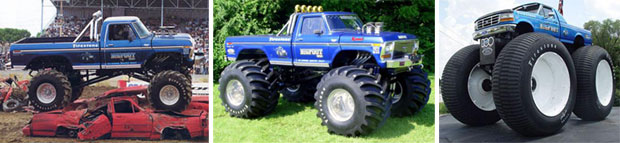
The news spread quickly. There was a truck, a "monster" truck that could destroy and car it came across. This truck became a sensation at tractor pulls and car shows. In 1983 the Silverdome was packed to capacity to see the legend perform something which had only been seen on tape. Chandler swapped out the regular off road tires for massive 66-inch Firestone tires. The crowd was on its feet. The air was charged with electricity, as if 60,000 fans thought they would witness the impossible. Bigfoot edged up to some junkers and thousands of flashbulbs went off at the historic first public showing of a car crush. The world would never be the same. Bigfoot went on to celebrity status, eventually becoming an institution. Chandler lead the curve, making subsequent generations of Bigfoot trucks bigger, better or faster than the previous.

The era of the monster truck arrived and imitators came out overnight, each with their own nickname and gimmick. Some were larger, had engines pulled from aircraft, bodies made of sports cars, could crush buses... you get the idea. The first generation of monster trucks, the stars of the 80's were arguably the most memorable. They all had an incredible D-I-Y feel about them as no two monster trucks looked the same. Each brought a different interpretation of what a monster truck should be to the venues. When they moved the earth shifted underneath them. When they crushed cars it was slow and methodical, as if the cars were being punished by the gods. It was a show of brute force that had no equal. The type of show that young boys adored, the type of show that made them want to grow up and make a monster truck out of the family car.

The owners were usually also the drivers and mechanics that put them together. Each builder taking their own approach to suspension, engine, transmission and safety equipment. All carefully protecting their secrets. Echoing the first generation of hot rod builders and their early dragsters. These monsters had a supernatural air about them. The car crush was the first format of monster truck racing. It seemed that car crushing wasn't enough to slow down these beasts so promoters began inventing new formats of racing, each more spectacular than the last. Contests became hybrid tractor pull, car crush and mud bog contests. Even multiple obstacles didn't slow down the trucks. Popular culture was smitten by the monster truck bug. For the first time in a long while those in the city began emulating their country cousins. The monster truck would turn up in movies and make cheesy cameos on TV. All of this exposure would only serve to signal the end-times of the classic monster truck.

Money follows popular trends. This leads to advances in the culture. Years before sponsorship money made dragsters get lighter, go faster and be much safer. Dragsters were no longer whittled down from the frames of cars but instead being build by welding steel tubes together. The days of the owner, builder, racer were passing and teams of dedicated specialists were put together. Something similar happened with monster trucks. The trucks were becoming lighter, faster, stronger and safer thanks to sponsorship money. Trucks were built from steel tubing rather than stock frames. Bodies were molded in fiberglass and suspensions were rivaling the best pro off road race trucks. To me this was when the monster truck had lost its magic, its connection to the hot rod world. They had become more Travis Pastrana and less Evel Knievel, very stunt oriented without a hint of daredevil. The modern trucks were all tube frames and fiberglass shells, cookie-cutter trucks that could be dolled up for a sponsor. A paint job was the only thing that made them different. These trucks now prance and jump over cars and obstacles rather than really grinding them into the Earth. The monster truck had come of age but their owners, drivers and builders would come at odds with each other. When fame and money were involved then ego became the biggest failing to the monster truck.

In the early days of drag racing big money and big egos made for some splits within the community. Who should be paid and what amounts. Ticket sales, concessions and venue should all go to property owners? What about sponsorship at the tracks and rival companies? Would team owners receive the lions share of money or would drivers or mechanics see fair compensation? Not everybody came to an agreement so hot rod and by default drag racing associations were splintered groups such as the International Hot Rod Association and the National Street Rod Association. One of the oldest hot rod groups actually took control of and the organization of early monster truck races. The United States Hot Rod Association pretty much dropped it's hot rod legacy and became the Monster Jam venue. Saying that rival the National Hot Rod Association didn't understand the unique nature of tractor pulls, mud bogs and monster trucks. Even other monster truck groups began organizing such as the Major League of Monster Trucks and the Monster Truck Racing Association. Each claiming to represent real monster truck racing.

By the time this happened I had walked away from the scene. Politics and the changing public tide had taken my beloved monster trucks. There was little to console me as the gaming scene had rarely been kind to the genre. Tomorrow I'll talk about the monster truck games that were almost good.

Was there ever a car culture movement that you followed? Let me know in the comments section please. As always if you would like to sponsor me please visit my Patreon page and consider donating each month, even as little as $1 would help make better blogs and even podcasts!
follow the Street Writer on Patreon!

Friday, June 2, 2023

The True Adventures of George Trosley! - Originally published on 1UP - March 13, 2009

George Trosley is an icon from the CARtoons era. He was one of their most prolific contributors and is still drawing strong to this day. In addition to his own website Troz also keeps the spirit of the magazine alive with a CARtoons info page. Anybody that was ever a fan of the magazine remembers "Troz" for two major reasons. He had a regular section in the magazine teaching readers how to draw cars which provided step-by-step instructions on just about every legendary make and model, including tips on creating paint schemes, drawing chrome and metallic effects and Newt-like animated cars.

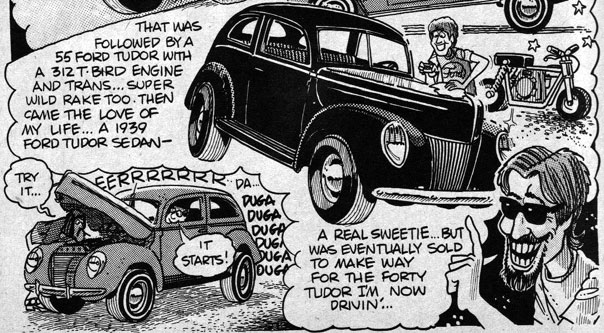
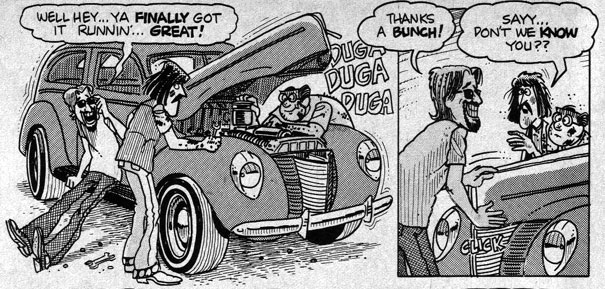
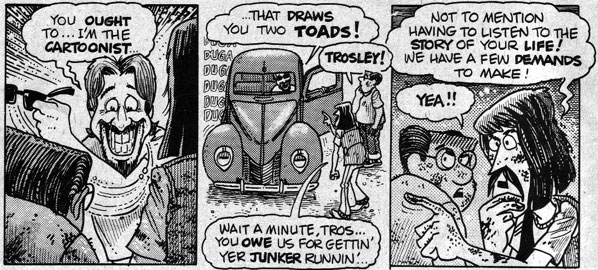
Fans would also remember Troz for his Krass and Bernie stories. Krass and Bernie were two good friends that shared all sorts of adventures. Their escapades revolved around building hot rods, racing or just cruising around. Sometimes the stories didn't always work out for Krass or Bernie but they were always memorable. They remained kids at heart, they were into models, riding BMX or skateboarding when they weren't building cars. These two were living the life that many teen boys (and a few adults) wish they had. Through his talent for cartooning and some of the cleanest and most detailed panels to grace CARtoons Troz made his love of hot rodding tangible.
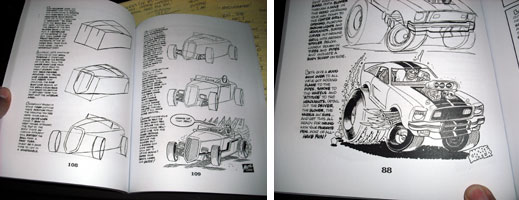
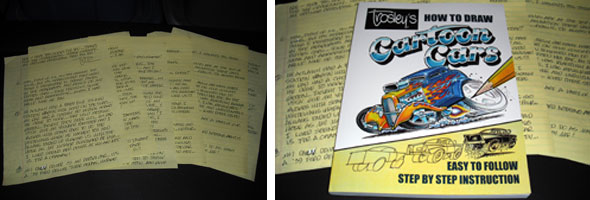
Troz' "How to Draw" parts of the magazine taught me a lot about illustration but in the art of storytelling I learned even more as I poured over the Krass and Bernie adventures for years. There weren't any cartoonists that I wanted to interview for this series more than Troz himself. When I e-mailed to ask if he was available for an online Q&A he said yes. Unfortunately he also told me that he's not much into computers so typing responses would have taken him a long while. So he offered to write down his responses and mail them in instead. It certainly was a humbling gesture. The interview you are about to read was all jotted down by hand. When I got the letter I was blown away. It was written in the familiar handwriting style that he uses in the Krass and Bernie comics.

I'd like to return the generosity and let all of my friends and visitors at 1UP know that the Krass and Bernie compilations are available on his website along with his impeccable How to Draw book. Help put his kid through college and order something, or a few things!
So now let's get onto the questions!

Noe V.: Troz you honor this random blog on 1UP. May I take a moment to say thanks for Krass and Bernie, thanks for the How To articles and thanks for being you! I have a million (or slightly less) questions, where do we begin? Ah yes, when did you first get bit by the car bug?
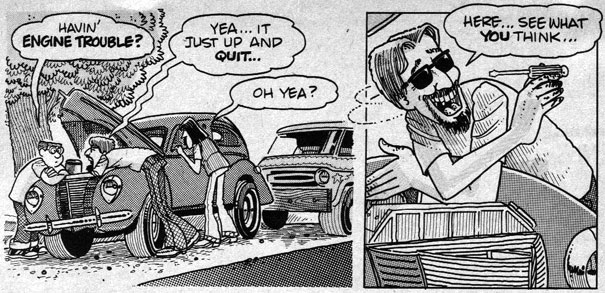
George Trosley: Well, first of all, you are wayyyy too kind... but it's appreciated! First carzy thing I remember is seeing faces in the headlights and grills of mid fifties cars. Some friendly, some mean and aggressive. Guess I was about nine or ten.

NV: What were your favorite cars growing up, any favorites that the parents or family drove?

GT: We actually had a baby blue '54 Ford Station Wagon with wood on the sides. My dad had a cherry 50 Hudson Hornet he drove to work, that wild metallic green. Thought they were cool. My dad usta' give my younger brother and I buckets with soapy pads to do the whitewalls when he washed 'em and always ended up soaking us with the hose as my mother screamed at him. I loved seeing her holler at him and not us for a change!
NV: What is your daily driver and what is your dream car?

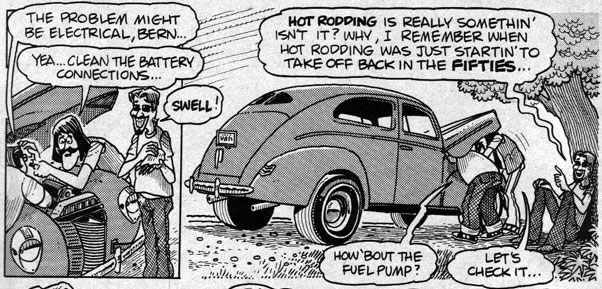
GT: My daily driver is my dream car. It's a '39 Ford Deluxe Tudor Sedan. Vintage burgundy, grey interior, 400 Chevy small block, auto trans., Ford 9" Mustang II independent front suspension. I am in love!

NV: Can you describe your local car scene while growing up?

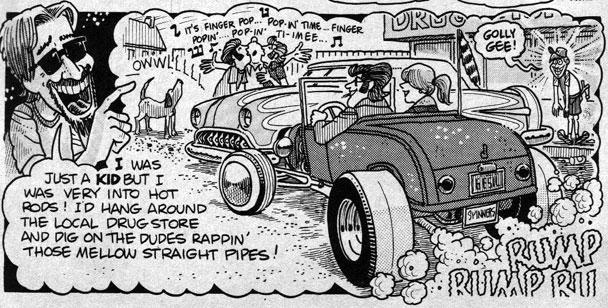
GT: Well it wasn't like the '50's you see represented now. We'd ride our bikes down to this sandwich shop where all the delinquents hung out to check out their cars. No nice paint jobs, lotsa junkyard fenders and hoods. These guys usually were trying to bring back a wreck from death... but it was cool over time to see them get primered. Then maybe cool hubcaps, duals... y'know, the usual stuff. I couldn't wait to grow up and get a license... and a car!
NV: Did school shape your love of cars and art or were teachers annoyed at your hobbies?

GT: I was lucky. I had a lot of teachers encourage me. Get me to draw maps and posters about whatever we were studying. I even did cartoons for the grade school newspaper.

NV: Were your parents or friends influential or supportive of your art?

GT: My dad could draw really well and taught me a lot. He was a major influence although he only drew as a hobby. But both my parents were very encouraging.

NV: Who were your car art inspirations, or your car customizing heroes?

GT: Ed Roth, Mouse, George Barris, the expected 50's and 60's stars. And I loved car magazines. Still have 'em all!

NV: When did you discover your talent for art? When did you know that art was something you wanted to pursue?

GT: I don't ever remember not drawing. My mom said she could always keep me quiet with a pencil and piece of paper.

NV: When were you first published, who gave you your big break?

GT: I sent some stuff to Pete Millar for his magazine Dragtoons but he'd sold it. The new owner used some of my stuff but of course never paid me. I saw it in a second-hand magazine store and was totally blown away! I quit my big studio art job. I was twenty four at the time and on the strength of this!!?!! I set my sights on trying to break into Peterson's CarToons, Cycletoons and Hot Rod Cartoons. And before too long began selling them stuff. I was thrilled!
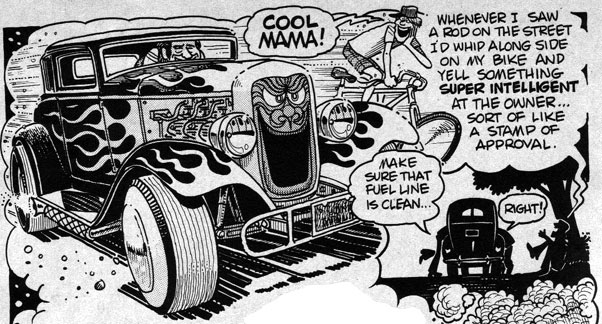
NV: I've been a fan of CARtoons magazine all my life. Krass and Bernie are the definitive hot rod guys. They live, breath and eat rods day and night. Given a choice I think most guys would rather be living like your characters. Is it true that they are based on you and your brother?

GT: Yes, and a garage we rented to work on our cars. We always wanted to throw a plywood floor up in the attic and move in. We never did but Krass & Bernie did!

NV: When they are not racing around in rocket sleds and nitro-snorting wagons Krass and Bernie also have a child-like innocence about them, they still love modeling, slot-cars, remote control kits and even skateboarding and BMX. Is this a recognition of the converging rod-surf-skate-rock cultures and celebration of your childhood?

GT: Hot rodders never grow up! That's the beauty of it!

NV: Are there some hobbies you've never outgrown?

GT: Yes, cars and girls. What else is there?

NV: What life lessons have Krass and Bernie taught you?

GT: K&B and the whole car community have taught me that good brings good. We all share this love of cars and fall all over ourselves helping each other. It's amazing! Shame the world can't be more like us!!!! 
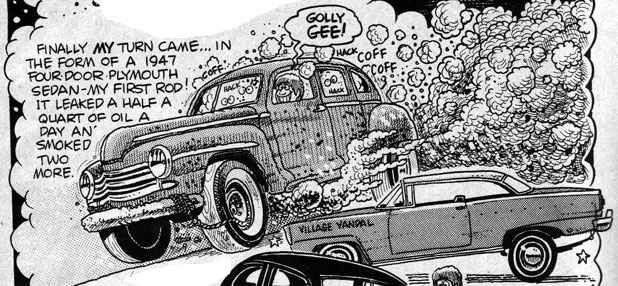
NV: You are also notable in hot rod circles for your thorough "How To" sections in CARtoons magazine. I certainly learned a lot by following along. How is this approach to art similar or different from what you learned in school?

GT: Over the years I ate up everything I could find about drawing cars. I'm basically passing on what I've learned from others with a lick or two of my own.

NV: The best car artists have an insane amount of knowledge about the auto industry. The evolution of designs and origins of hot rod and customization culture are second nature to people like you. Is part of being a good designer also part of being passionate about the subject?

GT: If you love something you'll always go the extra mile or two... or three... or four...

NV: How is recognizing the past important to an artist?

GT: It's good to see what came first and how it was built upon by the others coming next. Like seeing a frame or the car and watching it go together. And hey, everything old is new again.

NV: Do you ever feel that some artists and designers within the auto industry lack a historical understanding?

GT: I really don't know. I think they'd be interested.

NV: The Big Three are in bad shape right now. How would you feel if they were to close their doors?

GT: Terrible! It can't happen.

NV: What would the impact be on the car art and customization community?

GT: We're into the older stuff. We've got what we want.

NV: Do you see a chance for these companies to restructure and possibly herald a new era in US automotive ingenuity? One that works on alternative fuels technology, restructures the workforce and yet retains a racing legacy?

GT: Absolutely, they're already doing it. 
NV: I want to keep picking your mind about car culture but am afraid my friends would begin having fits. This blog is on a gaming site after all so I have to bring in that community. Are you or your kids into videogames?

GT: My son has always loved 'em. He just started college and his main concern was hooking up the Xbox in his dorm room.

NV: Parents had concerns over rock and roll, comic books and hot rods warping young minds. The new pop culture demon may very well be videogaming. Can you see the flipside to gaming as a hobby or pastime?

GT: Yes, we're training our youth to run the world. Educate themselves and fight the next war by remote control. Guess it's a step.

NV: Have you been approached to design vehicles for any games? Would you look forward to the challenge?

GT: I would but no I haven't. Tell them I'm ready!

NV: Do you think that the next generation of animators and designers in the entertainment field could learn a lot by taking classes in car and even rod design?

GT: I think these guys are at the top of the game. The animation these days is astonishing really. I'm always blown away!

NV: Car culture has seen some legends leave us in the past few years. A few were heroes an inspirations from the pages of CARtoons. What could you tell us about Ed Roth, Shawn Kerri and Dave Deal? Any funny or favorite stories to share?

GT: I saw Roth at a Philly car show when I was a kid and sat on cold concrete all day long. Even followed him to the bathroom, watched him eat. By the end of the day he was playfully blowing air brush air at me. I was mesmerized! Only met Shawn once and unfortunaetly never met Dave Deal. Loved their stuff!
NV: What was your reaction to the Disney / Pixar Cars movie? What about the ongoing Car Toons series featuring Mater?

GT: People love it. Cars are part of our lives.

NV: I know Petersen Publishing is undergoing restructuring but do you think they'll ever release a definitive CARtoons collection?

GT: I'd buy it! But I haven't heard anything about it.

NV: Barring some sort of publishing miracle, do you think we'll ever see CARtoons return in any format?

GT: I dunno. I'd love it and do as many pages as they'd buy from me!

NV: What have Krass and Bernie been up to all these years? Will we see their triumphant return soon?

GT: K&B have been appearing monthly in Car Craft magazine, turning the muscle car world upside down! Get a subscription!

NV: As I'm interviewing (bugging) the legends of car art this month, I am betting that there is enough talent to bring back CARtoons as a web quarterly. What do you think about that idea?

GT: Cool... you gonna do it?
NV: Are your kids thinking about carrying the Troz torch? You have a son that draws cars, is George the IIIrd interested in becoming a professional artist as well?

GT: He draws well but he's heading for a career in business... and making money!

NV: Will the son be going to art school, has he already begun work on his own car?

GT: No, and he's beating the hell out of a 2000 Corolla. Check that oil GT!

NV: If a budding car artist were reading this interview and wanted to follow in your footsteps what advice would you give them? On schools, building a portfolio and determination?

GT: You got it. You need all three! Learn from the books if you have to. Do samples of your work, send or e-mail 'em to anyone you think may be interested and don't give up!

NV: I told you this interview might be less than a million questions. Any words of wisdom that you'd like to leave the 1UP visitors with?

GT: Get going in a direction. Aim for nothing and you'll surely hit it!
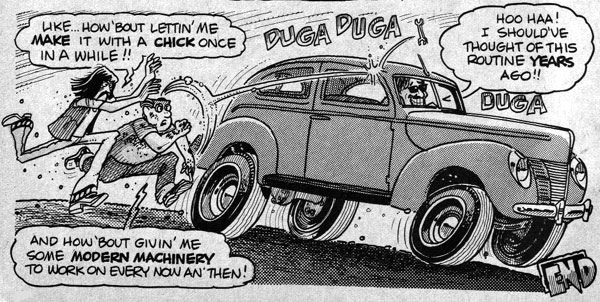
NV: Thank you for your time Troz. I wish you and yours the best and hope that your 2009 is filled with great times and great rides!
Is there a personal hero that you would love to interview? Let me know in the comments section please. As always if you would like to sponsor me please visit my Patreon page and consider donating each month, even as little as $1 would help make better blogs and even podcasts!
follow the Street Writer on Patreon!