Friday, February 20, 2026

Lightning strikes twice, a second rare Oswald item turns up on bidding sites!

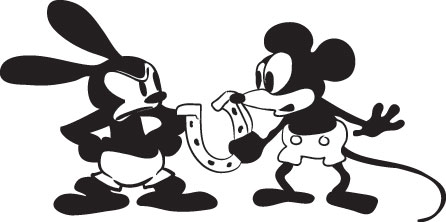
Hello friends, had you heard the saying that “lightning seldom strikes twice?” Well I’m happy to say that lightning struck twice for me. As you might know I’m a huge fan of Oswald the Lucky Rabbit. I had an extensive collection of plush figures, and rare items from Japan, and the USA. Just a week ago, on February 11, 2026 to be exact I posted a blog about a rare Oswald watch that turned up on bidding sites. I talked about how the seller was very greedy, and was asking for hundreds of dollars for a watch that you could have won at Japanese arcades. Its original retail value would have been closer to $20-$30. Well because of that post I decided to jump on the same Japanese bidding site where the watch first turned up to see what was new. Would you believe that the second of the three watches was available for a “buy it now” price?! Even better the price for this watch (after I used a coupon) was $58. I did have to pay for shipping, and a stupid tariff, but given how rare it was I was happy to pick it up.

I now owned two of the three watches from the short time that Universal Studios Osaka was promoting the character in Japan. If I could land the one with the Mickey Mouse hand movement then I would own the whole set. I doubted that it would ever turn up, but if lightning did strike twice for me, then maybe the third time was the charm? Have you ever lucked out when collecting anything? Tell me about it in the comments section. As always if you enjoyed this blog, and would like to sponsor me please visit my Patreon page and consider donating each month, even as little as $1 would help make better blogs and even podcasts!
follow the Street Writer on Patreon!

Wednesday, February 18, 2026

Building a gaming legacy, the Games Workshop series, final part

EDIT 2025: As I was going back through my blog history I discovered that I never wrapped up a series that I started on Games Workshop back in 2016. Sorry for the delay. This post was actually featured on "The Grind 1UP's RPG Blog" in 2012. The links to the rest of the series are at the bottom of this entry. 

One of the greatest contributions that Games Workshop gave the tabletop gaming community were the stand alone games. Some of the best self-contained board games, like Talisman, Hero Quest and Space Hulk were originally created to be an alternate to the larger tabletop systems. Many of the most memorable games were revised and rereleased over the decades. Many of the games however disappeared and would only be supported in a limited capacity through GW's Specialist Games range. The loss of many great games through the 90's was lamented by the long-time GW supporters. The bottom line seemed to be more important to the company than supporting the players.

Tabletop gaming shifted through the 90's with collectable card gaming (CCG) system like Magic: the Gathering and Pokémon the CCG began taking the focus away from miniatures and dice games. Independent studios that decided to stick with miniature gaming had to provide radically fresh designs in order to appeal to gamers. Studios like Rackham from France and Privateer Press from the USA flourished when they introduced their systems to players. It took Games Workshop the better part of a decade to realize that the card based systems were not a threat to their miniature based systems. If anything they could help compliment the Warhammer universe greatly.

The inked a deal with Fantasy Flight Games to develop a series of CCG based on their IP. These games were easy to get into and play and were easily portable, unlike the miniature systems. Like other CCG games there were expansion packs featuring wonderful character illustrations and new scenarios and rules that could help diversify the experience. More important, by going to CCG systems GW and Fantasy Flight were able to resurrect fan favorite games in a new format. Blood Bowl Team Manager took the popular fantasy football system and brought it to a new generation of gamers. Independent game stores reported issues keeping the game in stock. Players were still very much interested in the game even if GW were not really updating the system for miniature players.

The Blood Bowl CCG had everything that two players needed to enjoy the game. It was very reminiscent of the self-contained boxed sets that GW used to produce.

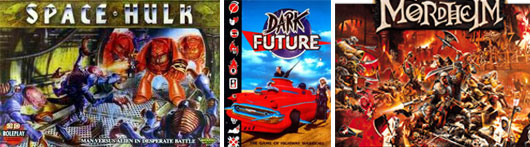
In the past few years GW had been listening to the long time supporters and began releasing limited-edition sets that were in the spirit of their classic experiences. However instead of reprinting old rules and models for nostalgic players they went about completely recreating the boxed set. Space Hulk for example was a stand-alone game that introduced Terminator Marines to the Warhammer 40,000 universe. It featured the Terminators against hordes of aliens known as Genestealers. I had mentioned a few years ago on this blog The Return of Space Hulk and why it was important to the community.
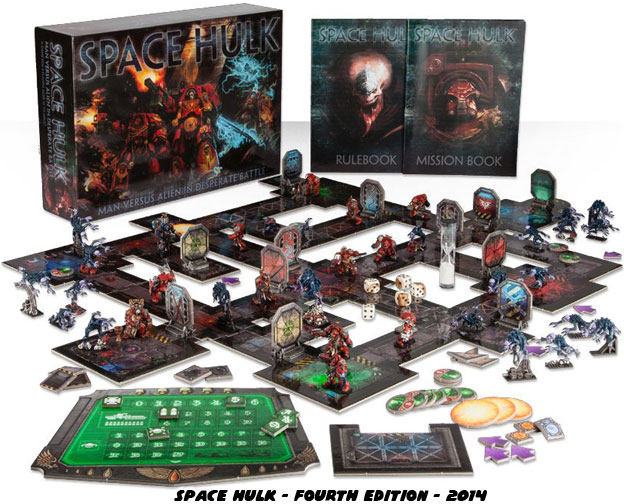
The new game featured embossed interconnectable card stock tiles with bright laser printed graphics. These tiles worked together with plastic scenery and doors that made the game feel very well put together. The production value was years ahead of the original Space Hulk. The sculpts of the Terminators and Genestealers were not rehashes of existing models either. They were very well made and insanely detailed, bridging the modern aesthetic with the classic proportions of Citadel sculpts. These miniatures that would never get reproduced in any other system or be available in a catalog. This distinction earned the collector a rare find.

The Third Edition of Space Hulk won awards from the gaming community and was produced in relatively small numbers, driving many collectors crazy. While it was a welcome release for the community GW was still missing something. The company had earned many followers by producing original boxed games that stood alone. New tabletop players had never known the stand alone experiences aside from the CCG. Those gamers had little knowledge of the experiences that GW used to develop. Long-time players were starved for something new and not another iteration of an existing system. Veteran game designer Phil Kelly heard the call and developed a new game called DreadFleet.
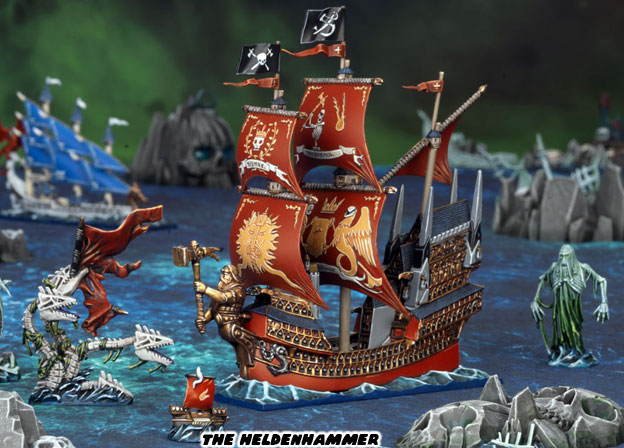
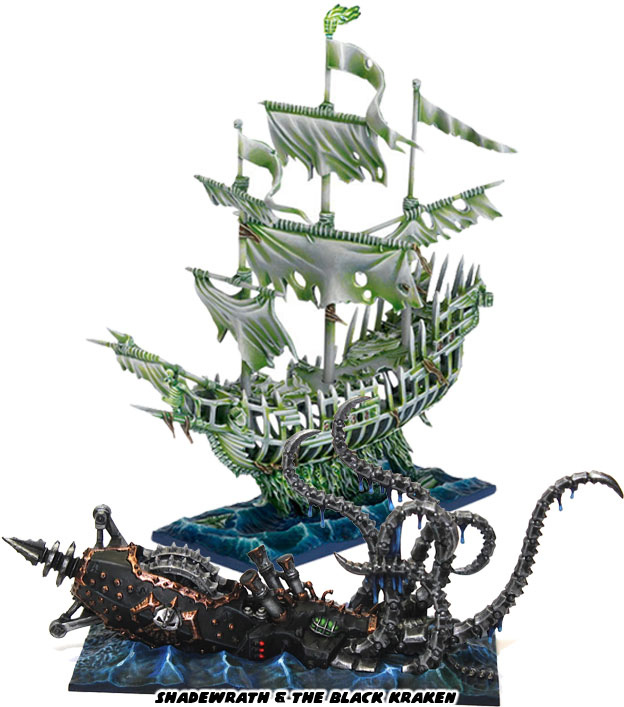
The story behind the game was conceived and written by Phil himself. It revolved around a cursed fleet lead by the vampire Count Noctilus. They made up a great gallery of classic warships, including a Tomb King death barge and a mechanized Chaos Dwarf Black Kraken. The Dreadfleet had been terrorizing the Warhammer high seas for years. A pirate captain named Jaego Roth set about to avenge the death of his family by recruiting or blackmailing some powerful privateers and friends. The game picked up at the climax of the book and allows players to experience different scenarios and choose sides. Easily this was the best new game produced by the studio in over a decade.

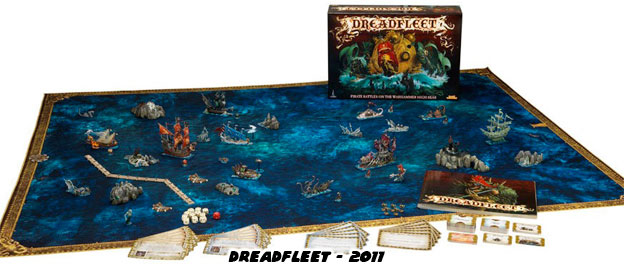
Dreadfleet was instantly appealing to new and veteran gamers because it did many things well. The miniatures were a powerful hook but the opportunity to experience a slice of the Warhammer world in a stand alone game was something unique. The game was a self-contained title that included highly detailed plastic models, that still required paint, markers, scenery and a color printed canvas map that represented a raging sea. That approach had not been seen in a long while, not since the original Blood Bowl boxed set had turned the fantasy universe on its head. Seasoned gamers were reminded of another old system that GW had developed and then abandoned. Man-O-War was the first boxed naval combat game set in the fantasy universe. It included rules for all of the major races, miniatures, markers and scenery to get a game going right out of the box. The game did fairly well and even saw an expansion set, the Sea of Blood, and additional miniatures released for the system. What Dreadfleet was not was the second coming of Man-O-War. It was a stand alone game with no plans for expansions or sequels. This both delighted and saddened players.
Veterans knew that if the release did not do well then GW would not support it and rules, errata and miniatures would be released sporadically through the Specialist Games store. The best way to preserve the legacy of the game was by making sure that the single experience was the best possible naval combat system the studio could produce. If players supported it then there was a chance that GW might consider making more stand alone games as well as they had done in the late 80's and early 90's. When the studio had their focus on the board game there wasn't another company that could touch them. Seasoned players were hoping that the company would return to that mentality and consider releasing other stand alone experiences. They would still be expected to support their core Warhammer Fantasy and 40,000 universes, as they had done decades ago, while making new experiences.
The stand alone game was also a gateway to the tabletop gaming hobby. It was a way to appeal to new players with a minimum level of investment required. Painting and assembling the Dreadfleet could help introduce the player to the hobby aspect while the easy-to-read markers and straightforward rule system got them into the gaming aspect. The appeal to many tabletop system was that there was something tangible to play with. Whether it was a CCG system or a miniatures based system, gamers had something to collect and personalize. Players did not need a television or console to enjoy these experiences. Best of all the stand alone format could compliment an existing universe or IP. A well design game with easy to follow rules could make a comic book, movie, cartoon or even videogame into a great board game. These games would not necessarily be a substitute for the series but instead a continuation of them. Bungie and Microsoft discovered this when Halo was licensed out for the Clix system of gaming. More recently Epic Games discovered this when they licensed Gears of War as a board game.

Studios like Games Workshop and Fantasy Flight Games were bridging the gap from casual gaming to hobby gaming by making great stand alone systems. This approach was actually nothing new to the industry. Decades ago the earliest videogame to board game titles were nothing more than copies of screen mechanics to paper boards. This was done to cash in on the craze of videogaming rather than to satiate the gaming desires of the public.

Games Workshop found success over the past couple of years by returning to the card and board game systems that made young players get interested in the hobby so many years ago. The further the studio shifted the focus from original ideas with great play elements to more established systems the more isolated they became. A similar thing could be said of Nintendo, which used to make card games, toys and stand-alone handheld electronic games. They all had their own unique play elements that turned young gamers into fans. Both GW and Nintendo had spent the better part of the 90's pandering to fans without catering to the play elements that helped create new followers. Only in the start of the new millennium did the studios begin going back to basics. But that would be a topic best saved for some other blog...

I hope my short look at Games Workshop has gotten you interested in tabletop gaming. Those that are interested should consider investing in some paints and brushes and getting the Dreadfleet game. Good things can come to those who play.

Building a gaming legacy, the Games Workshop series, part 1...

As always if you enjoyed this blog, and would like to sponsor me please visit my Patreon page and consider donating each month, even as little as $1 would help make better blogs and even podcasts!
follow the Street Writer on Patreon!

Monday, February 16, 2026

Pink Monorail Manufacturing the Magic Ep 25: Disney at the Fair

Heya friends, I spent the summer of 2025 recharging my creative batteries, and working on side projects. One of which was to continue the podcast series featuring the missus. This podcast is designed for Disney fans, amusement park visitors, and history buffs. You’ll learn the roots of the multi-billion dollar theme park industry from ancient history all the way to today. The missus, and I worked hard putting these episodes together through 2024, until we had a family emergency and had to stop working on it for 7 months. We are back on it through 2026. Click on the picture or link to visit our streaming page hosted on Jim Hill Media. I hope you get a chance to listen, subscribe, and leave a review so we can climb the theme park podcast rankings!

The Pink Monorail Podcast Manufacturing the Magic Ep 25: Disney at the Fair In the 25th installment of this educational series, Shelly & Noe Valladolid journey to Flushing Meadows. There, they shine a spotlight on the four attractions that the Imagineers created for the 1964–1965 New York World's Fair. Including the two that Disney Legend Bob Gurr designed. Over the course of this episode, listeners will learn about: 

  • What Disney attractions were influenced by the Magic Skyway at the Ford Wonder Rotunda?  
  • How many Ford Mustangs were sold at the Fair?
  • Where could you go to see “Nuclear Fusion?”
  •  What Hollywood star talked Walt into doing “it’s a small world?”
  •  What Disney character was the victim of ball-bearing attacks? 
Are there any current or former theme parks, or attractions that you love? I’d like to hear about it in the comments section. As always if you enjoyed this blog, and would like to sponsor me please visit my Patreon page and consider donating each month, even as little as $1 would help make better blogs and even podcasts!
follow the Street Writer on Patreon!

Wednesday, February 11, 2026

When a rare Oswald the Lucky Rabbit item turned up on bidding sites

If you are a collector of anything; comics, music, toys, cars, clothing, etc. then you probably have a wish list. These might be things you are on the hunt for, things that are super rare, or even super expensive. On that list you might even have a handful of “holy grail” or “white whale” items. These are things that are so rare / expensive that they might never come up in your lifetime. For those that don’t know I am a huge fan of Oswald the Lucky Rabbit. I have a large collection of Oswald items, some going back to the origins of the character.

Oswald was the cartoon star that Walt Disney created before Mickey Mouse. Walt lost the rights to Universal Studios back in 1928, and the Disney company didn’t get the rights back until 2006. One of my favorite eras of the character were just before Disney got him back. Universal made a big push to reintroduce the character as part of the Woody Woodpecker cartoon reboot circa 1998. The Universal Studios Park in Osaka Japan released merchandise featuring a blue-colored version of Oswald. As a fan of the “rubber hose” style of classic cartoons I fell in love with this look. My goal was to acquire as many items that were produced during that era. Arcade developer Taito actually created many of these for the parks, but also as claw machine prizes in the arcade. They came up with some wristwatches for the prize machines.

Interestingly enough when Disney got the rights back most of their first collaborations debuted in Japan as well. The studio partnered with Citizen, and the designers at Hirob to release a watch. It featured Oswald with his arms as the minutes, and hours hands. This was a nod to the original Mickey Mouse watch by Ingersoll. More than 20 years ago I spent every day on the Japanese bidding sites tracking down Oswald items. Much to my surprise I eventually scored both the dark background, and light background versions of the Disney / Hirob watch. Unfortunately the ones from Taito never showed up. So I put them on my grail list, especially the one with “Mickey Mouse” movement.

When the Disney company in the US started releasing Oswald watches I wasn’t really impressed with their offerings. Almost all of the merchandise in the USA, from stickers, to pins, shirts, and hats featured Oswald in one of a handful of poses. Master animator Eric Goldberg made him black, and white, and changed his style from Universal. As cute as the art was, it lost its charm when it was stamped on everything. The variety of art, and products featuring the rabbit at Universal was much more diverse. To make collecting harder some of the first US Oswald items were limited to the parks. Imagine spending over $150 just to get into Disneyland, and then being told that the Oswald pocket watch would run you an additional $500. Like I said I was a huge Oswald fan, but I also wasn’t made of money. I had to pass on a lot of Disney’s official merchandise because it was priced out of my budget. Less expensive wristwatches would eventually show up at the US and Japan Disney parks. I was able to get my hands on a few of these over the years, but not all of them. Some watches I didn’t think were worth it.

In early fall 2025 a grail watch popped up. While checking for items on eBay I noticed a Japanese seller had posted a Taito watch, complete in the box! It wasn’t the Mickey Mouse movement that I wanted, but it was still on my list. After 25 years of searching I never thought that it would turn up, let alone include the box. Unfortunately the seller wanted over $250 USD for it. The item may have been rare, but it did not warrant that price. There were only a handful of people that I could think of that would even be interested in collecting it. I was hopeful that the seller might budge on the price because the item was listed “Or Best Offer.” So I started with what I thought was a generous offer of $125. It was declined right away.

If you don’t know how the bidding works on eBay you only get five “best offers.” If the seller does not accept your offers then you have to pay the “Buy it Now” price if you still want the item. I’m on a strict budget. There was no way that I would spend over $200. I doubted that anyone else would either. As the weeks went on I would offer a little bit more, at the same time the seller would begin dropping the price. From $250, to $245, to $240… The seller stopped at $200, and I budgeted myself for $175 including taxes, and shipping. So there was still a gap in my maximum price, and the seller's minimum. Then one day the seller sent a private message. He said that he noticed I had made multiple offers. He then said he would be willing to extend to me a special offer of $180. I asked my family if I could tap into our holiday budget a little for this and they said of course. They knew how much the rare Oswald items meant to me.

I waited, and waited. Sadly the offer never came, and the seller never responded to my follow-up messages. He eventually put the watch on “sale” where he dropped the price to $193. This was still too rich for my blood. I used my final offer for $180, and that was also declined. I had to step away from this grail item. The seller was simply asking for too much. Fast forward to the end of 2025. I was surfing various Japanese bidding sites looking for Sonic Team, Namco, and Oswald items. I discovered that the eBay seller had listed the same watch on Japanese auction pages, except he was asking for ¥10,000 Japanese Yen which was about $65 USD. This was probably double how much he actually paid for the item to begin with.

I was shocked that it hadn’t been snatched up at that price. With taxes, shipping, and handling from Japan the total would be just over $80. Oswald's luck must have rubbed off on me. Needless to say I bought it right away. I was willing to pay almost three times that price when it was on eBay, but the seller’s greed cost him in the end. As far as collections went 2025 had been extremely kind to me, and to my family. I’d like to know if you ever lucked out when chasing a grail item. Tell me about it in the comments section! If you want to find out more about Oswald then click the links below.


As always if you enjoyed this blog, and would like to sponsor me please visit my Patreon page and consider donating each month, even as little as $1 would help make better blogs and even podcasts!
follow the Street Writer on Patreon!

Monday, February 9, 2026

Pink Monorail Manufacturing the Magic Ep 24: Disneyland’s First Four Years

Heya friends, I spent the summer of 2025 recharging my creative batteries, and working on side projects. One of which was to continue the podcast series featuring the missus. This podcast is designed for Disney fans, amusement park visitors, and history buffs. You’ll learn the roots of the multi-billion dollar theme park industry from ancient history all the way to today. The missus, and I worked hard putting these episodes together through 2024, until we had a family emergency and had to stop working on it for 7 months. We are back on it through 2026. Click on the picture or link to visit our streaming page hosted on Jim Hill Media. I hope you get a chance to listen, subscribe, and leave a review so we can climb the theme park podcast rankings!

The Pink Monorail Podcast Manufacturing the Magic Ep 24: Disneyland’s First Four Years 

In the 24th installment of this educational series, Shelly & Noe Valladolid discuss how Walt reacted in the late 1950s to the increasing competition his family fun park faced in the themed entertainment space. More to the point, which now-classic attractions were added to Disneyland during this era. Over the course of this episode, listeners will learn about: 
  • What did the Skyway look like when it first opened?
  • Why did the Pack Mule & Stagecoach get a name change?
  • How did the House of the Future come to be?
  • What was the main difference between Disneyland’s Submarine Voyage and the sub ride over at Pacific Ocean Park?
  • What does ALWEG stand for?
Are there any current or former theme parks, or attractions that you love? I’d like to hear about it in the comments section. As always if you enjoyed this blog, and would like to sponsor me please visit my Patreon page and consider donating each month, even as little as $1 would help make better blogs and even podcasts!
follow the Street Writer on Patreon!

Friday, February 6, 2026

The passing of a monster truck legend, and restoring a classic monster truck

Hello friends, today I have some melancholy news. As you may know I love cars, I love racing, and I am a super fan of monster trucks. I’ve written about the history of 4x4 culture extensively on this blog. One of my racing heroes died in September 5, 2025 in a traffic accident. Dan Runte was one of the drivers of the Bigfoot monster truck. He had a tremendous list of accomplishments, and could be ranked among the elite class of drivers. In many circles, myself included, he was considered the best monster truck driver of all time. He always seemed kind, and funny in taped interviews. People that met him said it wasn’t an act. He was a genuinely kind, and funny person based on everything I had been reading about him for decades.

Dan Runte started working with the Bigfoot team in 1989 as a crew member. He worked his way up to driver, shop foreman, and eventually Vice President of Operations. The first truck he drove was Bigfoot 2. It had appeared in television shows, and movies more than 40 years ago. It may have been the most iconic of the trucks. Mr. Runte traveled the country, and world putting on shows with the rest of team Bigfoot. The company had developed many different trucks, including the infamous “Snake Bite” monster rival. He raced, and tested just about every monster truck generation developed in their headquarters at Pacific Missouri. The last one he drove was Bigfoot 24 in honor of the 50th anniversary of the truck. Mr. Runte retired from full time competition, yet still drove the trucks for special events until the time of his death. If you want to see what a great personality he had watch this interview covering the history of the Bigfoot monster trucks.

I’m sorry for Mr. Runte, his family, and his friends. I never got a chance to meet the driver, and always wished I had. He was one of the drivers that helped shape motorsports for the better. He set an example that would be impossible to beat. I didn’t want to leave this post on a sad note. Instead I wanted to celebrate the restoration of another classic truck. A decade ago I remember seeing a photo of an old school monster truck rusting in a field. I am happy to announce not long after the photo was taken The Texas Toy was restored to its former glory. The new owner was Rocky Rohde (that’s his real name!) he purchased it from the original owner Larry Cook. Mr. Rohde was the grandson of Curtis Reese whose 4x4 shop sponsored the truck, and helped repair the transmission decades ago.

It was great knowing that the generations that grew up on monster trucks were eager to restore, and preserve the trucks that inspired them. Hat's off to the Rohde family for sharing the truck with the fans. I know if I had the money, and ability I’d be doing the same. I always dream of winning the lottery so I can restore, or build my own old school monster truck as well. Hey a guy can dream can’t he? Did you have any race drivers that you looked up to? Were there any famous vehicles you wished you had seen first hand? Let me know about it in the comments section. As always if you enjoyed this blog, and would like to sponsor me please visit my Patreon page and consider donating each month, even as little as $1 would help make better blogs and even podcasts!

follow the Street Writer on Patreon!

Wednesday, February 4, 2026

Pink Monorail Manufacturing the Magic Ep 23: Looking Back at Pacific Ocean Park

Heya friends, I spent the summer of 2025 recharging my creative batteries, and working on side projects. One of which was to continue the podcast series featuring the missus. This podcast is designed for Disney fans, amusement park visitors, and history buffs. You’ll learn the roots of the multi-billion dollar theme park industry from ancient history all the way to today. The missus, and I worked hard putting these episodes together through 2024, until we had a family emergency and had to stop working on it for 7 months. We are back on it through 2026. Click on the picture or link to visit our streaming page hosted on Jim Hill Media. I hope you get a chance to listen, subscribe, and leave a review so we can climb the theme park podcast rankings!

The Pink Monorail Podcast Manufacturing the Magic Ep 23: Looking Back at Pacific Ocean Park In the 23rd installment of this educational series, Shelly & Noe Valladolid head down to the water. To be specific, Santa Monica, California. Where CBS tried to get in the theme park business by radically reimagining a 30-year-old amusement pier. Over the course of this episode, listeners will learn about:

  • What was the original name of the first amusement pier in this location?
  • What nearby amusement park did Abbott Kinney build?
  • What was the first attraction on “The Million Dollar Pier?”
  •  Who narrated POP’s 1958 guidebook, and made an appearance in the Park?
  • What were the only two rides added to POP?
Are there any current or former theme parks, or attractions that you love? I’d like to hear about it in the comments section. As always if you enjoyed this blog, and would like to sponsor me please visit my Patreon page and consider donating each month, even as little as $1 would help make better blogs and even podcasts!
follow the Street Writer on Patreon!

Monday, February 2, 2026

Pink Monorail Manufacturing the Magic Ep 22: Disneyland’s Sister Parks – Part Two

Heya friends, I spent the summer of 2025 recharging my creative batteries, and working on side projects. One of which was to continue the podcast series featuring the missus. This podcast is designed for Disney fans, amusement park visitors, and history buffs. You’ll learn the roots of the multi-billion dollar theme park industry from ancient history all the way to today. The missus, and I worked hard putting these episodes together through 2024, until we had a family emergency and had to stop working on it for 7 months. We are back on it through 2026. Click on the picture or link to visit our streaming page hosted on Jim Hill Media. I hope you get a chance to listen, subscribe, and leave a review so we can climb the theme park podcast rankings!

The Pink Monorail Podcast Manufacturing the Magic Ep 22: Disneyland’s sister parks – Part Two 

In the 22nd installment of this educational series, Shelly & Noe Valladolid continue their look at C.V. Wood (the original president of Disneyland). In particular, what happened when Wood decided to enter direct competition with Disney and subsequently established his own theme park design company? Over the course of this episode, listeners will learn about: 
  • Why was Pleasure Island called “The Disneyland of the Northeast?” 
  • What became of that theme park’s mechanical Moby Dick?
  • Which city in Arizona did C.W. Wood help develop?
  • What were the Six Flags Over Texas upon the opening of that theme park? 
  • What are they now? What was the first runaway mine train coaster? 
Are there any current or former theme parks, or attractions that you love? I’d like to hear about it in the comments section. As always if you enjoyed this blog, and would like to sponsor me please visit my Patreon page and consider donating each month, even as little as $1 would help make better blogs and even podcasts!
follow the Street Writer on Patreon!