Friday, June 25, 2021

My favorite games of all time, the story of Carmageddon part 11...

When I got Carmageddon Max Damage my expectations were kind of low. They were pretty much nonexistent. I was thinking that it was going to look, and play as poorly as the reviewers had said. I thought to try it for a little bit, and if it was truly bad then I’d let the franchise go. I played through the PS4 version first, for about two months, then I got the Xbox One version. Of those two the Xbox One was superior, it ran at a faster frame rate, and it had better graphics all around. Of course I understand that the PC version runs much faster, and has the best graphics. But I took it for what it was; this was an attempt for Stainless Games to release a more complete Carmageddon Reincarnation for the home market. In case you enjoyed the original PC games, and have been thinking about picking it up let’s get you caught up. Most of the drivers, and their cars from the original game have returned. Absent are Burly Shirley, Agent Orange, Wanda Lust, OK Stimpson, and the Mech Maniac. Nora Virus represents the Auto Scum gang, she is driving the Razorbill. 

From the Splat Pack we had Rusk in the Degoryun, Mother Trucker and her Rig O’Mortis. Sadly none of the vehicles from Carmageddon II returned. Then there are the new faces; Roman and the futuristic Crazor truck, Twig N. Berries driving the Trope-Kill minivan, Nutkenz and the exotic Snaky Bastard, Ed Lesgar with the sporty KVN Toucan, and the Terrible Twins driving the jet-engine Siamese Dream. Of course you start the game with either Max Damage, or Die Anna in the Eagle, or Hawk. This time around you can freely switch between drivers. Destroying opponents still allows you to unlock their cars. Except for the police APC, which has to be earned by completing all the objectives for each main race. The PS4 version does not feature the angular Tez Eagle (much to my disappointment), or the Iron Hawk, which is sort of the Tez version for Die Anna. Both are in the Xbox One version. Besides that you can see that the latest versions of the main cars have a familiar look to them. They’re not numbered but instead have the “R” badge, I guess it stands for Racing edition, or is it Reincarnated? 

You can also tell that the studio continues the tradition to make each car look distinct. The Eagle being a heavier fighter, with the engine upfront, and the Hawk being more of a mid-engine speed machine. All of the cars were completely redone, but have the familiar paint job, look, and feel of the classics. The details on each ride is obscene. I’ve mentioned the working transmission, and suspension in the previous blogs. But the engines, and interiors are also just as detailed. I'm talking about spinning belts, and spark plug cables! Every car can be pulled apart completely, and of course restored on the fly. The little things really stand out from a physics perspective. At speed both the Eagle, and Hawk (plus a few other cars) have active aerodynamics. That is their tail fins rise up to give them more traction when they’re going fast, and can even act as air brakes to help them slow down. You would think this doesn’t actually cause drag, or affect aerodynamics in the game until you are in the middle of a jump. I discovered that popping open the doors, or activating the plow on Don Dumpsters ride, actually causes the vehicles to slow down, or change direction mid air. That is some fancy programming for sure!

Great physics aside. What actually surprised me at first was listening to the game. As soon as I started playing I had the eeriest sense of deja vu. In fact several stages in the game gave me the feeling that I had travelled back in time. The sounds of the menu, the announcer doing the countdown, saying “checkpoint,” the sounds of the car recovering were all pulled from the very first game. They instantly set the tone for the experience. I think the sound design really works best if you wear good headphones while playing. You can hear the ambient sounds of the stages. The different engine sounds, especially when they hit higher RPM's while using the Turbo, or Hot Rod power up. Even the sounds of tires deflating, the clank of metal treads, versus hard rubber for different rides. The people at Stainless Games made sure that every audible sound told the story alongside the visuals. This was going to be a classic game made brand new. It was not going to be an HD remake of the original. That was more or less what the iOS version was from a few years back. Everything in Max Damage was something different, yet familiar. Anything that was missing from the eyes of die-hard fans would be addressed by the modding community, such as the return of some classic big rigs.

Speaking of sounds, the music for the game was pretty on brand. I actually didn’t pay attention to it for the first month that I played the game. For whatever reason the mixing on the PS4 was terrible. Even when I went into the settings and turned down all the other sounds, and set the music to 100% I couldn’t really get the details of the soundtrack to come through. Eventually I went to YouTube to listen to it. I was blown away by what I heard. I certainly would have enjoyed the game much more if I could have heard it cranking on my speakers. Like the original Carmageddon the songs were mostly metal, and industrial tracks done by two groups; Morgue from Finland, and Maximum Sexy Pigeon from Australia. Big and Clever, Halls of Morgue, Revenge of the Titanic, and the Pig Welder are standout tracks. I enjoyed the music so much I jumped on BandCamp and bought their albums. I paid much more than the dollar or two they were asking for. The musicians certainly deserved some love seeing as how Sony didn’t bother to get them mixed right in the game. Everything sounded much better on the Xbox One, again especially with good headphones.

I found myself driving the first course through Bleak City almost by memory. The layout, buildings, locations, and distinct neighborhoods had all returned. Everything looked a thousand times better than before. Granted the placement of certain buildings was a bit different, but the studio had essentially remastered the stage. They added multiple side streets, and alleys which would be critical in escaping opponents, but certain power up barrels were in the exact same spot in the new game, as they were in the original. Long-time fans should remember which corner the pedestrian zapper power up was in the Bleak City Stadium. It made me appreciate all the details that Stainless was putting into the experience. Having an immersive world was one of the four elements that I consider makes a great game. The sheer variety of architecture really brought Bleak City to life. Pizza shops, restaurants, gas stations, factories, and even adult clubs were all represented. Understandably the limitations for PCs 20+ years ago made it so that cities lacked depth. They were mostly different polygon shapes, with a handful of textures applied to them. It could be easy to get lost looking at the same buildings over, and over. A good developer like Stainless could figure out how to make basic blocks appear like skyscrapers, and entire neighborhoods to race in.

The new Bleak City had a layer of wear that underscored the realism Stainless was shooting for. This was important to help pull audiences into the world of Carmageddon. In other sandbox environments the players could get out of the cars, and interact with the world. We don’t have that luxury in the tournament, but we can still explore. Not that it would make sense to get out of your car in the first place. Stainless was said to have contemplated that at some point during development. That’s great for GTA, but that’s not what this game is about. In order to put drivers in the moment Stainless had to convince them that these worlds were living. The devil was definitely in the details. There were weeds, and crab grass in the parks, which got churned up by tires as you drove over them. There were bags of trash, newspapers, cardboard boxes, plastic bottles, sofas, and appliances dumped in alley ways. Everything seemed destructible, even the cardboard boxes tore down, and folded flat under the cars as they plowed through. Water shot up if you sheared off a fire hydrant, traffic lights, and crossing signs lit up. Cans of soda fell off the hot dog carts when you bumped them. Street signs had unique names. In fact the street lights were different in different neighborhoods. They were Art Deco in the ritzy part of town, and rusty old poles in the industrial part of town. They shorted out if you ran over them, could be broken off, and the bulbs would even shatter when they hit the ground.

Bleak City had a completely different mood depending on what part of the map you were going through. The atmosphere, and visual effects were much better on the Xbox, and PC. With that said I was still happy with the graphics on the PS4. Again, remember that I said that frame rate, and graphics to me were not as important as the control, and game play. Familiar paths, and outlets returned for each stage, but with a ton of new ideas. Working bridges, shipping cranes, and elevators were added to the MagNuChem (sometimes written as Magnachem) Acid Ocean Reprocessing plant. New tunnels, secret paths, and ramps opened up the possibilities for combat, especially with multiplayer matches. Each of the returning locations filled me with a sense of nostalgia, but also with a sense of awe at all of the new material that Stainless had crammed into the world. The studio was very self-aware. They wanted audiences to recognize the callbacks they were doing to the first game. Little details like the name of the gas station (Gasso), the sponsors of the tournament CLANG, MAIM, and VLAD’s speed shop made me appreciate what Stainless had done. In a couple of stages you could actually find the original polygon models for several of the cars. Whether they were frozen in ice, or being window dressing in the 4x4 shop, Stainless never forgot where they came from.

There were many different levels returning for the game, including the arctic, and desert environments. Each filled with tons of new content, and details. The world building was tremendous in the game, as was the stage storytelling. Look for the "At the Mountains of Madness" inspiration in the arctic stage for proof. As for the game play itself. It still felt like Carmageddon. It took me only a moment to get used to the game pad instead of the keyboard. I learned how to fitness the triggers for the gas pedal, and the analog steering was on point. I was able to juggle between different power ups, and activate them on the fly using the shoulder buttons. The cars handled somewhere in between the Splat Pack, and Carmageddon II versions. The physics were improved, and the damage, and collision details were through the roof. If you want to get a sense to how violent the collisions were in this version try playing the game from the driver’s POV. To help get players to explore the maps Stainless put upgrade tokens throughout the stages. It was reminiscent of the hidden upgrades in Carma II. The difference was that you got to choose what you wanted to upgrade with your virtual tokens. Also there were “Smelly Bushes” hidden on the stages as well. These were supposed to be like the pine tree shaped air fresheners you might hang in your car, but of course they took on a sexual overtone in this game. Collecting these helped unlock the different skins for the vehicles. The one thing I didn’t appreciate was that some of the skins, and different wheels, could only be unlocked if you played online multiplayer. I never went online, and could imagine how frustrating it was for players that didn’t even have a decent internet connection.

Carmageddon Max Damage had already checked off the four criteria I had for a favorite game. It gave me an immersive world. The control was easy to use. The gameplay was original, and the music was icing on the cake. I hadn’t even mentioned the obscene amount of damage you could do to the pedestrians in the game. Stainless was in rare form as they set out to offend everyone equally. There were fat people, elderly people, athletic, skinny, homeless, and regular citizens of every shade. There were people riding bikes, or putting around on personal mobility scooters. There were even people using wheelchairs. Before you ask, yes, you could knock a person out of their wheelchair, and they would crawl on their arms trying to get away from you. You could also blow off their limbs, and watch them wriggle on the ground before bleeding to death. If the thought of that offends you then I shouldn’t bring up the penguins, coyotes, bears, sheep, and other animals that you could also do this too. The only thing off limits were kids. If there’s one thing that GTA, and Carmageddon had in common it was the lack of kids. I’m paraphrasing the President of Rockstar games when he said “kids should be in school during the daytime, and at home during the night. They should never be found wandering the streets.”

Pedestrians ran for their lives. Those that avoided getting hit were often soaked in the blood of those not as lucky. Carma now allowed you to commit war crimes as you could use poison gas against pedestrians. If you ran over ones having a breakdown, or were injured, you'd get a Mercy Killing bonus. It was truly compassionate for Stainless to do so. There was no kink shaming in the game either, as some people walked around in their lingerie, or danced with cows at the the strip club “Saggy Maggies.” Everybody had finally become an equal target in the universe. Although I don't remember seeing any nuns in the PS4 version. I did see them in the Xbox One. If this game had two steadfast rules those were; it was made in poor taste, and it was never meant for kids. To stick to its controversial reputation in 2016 the studio released the US Election Nightmare Special Edition. Which turned the pedestrians into Donald Trump, or Hilary Clinton. Each exploded in pools of either red blood, or blue blood depending on party affiliation. Even the Brits knew that the US was dealing with the least popular candidates in our history. Many of us would rather run them both over than let them run the country. 

The lessons learned from the first three games were visible in Max Damage. Capturing the look, and feel of the original Carmageddon was of course the goal. It was dark, futuristic, funny, naughty, and filled with mayhem. The studio just had to update the look, features, and control to match modern games. I believe that was accomplished for the most part in Reincarnation. From the Splat Pack they learned that multiplayer stages should be compact, have multiple escape routes, and be filled with lots of random power ups, those were in Max Damage. Also from the Splat Pack we saw that exotic, or even occult details on the stages, helped bring an element of the supernatural into this science fiction world. From Carmageddon II Stainless learned that cars could actually be too big. The rides had to be able to explore just about every inch of the stages. The Big Dump, and the Loggerhead from Carma II (as awesome as they were) would have had problems accessing many areas in Max Damage. There were still callouts to those massive rides in a couple of stages. The Rig O’Mortis diesel truck, towing a trailer was the measuring stick for every tight corner, and blind alley. Anything bigger than that would have broken the experience.

The studio also learned from Carma II that you could overpower your car, and kill the challenge. So they scaled back the upgrade purchases from 90 total slots to 15. It was much more like the original. To keep cars from being OP the studio put a cap in the Armor, Power, and Offense categories. They allowed for a maximum of 12 points to be spent on the cars, even though there were 5 slots available in each category. If you wanted the best engine, or armor, or offense, then you had to sacrifice points in a different slot. Not only that but each car required you to spend upgrade tokens on it. The upgrades didn’t transfer just because you stole a new car. Your prize money also didn’t count towards upgrades. It could however be used to purchase an in-game power up, and assign one of four d-pad buttons for easy access. There was a lot of replaying the stages, and seeking out hidden items to help earn the best parts for each ride. All of these things helped increase the replay value.

Stainless eliminated the mission objectives from Carma II as well. Instead each level was the host to a different type of game. Some had you chasing down certain pedestrians. Some had you going after checkpoints, destroying opponents, or completing laps first. The difficulty could be challenging at times, with opponents, and cops smashing you from all directions. It could be hard to get away, but that was also the reality of many fights in the original. I didn’t find any of the stages too difficult to complete on the normal setting. It had just the right challenge for long-time fans. I had previously mentioned the APC, and Subpressor were in the game. I’m not sure how the Subpressor control got past QA testing. or whether it was made intentionally hard to stop. The car skids like it’s on ice. It is impossible to stop on a dime, or do handbrake turns with. Even then it’s still fun to drive. The best surprise I had was learning that there were more than two types of police cars to unlock. A tiny little car known as the CU:NT (Compact Unit: Nil Threat) was added to the police arsenal. The car was about the size of a personal mobility scooter, and designed for community liaisons. It was included because Nobby was loaned a Smart car while his actual car was in the shop. He hated it so much that he insisted something as useless be added so that every player could have fun kicking it around. Using the car in the game was extremely difficult, and yet also fun. It was the equivalent of trying to beat a first person shooting game while using only a knife. 

The other vehicle was the BFG of the series. The Super Suppressor was absolutely massive. Imagine a rolling roadblock, towing a tank trailer! It added another strong female to the lineup, Agent Debbie O’Nuts. The first time I ran across it I had the same reaction to it as I did the Suppressor some 20+ years ago. I thought “what the hell is that?” before getting flattened by it. As with the original game, you couldn’t access the heaviest hitters until the final stages of the game. Even then beating them was a challenge all to itself. Carmageddon Max Damage was a fantastic game, but it was not without its perceived flaws. We will talk about those in the next, and final entry in this series. I hope to see you back for that. If you would like to sponsor me please visit my Patreon page and consider donating each month, even as little as $1 would help make better blogs and even podcasts!

follow the Street Writer on Patreon!

Wednesday, June 23, 2021

My favorite games of all time, the story of Carmageddon part 10...

For the Kickstarter backers there had been a growing sense of unease about the things they had been promised. Audiences knew that it might take weeks before they got their physical rewards. Some things had to be ordered from a local business, or from China where they would be manufactured, and shipped months later. Whether it was a survival kit, a card game, tee shirt, or other ephemera. These weeks turned into months, eventually stretched into years. Patrons began leaving queries on each Kickstarter update without getting too many responses from the studio. Of course some electronic rewards were available right away. People could access the beta trial, they could turn in their codes for games from Steam. One of the nice surprises came in the form of a comic book for certain backers. Concept artist Daniel Tejnicky had originally done a series of fan comics years ago. He was contacted by the studio to produce the art on an official comic. It was scripted by Neil (Nobby) Barnden. It filled in a lot of the back story for the new tournament, and helped flesh out the world of Carmageddon. Many of the details that audiences were noticing in the game levels were explained in the comics. The art was top-notch, and the comic was filled with gore, nudity, and crass humor. It was everything audiences could ask for. Unfortunately, the comic was not what thousands of sponsors had paid for.

A handful of concerned sponsors turned into dozens upon dozens calling out the studio with every Kickstarter post. Many had not gotten the physical rewards they had paid for. They were looking to get their money back, and many complained to both Kickstarter, and Stainless about it. It got to the point where Nobby had to post an update, and say they were going to look into the delays, and apologized for not being more proactive with physical rewards. The studio was running on a razor-thin budget, and crew. All hands were cranking on getting Reincarnation finished, and out the door. What the studio needed was a full time person handling the PR, and following up with all the clients. They didn’t have anybody for that, and as such many queries were left unanswered. Stainless completely ignored the backers asking about the Linux, and Mac ports that were promised. People still went to the Kickstarter page almost a decade after the campaign ended to call out the studio. The lack of transparency only served to build distrust in the studio, and the Kickstarter process.

There were many things that were out of Stainless’ control. For example one of the tiers was to receive a 3D printed model of the classic Eagle, and the TEZ Eagle. That was the one I had signed up for. Some people, mostly in England, posted that they had received their model. They said when it arrived it was tiny, and brittle, like a dry cracker. Very few received one that wasn’t misshapen. It turned out that the company responsible for printing them went out of business. They dumped a bunch off at Stainless after their promised date, and then disappeared. I never received the ones that I had paid for. It seemed that people outside of the UK, or the EU were out of luck as well. Other reward packages had gotten out. My wife’s with a tee shirt, and post cards did arrive eventually. There was no 100% guarantee for any sponsor, and Kickstarter had a policy asking that clients reach out to the publisher first to remedy any complaints. I knew that Kickstarter campaigns could sometimes be a gamble. I’d rather have my cash go into guaranteeing a new game, if it meant I might not get my physical rewards. I was willing to bite the bullet, but I knew that thousands of backers did not have that luxury.

Stainless Games moved forward as if backers weren’t growing despondent. The studio launched a website in 2012; Carmageddon.com, which is now closed. They posted news, new builds, hosted a forum, and shared links to mod updates. They proceeded with their business as if there wasn’t a problem for backers. It was disheartening knowing that hundreds of long-time fans were getting nowhere with the company. While at the same time the game was earning a new audience. We may never know if the studio didn’t actually care, or because they were advised by their lawyers not to say anything about the crowd funding. The Kickstarter campaign ended in May 2012, and Carmageddon Reincarnation came out for Steam in May 2015. In May 2013 Bullfrog studios founder Les Edgar invested an additional $3.5 million into the game to help with console development. He was rewarded with a playable character Ed Lesgar driving the KVN Toucan, a play on the TVR Tuscan. It was an incredibly tight development cycle, from a very small team. The title was also a flop in the eyes of critics, and audiences. Despite all of the advances in technology, and a return to form it seemed like too little, too late for the franchise. The studio redoubled their efforts, and released a version for the Xbox One, and Playstation 4 in July 2016. This version was a free update for PC’s called Carmageddon Max Damage. It added approximately 40% more content to Reincarnation. It too was snubbed by the gaming community. It seemed that they had moved on.

The studio seemed undeterred from the cold reception. They did not want to waste all of the work they had poured into rebuilding the franchise. There were literally thousands of assets that could be used to create new games on other platforms. One of those was Carmageddon Crashers, a mobile game that came out in August 2017. The mobile game featured the rides from Max Damage, with simple controls, and new gameplay. Instead of an open world game the title had players going head-to-head in drag races. This was not the type of drag racing where cars were side by side, the cars were literally heading at each other. What else could you expect from the franchise? The graphics were brilliant, with lots of details, cars to unlock, and upgrade. There was tremendous replay value here. Like many mobile games, it was the perfect way to spend time while waiting in a queue. The one thing Stainless did not say was when there would be another sequel. Things were quiet for about a year when THQ Nordic announced that they had acquired the rights to Carmageddon from Stainless in 2018. That news came to a shock for many in the community. They knew how hard the company had fought to build a franchise, lose it, get it back, only to have to see it go again.

Kickstarter backer Mikko Rasa summed up the theory for Stainless ghosting patrons, and then selling the IP. “I still suspect that the name change from Reincarnation from Max Damage was done so that somewhere down the line they can just drop the promises of delivering physical rewards and ports. After all, those were promised for Reincarnation, which at some point will be obsolete and no longer supported. Max Damage is a different game and no such promises have been made for it.” I’m not sure if there is any legal standing for Mikko’s assumptions. If THQ is on the hook for any broken promises, or what else might happen in the future because of the sale.

I did remember hearing something about the success of the original game, and how Stainless never hit the big time. The first Carmageddon sold about two million copies. Which was not bad for a developer that nobody had ever heard of. We did get the award-winning Splat Pack, and Carmageddon II, both of which also sold well. The studio was nebulous about what happened when they lost the rights. Whether they were contractual, legal, or other issues, it turned out that nobody on the team struck it rich. That was a damn shame. All of the bad press following Reincarnation, plus never getting my pledge rewards left me cold. I steered clear of the series for five years. Then on a whim I picked up Max Damage for the PS4. You couldn't blame me. Four years of dealing with Donald Trump, and an ongoing pandemic brought me to the brink... What I saw gave me a change of heart.

I remember reading things about how difficult the cars were to control, how crap the graphics were, how the physics were broken, how much the music sucked. Some even said this was nothing more than a prettier version of TDR 2000. After I actually sat down, and played through it I’m not sure what those people were griping about. Carmageddon Max Damage was so much better than they gave it credit for. I’m going to give my impressions on it in the next blog. If you would like to sponsor me please visit my Patreon page and consider donating each month, even as little as $1 would help make better blogs and even podcasts!

follow the Street Writer on Patreon!

Monday, June 21, 2021

My favorite games of all time, the story of Carmageddon, part 9...

Stainless had already started work on Carmageddon Reincarnation before the Kickstarter campaign in 2012. They needed to have a proof of concept, or at the very least a few renderings, if not a partial engine built in order to get investors on board. The art, and models of the Tez Eagle were just the beginning. The studio wanted to make sure that the next game took advantage of all the processing powers of modern PCs. This included physics, lighting, textures, environments, and other visual flair. Some pre-alpha footage was ready for the campaign kick off. The studio would show off progress, without giving away any real secrets on the Kickstarter updates. Not that they were excluding the backers. They were actually allowed to take part in the beta process. Crowd sourcing some of the QA, and online multiplayer testing in the process was an added benefit of self-publishing.

Speaking of the visuals. The studio had a goal to give every character a complete rebuild from the ground up. Working closely with Doug Telford’s new character art, the studio modeled actual bodies for every driver in the game. The last time the company did this was in 1998. The graphics engine didn’t really support unique driver models in Carmageddon II. The drivers were a universal shape, wrapped in a different texture. The humans in Reincarnation had different builds, from the obese like Don Dumpster, the malformed Stig O’Sore, to the paraplegic Screwie Lewie. Even the robot Ed 101 got an actual metallic body. Each driver was wrapped in high resolution textures, and had basic animations. They really came through if you were playing the game from the driver’s point of view. You could see opponents turn their heads, move their shoulders, and steer in close combat. In a high speed wreck both the player, and their opponent could go sailing through the windshield. It was a violent, yet amazing accomplishment from a technological perspective.

All of the technology for Reincarnation was ground breaking. Stainless Games did shop around for off the shelf physics, or graphics software that they could use. It would help streamline production, and help with budget costs. Unfortunately there was nothing on the market that did what they wanted. So as they had in the past, they built it themselves. From 2012 through 2015 each revision of their physics engine became greater, and greater. The vehicle damage engine was quite amazing. It would be studied, if not used by other studios. The cars themselves were built from individual parts that could be deformed, or even broken off depending on the severity of a hit. It was similar to what the studio had achieved in Carmageddon II. Only this time each car had a thousand times the detail, and complexity. How advanced was this technology? A tire could actually be deflated. It would flex, and fold realistically, spinning on the hub. It could also slide off the rim completely. This would affect the performance of the car in real time. Nothing like that would have been possible 15 years prior.

As if writing the book on vehicle damage wasn’t enough, the studio also rewrote the book on in game suspension. If you were to take a good look at the vehicle suspension for the cast you would be amazed at how realistic they were. This included the tank models. Shock absorbers, and coil springs actually compressed, and extended. The drivetrain rotated, and axels turned in realistically too. To be fair the car physics in other games had been done realistically as well. Yet those cars rarely had exposed suspensions. In this game you would be able to shear off a fender, expose the frame, and see the shock absorbers still working. It was an obscene amount of detail, but one which helped the cars perform better than in any other vehicle combat game. The team seemed to be working from a checklist of things that they always wanted to put in their game. Full 3D driver models? Check! Realistic vehicle deformation? Check! Realistic physics? Check! Working suspension? Check! What else was there on the list that they needed to address? Ah yes, they had always wanted to get trailers working properly. You could almost get a sense of shame from the incomplete Tanka they included in the original release. The studio would avenge themselves.

Not only were trailers supported, but every car could pull almost any trailer that was parked on a side street. Some of these trailers were empty, some were loaded with pipes, and barriers. Some were campers that actually had interiors. These all mirrored the car physics. Their tires could go flat, their panels could be broken off, or deformed. The items they were carrying could call off. To hook one up all a player had to do was back into one. Then whenever they wanted they could detach the trailer with the press of a button. They helped absorb the blows from opponents ramming from behind. They also came in handy when they were swung at opponents, or pedestrians while going at high speed. If only the revised Tanka had been included in the game. Thankfully Toshiba Core created a mod for it so that players could download it, and add it to the lineup. As much progress as the studio made they still had a ways to go before completing the checklist. Some of the things they accomplished in this Reincarnation weren’t really stated outright. They were mentioned as a feature in new car. One of their goals was the inclusion of a functional jet car.

There are three jet-powered rides in Carmageddon Reincarnation, but only one of which completes a dream they had since 1998. Nobby, and the team knew their cars, and their car history. It was how they were able to create a massive library of rides within the first three titles they developed. One of their stated goals in Carmageddon II was a working jet car. The texture of a jet exhaust on the back of Vlad’s Annihilator from the original game didn’t count. The studio was inspired by the atomic age promises of General Motors. Stainless Games said in Carmageddon II you would be able to drive this car by pedestrians, and they would catch fire from the exhaust. They also said that the sonic shockwaves from the Street Machine driven by Wide Boy would blow up pedestrians. I was excited by the possibility. To me it was as interesting as Ed 101’s flying concept car. When I was able to purchase Jenny Taylia’s (oh grow up now!) Jetcar in game the afterburner was negligible. Yes the car really took off like a rocket, and handled as well as a car from the ‘50s would have, but the promises of combusting pedestrians wasn’t there. Whether I drove by the peds quickly, or slowly it didn’t matter. I literally had to back into one in order for anything to happen. Of course it was impossible for victims to just stand around waiting to get run over. Nobby had an absolutely mad idea for Reincarnation. He wanted a huge turbine wedged in between two separate cockpits. To complete the theme there would be two pilots.

In typical Stainless fashion it wasn’t enough that there were two separate fuselages, and pilots. The drivers, the Terrible Twins, were formerly conjoined. They had an operation that had separated them. Yet their flight suits had a zipper to allow them to reconnect. It was bizarre, and yet it fit in perfectly with all the other weird characters in the series. The Siamese Dream was actually based on the Silver Fox concept car by Officina Stampaggio Industriale (OSI). The company wanted to set speed records using their uniquely aerodynamic body. They even wanted to get it into the 24 hours at LeMans in the late ’60s. Nobby never forgot this odd car, and came up with the idea for the Terrible Twins as well. Their disproportioned bodies were mirrored in the actual model. Each fuselage was from a different jet, so that the car was slightly asymmetrical. The ride height was matched by different sized tires, and landing gear. It handled as well as you could imagine a jet car would. It screamed in a straight line, but turning was tricky. You had to learn how to work the throttle, and not give it too much power. The massive intake insured that any pedestrians nearby would be sucked up. They would be cut to pieces by the front splitter, or when they hit the fans. Any close to the exhaust caught fire. You could leave a trail of burning corpses in your wake as you plowed through the streets. I could imagine the satisfaction that the studio had when the Siamese Dream came to life. It was clearly a front-runner for the best new ride in the game. Now if only they could invent a car whose speakers were loud enough to explode nearby pedestrians… but I digress.

Stainless never forgot the demand that fans had for the armored police vehicles from the first game. Carmageddon II had standard police cruisers, and it really wasn’t the same. They didn’t fit in the science fiction future of the series. The newly minted police units for Reincarnation were some of the best updates in an already great library. Something that audiences noticed was that the new heavy hitter did not have six wheel like the original model, not only that but the name had been changed from Suppressor to Subpressor. This was a surprise because from the earliest Carmageddon Reincarnation art the six wheeled version was promised, and now the studio would be cheating fans. The reason for this change was due to the physics engine. According to modding community member Alex Darby “The engine's car physics simulation was initially developed in conjunction with the Pro Drive rally team for a realistic rally simulation. As such the simulation seemed to be designed solely around 4 wheeled vehicles and not having to support arbitrary numbers of wheels obviously made it a lot simpler and more efficient to develop. It was an oversight that it wasn't changed earlier in C:R's development, which Nobby obviously was very annoyed about when he found out as the Suppressor was always in the game's specs.” This news actually made a lot of sense because of how the cars responded in the game. 

Each vehicle was all-wheel drive in Reincarnation. That is to say that all four wheels had the power to move the car. In the original game they were rear wheel drive. Cars could sometimes be stuck trying to climb a steep angle as the rear wheels spun. In Reincarnation if a car was cleanly cut in half, lengthwise or widthwise it would still be able to steer, and drive. Audiences appreciated this update, but they wanted the six-wheeled beast they had known. Once again the modding community came to the rescue. The fantastic render from Alex (TEZ) Tsekot was adapted for the game. The new build of the Suppressor was awe-inspiring. It took more than three years for all of this work to appear in game. During that time backers were trying out new builds in the beta test group. Despite early access, there was a problem rising in the Kickstarter community. Fans were beginning to show displeasure for Stainless Games. Their shouts became louder, and could not be ignored once Reincarnation went live. The studio was accused of defrauding many of the backers. We will talk about the fallout this caused in the next blog. If you would like to sponsor me please visit my Patreon page and consider donating each month, even as little as $1 would help make better blogs and even podcasts!

follow the Street Writer on Patreon!

Friday, June 18, 2021

My favorite games of all time, the story of Carmageddon part 8...

I went from computer lab tech to Instructional Associate II during my time in college. Getting to eventually run a lab, and classroom. The Mac lab was where I started a daily blog on 1UP. It was there where I made many lifelong friendships, and even met the woman that I would marry. The Mac OS had gotten to the point where it would no longer support old games. It had been years since we last played Carmageddon there. Roger, one of our friends in IT, made an image in an emulator for us in case we ever felt like firing it up. It just wasn’t the same without my old coworkers. My time at school was coming to an end, and I needed a better job with benefits. So I would commute to JPL part-time, and eventually work there full-time. There was no game playing at JPL, as you could imagine, but the boss didn’t mind if I updated my blog during my lunch break. That was how I kept my daily posts going. Things had pretty much settled into a routine, until April 2012 when the news dropped. Carmageddon would be getting a reboot, or rather, a Reincarnation. I just about lost my mind.

We all knew that Square Enix would never bring back the title. It turned out that the studio was selling off some old IP that belonged to Eidos at the start of the 2010’s. Stainless Games found out about it, and fought hard to get the rights back. They were in a bidding war against an unknown company. Thankfully they won, but the money they had went into acquiring the rights took a big bite out of the studio. They needed more cash to actually start developing a new game. Stainless Games senior members: Patrick Buckland, Ian Moody, Steven Haggerty, Neil (Nobby) Barnden, Russell (Rusk) Hughes, Kev Martin, and Will McCourt looked at their options. They saw that crowd-funding had been successful for other companies, why not give it a shot here? Most developers asked for a few thousand, but Stainless had an ambitious goal. They wanted to raise $400,000 in a month. They made the announcement, and thankfully just about every gaming site spread the word. The most controversial game of the ‘90s, was coming back! Nobby became the spokesperson for the reboot, and would post video updates on their Kickstarter page. The studio raised additional funds by selling limited edition tees on their store, plus they set up a way to donate on Facebook.

As with other Kickstarter campaigns there were multiple tier levels for audiences. Anywhere from $1, to $10,000 was available for backers. A few of people actually took advantage of the $10,000 level! They also set up stretch goals. If it passed a certain amount Stainless would see to getting a build on Linux, and the Mac. I was pretty sure that my old Mac at home would not run it, but I believed enough in the project that I was in for $150. My future spouse wanted to surprise me for my birthday by also pledging $150. I also ordered a shirt, and made sure that all of my friends online knew about the campaign. I provided updates as they happened on 1UP. They were several of my last blogs before the site closed down. Nobby made all of us believe in the campaign. He did so by appealing to our nostalgia for it. The studio wanted to bring back all of the elements that made their games work. It turned out that no detail was too small, and no callback was too dated. In fact he asked old friends Tony Taylor, and Faye Morey to do a little promo work for the studio. The pair had played Max Damage, and Die Anna in the Prat Cams some 15 years earlier. Seeing their pictures instantly aged me. Tony now had wrinkles, and gray hair. Faye was all grown up. Audiences learned via the Kickstarter blog that she was only 14 when first played the character! 

Although the new game would not use Prat Cams, it was the fact that Tony, and Faye were referenced that made fans celebrate. The studio was going deep into their history. Doug Telford the artist who helped with the promo art, and original concept art for Carmageddon returned for the project as well. He created new driver, and car renderings. They kept their look for the most part, with some updated details. His renderings for Max, and Die Anna set the tone for the rest of the cast. They weren’t as cartoony as the driver profiles were in the first game. They were serious, but not dark, or grim like they were in Carmageddon TDR 2000. Max sported a new robotic arm that was made partly of old car parts. Plus he seemed to have a cybernetic red eye. The past decade had taken its toll on him. Die Anna on the other hand looked fantastic. A face texture of the adult Faye actually appears on the new Die Anna model. She has officially been immortalized in 3D form.

Stainless promised to bring back a lot of the classic opponents as well. They too received new art, and updated vehicles. Of course Stainless made sure that they didn’t stray too far from their original looks. In an early update Mr. Telford created a new rendering of Screwie Lewie that looked on point with his original design, as well as the Twister, a sports car on monster truck wheels. Screwie always looked like a crazed pilot, only now he was legless, and using a four wheeled, drill enabled mobility scooter to get around. Just like Max there were many things that had happened to him since his last appearance. At some point we’d see other changes to the rest of the cast. Concept art was one thing, but the modelers at Stainless were showing off how much more detail the new vehicles had. They recreated The Bear, the Russian off-road car used by Ivan the Bastard. The new rendering was amazing. It captured the look of the original perfectly. It also showed how much more powerful the 3D tools were for this generation. Audiences knew that this was not the final design of the updated Bear, but it was hard to contain our excitement with the news.

It wasn’t the biggest reveal that Stainless dropped on the community. The Eagle would get a complete redo by Terry "Tez" Lane. The new eagle was still red, and had the classic blade running down the center. Only now all of its body angles were much sharper. From the headlights, to the rear bumper, every edge looked just as lethal as the blades up front. When it came to specific references it looked as if Terry had found the sweet spot between the first design, and the bruiser that was in the Splat Pack. It certainly undid the mess that was the Eagle in Total Destruction Racing 2000. Tez actually worked from original concept art from the team, as well as feedback from Nobby.  With that said however I would like to think that the new design was heavily influenced by the Spectrum Patrol car. It was featured in the Gerry Anderson show Captain Scarlet and the Mysterons. 

Gerry Anderson had tremendous success overseas with his marionette shows including Supercar, Fireball XL5, Stingray Thunderbirds, and Terrahawks. Even his live action shows grew a cult-following. The vehicle designs from his studio were a study in science fiction coolness. Whether it was a spy car, monorail, spaceship, tank, submarine, or rocket jet, there was nobody creating models from the late '50s through the '80s that were half as brilliant as those coming from Anderson. He undoubtedly influenced several generations of artists the world over. The split window, sharp angles, and scoop above the cockpit of the Spectrum Patrol were touches that could be seen in Tez's design. The final version of the new Eagle was not far removed from the concept rendering revealed on the Kickstarter blog.

The studio would refine the model to fit in the game. They would extend the blades up the windshield, and roof as they finalized the body. The game engine allowed blades to work as scissors on the hood. This was a feature on the Shredlight, a sports car driven by Madam Scarlett. The studio made the hood blades oscillate on the Tez Eagle as well. Nobby reached out to his team with a crazy proposal. Something he’d always wanted to see the blades double as a chainsaw. Specifically on the Eagle. Was it possible to get that working in the new game? The staff had always been good at figuring out new ways to get things done with a game engine. Before too long they figured out that they could animate all the blades. They turned this feature into a reward for backers. Donate a certain amount, if I remember correctly it was over $100, and you would get a code that allows you to have the exclusive model in your garage. Imagine how jealous other people online were of this ride. You can bet that my tier included this upgrade!

As a sign that the studio was in it for all the right reasons. Stainless released an HD remaster of the original game for the iOS once they hit their stretch goals. It was actually free to download for 24 hours. It brought back all of the sights, and sounds of the game exactly as I had remembered them. Plus the graphics had a greater fidelity than they did on the Mac 15 years earlier. Who would have ever thought that a mobile game would be better than the PC version? Critics, and fans seemed to agree. Slide to Play gave it a 70, Quarter to Three, and Pocket Gamer UK both gave it an 80, and AppSpy gave it a 100. The aggragate score on Metacritic from fans was 8.4 out of 10. This release was a thank you to the people that believed in the game enough to back it. The Kickstarter campaign ran during the month of May, 2012. Stainless Games was diligent about updating the public each time the developers hit a milestone, whether it was a technical one, or one that revolved around the amount that the backers donating. The updates were sometimes funny, sometimes candid, but always interesting. 

At the end of the month they had crushed their goal. They raised $625,143 from 15,736 backers. This was a quarter million dollars over their original target! Stainless Games was back in business. They would keep fans abreast of all the news over the next few years. There was a long way to go in completing the Reincarnation, the technical heights that Stainless was shooting for had never been tried before in vehicle combat. We will look at this in the next blog. If you would like to sponsor me please visit my Patreon page and consider donating each month, even as little as $1 would help make better blogs and even podcasts!

follow the Street Writer on Patreon!

Wednesday, June 16, 2021

My favorite games of all time, the story of Carmageddon part 7...

Publisher SCi would like you to believe that there were three main Carmageddon games. I count three all right, Carmageddon, the Splat Pack, and Carmageddon II Carpocalypse Now. The one known as Carmageddon TDR 2000 was released in 2000, and has only the name in common. Many were hopeful that the TDR stood for "The Death Race," but again SCi failed in acquiring the license, so it actually stood for "Total Destruction Racing." It slightly resembles a Carmageddon game, but it certainly doesn’t play like one. Something happened with the franchise that came as a shock to fans. SCi had a contract dispute with Stainless Games. This was nothing new in the industry. Developers have been hired, and fired since the industry was founded. What was uncommon was for a developer with a proven track record to create a hit, be let go, and replaced with a relative unknown.

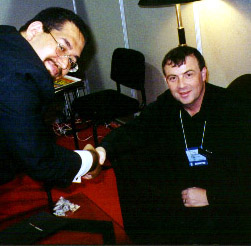
Torus Games out of Australia took over the IP. I hold no ill will to Torus for what went down. In my photograph archives I actually have a picture of myself shaking hands with the President of Torus.We met at the E3 in Los Angeles back in 1999. We talked about what they had planned for Carmageddon 3. The Australian company was trying to make a name for themselves in PC development, and in this case they bit off more than they could chew. It was apparent from the get-go. 

What happened between Stainless Games, and SCi, mirrors what happened between SingleTrac, and Sony. The Twisted Metal series was pretty much the brainchild of David Jaffe, and his team at SingleTrac. They had cut their teeth developing many of the first generation hits for the Playstation, and Playstation 2. The first wave included Warhawk, Jet Moto, and Critical Depth, in addition to the first two Twisted Metal games. They showed that they were capable of innovating in the combat department. It didn't matter if the fights were in the air, on the ground, or underwater. It was a niche they had carved out for themselves. This track record gave them the creative flexibility to begin developing another string of original games for the Playstation 2, including War of the Monsters (another of my absolute favorite games), and Downhill Domination. These titles were all good, but it was Twisted Metal that really took off for them. Then Twisted Metal 2 completely rewrote the book on vehicle combat. Everything that made the first game good was expanded upon. This included the library of characters, cars, physics, animation, combat design, levels, storytelling, music, and especially control. The things that were lacking were polished, and made better. A studio may get lucky out of the gate, but it takes real talent to build a greater sequel. This leap from game to game was not unlike the work that went into Carmageddon, and Carmageddon II by Stainless.

Fans were excited about a third game was in the works from Sony. It would debut two years later, but this time by a new developer. That was roughly the same window of time that Torus had to create an all-new game. 989 Studios took over for Sony, and although they had helped a little with the previous games, they had never been directly in charge of the franchise until Twisted Metal III. Audiences, and reviewers could tell that the game had taken a considerable dip. The control was unpolished, the vehicles lacked the creative spark or the prior games, the combat felt sluggish, and the story didn’t seem to fit the mold. When SingleTrac was dropped the team turned around, and released Rouge Trip which audiences could tell was the spiritual successor to Twisted Metal 2. Even with Sony’s powerful marketing arm, and great soundtrack (although Rob Zombie’s “Dragula” seemed to be featured in every other game), it was not enough to convince audiences that Twisted Metal 3 was  good. Things improved in Twisted Metal 4, which came out in 1999. Most sites commented that the things that were lacking had been fixed, and 989 had finally made a good sequel. By then the damage to the franchise had been done. Word of mouth killed the momentum, as did the bad reviews.

The best thing Sony could do was save face, and ask Jaffe and his team to return. They were given lots of creative freedom to reboot the franchise. The much darker Twisted Metal Black debuted in 2001. It was possibly the highest rated entry in the series. Shortly after Jaffe moved to Sony Santa Monica to begin development on another new idea, a game called God of War. Carmageddon TDR 2000 had dismal reviews, only SCi wouldn’t be able to save face by going back to Stainless. The franchise seemed dead, and buried. Fans got word of mouth that the new game was bad. Really, really bad. Those living in denial waited for a review from a trusted site, or magazine before deciding to pass on it. Their fears were only confirmed. GameSpot gave it a 5.7 out of 10, IGN gave it a 5.8 out of 10, PC Gamer gave it a 59%, and PC Zone gave it a 6.9 out of 10. 

The fallout from critics, and audiences was almost immediate. For starters the game was ugly. Yes it was in 3D, and yes the models, pedestrians, and environments had nice, high resolution textures, and improved lighting effects. But all of this was on a clunky engine. It wasn’t just rough around the edges, it felt like a tech demo for things their company could do. Had this game been on the demo disk I tried out in 1996 I would have passed on the series. The story became a convoluted mess about the apocalypse, a zombie outbreak, and the Carmageddon tournament being a chance for Max Damage to be let into a gated paradise. None of it felt thematically like anything that Stainless had even set up prior. Stages were dressed more like levels in a console game. The whole racing in a dystopian future seemed to take a back seat to mission objectives, and elaborate set pieces. Exploration didn't seem to be as much of a priority as the game seemed to hold your hand from start to finish. Not to mention there was a time traveling element to the levels. Where did that come from? To be fair however, the studio did a few things right. They returned the Suppressor, and squad cars of the first game. Also the studio added pedestrians that fought back against the cars, some even threw molotov cocktails!

You could almost sum up what was wrong with the game by looking at the rides. The Eagle was a shadow of its former self. It was fatter, rustier, and sported a jet exhaust, barely resembling what audiences remembered. Not only that, but the co-stars of the game, Die Anna, and her Hawk were nowhere to be found. Torus was keenly aware of the reputation of the series, their home government  had been very vocal about banning the game. They knew that violence was a strong selling point, and the cars had to go above, and beyond in their design. Several of the cars were very odd, whether they were three-wheeled, shaped like a brick, a hamster cage, or were made of translucent material with a naked driver. Torus was trying to be creative. Yet they would then turn around and put a garbage truck in the lineup. It was a literal work truck that didn’t have any extra flair added to it. To be fair Stainless put a combine in Carmageddon II, but at least it was designed for mowing down wide swaths of pedestrians. Torus also knew how influential the Mad Max movies were to the creation of the franchise. A car styled on Max’s Interceptor from the first film, both the black, and yellow versions, was featured in the game. Other cars like KITT from the TV show Knight Rider was introduced as KNAVE. It was an odd mix of street cars, hot rods, movie cars, and science fiction vehicles that didn’t mesh well together. Torus was trying their best to keep the series going, but they were just the wrong team for this project.

Part of the greatness of the original series were the vehicle designs. I hold the library with the same reverence I have for the Street Fighter cast. Every ride seemed to have a following. It wasn’t enough to just copy a design from a movie. Stainless put a lot of forethought into the look, and handling of each car. It is true that many were inspired by real world rides, but they were made to fit thematically as modified killing machines. The use of colors, spikes, blades, drills, and scythes gave each vehicle personality. No two looked alike. They could easily be made out even in the most heated multiplayer game. More important, each ride had a different effect on the game play experience. Stainless made sure to give the vehicles appropriate handling. It wasn’t meant to be a perfect simulation of driving, or even racing. A real big rig could have up to 18 gears. It would lose half a lap to a sports car just getting out of the first three gears. All you had to do in Carmageddon was point the Rig O’Mortis in the right direction, and mash the gas pedal. No shifting required, and in about four seconds you could be breathing down the neck of almost any opponent. This was arcade control, this was arcade handling. No driving experience needed, not even a steering wheel. A keyboard would do the job. From the biggest truck, to the smallest buggy, Stainless had built a simple-to-use universal set of controls. The cars from Carmageddon, the Splat Pack, and Carmageddon II were all easy to pick up, and play. 

These vehicles not only accelerated faster than their real world counterparts, they often handled better too. Plus they were much stronger than any real car. Audiences could randomly choose any ride, and enjoy the experience. Granted, some cars were more difficult to control, and this was a design choice from the team. It created a challenge for those looking to see the benefits of each ride. There was often an upside to a car that went too fast, or one whose suspension seemed to have more travel than the others. When it was on the right level, perhaps the street vs off-road, it was the car that could dominate the opponents. Then there were the cars that simply existed because they were over-the-top. Maybe they were too slow, rolled, or spun out easily. They’d be extremely difficult to win a race with, but the challenge was worth it for many players. Don’t believe me? There are people that try to beat first person shooter games using only a knife, instead of the biggest guns. To them a greater challenge is the experience they want. I find myself doing the same thing by choosing cars much smaller, or difficult to control, than my opponents. These subtle but important game play elements were lacking in TDR 2000. The majority of the cars were evenly matched, any real strengths or weaknesses were negligible. Torus tried to fix their shortcomings by releasing an expansion pack. The Nosebleed Pack could not hold a candle to the Splat Pack.

SCi had painted themselves into a corner. The franchise had sold millions of copies earlier, and was a game of the year at one point. Now it couldn’t find an audience. No studio would touch Carmageddon because of the controversial reputation. Now they wouldn’t touch it because it was a bad game. The publisher merged with Eidos in 2005. They were eventually taken over by Square Enix in 2009. Square Enix did not want to tarnish their reputation by bringing back the franchise. To audiences it was dead, and buried. That made me sad, but it wasn’t the first game that would never get a worthy revival. Work seemed less interesting after Carmageddon II. Most of my coworkers graduated, or transferred. I left college too, and started working at JPL. It was there that I got news that changed everything. Find out about the Reincarnation in the next blog. If you would like to sponsor me please visit my Patreon page and consider donating each month, even as little as $1 would help make better blogs and even podcasts!
follow the Street Writer on Patreon!