Wednesday, May 21, 2014

Fighting Layer, return of the dragon, final post...

This series began by looking at the film Enter the Dragon and ended by exploring the game Fighting Layer which was created by many of the same people that developed Street Fighter II. Fighting Layer had many of the same elements that made Enter the Dragon unique. There was a powerful and dangerous host that had gathered fighters from around the world. The competition was held on a private island in international waters where no government could intervene. An entire underground complex that housed lethal surprises was waiting for competitors. Even the dragon motif that was featured in the film made its way into the game.


Fighting Layer mixed much more mysticism into the story than any other version of Street Fighter. Although he looked human the host of the tournament was some sort of creature of darkness. He had apparently been alive for centuries and was capable of defying physics and logic. People that lived in the rural areas of China and Japan spoke in superstitious tones about the cursed island in the Sea of Japan. Villagers living near the coast had gone missing for generations. They had been taken by the "dragon" that lived on Zausu Island. Not all of the tournament competitors were familiar with the legends but when they set foot on the island they could tell there was something odd about it. Some fighters were so foolhardy and so confident in their fighting prowess that they welcomed any challenge. When tested against animated suits of armor and man eating tigers they learned quickly that the island would take their life if they stopped fighting even for a moment. Of course the other competitors were just as lethal as any wild animal and willing to do whatever it took to become the greatest fighter ever.


The diversity of characters provided in Fighting Layer was broad and different than those in other fighting games. Although they were set in fantastic circumstances the characters didn't really have the same mythical "fireball" attacks of the Street Fighter characters. Not to mention that the characters had more believable proportions unlike the Street Fighter lineup. This mix of realism and fantasy was unique to the genre. The game offered hidden moves, unique branching paths, secret bosses and alternate endings. The amount of control and gameplay features for the title made it one of the most robust fighting games ever created. Multiple animals that had faced martial arts masters in the comics were for the first time playable against and as. Finally manga geeks or otaku could settle the debate as to what would win in a fight, a shark or a tiger.


The animals and cursed Knight in the game were not half as colorful as the characters and bosses themselves. Each contestant brought with them a unique story and a reason for fighting. Some wanted to prove themselves in the ring, others wanted riches and notoriety. Some were even looking to assassinate the host and bring peace to the villagers on the mainland. Each of the main characters got a piece of the story if they defeated Vold Ignitio. The truth could only be known to players that beat the game with every possible character. Vold was a master of illusions. He could make himself appear like any contestant and even use their own techniques against them.


If he were defeated he might tempt the winner with riches. Players would find out that the treasures he offered were traps. More often than not he would try to attack players from behind when they were distracted by a prize. Several characters were powerful enough to stop him in his tracks while others fell for his lies and got knocked into the underworld. Sometimes he would hit an opponent and simply run away. Those that broke through his illusions saw the character fall to the ground and burn into a ball of bright light. His shadow would be left burned onto the floor. For one character the source of Vold's power was revealed. Tetsuo Kato, the main character saw Vold burn into the ground. He left behind a large crystal containing a DNA double helix. The blue and red strands mirrored the red and blue dragon logo of the tournament. Perhaps it was dragon DNA that gave Vold his powers, bloodlust and longevity. Kato did not succumb to temptation and shattered the crystal with a punch.


The sub boss characters were not as fortunate as the main characters. Not one of them made it off the island as it collapsed. Some of the endings were bittersweet. The assassin Preston Ajax was almost killed in a bomb blast. He had been pieced together with the remains of his brother, who was a mercenary killed in the explosion. He owed Vold Ignitio his life however cursed it was. The character could hear his brother speaking to him in his mind. Both knew that Vold deserved to die for his crimes against humanity. Ajax fought his way to the top in order to kill Ignitio and bring his island down on top of him. The wrestler Clemence Kleiber died of his own arrogance. He wanted to prove to himself that he was the greatest wrestler that ever lived. If he defeated Vold then he stayed on the island and celebrated, oblivious to the fact that the curse that held the island together was broken. The castle came down on top of the one-eyed wrestler as he waved to his adoring fans. Almost as melancholy was the character of Joe Fendi. The boxing champ had a flair for showmanship. He wore expensive jewelry and watches as he battled and would often swap out his sunglasses in between rounds.


The sunglasses were actually a front. Fendi had gone blind in one eye. He wore sunglasses to keep his secret from becoming public knowledge. Because he would not allow doctors to examine him Fendi was banned from professional boxing. He felt cheated by the system and swore that he would go out as the champ. If he managed to defeat Vold Ignitio then he would become the greatest undisputed fighter on the planet. He did not realize that he would have to deal with the castle as it collapsed. Unfortunately for Fendi a stone that fell from the ceiling hit him on the head and knocked off his designer sunglasses. A near blind Fendi crawled along the ground, searching desperately for his shades. Fendi had a personal trainer that would celebrate with him between rounds. In the ending credits the trainer ran through a collapsing tunnel without Fendi. The trainer ended up alone on a raft as he saw Zausu Island burn in the distance.


Fighting Layer may have revisited the sub boss and final boss designs for Street Fighter II but the game did not set itself up for a sequel. All of the villains ended up dead in every possible ending of the game. Perhaps it was Akira Nishitani's way of getting closure on his original plans for SF II. The producers on Street Fighter, SFII, SFEX, SF Zero and SF III did not want to keep developing sequels for their games. They wanted to tell a distinct story and close it out. They did not want to get locked into a series of upgrades either. Capcom hoped to capitalize on a successful game and turn it into a series. That was a pitfall of market based production. The majority of Capcom fighting game producers had only one story that they wanted to tell in each game. These were never meant to be a jumping off point for any other sequel. The producers wanted fighting games to be treated like other genres and be enjoyed as stand-alone arcade experiences. By killing off the villains and burning down Zausu Island Mr. Nishitani ensured that if he made a Fighting Layer 2 that almost none of the original characters or locations would be revisited.

ARIKA had put enough into Fighting Layer that it could stand on its own and not have to draw comparisons to Street Fighter II or any other fighting game. The first thing they addressed were the visuals. Game production for consoles and the arcade had moved to 3D. The era of the sprite had passed and there was no getting around that fact. The downside for most fighting games were the aesthetics that sprites provided. The Street Fighter series was established in 2D and the work of the 20+ designers created a cast that still has not been surpassed. Characters in the 2D fighting games had undeniable style. The artists could get away with exaggerated proportions and scale in 2D and still make the designs visually appealing. In Street Fighter EX it was obvious that the characters did not transition well to 3D. They looked bulky and generic. ARIKA learned from EX and created a cast that had more visual flair by the use of strong contrasting colors which would stand out more in 3D. In order to help bring over the influences from 2D design the studio added lighting and modeling effects that made their characters pop off the screen. The costume of Exodus for example actually reflected light as if he were wearing a gold flake painted singlet, the YouTube video of the character barely catches those details. That was not the only visual innovation that the company had added to 3D fighters.


In traditional animation a "smear" was a technique used to create blurry shapes indicating speed. Game characters in 3D moved quickly without any blur or smear effects. Other studios like Sega had experimented with effects to make their 3D characters look blurry while moving fast but none of the studios could quite get the effect right. ARIKA found a way to program an effect similar to a smear. The filter made streaks matching the colors of the character uniforms to create the illusion of speed. It didn't matter if the character were dashing forward or leaping backwards or even if they were dropping down from the rafters. The direction of the streaks followed the characters and the length and intensity of the lines were directly related to how fast they were moving. For example Vold Ignitio was capable of zipping back and forth between the walls with his leaping attacks. He looked like a long narrow streak of red, gold and black while doing so. Jigjid Bartol was large and slow by comparison and rarely got any sort of speed lines applied to his animations. The game also made great use of particle effects and transparencies. Flame and smoke for example were very well done in the game. This was important to Exodus as he could set his opponents on fire and then hit them with a chair.

In addition to the colorful cast of characters the biggest contribution that ARIKA gave the genre were its stage designs. Each stage in Fighting Layer told a story. The entire design was a narrative about Zausu Island and the empire that Vold controlled. Everything the camera showed, from the volcanic underground to the highest point in his castle was ruled by Ignitio. As the camera rotated 360 degrees around the players there was always something interesting to look at. The color choices, details and architecture complimented the theme of the game. When ARIKA wanted to show gamers a village that had been neglected for over a century then they went with faded colors, splintering wood and steam engines in the distance. When ARIKA wanted to show players what the new industrial heart of the island was then they created an enormous futuristic refinery. When ARIKA wanted players to see how opulent the castle of Vold was then they created room after room made of polished marble, stained hardwood and gold statues. All these visual cues grounded the characters into the reality that ARIKA was going for. There were places like this on Earth, countries that had a mix of the old world and the new world in a relatively small area. Of course there were also barons and business tycoons that had amassed fortunes and ran small nations. Without his dragon powers Vold very well may have been a crazed royal, dictator or mafia boss.


The idea to infuse the location with supernatural elements while keeping the fighters grounded with plausible fighting styles made the game unique. ARIKA had done similar things with the locations and characters introduced in Street Fighter EX. Fighting Layer was a more complete version of the themes they had previously explored. It was a worthy way of closing out their original fighting games. They did go on to adapt Namco's Tekken series for the Nintendo 3DS but they never created a new fighting game on their own. They teased a 3DS version of Street Fighter EX called Fighting Sample as an April Fools Joke but had no real intention of following up with an actual game.

Most of the original Street Fighter II developers had long since moved on from Capcom. They appreciated the institution that their fighting game became but had no intention of revisiting it. They wanted to try their hand at puzzle games, racing games, simulation games and more original properties. Fighting Layer was the last time the senior Capcom team members created a fighting game in the same vein as Street Fighter II. When it came out it was overlooked by most gamers as well the gaming press. The genre had grown and collapsed by then. Gamers were looking for new experiences. New team members were scouted and groomed by Capcom. New developers that grew up playing Street Fighter II tried to reinvent the game and call it Street Fighter IV. It played well but did nothing innovative with the IP. Instead it played up to the nostalgia for the various characters through the years. It was a reminder of why ARIKA, DIMPS and the other companies started up by former Capcom employees decided to leave. 

Street Fighter II was a groundbreaking game but it was in the past and instead the producers wanted to focus on the future. They had new ideas and took bold chances with the genre. Not all of these ideas worked for the Street Fighter universe or even with the Street Fighter mechanics but they did help make Dragon Ball Z, Naruto, Yu Yu Hakusho and Tekken games much better. The legacy that the developers left behind would last as long as gaming remained a part of pop culture. We must remind ourselves that they would not have had created Street Fighter II had they not been influenced by martial arts films like Enter the Dragon and The Master of the Flying Guillotine. Pop culture would continue to influence the creators and the creators would continue to change pop culture. It wouldn't hurt for the current crop of fighting game developers to look at more films and read more comics from time to time. Inspiration could be found from just about anywhere. I hope you enjoyed this series. If you have any comments or questions be sure to ask. If you would like to sponsor me please visit my Patreon page and consider donating each month, even as little as $1 would help make better blogs and even podcasts!
follow the Street Writer on Patreon!

Tuesday, May 20, 2014

Fighting Layer, return of the dragon, part 8...

As Fighting Layer progressed gamers moved deeper and deeper into Zausu Island. They also moved higher into the property of the host Vold Ignitio. The stages went from open air arenas to enclosed rooms. You would think that at some point the designers at ARIKA would paint themselves into a corner but that wasn't the case. At no point did the levels make gamers feel claustrophobic. Each room in Vold's castle seemed to take up 5000 square feet. Even the corners of the castle seemed to stretch out forever. The Entrance Hall was possibly the smallest room on the estate. There were three doors leading to one of three animal bosses. I'll start at the top and work my way down through these rooms.


The second highest point in the castle was an observatory called the Bird Room. A mis-translation labeled it the Bard Room in the arcade screen. The dome was the perfect setting for the giant Falcon that Vold Ignitio kept as a pet. An enormous painted mosaic of the sky framed the dome. Players fought the Falcon on top of an elevated platform. The bird was difficult to reach as he could fly higher than any player could jump. He would then swoop down suddenly and strike with claws extended. Players that managed to get the bird down to their level had to strike it in rapid succession and hope that they could connect with a special attack. Otherwise it would fly back up and wind down the clock. The alternate animals were no easier to fight.

Players that chose the second door from the Entrance Hall went right to the heart of the castle. It turned out that the host of the tournament had prison cells located underneath his opulent rooms, enough to hold an entire populace. Perhaps the missing residents of the island in fact. The Spawn Room was where the Tiger waited. Players found themselves locked in the cage with the creature. There was of course only way out, to defeat the man-eater himself.


Players could actually reach the Spawn Room if they took the alternate underground path but they could not reach the Bird Room from the underground passageway. The final animal room could only be reached by going through the Aquarium. Players found themselves on the ocean floor in an eerily illuminated cave underneath the castle. There was no rhyme or reason for how players were able to survive underwater without breathing apparatus. I would simply chalk it up to sorcery of some sort. There were many unexplained things about Zausu Island and this was just another one.

The Sea Zoo was the home to a great white shark that enjoyed feasting on fighters and whomever else crossed Vold. An unknown number had met a watery grave in this stage. No manga or animé series had even attempted to explore the possibility that a fighter might stand a chance against a shark. Tigers, bears, lions and giant falcons were plausible in the comics but sharks were absurd. ARIKA gave players a chance to try their hand against the perfect killing machine. Punches and kicks seemed ineffective against the Shark. The best strategy would be to strike with a fast combo and then get out of the way. If it got close enough to players it would grab them with its mouth and shred them to pieces. It only took a couple of bites to kill the strongest fighters.


Players that managed to defeat one of the animal bosses would be able to advance to the next stage. It was assumed that the bosses on each level following had proven their worth by defeating the animal boss as well. Starting at the topmost level there was the Blue Room. It was set in the same observatory as the Bird Cage. This time the platform was lowered to floor level so that players could make out the intricate details on the walls. An enormous Chinese Zodiac dial was hanging on the wall. It was pointing at two sets of characters. The zodiac actually consisted of multiple animals, there were the 12 animals known popularly for the year. However there were also animals assigned by month, day and even hour. These were known respectively as the inner animals, true animals and secret animals. The dial in the Blue Room was pointing at the Dragon Year and Dragon Month, which meant that the Fighting Layer tournament took place between April and May every 12 years. This "Double Dragon" competition had been going on for centuries. One dragon would be crowned and would have to face the dragon that resided in the castle. The Blue Room was the stage where players faced Joe Fendi. The flashy Fendi fit right in with the ornate decorations and gold filigree that covered the walls of the room. Dark burgundy corridors lead to unknown rooms and unknown challenges off in the distance. The Blue Room had a lot of storytelling elements applied to it. Budding game designers could learn a few things by dissecting the construction of each room.


The core of the castle was known as the Red Room. It seemed that Vold had amassed a private army and kept it well hidden. Enormous war machines lined the walls. They were parked row after row and level after level. Players could see that they ran all the way into the distance, into one of the cavernous antechambers underneath the castle. The room lived up to its title as players fought on red iron grates. The room was the stage where players fought Preston Ajax. It made sense that Vold would have the mercenary acting as the leader of his military force. Ajax had seen combat action all around the world and was responsible for the deaths of untold numbers. With his wire garrote and explosives Preston may have been the most dangerous of the sub-bosses in the game.


The Green Room was in the lowest level of the castle but it certainly wasn't treated like a basement. In fact it may have been the original location for the final match of the tournament. A multistory library was hidden behind enormous red tapestries that hung from the ceiling. There was a wrestling ring in the center of the room and the canvas of which had an ornate pattern woven into it. Fancy hardwood chairs were arranged along the wall, for unseen dignitaries and other guests for the tournament. A harpsichord was situated ringside to provide entertainment between matches. A terrace for the host complete with a throne overlooked the entire ring. This was certainly the most regal arena ever created for a match. Players fought Clemence Kleiber, the king of old-school catch-as-catch-can wrestling here. Clemence actually had an extra special attack that he could only use while in this ring. The character could use the turnbuckles to superplex his opponents off of. Players learned quickly to stay away from the ropes or run the risk of being brutally punished.


If a player managed to defeat an animal boss and a sub boss then they would finally get a chance to take on the host of the tournament. The highest point on the island was a tower in the castle named the Dragons Room. The room had open wall panels that offered a glimpse to the mossy stones that made up the exterior of the tower. The level promised a drop of a few hundred meters if players could not stay on the platform. Actually much to the chagrin of many gamers there was an invisible wall that prevented players or opponents from falling off any platform in the game. The dragon motif that symbolized the Fighting Layer tournament decorated the walls and floor of the Dragons Room. Vold Ignitio used the open area to demonstrate his full power. He could climb the walls and plunge down onto opponents like some sort of vampire bat. He could also pounce onto opponents and drag them around by the neck like a jungle cat. Despite his outward noble appearance Vold was a vicious animal, much more dangerous than any creature he kept hidden in his castle.


There were actually multiple endings for each character depending on how well they had done in the tournament and whether or not they had lost a single match. Players that beat Ignitio but lost a match along the way got the basic ending. After defeating the boss the castle and island began collapsing. During the credits an animation would show their character running through a tunnel that was falling apart around them. They would then get the Game Over screen.

Players that met the right criteria however would go onto a final challenge. They would be thrown into the abyss of Zausu Island where the True Knight was waiting for them. They literally went from the highest point to the lowest point of the island in one stage. The Underground 2 was similar to the original Underground stage, only now the Knight had a red lance and was much more difficult to defeat. If players beat him then they had a more complete ending. During the credits they would see their player run through the collapsing tunnel and actually end up on a raft floating in the Sea of Japan. The character would be looking at Zausu Island burn from a distance. Whatever dark secrets the island hid and whatever evil forces had created Vold would remain a mystery.


Fighting Layer was not the hit that ARIKA had anticipated. The genre had lost steam through the mid to late '90s because the market had become completely saturated with fighting games. A revised version of the Street Fighter II myth was lost to most gamers. The lessons provided by the studio within the game were still valid for designers though. The next and final blog in this series will close this chapter on fighting game history. If you would like to sponsor me please visit my Patreon page and consider donating each month, even as little as $1 would help make better blogs and even podcasts!
follow the Street Writer on Patreon!

Monday, May 19, 2014

Fighting Layer, return of the dragon, part 7...

Fighters were drawn from around the world to Zausu Island in the Sea of Japan to participate in the first Fighting Layer tournament. The island was a nation run by a mysterious figure named Vold Ignitio. Only the best of the best were invited to compete and these included two participants from the Street Fighter EX tournament. The team at ARIKA had approached their new fighting game with the same intent that they had in the original Street Fighter II. As the tournament began the first place that players would visit would be the port. As the game progressed the stages would get harder as the players wandered deeper into the island. Ultimately they would reach the literal peak of the island, which was a castle that seemed to go on forever.


Two of the first stages conceived in SFII were those of the port and factory. The two levels would become tied to the characters Ken and Zangief. This time around the stages had random characters appear on them. Only the sub bosses could be expected in the same place near the end of the game.


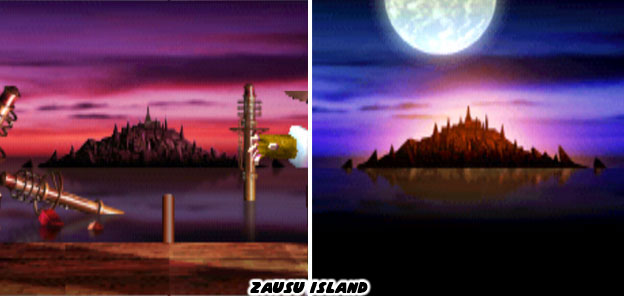
At the onset Zausu Island appeared like an industrial paradise. The first stage, the Factory, had a ring set out in the port. The walls were made of iron girders. The walls and floors of each arena reflected the stage itself. In the distance were giants pipes from an oil refinery. The refinery stretched off in the distance for a full 360-degrees around the arena. Arika had gotten plenty of practice creating stages in pseudo 3D in Street fighter EX. Prior to that all of the important information or the supporting details in most stages had to be presented straight on in one angle. The camera might pan left or right but not rotate. Audiences had no idea what was around the corner or behind the camera in Street Fighter II, III or Zero. That all changed in Street Fighter EX when the camera rotated a full 360 degrees and the entire stage had the same level of detail as the 2D screens.

When ARIKA began developing stages for 3D fighting games they often lamented the lack of storytelling elements that the 3D arenas in Sega's Virtua Fighter and Namco's Tekken had. Most 3D engines in the mid '90s did not have enough processing powers to render an actual 3D level with much detail. So instead shortcuts were used. Sega limited the draw distance of each stage, used simple textures or created walls to keep the action close to the characters where the rendering engine could animate the complex character models. By comparison Namco and ARIKA used pre-rendered 3D backgrounds that were "stitched" together into a 360-degree panoramic canvas. These backgrounds were highly detailed even if they lacked animated elements. The game engine would only render a small bit of the arena floor underneath the fighters and obscure the rest in shadow. Players could never actually move any closer to the backgrounds no matter how much they ran in a particular direction.


Based on the gigantic pipes and infrastructure it appeared as if Zausu Island had a lot of natural resources. The Factory level was reminiscent of the stages designed for Zangief in the Street Fighter EX series.

As players went further into the island they discovered that the modern factory had been built on the outskirts of an older factory. The architecture and details in Factory 2 looked like they were pulled from 19th century western mining colonies. There were steam engines, ore carts and rusted trains in the distance. Perhaps this was the area that gave birth to Zausu Island's industrial revolution. It now looked like a ghost town, lacking employees. There was an eerie stillness to the level which gave rise to the questions; how old was the island, where were its inhabitants or employees and how long had the sponsor been living there. Surely Vold Ignitio was not the founder of the centuries-old colony, or was he?


Players did not get to stick around at the factories for very long before the true face of the island began to show itself. After two stages the characters were thrown into a pit. The underground arena was a caged off island surrounded by menacing iron fences and the boiling glow of lava. The Underground was more like the Underworld from mythology. In the distance there were eerie carvings on the walls and gigantic chains lining the walls and plunging deep into the bowels of the Earth. This was where the Knight first showed up. Players learned very quickly that the Knight moved slowly and methodically but had the strength of a tank.


If a player managed to defeat the Knight then they were able to climb out of the Underground. The path took them to an enormous Garden. The stage was very reminiscent of the garden that Lady Clarisse d'Cagliostro, from the film the Castle of Cagliostro, used to visit. The ground seemed overgrown and not well tended to. It was overrun with ivy and hanging vines. A statue of two enormous dragons was in the distance. The twin dragons were the symbols of the Fighting Layer tournament but also symbolized the evil that lived within the island. If players had managed to defeat all their rivals up until that point with special attacks and without losing a round then the first surprise boss would show up. Blair Dame would kick out whatever character was waiting to face the player and challenge them instead.


If a player did not manage to defeat the Knight within the time limit then the game was not over. Instead they would be put on the outskirts of the island on a floating stage. The level was dubbed the Airplane and a wreckage of a jet was slowly decomposing in the shallow water. There was even a cargo ship that had run aground near the stage. It appeared as if the area had been a runway at some point. The island must have sank or flooded at some point and this area had become a graveyard for commercial vehicles. The stage was very much like a last chance for competitors. If they wanted to continue in the tournament they had to defeat whatever opponent had also been banished to the outskirts. If they failed then they were at least part of the way back to China or Japan.

Notice that each stage featured so far had a distinct color palette. The colors reinforced the theme for each level. They made a factory look modern or aged depending on the tones and hues selected. Vibrant colors helped add intensity to the levels and muted colors helped create a sense of age and neglect. The colors used on the Airplane stage were ominous. Night was closing in on the player and if they didn't get back to land then they would be stuck on a metal island floating on the pitch black ocean.


If players managed to defeat their opponent at the Airplane level then they made their way back to Zausu Island. However they did not climb right to the top. Instead they took a subterranean passage through the island. The only way to experience this branching path was to actually lose to the Knight in the first Underground encounter.

This approach to level design was unique to Fighting Layer. Street Fighter II was very linear in comparison and offered little diversity for players. In SF II the same opponents were waiting in every stage each play through, unlike the random opponents and even surprise mid bosses that would turn up in Fighting Layer. The next level in Fighting Layer was comparable to the Garden, only underwater. There was plenty of eye candy in the Aquarium. Instead of observing fish inside of a tank the roles were reversed. Contestants fought within a glass arena while the sea life swam all around them. It was one of the more beautiful stages in all fighting game history.


Meanwhile, a few hundred meters above the Aquarium the contestants that managed to get past the Garden finally made their way into the castle where the tournament host lived. The floors and walls of the Entrance Hall was covered in ornate polished marble. Golden statues illuminated the doorways, the portals to the other enormous rooms in the castle. This was the second location where a mid boss might appear if players met the right criteria. This time it was Allen Snider, the other cameo character from Street Fighter EX.


The most memorable challenges would take place if a player defeated his opponent on this stage. Each of the doors in the Entrance Hall offered a choice to players. Beyond would be an opponent unlike any they had ever faced in any other fighting game. The next blog will look at the stages that made up the castle on Zausu Island. If you would like to sponsor me please visit my Patreon page and consider donating each month, even as little as $1 would help make better blogs and even podcasts!
follow the Street Writer on Patreon!

Friday, May 16, 2014

Fighting Layer, return of the dragon, part 6...

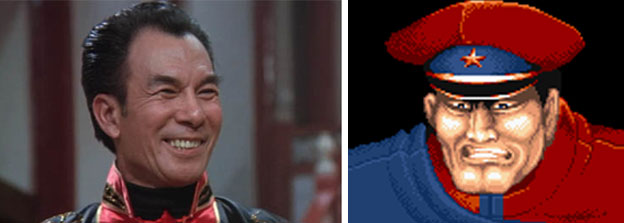
When the series first started I wrote about how influential the characters and plot to Enter the Dragon had on the development of Street Fighter II. The crime lord Han in the Bruce Lee film had a hand in inspiring the military general Vega in Street Fighter II.


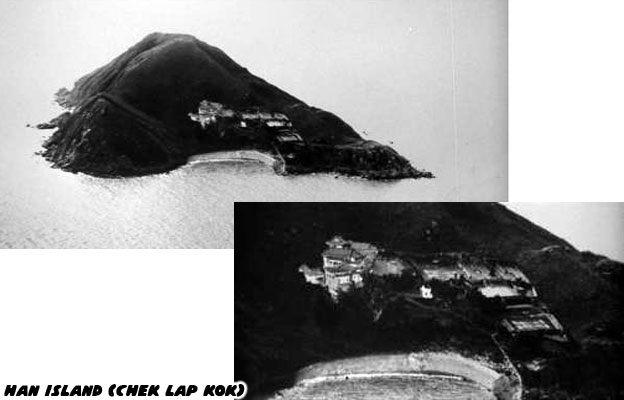
Han's island fortress was even the inspiration for the original design of Shadowlaw. It was where the entire Street Fighter II tournament was supposed to take place.


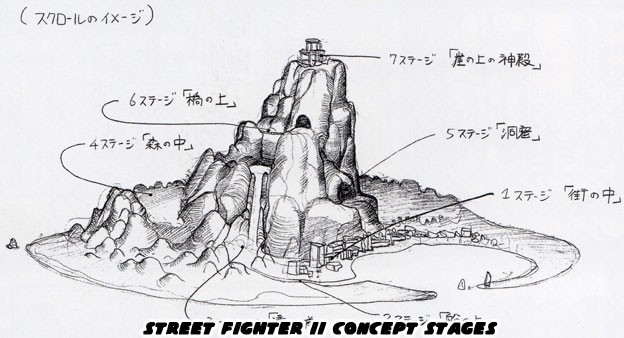
Before they were scattered through every corner of the globe all of the stages in Street Fighter II had been set in a singular location.


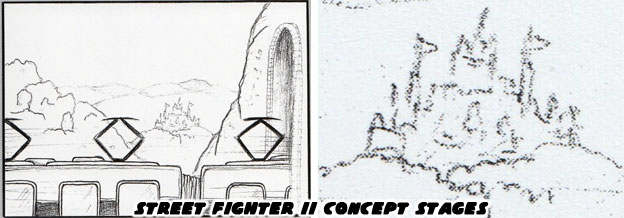
One of the levels proposed for Street Fighter II one was supposed to take place on top of a speeding train. In the distance there was a shot of the castle that the host resided in. The previous blog showed that the original boss characters for SFII looked like medieval knights. It could have been possible that the final battle took place inside of this castle. It wouldn't be the first time that a fighting game stage was inside of a castle, let alone a boss level. It would however be the first time that players could see themselves speeding towards the final destination a few levels prior.


Almost a decade later Akira Nishitani revisited the plans for Street Fighter II and created a new title that made use of ideas that were left behind. The entire Fighting Layer tournament took place on an island, Zausu Island to be precise. The final level was set in the castle at the center of the island. The island looked eerie and uninviting. Sharp jagged rocks framed the island that was trapped in perpetual twilight. From a distance it appeared supernatural, like a location from a horror film.


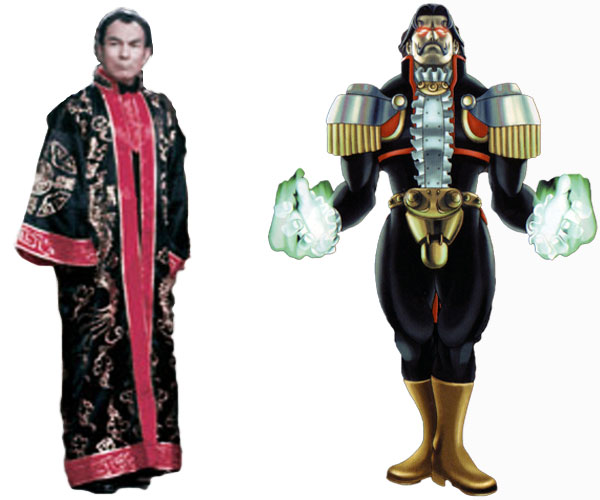
The host of the Fighting Layer tournament owned the island and everything in it. He was as eerie and mysterious as the location itself. Vold Ignitio dressed like an aristocrat although there was something more menacing underneath his costume. Again we would have to return to Han to find the inspiration for this type of character. Han after all made a castle his home and seemed to live an opulent lifestyle. It was all a clever facade to help keep authorities from taking too close of a look at his estate.


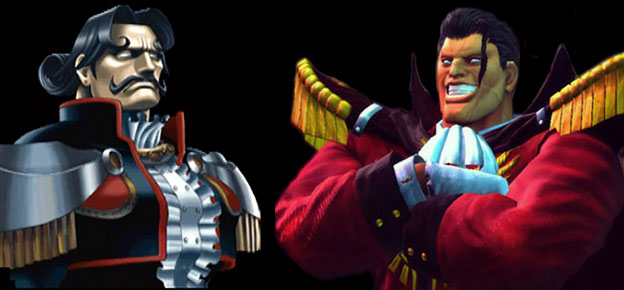
Vold was very much a retelling of Vega from SFII. Both characters did not dress like traditional martial arts masters. Vega had a modern militaristic uniform whereas Vold had a costume more like a royal military outfit. They each had an assortment of awe-inspiring moves that could tear through opponents with ease. They could even defy gravity and finish opponents with a few powerful strikes.


Despite his costume Vold acted much more savage than any other character in Street Fighter history, with the exception of Blanka. He would slash at opponents with his long fingernails and even pounce and maul his opponents like the Tiger which he kept under his castle. He was a very arrogant villain, taunting his opponent with his outlandish stances.


The setting of the Fighting Layer tournament was probably the most interesting part of the game itself. Each stage had personality. Each level told a story and the collective could be considered the template for great stage designs. The next blog will look at Zausu Island in more detail. If you would like to sponsor me please visit my Patreon page and consider donating each month, even as little as $1 would help make better blogs and even podcasts!
follow the Street Writer on Patreon!

Thursday, May 15, 2014

Fighting layer, return of the dragon, part 5...

Many of the early designs for Street Fighter II characters were based on what the Japanese found exotic, which was often Western characters and themes. I don't mean cowboys and indians however, I mean gangs, tattoos and thugs that were different than the Yakuza or Japanese criminals. Some of the other things that the developers found interesting were European culture, architecture, design and mythology. To this day many in Japan have a fondness for Victorian-era England and late 19th century / early 20th century Belle Époque France. Aristocratic characters in manga and animé are dressed right out of the Guilded Age and often lived in opulent mansions. They are waited on by butlers and maids even in high school and at work in many of the titles. The boxer Dudley in Street Fighter III and Lili de Rochefort from Tekken 5: Dark Resurrection are two of the more famous aristocratic fighters. They view themselves as superior to their counterparts in every way, but especially in fighting and etiquette. The original boss designs for Street Fighter II were far more different than the playable characters audiences saw. The majority of the cast had a martial arts style that could easily be identified by players. Karate, kung-fu and boxing masters could easily be made out by gamers after all. The final bosses had to stand out and not necessarily reflect any actual technique. Shadowlaw started off as an island before it became a landlocked country in Southeast Asia. In the planning stages the architecture and infrastructure on the island was Western. It was a blend of modern with the city and port, but also classic with the countryside. As the peak of the island there was a temple where fighters met the final boss. It was not always an Asian temple and the final villain was not always Asian.


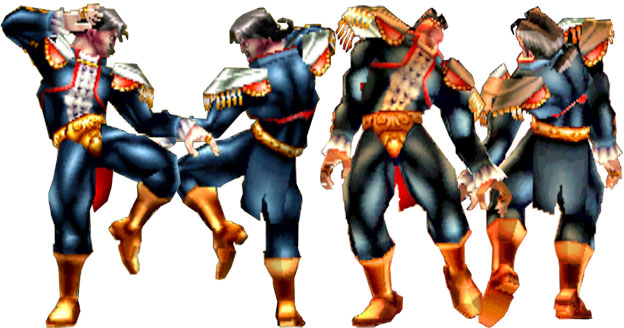
Before the assassin became a mask-wearing Spaniard he looked more like a Templar Knight. This character completely broke the visual consistency of the rest of the cast. The armor, sword and tunic were from another era. Capcom might have made the character work but that would have meant revising the locations and themes they were already working on. It would be easier to redesign one character than change an entire game to make that character work. The boss went back to the drawing board and the designers tried to figure out what made him interesting. He needed to have a weapon but a sword would be hard to work around. The claws did increase the reach of the character but were less than half the length of a sword. The helmet was too cumbersome for a fighter so it was switched out for a mask. They mystery element remained but the character became more believable. The costume and tattoo were very reminiscent of the pirate San-Po from the Jackie Chan film Project A.

An alternate to the knight was also in the planning stages. This character was a mix of contrasting elements. He too wore a mask but not a suit of armor. Instead he had an armored vest and shoulder pads. The character appeared more like she sort of European ninja. The early designs for Balrog and Vega, and even the medieval theme for Shadowlaw could have been inspired by the 1979 film the Castle of Cagliostro. The film featured assassins that were dressed like armored ninjas and also sported claws. It was considered one of the best animé films ever produced and one of the most memorable adventure films of all time. There was no doubt that the Capcom designers were familiar with the film and the fantastic world that director Hayao Miyazaki had created. But again, if Street Fighter II were to use villains inspired by the film then the entire game and levels would have to be re-themed in order to make them work with the cast.


Fighting Layer was different however. Akira Nishitani was revisiting the plans for Street Fighter II. This time he took a different path than producer Yoshiki Okamoto did with SF II. Nishitani wanted to have more fantasy in the game and allow his cast of fighters adapt to the weird and supernatural. Great fighting game characters were not far removed from the heroes in manga and comic books. At least not in the mind of Nishitani. Audiences didn't need to have everything explained to them in order to suspend their disbelief. The word "magic" was often more than enough for them to get the idea. In Fighting Layer players were dropped into a pit where an animated suit of armor appeared out of thin air. It was taller than the the other characters and moved very slowly. Punches and kicks did not knock the character down, only special and super attacks could manage that. The Knight swung a heavy lance, much longer than the sword that was originally planned for Balrog. The balance to giving an opponent a long weapon was found by making the character use it very slowly. This gave players time to dodge the strike and work on counter attacks. If players managed to defeat the Knight then he would fall apart in a cloud of smoke and flames. They would then be able to continue through the game. If time ran out then the suit of armor would simply turn and walk away, breaking into tiny pieces and fade into nothing as it took each step. It was an eerie sight for gamers.


There were actually two distinct Knights in the game. The original Knight in the second stage and the "True" Knight at the end of the game, after the host of the tournament was defeated. The True Knight was slightly stronger and could take 80% of an opponents energy before the match even started by throwing his lance at players as they fell into the underground stage. It was obvious that there was much more to this world than had been seen in other Capcom fighting games.

ARIKA had actually infused their fighting games with supernatural elements much earlier. In Street Fighter EX the character of Kairi was under the influence of evil spirits. They were in fact the source of his powers. His sisters were trying to bring Kairi back from the brink of madness in the plot of the game. One of the boss characters created for the series was an animated suit of samurai armor. The villain named Gardua had no true face. He was the first completely supernatural character introduced into the series. Because he could have also been interpreted as a madman in armor and not some sort of ghost then he was entirely plausible within the world of Street Fighter.


There were plenty of clues that the supernatural was a part of the Fighting Layer world and even a part of the competitors. The eerie glow of the eyes on ninja Sessyu Tsukikage mirrored the eerie glow that inhabited the armor of the Knight. Sessyu's ability to disappear and reappear in a puff of smoke seemed even more incredible than the ninja myths. Perhaps he too used some sort of magic to give him an edge in combat.


Every gamer that had read a comic book or watched a cartoon knew that spirits and giant animals would have to be under the control of some powerful villain. Whether the tournament was set in the real world or some sort of Twilight Zone there was still a host pulling the strings. This person may have been a drug lord, dictator or even sorcerer based on previous games. The truth would only be revealed to the fighter that made it through the final battle. The next entry in the series will look at the organizer of the Fighting Layer tournament and try to find his roots. If you would like to sponsor me please visit my Patreon page and consider donating each month, even as little as $1 would help make better blogs and even podcasts!
follow the Street Writer on Patreon!

Wednesday, May 14, 2014

Fighting layer, return of the dragon, part 4...

Fighting Layer featured quasi-believable good and evil martial arts masters in a tournament setting. This was a tradition that was started in Street Fighter II in 1991. The majority of the developers working at ARIKA had worked on both titles. Through the cast, levels and character designs they wanted to make a distinction between the two games. They had several branching paths in their title that allowed players to explore alternate sub bosses and endings. The previous blog had highlighted the human sub bosses. However before players even got a chance to challenge them they first had to defeat dangerous animals. Each of the animals was a master of their respective element. The first of the creatures was very believable and very difficult to beat.


The Tiger had only a few attacks but each of these attacks did a tremendous amount of damage. He swiped with his massive paws, leaped forward with them out and could even pounce and maul his opponents. The Tiger was the creature players had to face before fighting Preston Ajax. The tiger was one of the predators that karate and kung-fu masters were rumored to have tested themselves against. I only say rumored because an actual case, with actual evidence from history had yet to appear. The closest thing to reality was the character Wu Song, a person that appeared in the Water Margin, better known as one of the 108 Heroes of the Marsh. This Chinese fighter had gotten drunk on his way to a village and crossed paths with a ferocious man-eating tiger. He was either very brave or very drunk (or both) when he took on the tiger with his bare hands. He managed to get behind it and proceeded to bash its head in with his punches. Many of the Heroes of the Marsh were inspired by historical figures and actual events. There was a chance that Wu Song existed in some point in the past and had indeed done the impossible.

What was not rumor however were the creatures that martial arts master Mas Oyama had tested himself against. One of his most legendary encounters was against a wild bear. The bear had been menacing the residents of a rural village. Oyama decided to test his form of karate against the bear in an exhibition match. In the end he had to fight for his life and a hunter put down the bear with his rifle. In the manga and animé retelling of his life the battle was made very dramatic and drawn out but the actual fight probably took less than a minute. Of course even a few seconds in a cage with a bear can seem like an eternity. As Oyama got older he would stage exhibition matches against a bull. He would wrestle it to the ground, chop off its horns and kill the bull with a well placed punch to the head.


He would often wonder aloud with his students and friends, often members of the press, how well his Kyokushin karate would hold up against the strongest predators in nature. He always wanted to try his luck against a tiger but would never get a chance. This did not stop him and his contemporaries for coming up with strategies on how they would have taken on all sorts of creatures. They would publish these articles in martial arts journals and help build the legend of karate. Battles against wolves, tigers, bears and even gorillas were discussed. Some were set against actual historical encounters. Stories of hunters and samurai that were ambushed in the forest centuries earlier and how they used their martial training to defeat the creatures helped support some of the claims. These stories colored the world of the young programmers and designers. It wasn't enough that they had been raised on a diet of martial arts films, pro wrestling, sumo wrestling, pro sports, manga and animé, they also had real world legends to draw from. By the time they got to Capcom they were more than ready to create the first generation of virtual legends.

In many manga and manhua (Chinese comic book) stories wild animals could be tamed or defeated in unarmed combat. These stories were often fantastic in their representation of the martial arts masters. In many cases the youngest fighters could sometimes do the impossible. Such was the case for Karin Kanzuki, the arch-rival of Sakura from Street Fighter Zero fame. As the heiress of the Kanzuki empire she showed up her father by defeating the fearsome creatures that patrolled the Kanzui estate in Japan. She defeated a grizzly bear and giant falcon before taming a lion. At the tender age of 15 she had done more than Mas Oyama had in his real or manga lifetime.


The giant bird of prey returned in Fighting Layer as one of the animal bosses to defeat. Like the Tiger, this creature was incredibly fast and powerful. A few strikes was enough to kill most players. The Falcon had to be defeated before players could challenge the boxer Joe Fendi.


The animals in the game had moves that were appropriate for them. None of them stood on two legs and tried to trade punches and kicks with the players. Instead they lunged and slashed ferociously. The Tiger would pin down opponents and maul their faces. The Falcon could pick up opponents and then drop them from a tremendous height. It was always a challenge playing against them but it was even more enjoyable playing as the animals against human opponents.


The animal bosses were time release characters. After a few weeks in the arcade both the animal and sub boss characters became playable. Allen Snider and Blair Dame were the hidden mid-bosses in the game. They could only be fought if the player met the right criteria, like not losing a round and finishing opponents with a super attack.

There were three sub-bosses however and I have only mentioned two of the creatures so far. Both the air and land were covered already but what about the sea? What creature rules the seas in the minds of most players and would make quick work of even the best fighters ever?


A Shark patrolled the sea floor around the host island of the tournament. This character had to be defeated before players could face Clemence Kleiber. Players actually had to face the creature underwater in a stage called the "Sea Zoo." It, like the Tiger and Falcon, would try to circle around the player and look for an opening before striking. The Shark could fit players in its mouth and cut them to ribbons. A few bites could kill players within seconds. It was possible that the Shark was the toughest of the animal bosses to face, just as one would imagine. When the character was unlocked in the game he would actually float above ground and play with the same physics as he had underwater. Players could even get the Shark to "swim" outside of the barrier for each stage where regular players could not tread. In the eyes of many Fighting Layer literally "jumped the shark" with this character. Those that were willing to suspend their disbelief however learned that the game was supposed to be fantastic and over-the-top. The explanation for the creatures, sub bosses and tournament itself was grounded in the supernatural.

When I began this series I mentioned that the film Enter the Dragon had inspired much of the development for both Street Fighter II and Mortal Kombat. Street Fighter was rooted in science and realism, with a militaristic dictator running the tournament. Mortal Kombat was rooted in the supernatural, with an ancient wizard hosting the tournament. Fighting Layer was actually a blend of both mythologies. Fantasy and animal characters acted as the sub bosses while the actual competitors were rooted in real martial arts. The understanding that the game was not entirely based in reality was presented in the very second level of the game. Players had to take on an animated suit of armor in an underground cage. It was obvious then the game would be mixing fantasy and reality elements. Players that didn't understand this inclusion of fantasy would be lost through the rest of the game.


The seeds for the fantastic elements in Fighting Layer had been planted in Street Fighter EX. However some of those designs had been around since the planning stages for Street Fighter II as well. The next blog will look at these origins. If you would like to sponsor me please visit my Patreon page and consider donating each month, even as little as $1 would help make better blogs and even podcasts!
follow the Street Writer on Patreon!

Tuesday, May 13, 2014

Fighting Layer, return of the dragon, part 3...

The Fighting Layer tournament had pulled together many different styles of martial artists. Some of these archetypes reminded players of the Street Fighter II icons. Developer ARIKA had revisited some of the prototypical characters in the planning stages for Street Fighter II while building a cast for their new tournament. Two of the more lethal fighters had very contrasting styles yet both had a similar goal, to kill a target. The ninja Sessyu Tsukikage fought like a man possessed. He had an arsenal of quick attacks and traditional weapons. The man was extremely fast and could even disappear in a puff of smoke and drop down on opponents with his sword. The homicidal maniac Janice Luciani balanced out the ninja. She was a crazed killer that used knives and guns on opponents. It was suspected that both characters were trying to assassinate the sponsor of the tournament. Of the two Luciani seemed content with killing all her opponents on the way to the top.


All of the characters announced thus far fell in the realm of possibility. Most were rooted in real fighting systems. The artists and designers at ARIKA did not use exaggerated proportions to make characters giants like Zangief or Sagat. Yet part of the charm of Street Fighter II was the oddball characters that fought alongside the "regular" characters. The wild man Blanka and elastic yoga master Dhalsim had become icons to fighting game fans. Those characters looked and fought unlike any other character in history. ARIKA had previously introduced Skullomania in the Street Fighter EX series. The circus performer wore a skeleton costume and thought of himself as a super hero. His attacks in the game were very unconventional but memorable. Fighting Layer had its own oddball character that was leagues beyond Skullomania, Dhalsim or Blanka. In fact the new character so beyond what had ever seen before that few knew what to make of him at all.

Capriccio was a sort of mystical, tribal, animistic witch doctor. His costume and helmet made him appear like a cycloptic bee. The best way I could describe the costume and influences that the ARIKA designers put into the character were if the Alien, as designed by H.R. Geiger had a lovechild with Mudman, the character from World Heroes. Capriccio fought with an assortment of odd attacks. He would crawl along the ground like an insect and make poisonous mushrooms appear from thin air for his opponents to step on. He was without a doubt the strangest human(?) character ever to appear in a fighting game.


The sub-boss characters in the game were not as eccentric as Capriccio. They were in fact a retelling of the bosses from Street Fighter II. In Fighting Layer players chose which sub-boss they wanted to fight, or had to fight, depending on which paths they had played through. Players faced one animal-boss and one sub-boss before facing the final villain. In SFII players had to defeat three consecutive boss characters before facing the final battle. The ability to choose a sub-boss was unique to audiences. Each boss character offered a different challenge to gamers. The characters themselves however seemed eerily familiar to veterans.

There was a one-eyed former world champion that was in the twilight of his career… Sagat was the boss of the original Street Fighter and was relegated to second-in-command by Street Fighter II. The former champ was still a powerful opponent but challengers knew he was a stepping stone on the way to a more powerful opponent. Clemence Kleiber was a wrestler that stepped out of the limelight to find a new challenge. What he found instead was an empty existence. He lived in the lap of luxury. A private ring was built inside of a library of an ornate castle. Kleiber would spend his final days waiting for a worthy challenger that might never come.


Almost as tragic was the story of the boxing champion that had been banned from the sport he was born to dominate. In Street Fighter II this character was M. Bison, or Balrog depending on which country you lived in. The Mike Tyson clone was once idolized the world over. He spent and drank his fortune away and had to work as a Shadowlaw enforcer to recapture some of his former glory. In Fighting Layer the former champ Joe Fendi was turned down by all of the boxing promotions because it was rumored that he had gone blind in an eye. A disabled athlete would never be allowed to compete on the professional circuit. Fendi denied these claims but never allowed a doctor to confirm his condition. Both fighters were extremely dirty boxers. They were known for throwing head-butts and elbows at opponents. Fendi would pummel his opponents with brass knuckles and even gauntlets during the Fighting Layer tournament. His personal trainer backed him up at every chance, especially when he taunted opponents.


The last of the sub-bosses was a trained killer. This person was more dangerous than either Janice Luciani or Sessyu Tsukikage. The masked assassin in SFII was named Balrog or Vega depending on your country. He was called "Claw" by Capcom developers as to avoid confusion. He wore a mask, not to hide his identity but to protect his beautiful face. This assassin was a famed matador, a bull fighter by day and one of the Shadowlaw generals by night. He was proud, vain and responsible for killing government officials, soldiers and law enforcement officers, including Chun-Li's father. The assassin acting as a sub-boss in Fighting Layer was neither pretty nor stealthy. Preston Ajax had been featured in an earlier blog. The character was a patchwork of body parts, half his own and half of his brother following a failed bombing attempt. Of the sub-bosses he was the most tragic. A fighting Frankenstein's monster, Ajax was also inspired in part by the manga character Dr. Black Jack.


Before players could even face these dangerous sub-bosses they had to defeat the fiercest predators from nature. The selection of creatures were right out of martial arts myth. The next blog will look at these characters. If you would like to sponsor me please visit my Patreon page and consider donating each month, even as little as $1 would help make better blogs and even podcasts!
follow the Street Writer on Patreon!