Monday, June 21, 2021

My favorite games of all time, the story of Carmageddon, part 9...

Stainless had already started work on Carmageddon Reincarnation before the Kickstarter campaign in 2012. They needed to have a proof of concept, or at the very least a few renderings, if not a partial engine built in order to get investors on board. The art, and models of the Tez Eagle were just the beginning. The studio wanted to make sure that the next game took advantage of all the processing powers of modern PCs. This included physics, lighting, textures, environments, and other visual flair. Some pre-alpha footage was ready for the campaign kick off. The studio would show off progress, without giving away any real secrets on the Kickstarter updates. Not that they were excluding the backers. They were actually allowed to take part in the beta process. Crowd sourcing some of the QA, and online multiplayer testing in the process was an added benefit of self-publishing.

Speaking of the visuals. The studio had a goal to give every character a complete rebuild from the ground up. Working closely with Doug Telford’s new character art, the studio modeled actual bodies for every driver in the game. The last time the company did this was in 1998. The graphics engine didn’t really support unique driver models in Carmageddon II. The drivers were a universal shape, wrapped in a different texture. The humans in Reincarnation had different builds, from the obese like Don Dumpster, the malformed Stig O’Sore, to the paraplegic Screwie Lewie. Even the robot Ed 101 got an actual metallic body. Each driver was wrapped in high resolution textures, and had basic animations. They really came through if you were playing the game from the driver’s point of view. You could see opponents turn their heads, move their shoulders, and steer in close combat. In a high speed wreck both the player, and their opponent could go sailing through the windshield. It was a violent, yet amazing accomplishment from a technological perspective.

All of the technology for Reincarnation was ground breaking. Stainless Games did shop around for off the shelf physics, or graphics software that they could use. It would help streamline production, and help with budget costs. Unfortunately there was nothing on the market that did what they wanted. So as they had in the past, they built it themselves. From 2012 through 2015 each revision of their physics engine became greater, and greater. The vehicle damage engine was quite amazing. It would be studied, if not used by other studios. The cars themselves were built from individual parts that could be deformed, or even broken off depending on the severity of a hit. It was similar to what the studio had achieved in Carmageddon II. Only this time each car had a thousand times the detail, and complexity. How advanced was this technology? A tire could actually be deflated. It would flex, and fold realistically, spinning on the hub. It could also slide off the rim completely. This would affect the performance of the car in real time. Nothing like that would have been possible 15 years prior.

As if writing the book on vehicle damage wasn’t enough, the studio also rewrote the book on in game suspension. If you were to take a good look at the vehicle suspension for the cast you would be amazed at how realistic they were. This included the tank models. Shock absorbers, and coil springs actually compressed, and extended. The drivetrain rotated, and axels turned in realistically too. To be fair the car physics in other games had been done realistically as well. Yet those cars rarely had exposed suspensions. In this game you would be able to shear off a fender, expose the frame, and see the shock absorbers still working. It was an obscene amount of detail, but one which helped the cars perform better than in any other vehicle combat game. The team seemed to be working from a checklist of things that they always wanted to put in their game. Full 3D driver models? Check! Realistic vehicle deformation? Check! Realistic physics? Check! Working suspension? Check! What else was there on the list that they needed to address? Ah yes, they had always wanted to get trailers working properly. You could almost get a sense of shame from the incomplete Tanka they included in the original release. The studio would avenge themselves.

Not only were trailers supported, but every car could pull almost any trailer that was parked on a side street. Some of these trailers were empty, some were loaded with pipes, and barriers. Some were campers that actually had interiors. These all mirrored the car physics. Their tires could go flat, their panels could be broken off, or deformed. The items they were carrying could call off. To hook one up all a player had to do was back into one. Then whenever they wanted they could detach the trailer with the press of a button. They helped absorb the blows from opponents ramming from behind. They also came in handy when they were swung at opponents, or pedestrians while going at high speed. If only the revised Tanka had been included in the game. Thankfully Toshiba Core created a mod for it so that players could download it, and add it to the lineup. As much progress as the studio made they still had a ways to go before completing the checklist. Some of the things they accomplished in this Reincarnation weren’t really stated outright. They were mentioned as a feature in new car. One of their goals was the inclusion of a functional jet car.

There are three jet-powered rides in Carmageddon Reincarnation, but only one of which completes a dream they had since 1998. Nobby, and the team knew their cars, and their car history. It was how they were able to create a massive library of rides within the first three titles they developed. One of their stated goals in Carmageddon II was a working jet car. The texture of a jet exhaust on the back of Vlad’s Annihilator from the original game didn’t count. The studio was inspired by the atomic age promises of General Motors. Stainless Games said in Carmageddon II you would be able to drive this car by pedestrians, and they would catch fire from the exhaust. They also said that the sonic shockwaves from the Street Machine driven by Wide Boy would blow up pedestrians. I was excited by the possibility. To me it was as interesting as Ed 101’s flying concept car. When I was able to purchase Jenny Taylia’s (oh grow up now!) Jetcar in game the afterburner was negligible. Yes the car really took off like a rocket, and handled as well as a car from the ‘50s would have, but the promises of combusting pedestrians wasn’t there. Whether I drove by the peds quickly, or slowly it didn’t matter. I literally had to back into one in order for anything to happen. Of course it was impossible for victims to just stand around waiting to get run over. Nobby had an absolutely mad idea for Reincarnation. He wanted a huge turbine wedged in between two separate cockpits. To complete the theme there would be two pilots.

In typical Stainless fashion it wasn’t enough that there were two separate fuselages, and pilots. The drivers, the Terrible Twins, were formerly conjoined. They had an operation that had separated them. Yet their flight suits had a zipper to allow them to reconnect. It was bizarre, and yet it fit in perfectly with all the other weird characters in the series. The Siamese Dream was actually based on the Silver Fox concept car by Officina Stampaggio Industriale (OSI). The company wanted to set speed records using their uniquely aerodynamic body. They even wanted to get it into the 24 hours at LeMans in the late ’60s. Nobby never forgot this odd car, and came up with the idea for the Terrible Twins as well. Their disproportioned bodies were mirrored in the actual model. Each fuselage was from a different jet, so that the car was slightly asymmetrical. The ride height was matched by different sized tires, and landing gear. It handled as well as you could imagine a jet car would. It screamed in a straight line, but turning was tricky. You had to learn how to work the throttle, and not give it too much power. The massive intake insured that any pedestrians nearby would be sucked up. They would be cut to pieces by the front splitter, or when they hit the fans. Any close to the exhaust caught fire. You could leave a trail of burning corpses in your wake as you plowed through the streets. I could imagine the satisfaction that the studio had when the Siamese Dream came to life. It was clearly a front-runner for the best new ride in the game. Now if only they could invent a car whose speakers were loud enough to explode nearby pedestrians… but I digress.

Stainless never forgot the demand that fans had for the armored police vehicles from the first game. Carmageddon II had standard police cruisers, and it really wasn’t the same. They didn’t fit in the science fiction future of the series. The newly minted police units for Reincarnation were some of the best updates in an already great library. Something that audiences noticed was that the new heavy hitter did not have six wheel like the original model, not only that but the name had been changed from Suppressor to Subpressor. This was a surprise because from the earliest Carmageddon Reincarnation art the six wheeled version was promised, and now the studio would be cheating fans. The reason for this change was due to the physics engine. According to modding community member Alex Darby “The engine's car physics simulation was initially developed in conjunction with the Pro Drive rally team for a realistic rally simulation. As such the simulation seemed to be designed solely around 4 wheeled vehicles and not having to support arbitrary numbers of wheels obviously made it a lot simpler and more efficient to develop. It was an oversight that it wasn't changed earlier in C:R's development, which Nobby obviously was very annoyed about when he found out as the Suppressor was always in the game's specs.” This news actually made a lot of sense because of how the cars responded in the game. 

Each vehicle was all-wheel drive in Reincarnation. That is to say that all four wheels had the power to move the car. In the original game they were rear wheel drive. Cars could sometimes be stuck trying to climb a steep angle as the rear wheels spun. In Reincarnation if a car was cleanly cut in half, lengthwise or widthwise it would still be able to steer, and drive. Audiences appreciated this update, but they wanted the six-wheeled beast they had known. Once again the modding community came to the rescue. The fantastic render from Alex (TEZ) Tsekot was adapted for the game. The new build of the Suppressor was awe-inspiring. It took more than three years for all of this work to appear in game. During that time backers were trying out new builds in the beta test group. Despite early access, there was a problem rising in the Kickstarter community. Fans were beginning to show displeasure for Stainless Games. Their shouts became louder, and could not be ignored once Reincarnation went live. The studio was accused of defrauding many of the backers. We will talk about the fallout this caused in the next blog. If you would like to sponsor me please visit my Patreon page and consider donating each month, even as little as $1 would help make better blogs and even podcasts!

follow the Street Writer on Patreon!

Friday, June 18, 2021

My favorite games of all time, the story of Carmageddon part 8...

I went from computer lab tech to Instructional Associate II during my time in college. Getting to eventually run a lab, and classroom. The Mac lab was where I started a daily blog on 1UP. It was there where I made many lifelong friendships, and even met the woman that I would marry. The Mac OS had gotten to the point where it would no longer support old games. It had been years since we last played Carmageddon there. Roger, one of our friends in IT, made an image in an emulator for us in case we ever felt like firing it up. It just wasn’t the same without my old coworkers. My time at school was coming to an end, and I needed a better job with benefits. So I would commute to JPL part-time, and eventually work there full-time. There was no game playing at JPL, as you could imagine, but the boss didn’t mind if I updated my blog during my lunch break. That was how I kept my daily posts going. Things had pretty much settled into a routine, until April 2012 when the news dropped. Carmageddon would be getting a reboot, or rather, a Reincarnation. I just about lost my mind.

We all knew that Square Enix would never bring back the title. It turned out that the studio was selling off some old IP that belonged to Eidos at the start of the 2010’s. Stainless Games found out about it, and fought hard to get the rights back. They were in a bidding war against an unknown company. Thankfully they won, but the money they had went into acquiring the rights took a big bite out of the studio. They needed more cash to actually start developing a new game. Stainless Games senior members: Patrick Buckland, Ian Moody, Steven Haggerty, Neil (Nobby) Barnden, Russell (Rusk) Hughes, Kev Martin, and Will McCourt looked at their options. They saw that crowd-funding had been successful for other companies, why not give it a shot here? Most developers asked for a few thousand, but Stainless had an ambitious goal. They wanted to raise $400,000 in a month. They made the announcement, and thankfully just about every gaming site spread the word. The most controversial game of the ‘90s, was coming back! Nobby became the spokesperson for the reboot, and would post video updates on their Kickstarter page. The studio raised additional funds by selling limited edition tees on their store, plus they set up a way to donate on Facebook.

As with other Kickstarter campaigns there were multiple tier levels for audiences. Anywhere from $1, to $10,000 was available for backers. A few of people actually took advantage of the $10,000 level! They also set up stretch goals. If it passed a certain amount Stainless would see to getting a build on Linux, and the Mac. I was pretty sure that my old Mac at home would not run it, but I believed enough in the project that I was in for $150. My future spouse wanted to surprise me for my birthday by also pledging $150. I also ordered a shirt, and made sure that all of my friends online knew about the campaign. I provided updates as they happened on 1UP. They were several of my last blogs before the site closed down. Nobby made all of us believe in the campaign. He did so by appealing to our nostalgia for it. The studio wanted to bring back all of the elements that made their games work. It turned out that no detail was too small, and no callback was too dated. In fact he asked old friends Tony Taylor, and Faye Morey to do a little promo work for the studio. The pair had played Max Damage, and Die Anna in the Prat Cams some 15 years earlier. Seeing their pictures instantly aged me. Tony now had wrinkles, and gray hair. Faye was all grown up. Audiences learned via the Kickstarter blog that she was only 14 when first played the character! 

Although the new game would not use Prat Cams, it was the fact that Tony, and Faye were referenced that made fans celebrate. The studio was going deep into their history. Doug Telford the artist who helped with the promo art, and original concept art for Carmageddon returned for the project as well. He created new driver, and car renderings. They kept their look for the most part, with some updated details. His renderings for Max, and Die Anna set the tone for the rest of the cast. They weren’t as cartoony as the driver profiles were in the first game. They were serious, but not dark, or grim like they were in Carmageddon TDR 2000. Max sported a new robotic arm that was made partly of old car parts. Plus he seemed to have a cybernetic red eye. The past decade had taken its toll on him. Die Anna on the other hand looked fantastic. A face texture of the adult Faye actually appears on the new Die Anna model. She has officially been immortalized in 3D form.

Stainless promised to bring back a lot of the classic opponents as well. They too received new art, and updated vehicles. Of course Stainless made sure that they didn’t stray too far from their original looks. In an early update Mr. Telford created a new rendering of Screwie Lewie that looked on point with his original design, as well as the Twister, a sports car on monster truck wheels. Screwie always looked like a crazed pilot, only now he was legless, and using a four wheeled, drill enabled mobility scooter to get around. Just like Max there were many things that had happened to him since his last appearance. At some point we’d see other changes to the rest of the cast. Concept art was one thing, but the modelers at Stainless were showing off how much more detail the new vehicles had. They recreated The Bear, the Russian off-road car used by Ivan the Bastard. The new rendering was amazing. It captured the look of the original perfectly. It also showed how much more powerful the 3D tools were for this generation. Audiences knew that this was not the final design of the updated Bear, but it was hard to contain our excitement with the news.

It wasn’t the biggest reveal that Stainless dropped on the community. The Eagle would get a complete redo by Terry "Tez" Lane. The new eagle was still red, and had the classic blade running down the center. Only now all of its body angles were much sharper. From the headlights, to the rear bumper, every edge looked just as lethal as the blades up front. When it came to specific references it looked as if Terry had found the sweet spot between the first design, and the bruiser that was in the Splat Pack. It certainly undid the mess that was the Eagle in Total Destruction Racing 2000. Tez actually worked from original concept art from the team, as well as feedback from Nobby.  With that said however I would like to think that the new design was heavily influenced by the Spectrum Patrol car. It was featured in the Gerry Anderson show Captain Scarlet and the Mysterons. 

Gerry Anderson had tremendous success overseas with his marionette shows including Supercar, Fireball XL5, Stingray Thunderbirds, and Terrahawks. Even his live action shows grew a cult-following. The vehicle designs from his studio were a study in science fiction coolness. Whether it was a spy car, monorail, spaceship, tank, submarine, or rocket jet, there was nobody creating models from the late '50s through the '80s that were half as brilliant as those coming from Anderson. He undoubtedly influenced several generations of artists the world over. The split window, sharp angles, and scoop above the cockpit of the Spectrum Patrol were touches that could be seen in Tez's design. The final version of the new Eagle was not far removed from the concept rendering revealed on the Kickstarter blog.

The studio would refine the model to fit in the game. They would extend the blades up the windshield, and roof as they finalized the body. The game engine allowed blades to work as scissors on the hood. This was a feature on the Shredlight, a sports car driven by Madam Scarlett. The studio made the hood blades oscillate on the Tez Eagle as well. Nobby reached out to his team with a crazy proposal. Something he’d always wanted to see the blades double as a chainsaw. Specifically on the Eagle. Was it possible to get that working in the new game? The staff had always been good at figuring out new ways to get things done with a game engine. Before too long they figured out that they could animate all the blades. They turned this feature into a reward for backers. Donate a certain amount, if I remember correctly it was over $100, and you would get a code that allows you to have the exclusive model in your garage. Imagine how jealous other people online were of this ride. You can bet that my tier included this upgrade!

As a sign that the studio was in it for all the right reasons. Stainless released an HD remaster of the original game for the iOS once they hit their stretch goals. It was actually free to download for 24 hours. It brought back all of the sights, and sounds of the game exactly as I had remembered them. Plus the graphics had a greater fidelity than they did on the Mac 15 years earlier. Who would have ever thought that a mobile game would be better than the PC version? Critics, and fans seemed to agree. Slide to Play gave it a 70, Quarter to Three, and Pocket Gamer UK both gave it an 80, and AppSpy gave it a 100. The aggragate score on Metacritic from fans was 8.4 out of 10. This release was a thank you to the people that believed in the game enough to back it. The Kickstarter campaign ran during the month of May, 2012. Stainless Games was diligent about updating the public each time the developers hit a milestone, whether it was a technical one, or one that revolved around the amount that the backers donating. The updates were sometimes funny, sometimes candid, but always interesting. 

At the end of the month they had crushed their goal. They raised $625,143 from 15,736 backers. This was a quarter million dollars over their original target! Stainless Games was back in business. They would keep fans abreast of all the news over the next few years. There was a long way to go in completing the Reincarnation, the technical heights that Stainless was shooting for had never been tried before in vehicle combat. We will look at this in the next blog. If you would like to sponsor me please visit my Patreon page and consider donating each month, even as little as $1 would help make better blogs and even podcasts!

follow the Street Writer on Patreon!

Wednesday, June 16, 2021

My favorite games of all time, the story of Carmageddon part 7...

Publisher SCi would like you to believe that there were three main Carmageddon games. I count three all right, Carmageddon, the Splat Pack, and Carmageddon II Carpocalypse Now. The one known as Carmageddon TDR 2000 was released in 2000, and has only the name in common. Many were hopeful that the TDR stood for "The Death Race," but again SCi failed in acquiring the license, so it actually stood for "Total Destruction Racing." It slightly resembles a Carmageddon game, but it certainly doesn’t play like one. Something happened with the franchise that came as a shock to fans. SCi had a contract dispute with Stainless Games. This was nothing new in the industry. Developers have been hired, and fired since the industry was founded. What was uncommon was for a developer with a proven track record to create a hit, be let go, and replaced with a relative unknown.

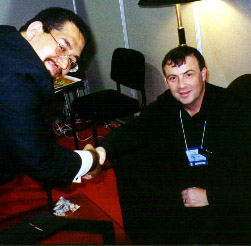
Torus Games out of Australia took over the IP. I hold no ill will to Torus for what went down. In my photograph archives I actually have a picture of myself shaking hands with the President of Torus.We met at the E3 in Los Angeles back in 1999. We talked about what they had planned for Carmageddon 3. The Australian company was trying to make a name for themselves in PC development, and in this case they bit off more than they could chew. It was apparent from the get-go. 

What happened between Stainless Games, and SCi, mirrors what happened between SingleTrac, and Sony. The Twisted Metal series was pretty much the brainchild of David Jaffe, and his team at SingleTrac. They had cut their teeth developing many of the first generation hits for the Playstation, and Playstation 2. The first wave included Warhawk, Jet Moto, and Critical Depth, in addition to the first two Twisted Metal games. They showed that they were capable of innovating in the combat department. It didn't matter if the fights were in the air, on the ground, or underwater. It was a niche they had carved out for themselves. This track record gave them the creative flexibility to begin developing another string of original games for the Playstation 2, including War of the Monsters (another of my absolute favorite games), and Downhill Domination. These titles were all good, but it was Twisted Metal that really took off for them. Then Twisted Metal 2 completely rewrote the book on vehicle combat. Everything that made the first game good was expanded upon. This included the library of characters, cars, physics, animation, combat design, levels, storytelling, music, and especially control. The things that were lacking were polished, and made better. A studio may get lucky out of the gate, but it takes real talent to build a greater sequel. This leap from game to game was not unlike the work that went into Carmageddon, and Carmageddon II by Stainless.

Fans were excited about a third game was in the works from Sony. It would debut two years later, but this time by a new developer. That was roughly the same window of time that Torus had to create an all-new game. 989 Studios took over for Sony, and although they had helped a little with the previous games, they had never been directly in charge of the franchise until Twisted Metal III. Audiences, and reviewers could tell that the game had taken a considerable dip. The control was unpolished, the vehicles lacked the creative spark or the prior games, the combat felt sluggish, and the story didn’t seem to fit the mold. When SingleTrac was dropped the team turned around, and released Rouge Trip which audiences could tell was the spiritual successor to Twisted Metal 2. Even with Sony’s powerful marketing arm, and great soundtrack (although Rob Zombie’s “Dragula” seemed to be featured in every other game), it was not enough to convince audiences that Twisted Metal 3 was  good. Things improved in Twisted Metal 4, which came out in 1999. Most sites commented that the things that were lacking had been fixed, and 989 had finally made a good sequel. By then the damage to the franchise had been done. Word of mouth killed the momentum, as did the bad reviews.

The best thing Sony could do was save face, and ask Jaffe and his team to return. They were given lots of creative freedom to reboot the franchise. The much darker Twisted Metal Black debuted in 2001. It was possibly the highest rated entry in the series. Shortly after Jaffe moved to Sony Santa Monica to begin development on another new idea, a game called God of War. Carmageddon TDR 2000 had dismal reviews, only SCi wouldn’t be able to save face by going back to Stainless. The franchise seemed dead, and buried. Fans got word of mouth that the new game was bad. Really, really bad. Those living in denial waited for a review from a trusted site, or magazine before deciding to pass on it. Their fears were only confirmed. GameSpot gave it a 5.7 out of 10, IGN gave it a 5.8 out of 10, PC Gamer gave it a 59%, and PC Zone gave it a 6.9 out of 10. 

The fallout from critics, and audiences was almost immediate. For starters the game was ugly. Yes it was in 3D, and yes the models, pedestrians, and environments had nice, high resolution textures, and improved lighting effects. But all of this was on a clunky engine. It wasn’t just rough around the edges, it felt like a tech demo for things their company could do. Had this game been on the demo disk I tried out in 1996 I would have passed on the series. The story became a convoluted mess about the apocalypse, a zombie outbreak, and the Carmageddon tournament being a chance for Max Damage to be let into a gated paradise. None of it felt thematically like anything that Stainless had even set up prior. Stages were dressed more like levels in a console game. The whole racing in a dystopian future seemed to take a back seat to mission objectives, and elaborate set pieces. Exploration didn't seem to be as much of a priority as the game seemed to hold your hand from start to finish. Not to mention there was a time traveling element to the levels. Where did that come from? To be fair however, the studio did a few things right. They returned the Suppressor, and squad cars of the first game. Also the studio added pedestrians that fought back against the cars, some even threw molotov cocktails!

You could almost sum up what was wrong with the game by looking at the rides. The Eagle was a shadow of its former self. It was fatter, rustier, and sported a jet exhaust, barely resembling what audiences remembered. Not only that, but the co-stars of the game, Die Anna, and her Hawk were nowhere to be found. Torus was keenly aware of the reputation of the series, their home government  had been very vocal about banning the game. They knew that violence was a strong selling point, and the cars had to go above, and beyond in their design. Several of the cars were very odd, whether they were three-wheeled, shaped like a brick, a hamster cage, or were made of translucent material with a naked driver. Torus was trying to be creative. Yet they would then turn around and put a garbage truck in the lineup. It was a literal work truck that didn’t have any extra flair added to it. To be fair Stainless put a combine in Carmageddon II, but at least it was designed for mowing down wide swaths of pedestrians. Torus also knew how influential the Mad Max movies were to the creation of the franchise. A car styled on Max’s Interceptor from the first film, both the black, and yellow versions, was featured in the game. Other cars like KITT from the TV show Knight Rider was introduced as KNAVE. It was an odd mix of street cars, hot rods, movie cars, and science fiction vehicles that didn’t mesh well together. Torus was trying their best to keep the series going, but they were just the wrong team for this project.

Part of the greatness of the original series were the vehicle designs. I hold the library with the same reverence I have for the Street Fighter cast. Every ride seemed to have a following. It wasn’t enough to just copy a design from a movie. Stainless put a lot of forethought into the look, and handling of each car. It is true that many were inspired by real world rides, but they were made to fit thematically as modified killing machines. The use of colors, spikes, blades, drills, and scythes gave each vehicle personality. No two looked alike. They could easily be made out even in the most heated multiplayer game. More important, each ride had a different effect on the game play experience. Stainless made sure to give the vehicles appropriate handling. It wasn’t meant to be a perfect simulation of driving, or even racing. A real big rig could have up to 18 gears. It would lose half a lap to a sports car just getting out of the first three gears. All you had to do in Carmageddon was point the Rig O’Mortis in the right direction, and mash the gas pedal. No shifting required, and in about four seconds you could be breathing down the neck of almost any opponent. This was arcade control, this was arcade handling. No driving experience needed, not even a steering wheel. A keyboard would do the job. From the biggest truck, to the smallest buggy, Stainless had built a simple-to-use universal set of controls. The cars from Carmageddon, the Splat Pack, and Carmageddon II were all easy to pick up, and play. 

These vehicles not only accelerated faster than their real world counterparts, they often handled better too. Plus they were much stronger than any real car. Audiences could randomly choose any ride, and enjoy the experience. Granted, some cars were more difficult to control, and this was a design choice from the team. It created a challenge for those looking to see the benefits of each ride. There was often an upside to a car that went too fast, or one whose suspension seemed to have more travel than the others. When it was on the right level, perhaps the street vs off-road, it was the car that could dominate the opponents. Then there were the cars that simply existed because they were over-the-top. Maybe they were too slow, rolled, or spun out easily. They’d be extremely difficult to win a race with, but the challenge was worth it for many players. Don’t believe me? There are people that try to beat first person shooter games using only a knife, instead of the biggest guns. To them a greater challenge is the experience they want. I find myself doing the same thing by choosing cars much smaller, or difficult to control, than my opponents. These subtle but important game play elements were lacking in TDR 2000. The majority of the cars were evenly matched, any real strengths or weaknesses were negligible. Torus tried to fix their shortcomings by releasing an expansion pack. The Nosebleed Pack could not hold a candle to the Splat Pack.

SCi had painted themselves into a corner. The franchise had sold millions of copies earlier, and was a game of the year at one point. Now it couldn’t find an audience. No studio would touch Carmageddon because of the controversial reputation. Now they wouldn’t touch it because it was a bad game. The publisher merged with Eidos in 2005. They were eventually taken over by Square Enix in 2009. Square Enix did not want to tarnish their reputation by bringing back the franchise. To audiences it was dead, and buried. That made me sad, but it wasn’t the first game that would never get a worthy revival. Work seemed less interesting after Carmageddon II. Most of my coworkers graduated, or transferred. I left college too, and started working at JPL. It was there that I got news that changed everything. Find out about the Reincarnation in the next blog. If you would like to sponsor me please visit my Patreon page and consider donating each month, even as little as $1 would help make better blogs and even podcasts!
follow the Street Writer on Patreon!

Monday, June 14, 2021

My favorite games of all time, the story of Carmageddon part 6...

Stainless Games let their fans know that they were busy on a Carmageddon sequel as the reviews were rolling in. The buzz (and money) they created on the first, and Splat Pack would guarantee a second, if not series. They announced another game was in the pipeline to keep public interest going. From a business standpoint it made sense to cash in while the franchise was hot. They promised something completely new. The next title would not simply be the old engine with more levels. This was a shortcut that made a quick buck for publishers. The flip side of that was that audiences quickly lost interest if the sequel was too much like the original. More of the same wasn’t a winning strategy. The long-term health of a franchise required studios to take their time, and create a worthy successor. If you don’t believe me see how Activision drove the multi-million dollar Tony Hawk, and Guitar Hero franchises into the ground with annual sequels.

Stainless wanted to give audiences something worth their money. Carmageddon II Carpocalypse Now was most definitely it! Awesome name aside the game engine was completely redone. New models, new physics, new locations, new game play, and new everything. This included an entirely new Eagle, and Hawk. They were the third redesigns of the iconic cars. Each one now highlighted its specialty. The Eagle was bigger, and heavier, it was meant to take an impact. The Hawk was sportier, and much more suited for racing. Fans did miss the yellow livery on the Hawk, Stainless would return to that in the future. I made sure to pick it up as soon as it was released for the lab at work. My coworkers, and I were eager to see how the game had evolved. Our 1997 end of the year party with the Splat Pack was arguably the best of the LAN events during my time in college. We had faith that the next game released in October 1998 would add more hijinks to the next holiday party.

Right from the all CGI-intro we were not disappointed. The team at Stainless Games didn’t just add the cars, or tracks that were planned for the original. They gave the game as much dimension as possible. This started with the vehicles themselves. Stainless reviewed the vehicles for returning opponents, then created new models that were hyper detailed. In the first Carma the polygonal bodies could be deformed to represent vehicle damage. They would still however remain in one piece. Most of the vehicle panels in Carma II could be dented, but more important, they could be pulled apart. The fenders, wheels, doors, hood, trunk, and even engines could be broken off from the damage they received. It was possible to shear a car in half, lengthwise, widthwise, or even cut the top off. A car cut in two might still be drivable depending on how much total damage it received. It might not drive very fast, or just end up spinning in circles depending on the severity of the hit. The windows on the cars were not simply textures either. They were semi-opaque, they could crack, and even shatter. Stainless created driver models that could be seen in the cars. They looked like their character portraits; helmets, leather jackets, spikes, and all. 

Some of the vehicles featured killing devices, like spinning propellers, rolling spurs, and animated guillotine blades that moved up and down. These were expanded ideas from weapons featured on The Bear, and the Twister in the first game. These details would have been useless without pedestrians to try them on. The new engine meant the game needed new victims. This time Stainless didn’t have to run over Tony Taylor for research. Two dimensional sprites were dropped completely. The people, and animals (imagine PETA’s reaction) in the game were actual 3D models. They had complex animations too. They could walk, run, hide, fall over, and beg for their lives. They could also be pulled apart, just like the car models. This meant amputations of all four limbs, and the head. Hitting them did not mean an instant kill either. You could bump into one at slow speed, and watch them roll off the hood, crawl on the ground, get back up, and start running. Or you could knock off an arm, or leg, and watch them bleed to death. Earning a pedestrian kill was a little more challenging than in the original. Not only that, since these models had size, and weight, it also affected how cars handled. Cars could be thrown completely off course by hitting a large group. Smaller cars would bounce around, or spin out while trying to run over corpses.

The realism was then applied to the world as well. Some buildings had breakable windows, and even breakaway doors. Gates, and barriers could be pushed aside. Offices, and residencies were filled with furniture, and equipment that could be tossed about. Enormous boulders (or snowballs) could be pushed down roads, flattening any vehicle in their path. Conveyor belts pulled material through the Beaver County Quarry. Cross traffic moved on the streets of Beaver City, whereas there were only static parked cars in the first game. Passenger airliners actually landed, and took off at the Beaver County Airport. Even more impressive were the fighter jets taking off, and landing on the aircraft carrier; the USS Lewinsky. Ski lifts took tourists up the Beaver Mountains. Trains passed through crossings in the Beaver Woods. Stainless was flexing its programming muscle, while at the same time repeating the sophomore humor that they were known for. There were plenty of sexual, if not sexist innuendos in the stage names. There was also at least one erect stone obelisk with two boulders, surrounded by bushes in the El Morte Desert. Dick jokes aside, the world Stainless created was filled with more life than other virtual environments. They were raising the bar for vehicle deformation, physics, animated NPCs, and world building. Remember that this was in 1998, they were certainly way ahead of Grand Theft Auto, and all their other contemporaries.

Carmageddon II was a fantastic game, but it also came with quite a learning curve. The focus on realism actually affected the game play. Gone was the indestructible “Hot Wheels” physics that had I enjoyed in the original title. One of the first things players learned was not to go too fast on the courses. The cars could be totaled, or even split in half if they hit an obstacle too hard. Instant game over, even if you were leading on a race. You did have the ability to upgrade the three elements of each car; the Armor, Power (engine), and Offense. However instead of buying parts you had to seek out icons hidden all over the map. This was great for exploration, and training audiences to memorize the shortcuts of a particular map. In order to give each stage replay value, and encourage the search, there was a potential 30 slots for each element to upgrade, meaning a total of 90 icons scattered over nine unique environments. By contrast in the first Carmageddon there were only five levels of upgrades. A car that was fully powered up did manage to capture the reckless energy of the first game. They wouldn’t explode if they hit opponents, or buildings too hard. With a full 90 slot upgrade it was possible to have a car that was too strong, and make for short matches. Stainless gave players the ability to reduce the strength, speed, and change the ride height of their car to make games more evenly matched. For some opponents a fully upgraded car would be just enough to level the playing field.

Stainless Games pushed the number of cars that could run in the tournament. The original game featured six cars in the race at one time, plus any police vehicles hiding in the stage. In the sequel up to 18 cars could hit the field. Most races had less. The library also included some of the biggest rides ever featured in a vehicle combat game. Psycho Pitbull drove a tow truck called the Towmeister in the original, in the sequel he had a gigantic earth mover called the Big Dump. Halfwit Harry traded in his Humvee the Lumberer for a massive log stacker called the Loggerhead. The wheels of these heavy machines were bigger than some of the opponents. It was hard to believe that even a monster truck paled in comparison. The introduction of these vehicles was done more than shock value. The majority of the stages in Carma II observed the rules of the original. You could win a level by either finishing all of the laps, destroying all of the opponents, or killing all the peds. Stainless then introduced timed missions to the end of each group of races. Some of these were fights against bigger opponents, but the majority had a story element to them. Such as run over escaped hospital patients, assassinate an evil admiral aboard his aircraft carrier, or kill the deviant circus clowns at the fair. Missions were a good way to unlock massive opponents. The Hawk, and Eagle couldn’t go into a head on fight with them. Beating the new library of vehicles, especially the big boys, required some thinking.

Even without upgrades it was possible to take on the giants. The strategy was hit, and move before they could react. Just about every vehicle could run circles around the juggernauts, save for the Deathcruiser, a tour bus powered by a missile. Having a time limit for each mission upped the challenge. Players did not have to complete the mission in order to continue. They could finish other groups of races, upgrade their vehicles, and try again later. Savvy players learned that every vehicle had a weakness. If you could get to the driver it would make the fight easier. Instead of wasting time running into the tires, or trunk of a car, a well timed jump directly through the windshield could kill the driver instantly. This was true for both the Loggerhead, and the Big Dump. Players learned to angle their cars just right, and leap into the cabs with the Kangaroo on Command power up. Speaking of which, the power ups were a complete game changer in the sequel. Stainless had gotten a lot of feedback on favorite multiplayer modes, and the benefits of certain power ups. In the original game the power ups either effected the player’s car, or were global effects for everyone. They were instant, or lasted a few seconds. Players could not control when they wanted power ups to kick in. In Carma II players could stack some power ups, and use them like weapons against the computer, or human opponents. The types of power ups were expanded to affect pedestrians as well, including a flame launcher, and ability to make them stagger around drunk. Again some were automatic, but many could be saved in reserve. They came in especially handy during the missions.

The massive collection of new rides, each with their own strengths, and some with unique properties gave Carmageddon II fantastic replay value. Going through the stages with each vehicle was a completely new experience. The creative multiplayer maps, and changes to power ups, kept fans coming back. My coworkers, and I were having an absolute blast with the sequel. The holiday 1998 work party went off like never before! Did I forget to mention that heavy metal icons Iron Maiden were featured on the soundtrack? Along with instrumental music by Sentience, it was one of the hardest riding soundtracks of all time. The CarMod community kept developing new skins, and models to keep the game fresh. Some created realistic muscle cars from the late '60s, and early '70s. Some created cartoon cars from the old Hanna Barbera cartoons, like the Flintstones mobile, and the Hong Kong Phooeymobile. Every vehicle type was a welcome experiment. Any issues with the game they were negligible. Little things like traditional cop cars were used in the game, instead of the armored brutes from the original. Also the World War II German fighter plane driven by Heinz Faust, the Supastuka, really seemed out of place. His prior appearance had him in a tank-treaded car called the King Merc. Again these were minor complaints in an otherwise fantastic sequel.

News outlets repeated the same exaggerations about violent video games. Audiences completely tuned out any alarmist headlines this time around. Those curious about a sequel relied on word-of-mouth more than media reviews anyhow. Even then the gaming press enjoyed this one as much as the first. The most positive reviews were for the PC, and Mac. IGN gave it a 7 out of 10, GameSpot gave it a 7.8 out of 10, CNET Game Center give it a 8 out of 10, CGSP gave it a 4.5 our of 5, GameRevolution gave it a B+, PC Gamer gave it an 83%. The console builds were universally panned. Those were the fault of SCi for choosing the wrong studios for an adaptation. Or because they tried to censor the game features. Stainless had done the impossible. The tiny studio from England didn’t create the genre, but they certainly did master it. In two years they set the standard that would be copied by dozens of other studios over the next few decades. What happened to them completely floored the community. The series would continue, but it wasn't the same. We will talk about what happened with Carmageddon 3 in the next blog. I hope to see you back for that. If you would like to sponsor me please visit my Patreon page and consider donating each month, even as little as $1 would help make better blogs and even podcasts!

follow the Street Writer on Patreon!

Friday, June 11, 2021

My favorite games of all time, the story of Carmageddon part 5...

In the history of Carmageddon, the Splat Pack expansion is always glossed over. It does not get nearly enough respect from game journalists, or game historians. Those that know could testify to how important it was in shaping the franchise. Carmageddon came out in February of 1997, the Splat Pack was ready by November of that same year. I consider it to be a more complete vision of what Stainless Games wanted to release on day one. It added eight new environments, with several levels dedicated specifically to multiplayer games. Plus it added 18 new cars, including multiple color version of the new Eagle, and Hawk. The version 2 cars had updated bodies. Many noticed that the Eagle was less aerodynamic. It now looked like a bruiser, closer to the Batmobile from the Batman Animated Series than a dupe of a '70s exploitation film. The Hawk on the other hand had all of its angles pushed further, making it more into a science fiction racer. 

They were not the only cars to be replaced for the drivers. Stig O’Sore previously drove the Volkswerker, an armored Volkswagen Beetle. In the Splat Pack he had the much sportier Carrerasaurus by Porky Motor Corp. It looked like a Porsche with metal Stegosaurus plates welded over the top. Fans enjoyed the changes to the game. The graphics had a bump thanks to the native support for 3D acceleration. There was also a patch to add 3DFX support to the original Carmageddon. For those that lived in a country with the “zombie" or censored version, the devs included a Blood Pack file to restore the game to its full blood, and guts glory. When it came to stirring up controversy Stainless wasn't messing around with the Splat Pack. There was a level that had you racing around a prison, running over inmates, and cops alike. The final stage of the game, the Ring of Fire, took place in a cemetery filled with mysterious hooded figures. A mausoleum portal took the racers straight to Hell which was made up of fire, brimstone, demons, and a disco club. If you reached the lowest point on the map you actually came across a gigantic model of the devil. Where he's seating in front of his P666 computer playing Carmageddon. Talk about being self aware! The media stirred up more controversy. Princess Diana had died in a car accident in August 1997, a few months before the Splat Pack dropped. The studio was asked to change the name of Die Anna out of respect. The studio did not.

Stainless was very much counterculture to the games industry, and for many they were counterculture to good taste. They seemed to love the fans, but not the business so much. Every chance they could they stuck their collective middle fingers up to the establishment. Studios were expected to submit a list of cheat codes so magazines could publish them. In Carmageddon typing a short phrase on a keyboard would enable a power up, as if the cars had driven over a barrel. Stainless made sure that magazines would have a hard time printing the phrases. Things like WEHATEMARIO, HAMSTERSEX, and SEXWITHFISH were just some of the individual codes you could enter. There was a master code that allowed you to type a number for a particular power up. This code was IBETYOUCANTPRINTCUNT. You can imagine that this didn't make things easier for publisher SCi. Players were very much on board with this brand of humor. Stainless reciprocated the love by dropping the dev tools to the modding community, which began calling themselves the CarMod Community. This was an international effort, as there were literally fans of the game all around the world. Their updates became CarModgeddon. People like CoffeyCup, and Crimson in the late '90s began releasing new skins for cars, and tracks. The Third Reich Mod for Carmageddon was arguably their most ambitious work. This patch replaced the theme for Bleak City, turning it instead into Berlin during World War II.

The modders went so far as to add goose-stepping Nazis where there were normally pedestrians. They replaced the Cops with SS APC’s, and added a few seconds of Hitler giving a speech on the projection screens in the game. The level had a story, somewhere in the city Hitler was giving a speech to his base, it was up to the racers to find out where he was hiding, and kill him. As if running over pedestrians wasn’t already fun, the mod made it a pleasure to mow down Nazi’s by the hundred. It was another example of the British humor that Stainless had built their reputation on. This time however, it came from fans, and Stainless gave it their blessing. I was eager to see what other changes the community would drop. Since I did not have a computer at home I had to wait to get to work to try out each update. My coworkers, and I got a chance to download every patch as it was released. If a new skin didn’t work, or was just plain ugly, it was easy restoring the original files from the CD. The one thing that many in the community missed was having access to the original Eagle, and Hawk. Yes, the new versions were nice, but so too were the first ones. The modding community released a patch that would allow players to choose any version. They then set their eyes on fixing what Stainless didn’t get around to.

One of the biggest disappointments in the original release was the car driven by Ed 101. It was a sporty Japanese-styled import called the Tashita Coupe. Fans didn’t have a problem with how it looked or handled. They didn’t have a problem with Ed’s design either. It was great storytelling that a robot went rogue, and entered the Carmageddon tournament. This wasn’t however the car that we were promised. In their website, and official material. It was stated that when Ed 101 went against his programming he stole a prototype race car for the tournament. This car looked like a UFO, the type of vehicle used in the F-Zero series by Nintendo. Of all the rides in the game, it was possibly the one I most look forward to stealing. You can imagine how disappointed I was that the car ended up looking like a Toyota Supra with a blade splitter up front. Again, it was fun in game, but not what I was promised. Stainless had meant for the car to be in the game all along. They just didn’t have the time to finish the model. 

Stainless actually left the textures for the flying car in the Devil's Canyon Mining Town game files. They invited the community to see what they could come up with. Modders found the file names, they were clearly labeled pieces for fins, a cockpit, and boosters. They got to work. Before too long they had a patch in place, and released it to the world. Players were welcome to use either of Ed 101's cars in game. The community figured out a clever way to make the prototype appear like it was floating. There were four wheels under the body, however they did not have a texture applied to them, so they were invisible. The only clue that there were wheels was when the car skidded out, it left behind the streaks from where the tires should have been. It was a clever work around, and remains one of the most fun surprises I’ve ever had in my time playing games. The community then set their sights on an even more complex file. They wanted to know if they could restore Tanka to its original design as well. I mentioned previously that Stainless couldn’t get the trailer mechanics working properly in their engine. So they cut out the back half, and left the cab to bounce about in the game. 

It took years but modders Carnage / Crimson eventually figured it out, as did Toshiba-3. Not only that, fellow community member Trent took up the challenge to get the tanker up and running in the later release of Carmageddon Reincarnation. The community that modified the games had as much passion for the IP as the people that created it. In some instances Stainless did reach out to the best modders, and offered them work. They would actively listen to the fans, and run polls on fan favorites. This helped shape the direction of the series. None of this would have been possible if the Splat Pack, and the modding tools had never been released. It opened our eyes to the possibility of changing an already published game. It’s certainly rare for a developer to have an open dialogue with audiences today. Most studios are insulated, and many online forums have devolved into shouting matches. For what it was worth the ones coming together under the Carmageddon banner seemed to vibe well together. This was something that never came up in any "making of" articles.

The Splat Pack had many other things going for it. Stainless never stopped working once Carmageddon went gold. There were many ideas that they had written down that they meant to be released in the original game. Several cars, and characters that appeared in the Splat Pack were in the works from the very beginning. Time, money, and resources just meant that they were left out. The success of that first game, plus the audience reception, gave them the push to complete the Splat Pack, and finish the vision they had originally. The additional vehicle types provided a bigger cross section of the Carma experience. Other studios may have been content to just draw up race cars with spikes for an expansion, and call it a day. Stainless was anything but an ordinary company. The vehicle types often came out of left field. An ambulance coated in blood, driven by the mad surgeon Sawbones was listed in the early concept drawings. The Blood Mobile was now official. The Ramraider, an SUV with a battering ram  driven by USA sports fanatic Big Daddy was now plowing through opponents. Other cars were jabs at Stainless' contemporaries. A blue, and white-striped muscle car, the Stodge Barger, driven by Carkey, and Clutch, was a direct call-out to the Picard Piranha, and Groove Champion from Interstate ’76.

The Splat Pack made the monster trucks bigger, like Herman Monster and his Monster Masher. The 10-foot tires were based on the tires used by Bigfoot V, and Bigfoot VII. It added a rampaging diesel truck to the lineup, Mother Trucker, and her Rig O’Mortis. It added full-blown race cars like the Fearari F999 driven by Ashteroid. The studio also expanded on the Auto Scum gang member rides. The Mech Maniac got the smallest car in the expansion, the slippery little Grunge Buster. Sports cars, trucks, just about anything with wheels was well represented. One of the influences for the studio, and a movie that isn’t always given enough credit for in car circles, was the Italian Job. I’m talking about the original from 1969, not the remake from 2003. The scene stealers were three Mini Coopers hauling a ton of stolen gold out of Italy. The stunt driving was amazing, and the producers made it look like the little cars were unstoppable. It inspired the Killer Coop, driven by Mike O’Kane (Michael Cain was the star of the film). It stood to reason that the mighty British Cooper with a jousting lance attached to the door would symbolize Britannia in the game. It would surely slay the giants of the tournament, and bring home the glory.

At the end of 1997 there was no argument. Carmageddon, and the Splat Pack were certified hits. In spite of all the negative publicity the outlets came to a consensus. This was a great game. To help get the title on as many computers as they could SCi bundled the game, and expansion together as the Max Pack. It was uncensored, as the developers had originally meant it to be. The bundle was nominated for Computer Action Game of the Year in the 1998 D.I.C.E. Awards. The awards given to Carmageddon were numerous, here's a sample; Winner - Best Action Game - Ultra Game Players, Game of the Year - PC Zone Magazine, 5 out of 5 - Computer Life, 4 out of 5 - Next Generation, 4 out of 5 - C:/Net’s Game Center.com, 9 out of 10 - Computer & Net Player, GameRevolution - B+, GameSpot - 8.8 out of 10. The quotes in the reviews did the team at Stainless proud. “Very playable, and addictive" - PC Gamer, “A complete blast to play" - Computer & Net Player, and “It’s been a long time since a driving game has been as much fun as Carmageddon." - Computer Gaming World. This was vindication for everything the studio had gone through in the prior three years. With everything they learned from Carmageddon, and the Splat Pack they were ready to go even bigger in a sequel. We will talk about that in the next blog. If you would like to sponsor me please visit my Patreon page and consider donating each month, even as little as $1 would help make better blogs and even podcasts!

follow the Street Writer on Patreon!