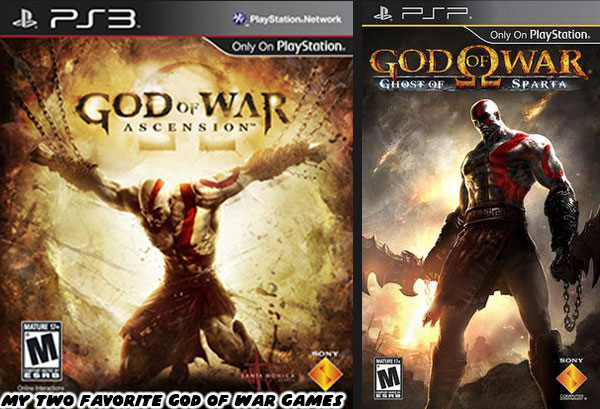
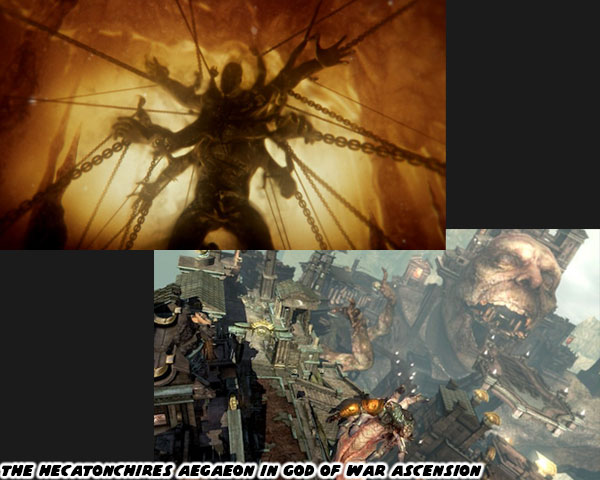
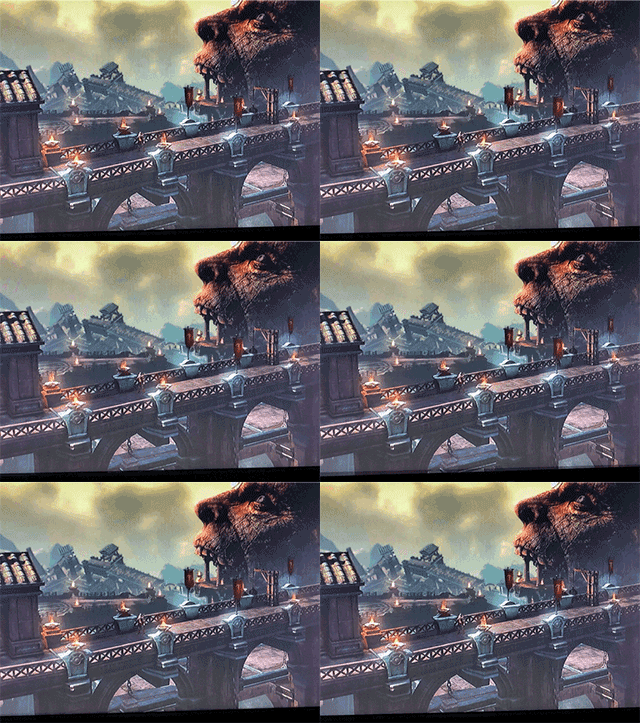
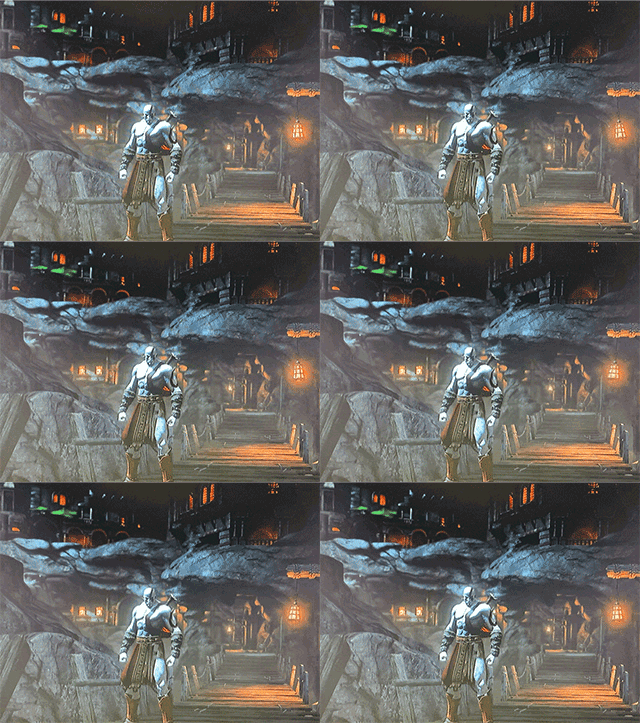
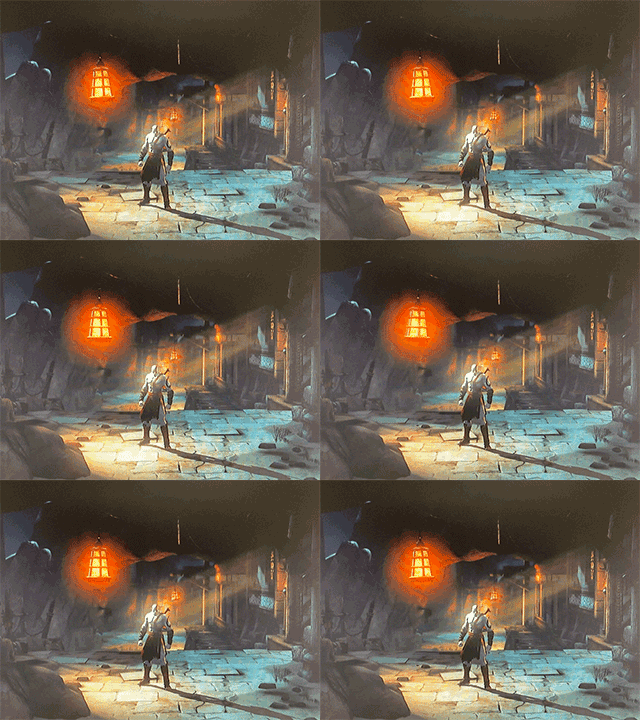
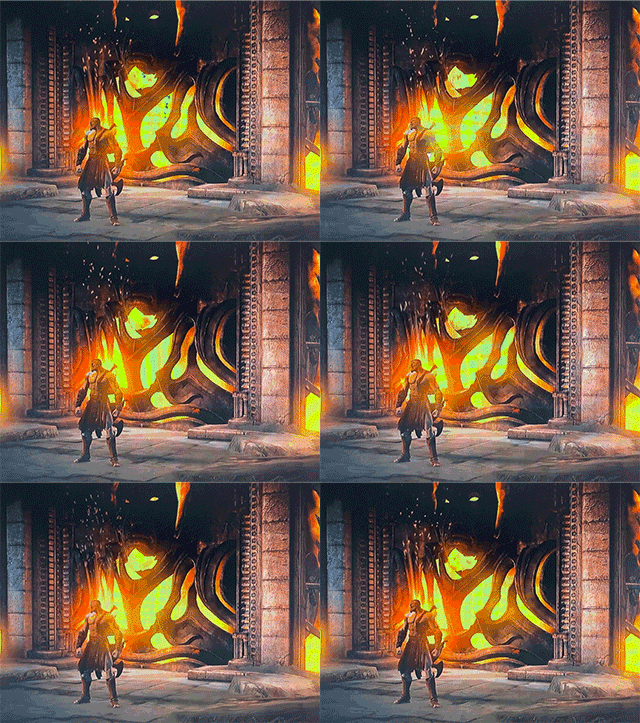
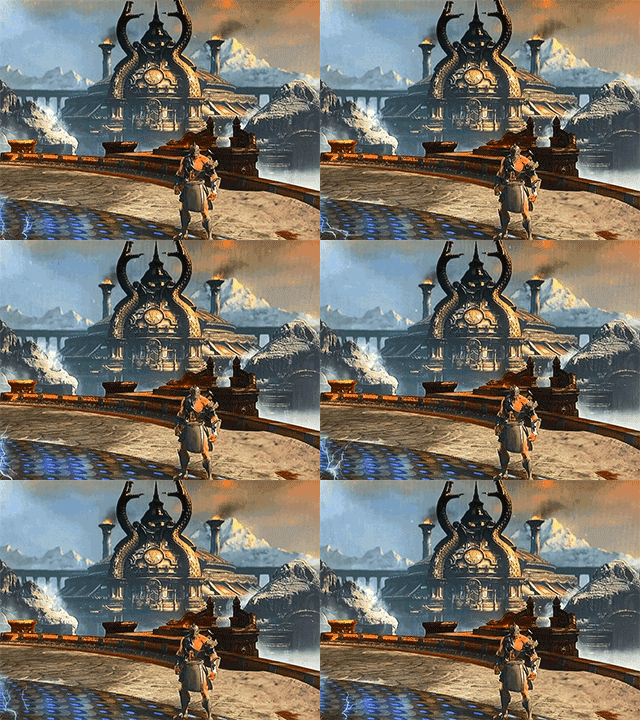
In God of War Ascension Kratos is on a mission to break his oath to Ares, the god of war. It started with a difficult boss fight, and a prison escape, but it wasn’t just any jail. He escaped from a prison made out of a living giant, the hundred armed Hecatonchires. Then he traveled through the port village of Kirra, in the search of an oracle to guide him. No soothsayer was as famous as the Oracle of Delphi in actual Greek mythology. I was grateful for the studio for doing such a deep dive into Greek history. I never imagined what the temple would have looked like, or how one would even reach it. Sony Santa Monica decided to set it in the peaks of a mountain. A frozen breeze gave motion to the environment. But so did gigantic mechanized snakes that powered the bridge leading to the temple. It was certainly a fresh take on stage design. There were a lot of enemies leading up to the temple, and an amazing encounter against both a Chimera, and a Manticore.
Once inside the temple Kratos discovers that some unscrupulous twins (labeled the False Profits by the developers) have sequestered the Oracle. They were ordering slaves around in her absence, and having them build tributes to themselves. When I saw the name Castor I instantly knew who they were. The brothers Pollux, and Castor were experienced sailors, and renowned horsemen. They had been featured in a few classic mythologies. Their most famous appearance was as Argonauts, traveling with Jason. Pollux was a demigod, the son of Zeus, and Queen Leda of Sparta. His brother Castor had the same mother, but his father was Tyndareus, the King of Sparta. Castor was mortally wounded in battle, and his brother begged Zeus to make him immortal. Zeus agreed so long as Pollux were willing to give up some of his godhood. When he agreed Zeus turned the duo in the constellation Gemini. Where they spent half the year on Olympus, and half the year in the fields of Elysium. The adventures of Jason took place before Kratos became a legendary captain in Sparta. It explained why Theseus was past his prime in GoW II, and why the twins were old in Ascension. Their age didn't matter as they could use the power of the oracle to make themselves young men.
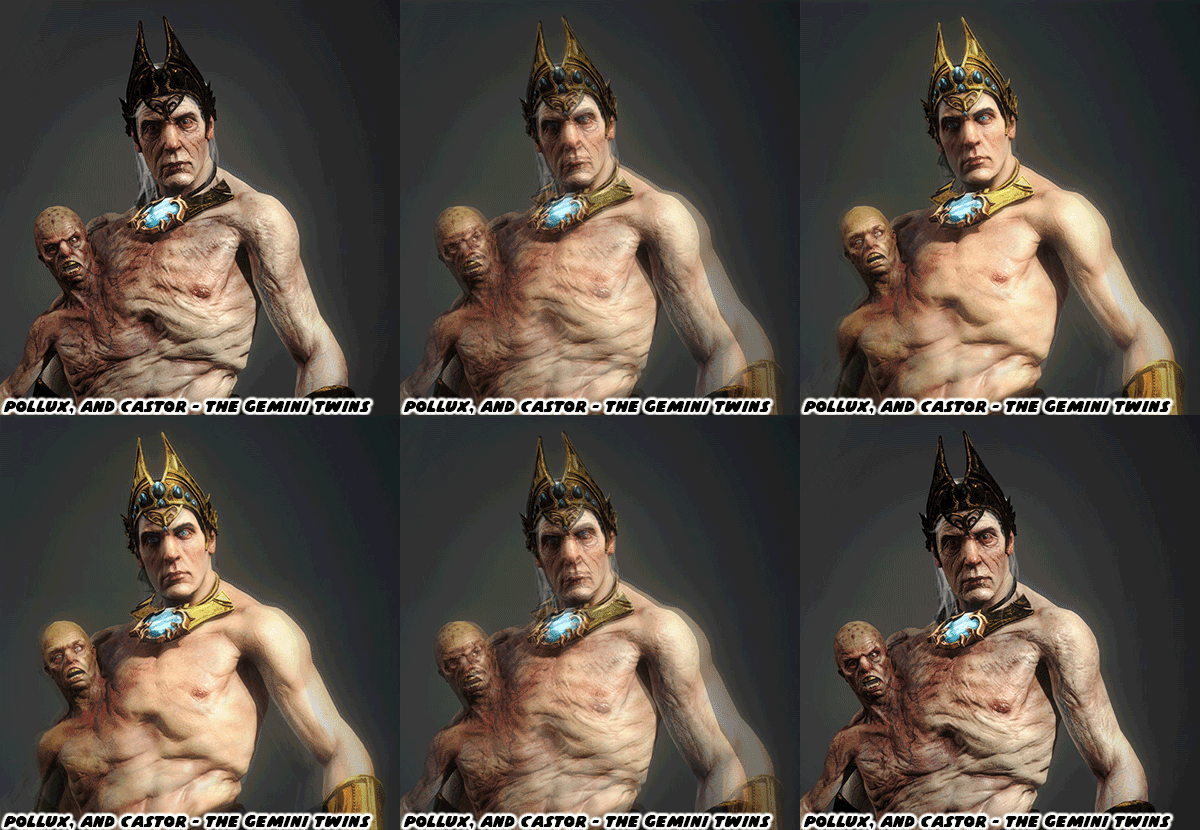
It wasn't enough for the art team, and animators to put two separate characters for to battle against. That would go against the library of other memorable bosses. What they did instead was make the brothers conjoined twins. The more powerful Pollux was sticking out of the side of Castor, just about where his liver would be. It was grotesque, and awesome at the same time. Anybody that had seen the movie Total Recall would get the punchline following the battle with the twins. Each brother actually had their own weapon, a sword, and a mace. When those weapons were joined Castor used it as a massive walking staff. The majority of the twins attacks were not physical but magical. They could decay the ground, and cause Kratos to fall to his death. They could also slow down time, and strike Kratos before he could react.When the twins sensed that they were losing the battle they decided to rob Kratos of his goal. They caused the Oracle to fall to her death. It was certainly a tough, but memorable battle against the duo. The Oracle survived the fall, but she was living on borrowed time.
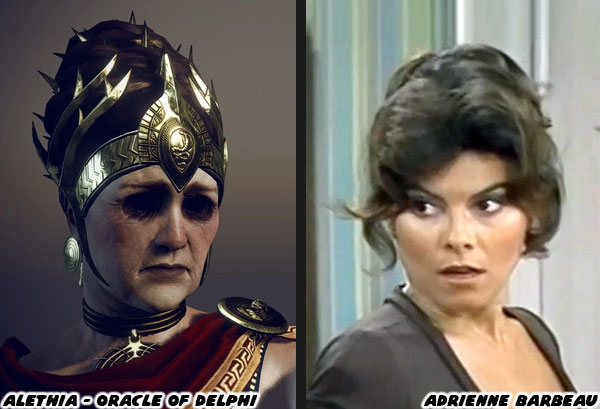
Kratos took the Amulet of Uroborus from the lifeless body of Castor. With it he could rewind the life of an object, or speed it up, and cause it to decay. Unfortunately he could not use its powers to reverse the injuries on Alethia, the Oracle of Delphi. Although she only existed in the game for a few moments I always thought the performance was one of the best in the franchise. I was surprised to discover who performed the role. It was Adrienne Barbeau. She was the sexy brunette character in a number of late '70s / early '80s movies, and TV shows. I first remember seeing her in the film Escape from New York in 1981, the same year my brothers, and I saw Clash of the Titans. Then she popped up again in 1982 in the films The Swamp Thing, and The Creepshow. She would turn up on TV over the years, and was always a fan favorite whatever she did. But I digress. Adrienne brought a lot of gravity to her performance. She explained to Kratos that her eyes were taken, and hidden away by the Furies because she could see the truth. A mysterious character named Orkos had been trying to aide Kratos through the adventure. She revealed that he was son of Alecto the Queen of the Furies. They both tried to warn Zeus that Ares, and Alecto were conspiring against him, and looking to take over Olympus. Orkos was imprisoned by them in the Hecatonchires, and Alecto imprisoned in her own temple. It was up to Kratos to retrieve her eyes, and break the magic of the Furies.
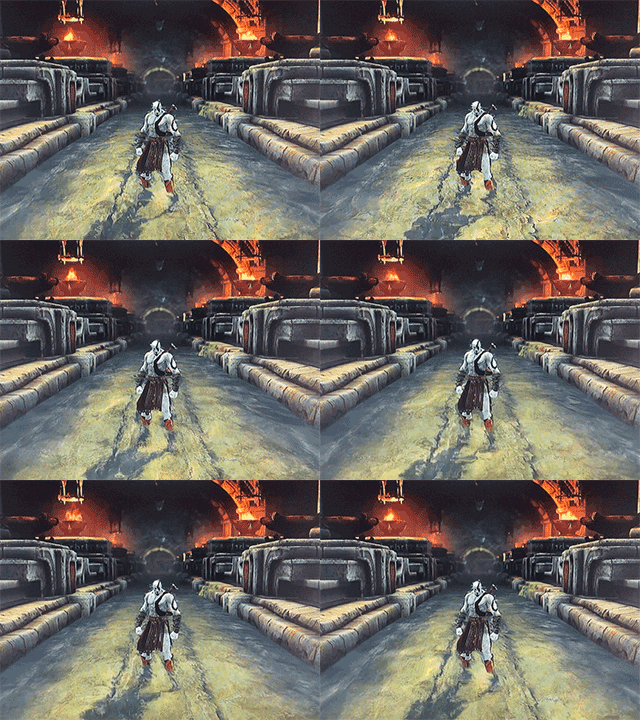
The moment with Alethia lasted only a few seconds, but in it you could see Kratos show a range of emotions. Most important he had a little bit of compassion for her as she took her last breaths. You could see Kratos take her hand, and offer her some comfort as she accepted her fate, and sent him to complete his task. These little moments were all throughout Ascension. T.C Carson got to show off his acting chops, and Kratos went through the spectrum of emotions while dealing with the cast. It was the first time the studio was using performance capture technology with the voice actors, and not solely with the stunt performers. We actually got to see Kratos be something other than just a rage machine. He had much more dimension than he did in GoW III. I was grateful for the studio for giving us a reason to empathize with him, and his impossible decisions. The other thing that I was grateful for was the studio not being scared of lighting the environments, and showing us what the PS3 was capable of. The look of the game was far removed from the infinite shades of gray, and mud that colored GoW III.
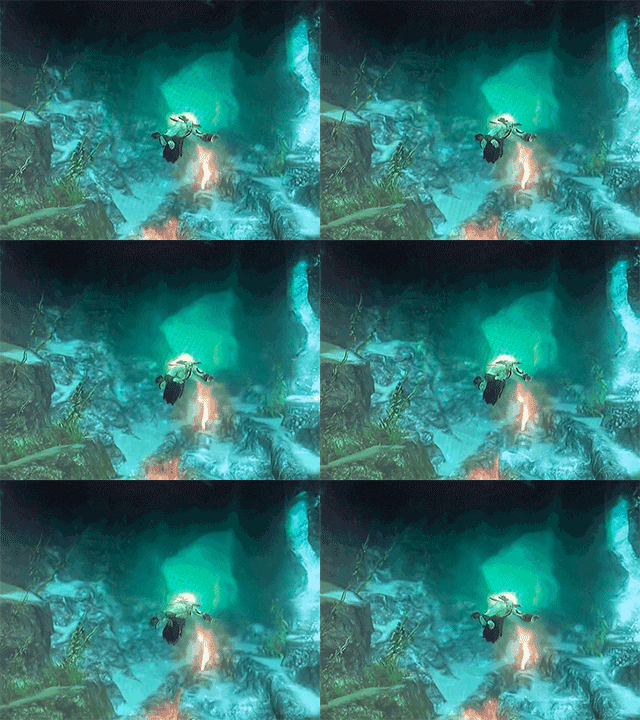
Kratos continues his adventures, while gathering additional power ups. With the Amulet of Uroborus he is able to create bubbles that slow down time, and allows him to strike at enemies that are almost frozen in space. He also gains the Oath Stone from Orkos, this allows him to create shadowy clones of himself that can fight, or help solve puzzles. A huge portion of his journey takes place on the Isle of Delos. The mathematician, and architect Archimedes has been busy at work on his masterpiece, the Statue of Apollo. This statue is the largest in the world, even on bent knee it is taller than the Colossus of Rhodes. A group of sailors that Kratos travels with considers Archimedes mad. Because he has sent all his workers home, and is determined to finish the statue all by himself.
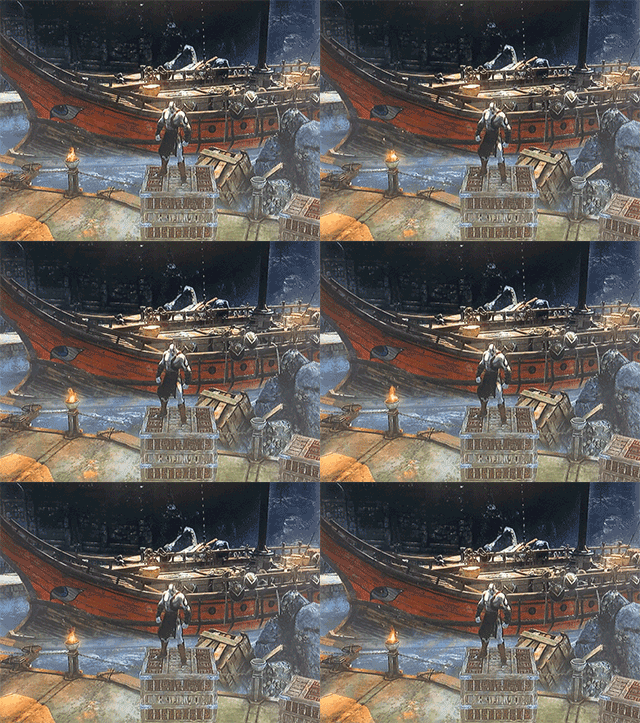
This location is notable for several reasons. It was one of the most important port locations in all of the Mediterranean. Settled around 3000 B.C. it was a prosperous location. In mythology the
Isle of Delos is the birthplace of Apollo. He is the god of light, dance, wisdom, and music. He is also supposed to be an exceptional archer. Most important to the story of Ascension is that Apollo is the patron god of all oracles. He was blessed with wisdom, and prophecy. He shared this gift with the oracles, and was primarily worshipped in Delphi. The statue of Apollo was going to be a monument to the highly influential god. It was enormous in scale, easily as tall as the biggest modern skyscrapers, with a footprint dozens of city blocks wide. The statue was so big in fact that its size alone had a personality. Even in its ruined state it was as cavernous, and as dangerous to explore as the Temple of Pandora from the original GoW.
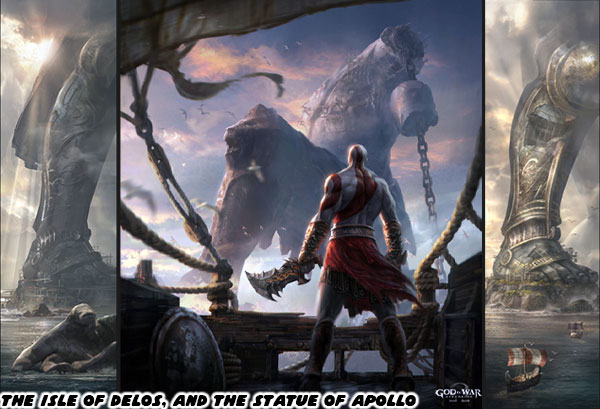
The designers working at Sony Santa Monica wanted the set piece to be awe inspiring. The concept art was painted, and repainted, with tiny details like ships, and birds being added to give you a sense of scale. This art was used to sell the game to vendors, and featured in magazine spreads. The 3D model created, and textured for the game was as majestic as the concept art. Kratos is dropped off at the port, and the sailors convince their captain to leave right away as they believe the island to be cursed. Kratos sees that there might be some truth to that as he has to fight off wave after wave of monsters sent by the Furies. He claws his way up each level. After several minutes of fighting, and climbing you realize that you’ve only made it to the ankle of the statue. It felt like it was going to take days to reach the top, and that was fine with me.
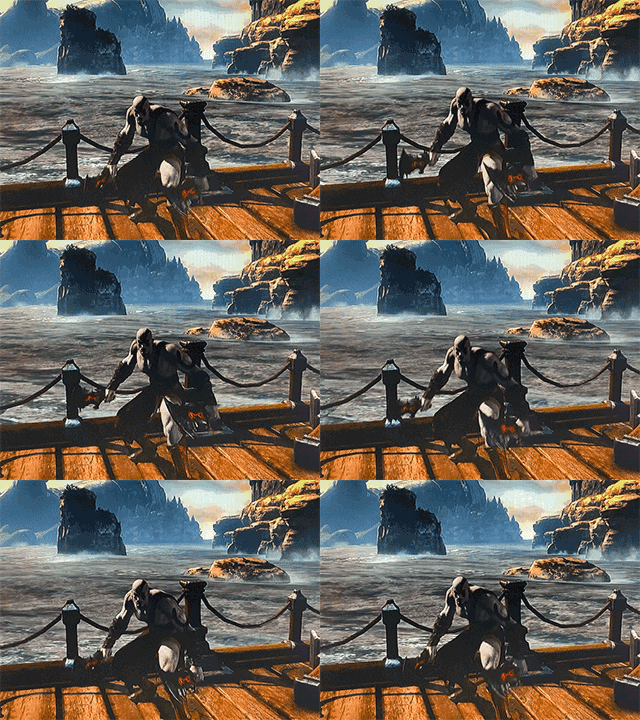
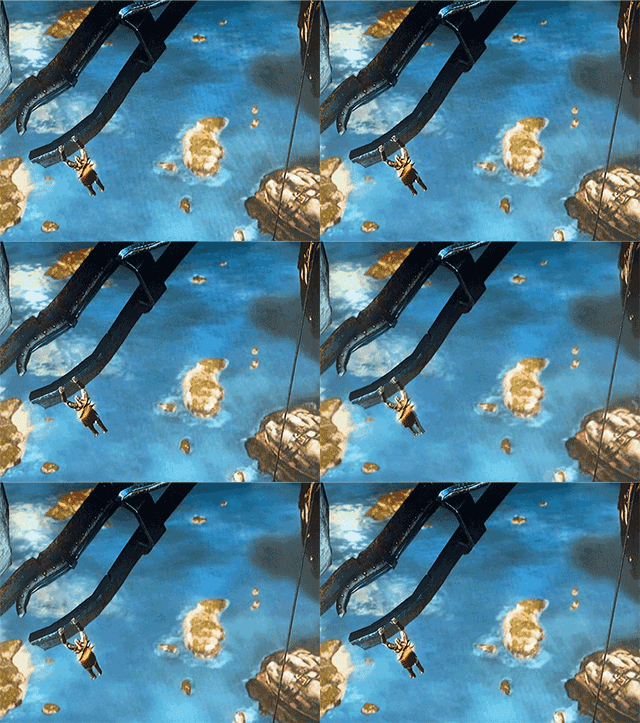
The traversal in the game was easily the best in the franchise. I think it was even better than the climbing mechanic used in GoW (2018). The studio realized that it was too simplistic to have a flat face with a slightly different texture than the surrounding areas. This signaled to audiences where Kratos could simply stick his Blades into the rock face, and start climbing. It made sense in the original game, but by GoW III the studio had no excuse to keep using that same type of level design. In Ascension Kratos could grab ledges, and pull himself along. It felt like the freestyle climbing used in other popular games like Assassins Creed, and Uncharted. His movement was natural. The animation flowed smoothly from climbing with just his bare hands, to bracing himself with his feet, and making realistic lunges to nearby ledges. Before you knew it you had climbed hundreds of feet. The camera would turn to show you a vertigo inducing shot of Kratos hanging by his fingertips over the ocean.
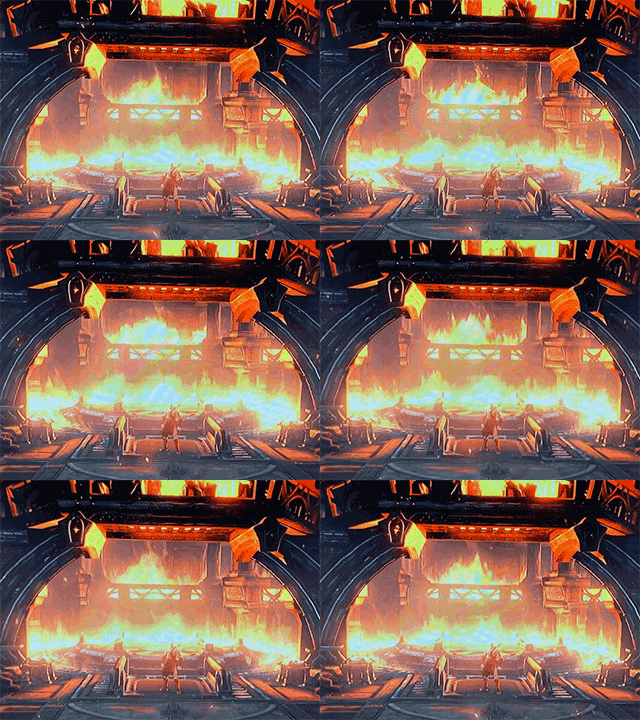
Kratos has to explore the dangers lurking within the statue on his quest. There is no ladder, or staircase inside the cavernous interior. To reach the highest level in the torso he has to activate the Forge. The genius of Archimedes is evident in every corner of the statue. In order to build the statue without having to wait for supplies he created a self-sustaining forge within. A conveyor belt of raw material, and molten metal would automatically move throughout the entire frame. It could be dumped where needed. Archimedes also developed a series of elevators, and pullies that raised the lantern of Apollo when it was finished. When Sony Santa Monica was developing the game they had a lot planned for the genius inventor. The concept artists had fleshed out dozens of concept illustrations for the character. In one version he had a metal plate stapled to his head from a previous injury. He wouldn't let a cracked skull stop him from working. He carried a staff that had acted as a surveying tool, but was capped with all manner of mechanical innovations. Plus he wore various gadgets on his belt, and wrist. He would interact with Kratos on several occasions, perhaps in the place of Orkos, and explain why he worked alone. All of this pushed the plot along. Sadly as time constraints hit the developers less, and less was made of Archimedes until his role was ultimately cut. Instead all we get are some of his notes, and a mummified corpse laying across his workbench.
The Furies hid the Eyes of Truth in the statue. They were doing everything they could to keep Kratos from reaching its secret location. Since they had a portion of the Primordial powers, essentially the forces that created the universe, this meant the Furies could create their own reality. They used it to create realistic illusions. These places were solid, with actual sites, sounds, smells, and even people. They were convincing enough to keep any mortal trapped in illusion for the rest of their lives. They tried to appeal to Kratos in a number of ways, through his lust, through his ambition, and finally through his family. Kratos was able to focus on what was real or not because Orkos gave him a pendant from his daughter Calliope, and a ring that belonged to his wife Lysandra. These items would help Kratos break through the visions. Often in an extremely violent manner.
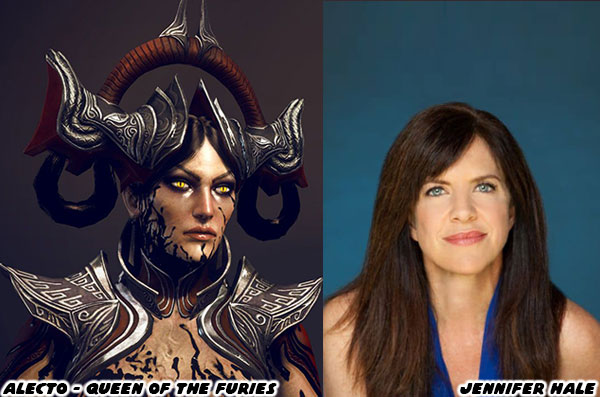
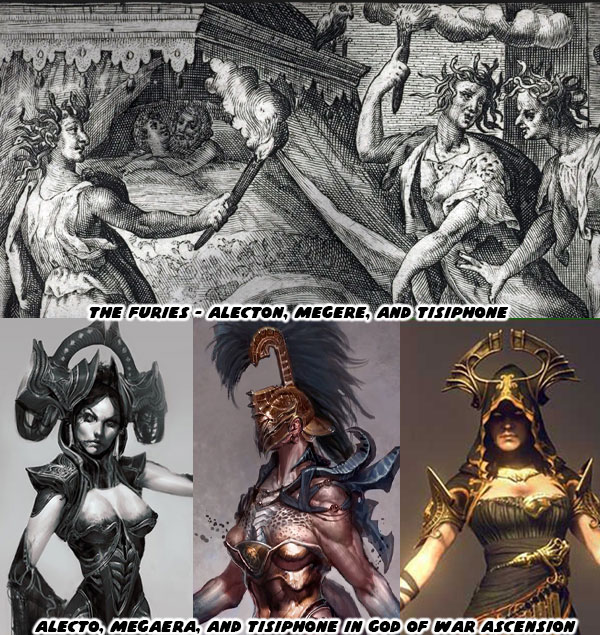
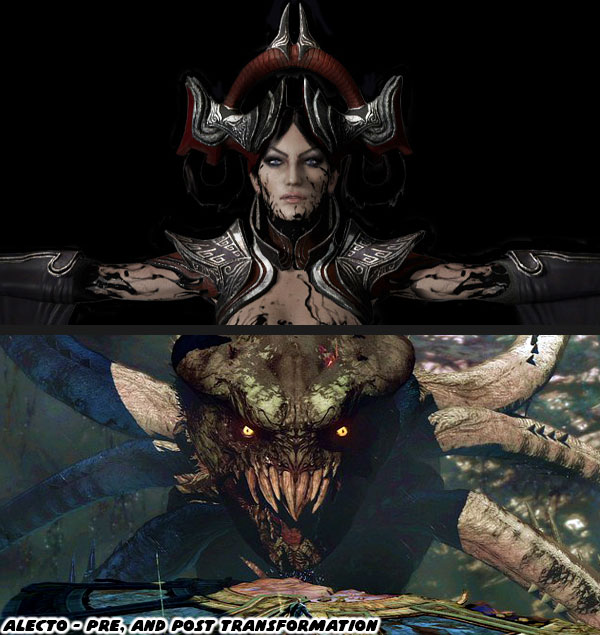
The actresses behind the three Furies all gave exceptional performances. Debi Mae West voiced Tisiphone, the Furie that tried to get Kratos to submit to his ambition for Sparta. She had also voiced the Fate Atropos, arguably the best design in GoW II. Nikka Futterman voiced Megaera, but pop culture geeks would recognize her as the voice of Asajj Ventress from Star Wars: The Clone Wars. Of the three I think veteran voice actor Jennifer Hale delivered a knockout performance as Alecto, Queen of the Furies. Game fans might recognize her from her award winning runs on Mass Effect, Star Wars: Knights of the Old Republic, Metal Gear Solid 4, and BioShock Infinite. Alecto's design was possibly the best female villain in the entire franchise, although Megaera's design was great as well. The closer Kratos got to the Eyes of Truth, and breking free from his bonds to Ares, the more determined the Furies became. None more than Alecto.
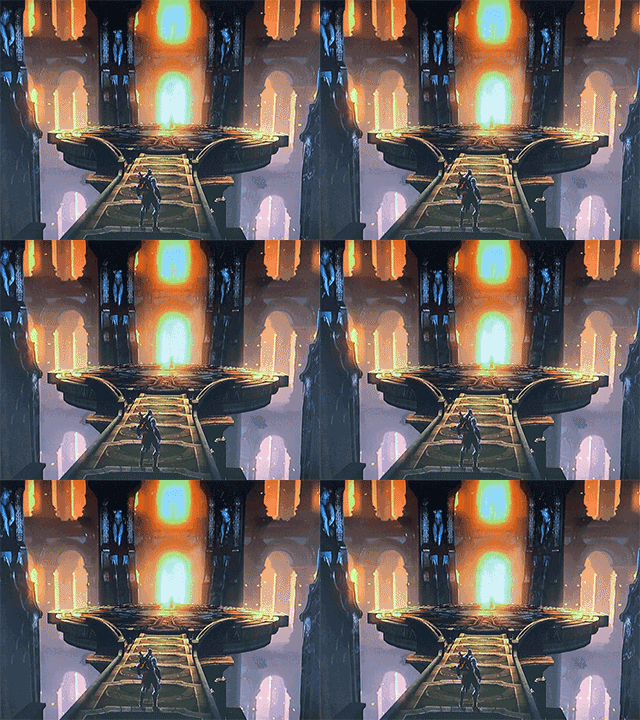
The team at Sony Santa Monica was hiding a big reveal for the final boss battle. Kratos had defeated Megaera, and had stolen the Eyes of Truth from Alecto. In doing so he forced her hand. She transformed into an enormous, squid-like beast, and pulled Kratos into the dimension of the Furies. A world made of inky illusions that she turned into a raging tempest. Those that had played the Ghost of Sparta would recognize the whirlpool battle was very similar to stage where Kratos was sailing into the Nexus of Atlantis. Not only that but there was a battle against an enormous sea creature, similar to the Scylla, also from Ghost of Sparta. The sea creature turned out to be Alecto's alter-ego. The queen was also known as Charybdis. She often appeared opposite the Scylla in Classic Greek Mythology. She would create ship-eating giant whirlpools. You could imagine that this reveal made the mythology geek in me instantly decide this was the greatest GoW adventure ever.
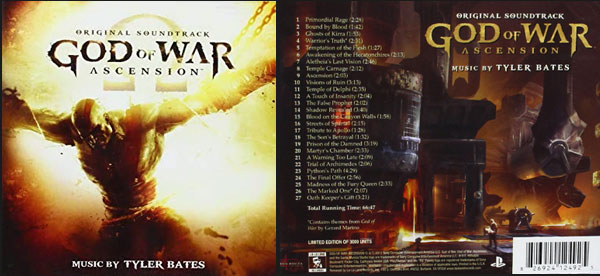

I think the final battle with Alecto/Charybdis was a way for Sony Santa Monica to do something they had always wanted to. This type of battle was a wish in their design notes going back almost a decade. Remember when I mentioned that Atlantis was originally going to be a playable stage in GoW II? As Kratos ascended the Tower of Atlantis he would see the Kraken swimming in the ocean, behind the magical waterfall. It would suddenly break through, and attack before Kratos could reach the summit. The battle with Charybdis is a wonderful mash up of the Atlantis whirlpool from Ghost of Sparta, and the proposed Kraken battle from GoW II. In a way it is even more dangerous because the ocean in the realm of the Furies is made of ink. It's impossible to see very far in the darkness, when the Charybdis appears it is meant to be a jump scare. As if the fight wasn't already stressful enough the soundtrack raises the stakes. Tyler Bates drops the
Madness of the Fury Queen to really get our heart going.
The final battle is amazing. With the Three Furies defeated Kratos is able to learn the truth. Ares, and Alecto had conspired for Kratos to kill his family, and create false blood oath to Ares. When this deception was revealed Kratos was able to break his bonds. But it came at a price, the death of Orkos. It was a bittersweet ending for the Spartan. He would have a long road ahead of him following the events of Ascension. It would be one that I would follow him on again, and again for the next 18 years. God of War Ascension had even more to offer than a fantastic single player story. The multiplayer game may have been even better. I’d like to talk about that in the next blog. For now I’d like to know your thoughts on the game, and what you liked best about it. Let me know in the comments section please. As always if you would like to sponsor me
please visit my Patreon page and consider donating each month, even as little as $1 would help make better blogs and even podcasts!