Showing posts with label styleos. Show all posts

Monday, May 22, 2017

The Style Files, Daraku Tenshi: The Fallen Angels, part 1

Steel Hearts had been working on a fighting game called Daraku Tenshi - The Fallen Angels for about three years. The publisher Psikyo had been patient for the most part but by 1998 almost every fighting game franchise had run its course. Street Fighter, Tekken, Virtua Fighter, Mortal Kombat, the King of Fighters had sequels upon sequels in the arcades and home consoles. Psikyo had been floating the bill all this time and was running out of money and patience. They wanted their new franchise title in arcades as quickly as possible. Steel Hearts did the best they could and polished what they had and scrapped the rest. There were incomplete animations, unbalanced rosters, missing shadows and other sprite data was patchy. The endings, cut scenes and stories were not all in place when the game was released. In recent years arcade fans tracked down copies of the title and dumped the ROMs online for game fans to emulate. Some fans dug through the files and discovered unfinished sprite data for at least four more characters with names and costumes. There may have been even an extra character or two in beta that they had just started before publishing the game.


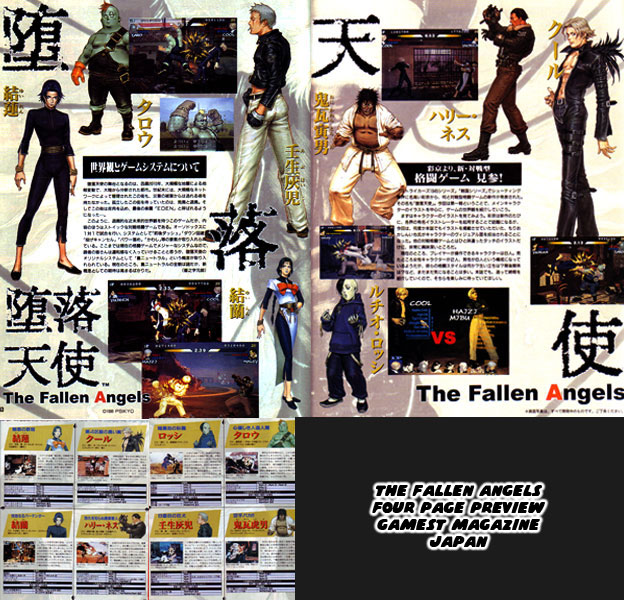
Psikyo had an uphill battle trying to get audiences behind their new game. Battle K-Road was such a poorly received fighter that most people assumed they were going to get more of the same. When it came to sprite-based titles audiences thought that the peak had already been reached. Capcom released Warzard two years earlier and Street Fighter III a year before The Fallen Angels. Fans were skeptical that Psikyo could match the size, and quality of the sprites in either game. Little did they know that there was always room to grow. The Fallen Angels and King of Fighters XII demonstrated that. Anyhow Psikyo went on a full press blitz for their title. They got Gamest, the top Japanese arcade magazine, to do a four-page special on The Fallen Angels. They wanted to show fans that their game was worth the wait. It started by breaking conventions. The majority of fighting games up until that point had martial artists in some sort of tournament. This game had no tournament, the fights were al interconnected through a story. This game had a couple of martial artists but they weren’t the traditional heroes that we had seen previously. Take the karate master in The Fallen Angels for example. Torao Onigawara was the hardest hitting karate fighter the world had ever seen. Yet his extreme dedication to his craft turned him into a literal demon. Well, a homeless demon.
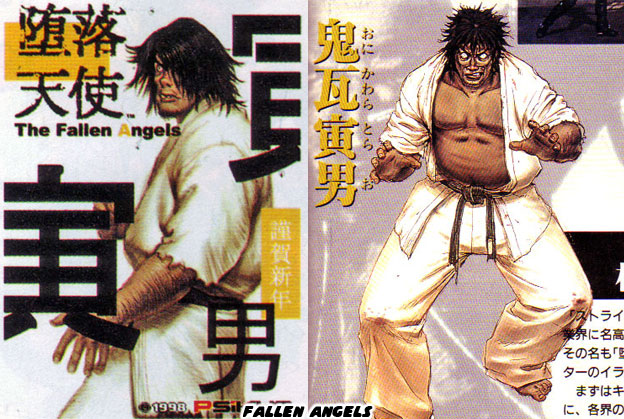
 

The romantic ideal of the karate fighter, somebody like Ryu for example, is flawed. Ryu was based on people like Mas Oyama and Yoshiji Soeno. People that became heroes by defeating other martial artists. In order to become great karate masters they lived like hermits. They trained in the mountains, under extreme weather conditions, isolated from human contact. They did pretty much nothing else for years. This made them mentally and physically stronger than their opponents. It turned them into legends. Then you take that idea to the extreme with a character like Torao. His zealotry showed in his design. His gi was worn and tattered, like Ryu’s, but unlike Ryu it was also dirty and covered in sweat stains. Torao in the game had literally stepped on screen after a training session. He had long, oily unwashed hair. The character looked like he hadn’t bathed in months. Steel Hearts actually animated Torao with tiny flies buzzing around his head. Other studios presented their characters in an ideal light, Psikyo went the opposite way. Ryu was always illustrated as young and handsome, even if a little bit rugged. Torao was raw, with a wild look in his eyes by comparison. Steel Hearts painted him with flies-a-buzzing and a snaggletooth sticking out from under his lip in the official character art. Even the name Onigawara was a play on words. An oni-gawara, literally a demon tile, was a decoration on a Japanese roof. Torao was no Ryu, he was more accurate to what an insane karate demon would look like.
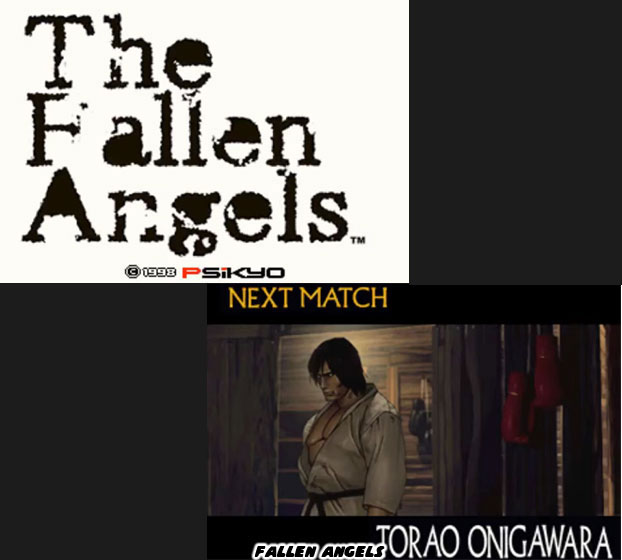
 

Every character in the game had an intense level of design and back story, not just Torao. Every character had a reason to fight and a reason to go through the lineup. Steel Hearts wanted players to feel as if they were living vicariously through the cast. The society that they were being brought into was on the verge of collapse. The stages were desolate, as if the last people on Earth were the main characters. It turned out that the fate of a tiny island nation rested in the hands of these people and an evil crime lord. Steel Hearts had reached a new level of directing for a fighting game. The situations that the cast found themselves in were serious. These weren’t some random fighters in a tournament, brought together by fate. Each encounter was a life or death struggle. I don’t think that any Japanese game since had matched the tone of The Fallen Angels. It was as if had been written and directed by Michael Mann, David Lynch or Brian De Palma. I’m certain that lead artist Morioka Shinichi, producer / co-designer Kouzou Fujimoto, and director / co-designer Mitsuo Kodama could turn this story into a compelling 6-episode OVA. Just look at the official story that played in the introduction.
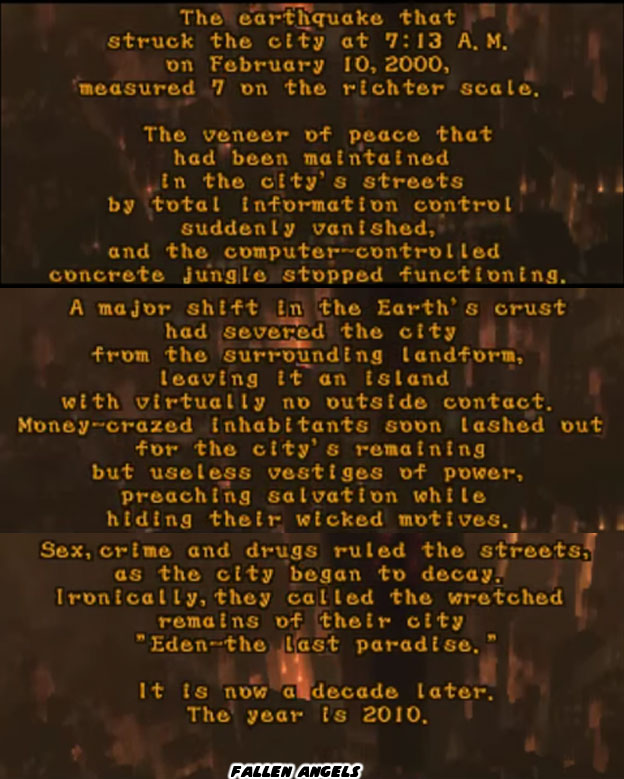
 

The world that Steel Hearts painted was very grim and brooding, more so than any standard metropolis. The island of Eden place never completely recovered from a massive earthquake. There was a reason why the inhabitants on the island were melancholy and hesitant to leave their homes. Drugs and crime had taken over the streets. Without direct access to state emergency resources they were at the mercy of local mob bosses. Also unlike other fighting games, even the gruesome ones like Mortal Kombat, the action here was grounded in realism. The characters did have some level of fantastic martial arts ability but they weren’t shooting fireballs or throwing burning dragon punches. They did actual take downs and slams, spinning backhand punches and thrusting axe kicks. We could imagine that these people were very real, or inspired by real heroes and villains. There was a dash of science fiction rather than fantasy in this world. Demons weren’t real in this game as they were in the Goketsuji Ichizoku / Power Instinct universe. Instead things like kidnapping, brainwashing, cloning were. To an extent even genetic modification was possible in this world. These sci-fi elements had been touched upon in the Tekken and Street Fighter universes. Yet none of the previous games had put the characters in such a foreboding world. No other game was ripe with an aura of depression. It was palpable. It hung over the stages. Over the cast, and over the intro screens.
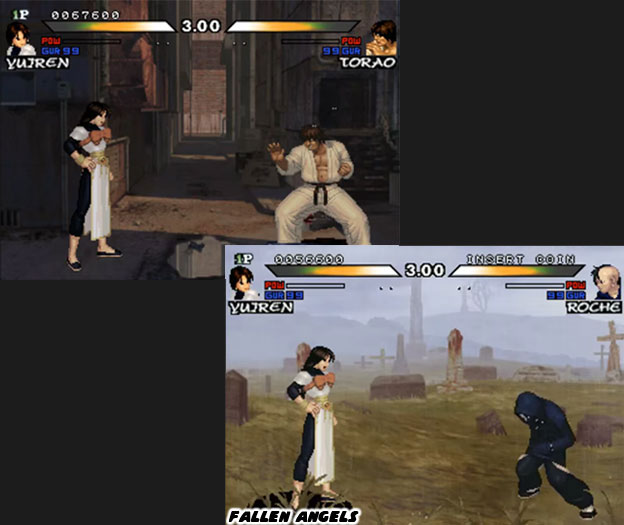
   

The streets were desolate in Eden. It made sense given the story leading up to the events in the title. Also since this wasn’t a game about a competition then it made sense that there weren’t bystanders cheering on the fighters. Sure it could be argued that the developers didn’t have enough time to create background characters but I do not think that was their intent all along. After spending years on an unfinished main cast they must have realized their resources weren’t being used to populate the city. This worked to their advantage. It made Eden look like a nice place to drive through but not stay. The team could focus on the cast, on the moves, on the fight mechanics. They could explore things that weren’t being done in other fighting games. For example, one of the things they created were custom win quotes for each character and rival. Having dedicated lines for every opponent helped create a relationship between characters. It helped sell the story and connect the reasons why everyone was fighting.
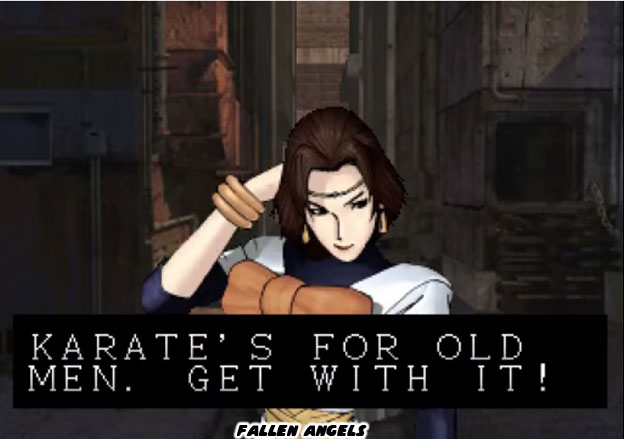
 

Every stage told a story, like the great fighting games before it. Eden had a literal atmosphere, including realistic fog and rain effects. The studio wanted Eden to look worn and lived in. The buildings and streets weren’t in the best condition. The fights didn’t happen in front of a flashy casino or sporting event. They happened in darkened rooftops and side alleys. They happened in seedy bars and open cemeteries. There was a sense of decay in these levels. This world was real and it was slowly falling apart. The years of neglect following the earthquake were showing. If something didn’t happen soon, and for the better then this world would fall apart completely. This was important to the story. All great stories happen at the critical moment, they don’t take place during the inconsequential periods. It was no different in this game. A crime boss named Carlos was consolidating his power. He was taking out his rivals with the help of some assassins, including a red-suit wearing gunman named Trigger. Carlos was making an already bleak existence in Eden even harder. Every character in the game had a vendetta against Carlos, if they weren’t secretly working for him. At least one person, a soldier named Harry Ness, was trying to bring him to justice in the mainland. But getting through Eden and back out alive would prove to be a challenge.
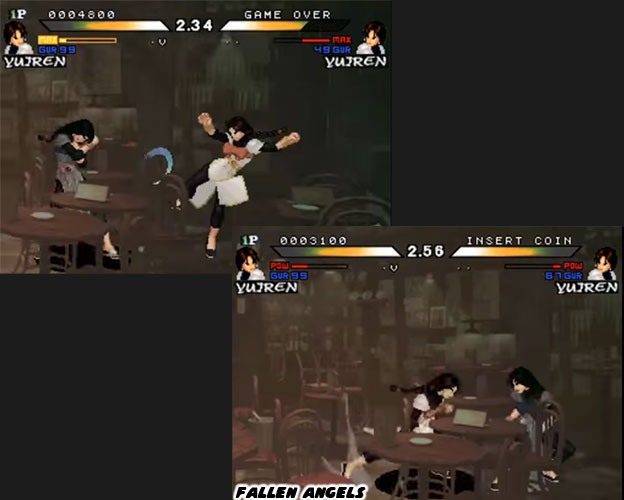
 

Steel Hearts took a number of unique approaches to the game. The final cast had eight playable characters. Like the original Street Fighter II. It also had a sub boss and boss. But like I said earlier, they were not the traditional martial arts masters. For example there were two female characters in the game, sisters named Yuiran and Yuiren. They ran a club called the Wind Fish. Yurien was a singer in the club and was actually a trans character. She was born the brother of Yurian, acting as protector and entertainment while her sister acted as a bouncer. Yurien had very fast strikes while her sister had the power moves. It was a unique change of traditional roles. This stage was an example of the sort of interactive environment that the studio wanted to build. There were chairs and tables in the foreground that obscured the view of audiences. This sort of blocking wasn’t done in other games. As players fought they could kick the chairs and tables over. It was a nice detail that was rarely used in other fighters. It helped make the fights look like they took place in an action film. The smoky club looked like it had been in business for a few generations and the sisters were doing everything they could to keep it going. The Wind Fish actually appeared twice in the game. The first time the club was intact, as if they had just closed for the night. By the end of the game Carlos and his goons had trashed the club. Whether he wanted the land, the clientele or the sisters out of business we might never know.
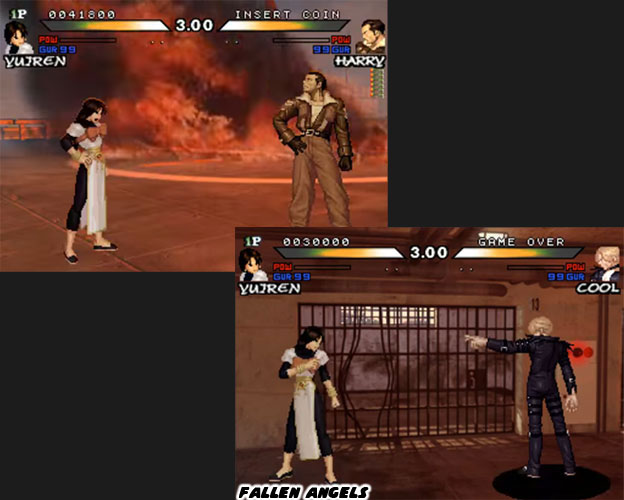
   

The Wind Fish was the only level to have foreground elements to knock over but again every stage told a story. Steel Hearts was experimenting with the format and trying to add details and effect rarely if ever used in other games. The chairs and tables were one example of expanding stage design. In other places they experimented with effects. Realistic fog and rain were one thing but the studio tried very hard to create a realistic flame effect on Harry’s stage. There was a massive fire on a helipad, as if Harry’s chopper had just crashed. Steel Hearts blended video effects onto the stage so that the raging inferno looked realistic because it was a real fire. The sprites the studio created also had a certain weight and depth to them. This was because not only were they carefully painted to display shadows and highlights, but because many of the idle and strike animations were rotoscoped. This was to say they were based on video of actual people performing the moves.
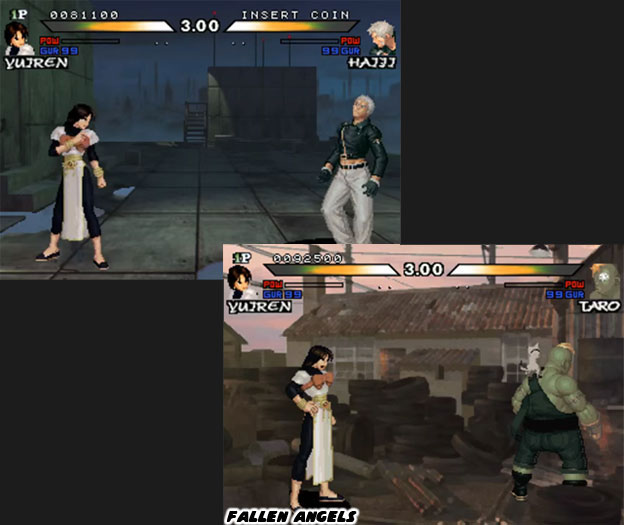
   

As the game progressed the encounters got more and more unique. The locations became more diverse and the opponents a little bit stranger. They were all leading up to a final showdown. Carlos had heard the rumors that there were fighters in Eden ready to take him down. So he pushed back with hitmen of his own. Some did it for the money, others did it because they were just evil. The final battles were unique. We will look at these in the next blog and see the legacy that the studio established. As always if you enjoyed this blog and would like to sponsor me please visit my Patreon page and consider donating each month, even as little as $1 would help make better blogs and even podcasts!
follow the Street Writer on Patreon!

Friday, May 19, 2017

The Style Files, Psikyo and the aesthetic copies

Many game fans wish their favorite developers had an unlimited budget and an unlimited development cycle to create “perfect” titles. This would make for better movies, cartoons and comic books as well. But we live in a practical world. A world that doesn't have unlimited time or money. We live in a world where the decision makers are not always the creative types. Stockholders demand a return on investment and they have little patience for a director's flights of fancy. No studio could survive for long if they wrote their team a blank check. Do you wonder what would happen if a studio gambled really big and put all their chips on one game? What would happen if they spent years in development and were still not finished when the game was published? How good could a rushed game really be? How much better could it have been? This happened with a lot of games, including many of the biggest franchises. The best managed to cut the right parts without sacrificing the overall experience. One game in particular became a sort of urban legend in the fighting game community. It was released before it was ready, didn’t see too many arcades and then vanished. It retained enough elements to let audiences know where the developer was headed with it. The people that worked on the game ended up coloring the biggest franchises, including Street Fighter and the King of Fighters. In order to tell the story properly we need to look at the agenda of the publishers and developers separately.


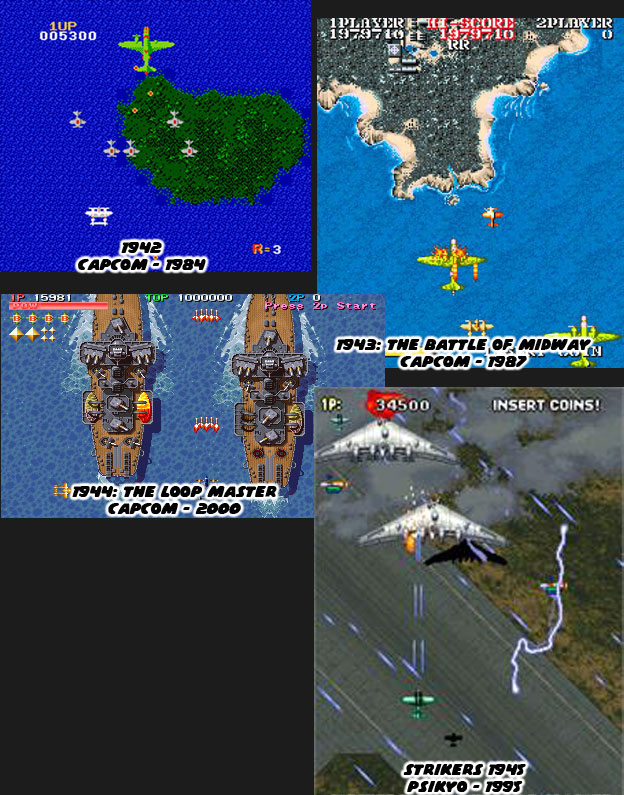
Studios copied game designs from each other. That was a tradition that went back to the earliest days of the arcade. If one company created a racing game then another studio created a racing game. If one studio created a space shooter then the other studio followed suit. The more popular the game was the more likely it was to be copied. The runaway success of Pac Man in the '80s meant that every developer would create their own maze game. Psikyo was no different when it came to copying ideas. What they did was unique. They waited a few years, sometimes a decade, and released a game that had many of the elements of a classic arcade title. The shoot 'em up (SHMUP) was an arcade standard. Every designer tried to improve on the classic Space Invaders formula. Studios experimented with graphics, controls and game play. Capcom took the SHMUP out of space and used the mechanics to tell a story set in WWII featuring planes and ships from that era. The game 1942 was a phenomenal success. They created a sequel called 1943 and many years later, riding a wave of arcade nostalgia, released 1944. Psikyo had developed their own take on the title, Strikers 1945, released almost a decade after Capcom's original game.


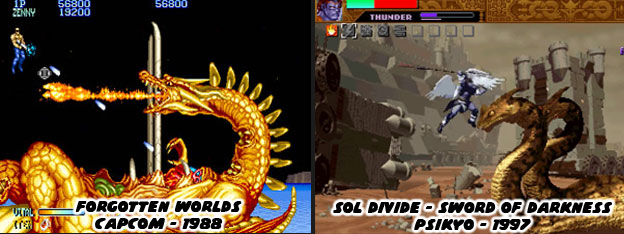
Psikyo had become very good at filling in a certain niche. It was as if they knew that arcade audiences occasionally longed for classic experiences. Even with the leaps and bounds in graphics and genres there was still a certain charm to the feel of a traditional game. So they used newer technology and better graphics to enhance the classic-inspired titles. Strikers 1945 was probably one of the better known releases but one of their games with a very strong aesthetic was called Sol Divide - Sword of Darkness. It was a side-scrolling SHMUP that featured flying characters in a fantasy universe. If I were to compare it to another classic it would undoubtedly be Capcom's Forgotten Worlds and sure enough it came out almost 10 years later. To be fair the Capcom game was set in a post-apocalyptic wasteland where monsters and angels were fighting alongside jet-pack wearing mercenaries. Sol Divide had similar mechanics but a strict fantasy environment. It was a fun game and an under appreciated Playstation title. When fighting games were red-hot at the start of the ‘90s Psikyo couldn’t afford to stay quiet for another decade. They jumped into the genre with a game called Battle K-Road.


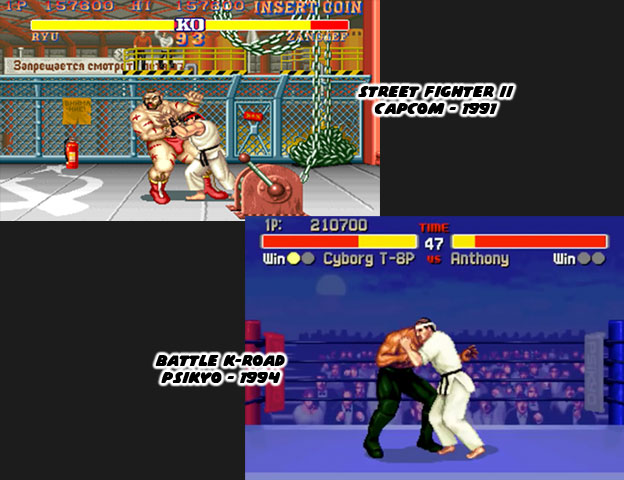
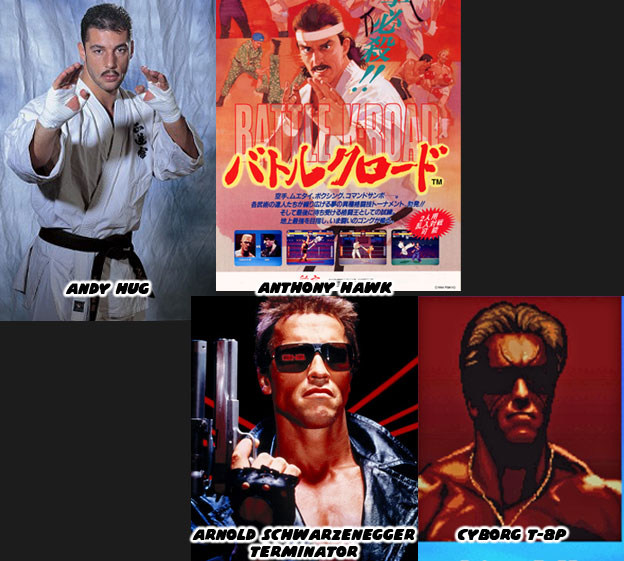
The game was inspired by the hugely popular K-1 fighting tournament. It was one of the influencers of modern MMA tournaments. It focused more on strikes than grapples. The name of the tournament actually got its name by taking the first letter of Karate, Kickboxing and Kung Fu. One of the most popular fighters was a Swiss Kyokushin practitioner named Andy Hug. He was an exceptional fighter and helped build a bridge between western and eastern practitioners. His look was the basis for one of the lead characters in Battle K-Road, Anthony Hawk, yes as in “Tony” Hawk. The game was notoriously bad. The control, balance, animation and character design were forgettable. Even the boss character Mr. Bear was overpowered. It poached a number of elements from other fighting games but especially the likenesses of real people. Andy looked similar to Anthony but there was even a cyborg in the game that was a dead ringer for a certain bodybuilder-turned-actor-turned-politician. Psikyo’s flop was released in 1994 for the arcade and never saw a console or PC release, which was rare for most fighting games of the era.


Psikyo had struck out when they really needed a hit. They asked their development team Steel Hearts to work on a new fighting game. If Psykio’s first attempt failed because it lacked originality then this new one would pull out all the stops. Steel Hearts looked at their art team and pushed for a very strong aesthetic. This new game could not look remotely like any other fighting game that had ever come out. In order to set themselves apart they had to have a distinct visual style that carried through every part of the game, not just the character designs, but every stage, every intro screen and ending as well. Capcom, SNK, Sega, Namco and the other big companies knew that there was a steep price to developing fighting games. Perhaps Psikyo was underestimating the task. There were many variables that went into the budget; programmers, animators, sound and music all factored in. Sprite creation accounted for a good chunk of the money. The size of the sprite, number of colors, number of animation frames all effected the price. Of course the team also had to settle on the lineup. Not enough unique characters and audiences would skip the title, too many and the game would never be completed in a reasonable time frame. Steel Hearts wanted to create larger-than-average sprites that looked as if they were hand-painted by the lead artist on top of highly-detailed stages. Except they didn’t have a lead artist right away or theme they wanted to pursue.


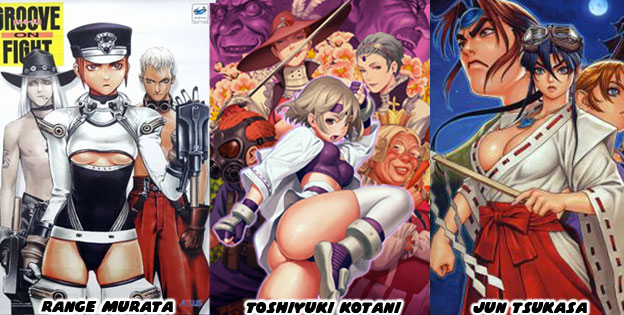
What the studio did know was that the game industry focused on cartoonish or animé-style aesthetics. They didn’t pursue anything with softer, more realistic tones. A designer like Range Murata really stood out in the crowd. It would be wonderful if they could get his style, down to the color palette that he used in a fighting game. Yet Range was contracted by Atlus not to mention that he was already doing the designs for the Goketsuji Ichizoku / Power Instinct Series. The team at Atlus had other tremendous artists that filled in the stage art, menu art and other details. Range didn’t do everything himself and that’s why there were some slight differences in the stage art and background characters between games. They didn’t all capture his unique perspective. One of the secret weapons that Atlus had was an artist named Toshiyuki Kotani aka Styleos. He could mimic the Range Murata style very well especially in the final games of the series. Later on he began to show off his own style, which had soft, blended colors on top of lean athletic figures. His style of art really stood out when he worked on the indy fighter Yatagarasu: Attack on Cataclysm along with former KOF developers. Atlus had a packed art team working on their fighting game series; Haya, Kobayashi Takashi, Masafumi Fujii, Shioi Tomohide (KOF Maximum Impact), Nishikawa Yoshikazu and dadamusi. They had no lack of talent coming up with all the wild characters and stages in their games.


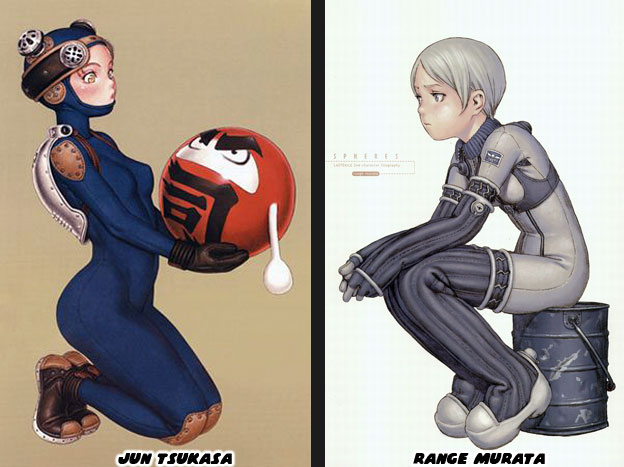
Psikyo had their own art team as well and a special designer whose illustrations were very much on par with those of Murata. Jun Tsukasa was the character designer and illustrator on Psikyo’s Sengoku Blade series and mahjong games. He often created cheesecake paintings of very busty women in revealing costumes if not semi-nude for the in-game graphics as well as arcade posters. I cannot recall a time a time that Range Murata painted voluptuous women. When Tsukasa drew young men and women they often had the same proportions and stylings of Murata. When put side-by-side it was almost eerie how similar their work was. If you have difficulty telling the artists apart then just compare their main body of work. Tsukasa tended to focus on paintings of busty women whereas Range’s subjects were often thin girls. Unfortunately Mr Tsukasa was not able to help Steel Hearts develop the characters, I’m not sure what he was working on in that time. So Steel Hearts turned to the talented Morioka Shinichi to come up with the art direction of their next game; Daraku Tenshi - The Fallen Angels. His own style of illustrating was similar to those of Murata and Tsukasa. Toshiyuki Kotani also ended up working on the project, helping keep the Murata / Tsukasa aesthetic very close. In Gamest Mook Vol. 113: Psikyo Illustrations Mr. Shinichi said that he worked on the project for three years and wishes to revisit it so he could complete what the studio set out to do. Imagine working every day for three years and having the game published but considering it unfinished. Did Steel Hearts not hire enough talent to properly complete the title? Did Psikyo again underestimate what it took to create a AAA fighting game? Or were both studios to blame? We’ll look at this title in the next blog and see what made it one of the most anticipated fighting games of the ‘90s. As always if you enjoyed this blog and would like to sponsor me please visit my Patreon page and consider donating each month, even as little as $1 would help make better blogs and even podcasts!
 follow the Street Writer on Patreon!