I’ve played through hundreds of video games in my lifetime. A small percentage of which I would consider among the best. The God of War series was unique because it was amazing across the board. Every title in the franchise looked great, played great, and provided the perfect challenge. As a mythology geek the stories, and characters kept a fire burning inside me. Also unlike other games once you played through this games the adventure didn’t necessarily end. You could raise the difficulty, and give it another try. Either in the search of secrets to unlock, or simply for the challenge. Sony Santa Monica seemed to know they had a great thing early on. They made sure to put in a lot of content, in addition to the main game. They wanted audiences to enjoy the experience they had created in different ways. This is how they came up with the Challenge of the Gods.
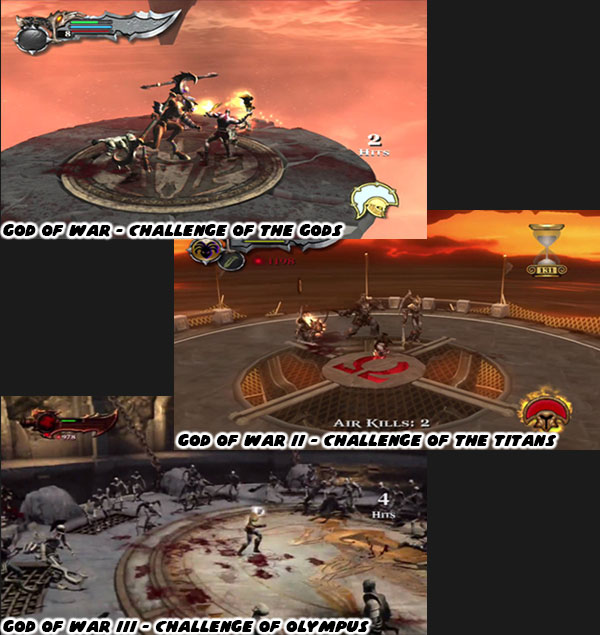
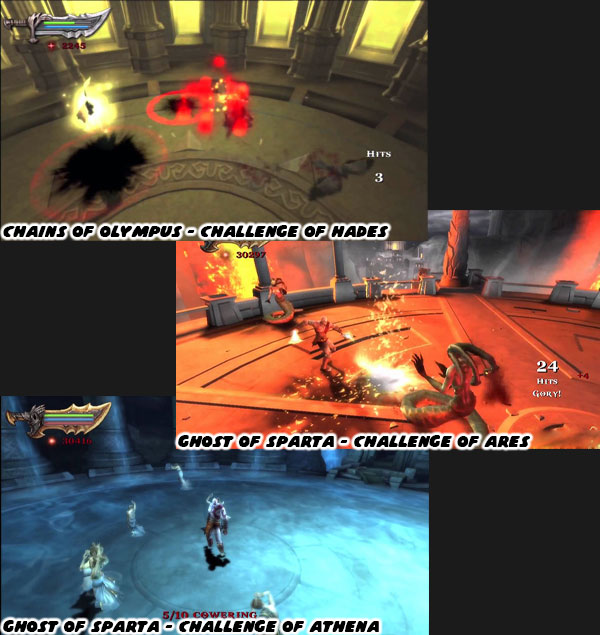
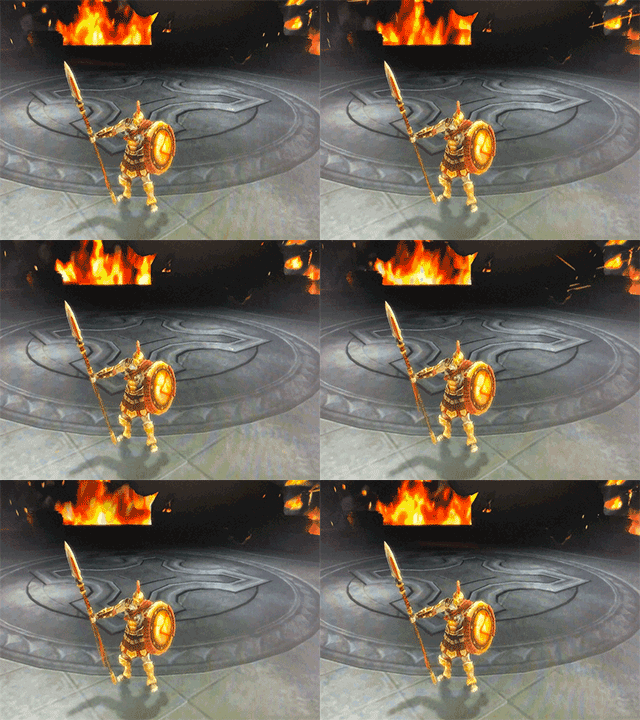
These were mini challenges featured in the series that allowed players to test their ability. Whether it was fighting a certain type of opponent, trying not to get hit, or wiping out a regiment, there was something unique to each trial. The challenges weren’t straightforward either. To raise the stakes most gave Kratos limited time, magic, or energy in order to complete. They may have seemed impossible at first, but players learned that there were attacks, and combos that made them possible. Audiences had to go with trial, and error in order to find which moves worked best. Doing this repeatedly actually made them better players. Suddenly the harder play throughs seemed less daunting. Completing the challenges rewarded the player with all sort of bonus content. You could earn concept art, making of videos, special skins, or other features that you could unlock during a play through. Of all the bonus games the one I enjoyed the most was featured in the Ghost of Sparta. You could fight within a Combat Arena. These were customizable battles that took place on a large circular stage. You could configure these fights in a number of ways. You could select the types of enemies, the number of enemies, the difficulty of them, and even whether or not they respawned. You could also choose to have infinite energy, or magic as well.
The Combat Arenas were first introduced in God of War II as the Arena of the Fates. They featured the stages that were created for the Challenge of the Titans. Each location was reminiscent of areas featured in the game. There was the Summit, which looked similar to the place where Kratos, and Zeus had their final battle in GoW II. There was the Barbarian, which was the location in the bogs where you battled The Barbarian King Alric. Lastly there was Daedalus, a circular platform with mechanized wings. Not every arena had to be a place visited in the game. It just had to carry the same design, and tone from the series. For example there was the Forest, which took place on a stone path in the middle of a rainstorm. There were no forest locations in the Ghost of Sparta, but it still matched the look of the game.
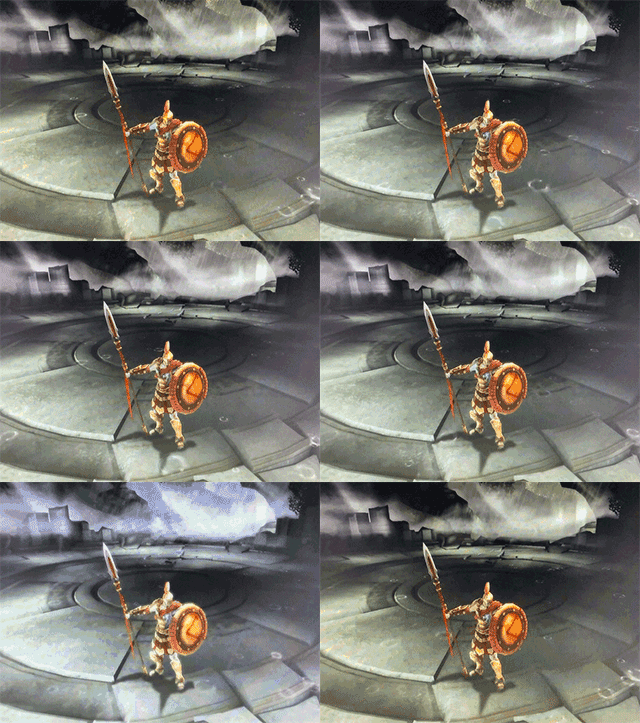
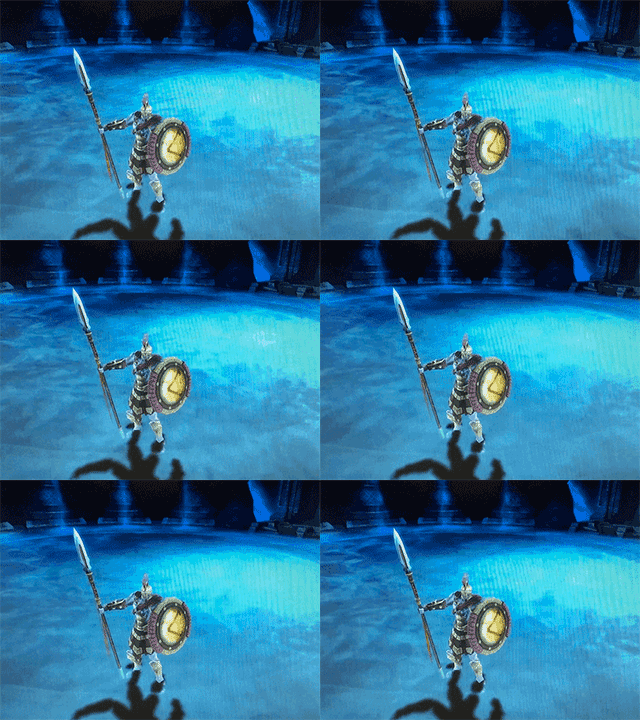
Each arena location told a story. Some were bold, others very subtle. For example the arena labeled Arctic. It had a frozen atmosphere similar to the Mounts of Aroania. If you looked in the distance however you could actually see a temple, and a statue of Zeus. This hinted as to where his temple was located in the GoW universe.
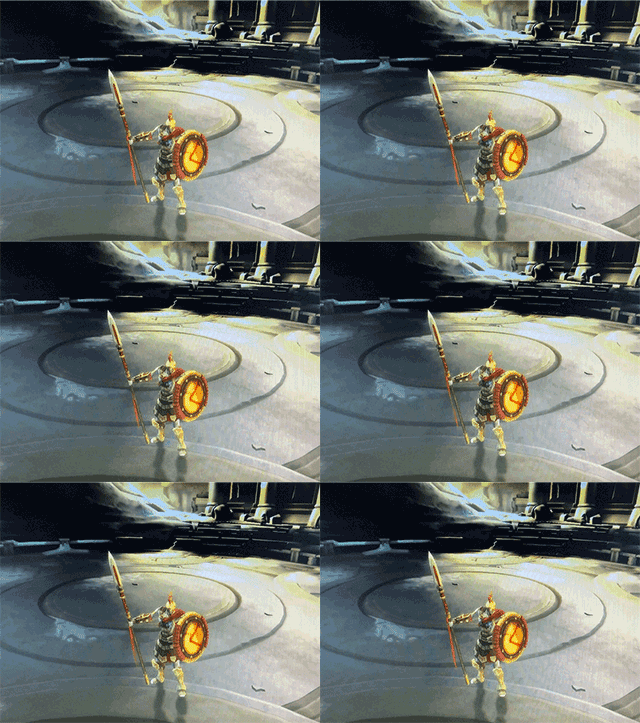
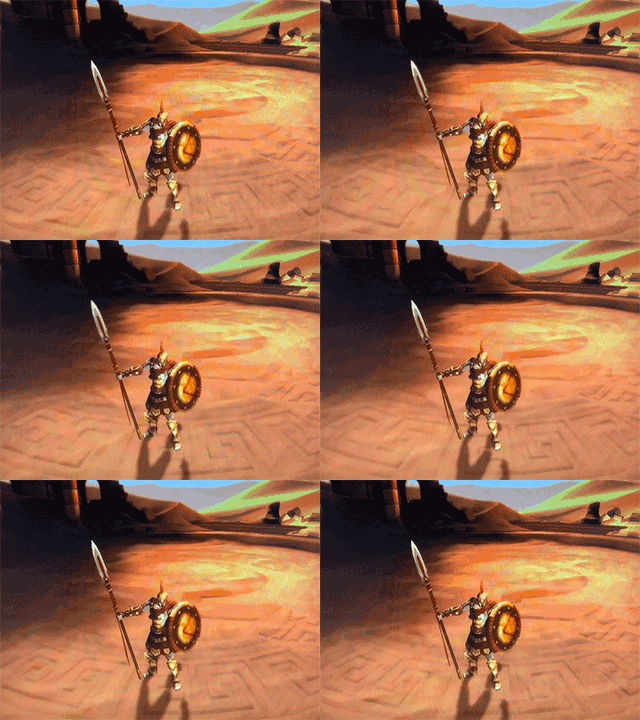
There was the Desert. Possibly the nicest looking background. A steady breeze blew sand across the ground. The sun was past midday. You could just about feel the heat. I imagined that this place was not too far from the Desert of Lost Souls from the first GoW. I greatly enjoyed the look of all these places, could appreciate fighting within them as long as I wanted, and with whichever enemy I chose.
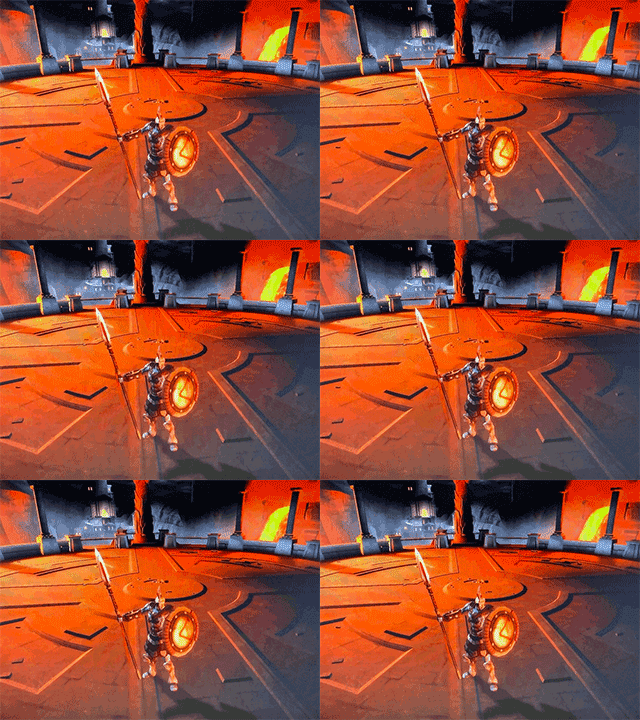
One of the most unique stages was Hades. It looked different than how it appeared in either GoW III, or the Chains of Olympus. It was dark, and mysterious, with harpies flying in the background, and lava waterfalls skirting the perimeter. It was certainly not a place that a mortal would want to visit.
In my opinion there was a toss up between the two best arenas in the game. One of those was Atlantis. In the previous blog I talked about how the sunken city had been on the drawing board since GoW II was in development. This was around 2005. That stage wouldn’t formally be introduced until the Ghost of Sparta in 2010. The stage was part building, and part magical barrier where we could stare out in the abyss. It was the sort of fantastic world that Sony Santa Monica, and Ready at Dawn could bring us into.
You could really appreciate the planning for the stages if you looked at the concept art. Atlantis wasn’t the only location that the studios had always thought about taking Kratos through. In very early GoW II plans they were thinking of setting a chase, or action stage, through the city of Sparta, as they were under attack. There would be a huge battle, with flaming arrows streaking back, and forth across the sky.
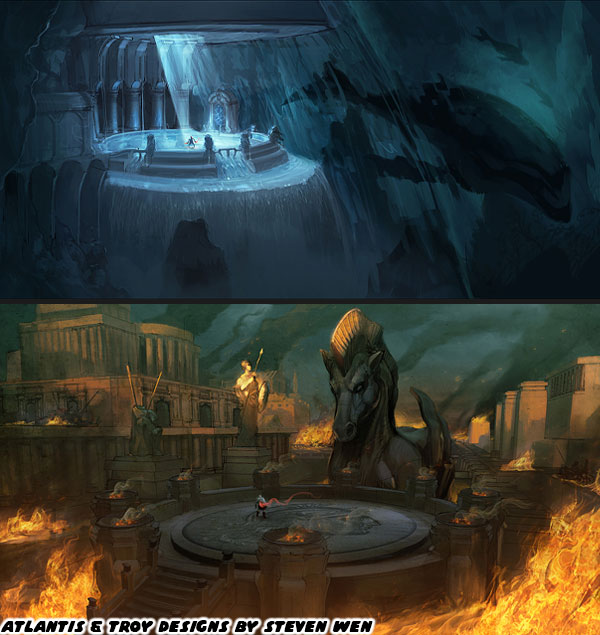
Some of those plans, and settings were adapted by Ready at Dawn. The burning arrows, and spears were used in the opening moments of Chains of Olympus. The intact city of Sparta was put in the Ghost of Sparta. Whereas the city being destroyed became Crete, and Heraklion during the eruption of the Methana Volcano, as well as the collapse of Atlantis. Ready at Dawn honored the developers at Sony Santa Monica by putting an actual Troy arena in the game. Best of all playing the Challenge of Ares, the Challenge of Athena earned you red orbs that you could spend in the Temple of Olympus, and unlock all sorts of goodies. The best surprise in the game was the Grave Digger’s Shovel. It allowed you to unlock a special character in the Combat Arena.
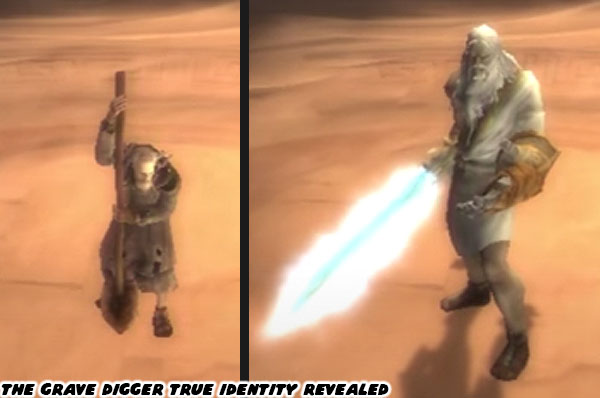
There had been a lot of speculation as to the identity of the Grave Digger from the series. Many had guessed that he was Zeus in disguise, especially since he referred to Kratos as son. It was nice to see this get officially confirmed in the game. When the arena stage begins we see the Grave Digger standing in place, for a second I thought I would actually be able to see him swing the shovel in combat. However he instead raises it to the sky, and a lightning bolt transforms him into Zeus, and the shovel into the Blade of Olympus. He not only fights with that, but in his left hand he has the Gauntlet of Zeus. The most powerful weapon from the Chains of Olympus. To say Zeus is O.P. would be an understatement. He doesn’t have a block button, but instead he’s blindingly fast. Rather than roll he can dash out of the range of most attacks. Also he doesn’t use any magical attacks. If you press the directional button, the ones that activate magic for Kratos, he instead makes one of four statements. “Feel the power of Olympus! I will crush you! Insolent Fool!” and the always classic “Die mortal!” The studio went so far as to actually animate his mouth when he talks.
It was great having Zeus as a playable character, but the team did make one change with his weapons. The Gauntlet of Zeus was a right hand weapon, but he sports it on his left. It’s a minor detail, but one that I noticed because of how much I replayed the Chains of Olympus. I’d like to know if you had a favorite challenge in the GoW series, or if there was one that you felt was absolutely impossible. Let me know in the comments section please. As always if you would like to sponsor me
please visit my Patreon page and consider donating each month, even as little as $1 would help make better blogs and even podcasts!