Friday, August 18, 2023

Street Fighter 6: A master class in game design, part 9

In Street Fighter 6 the entire map of Metro City was not open at first. This was done for several reasons. The developers wanted to pace out the game play. They wanted players to absorb the world they were being placed into. To see how the story was developing. Chapters were being unveiled in a very deliberate fashion. Missions were scattered across the town to force audiences to learn how to navigate the various side streets, and study the environment. The developers were using all the tricks at their disposal in order to force audiences to focus on specific things. Along the way you were being introduced to both classic SF characters, and entirely new faces. The developers wanted to give audiences the idea that they were an important member of this world, and not just a visitor.

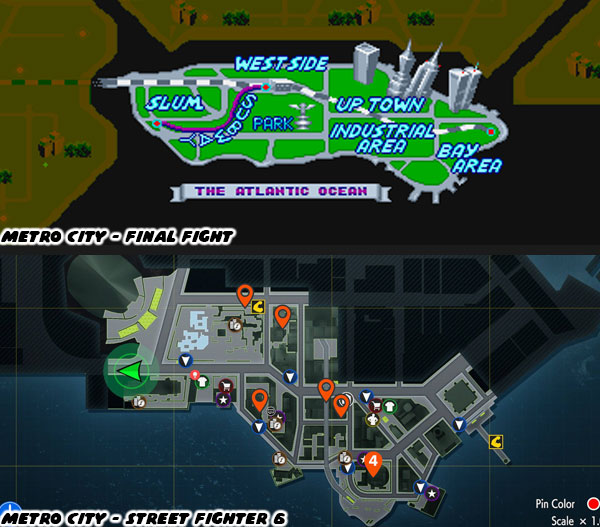
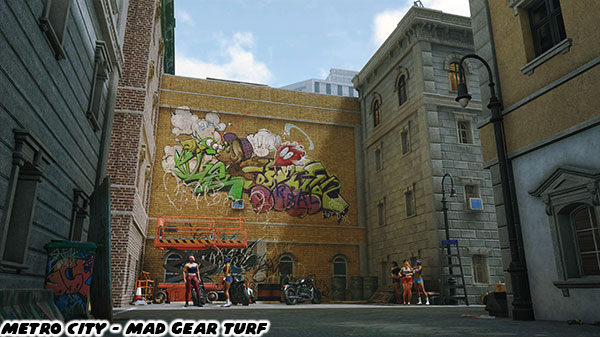
Clues to different plot points were scattered along the journey. Metro City was created out of thousands of tiny, easily overlooked details. It was up to the player to figure out the layout. To see which areas were safe to visit during the daytime, but might become sketchy at night. For example you could see a concentration of Mad Gear members behind a high chain link fence. Some were dancing, some were playing basketball, or just hanging out. Some were just waiting for a fight. It was up to you to decide whether or not you had the skill, or courage, to walk down a dark alley, and face all of those gang members. Or if it was a place that you might visit after leveling up.

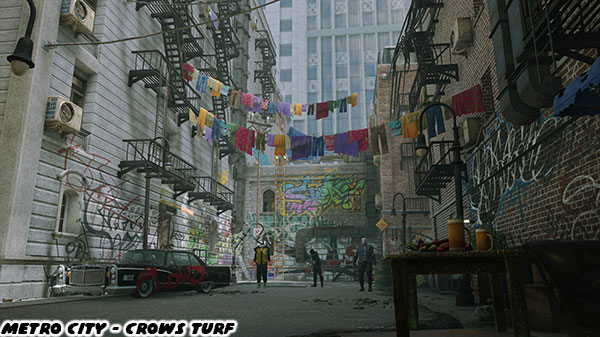
As the map expanded you discovered that Mad Gear wasn’t the only gang that had carved out their own turf. A new gang called the Crows has been steadily expanding as well. Visiting their area was not something that low-level players could do. You had to meet some criteria, and make allies with other NPCs before you could even get your foot through the front gate. The SF6 art team was able to make gang turf feel imposing, even without gang members waiting for you. They layered tags, and graffiti on the walls to make this part of the city look old, and neglected. They made the location feel isolated, by using alleys, and high walls to block out the view of the rest of the city. The deeper you went into their side of town, the more difficult the battles would become. It was one of those places where if you disappeared you wouldn’t expect the cops to come looking for you.

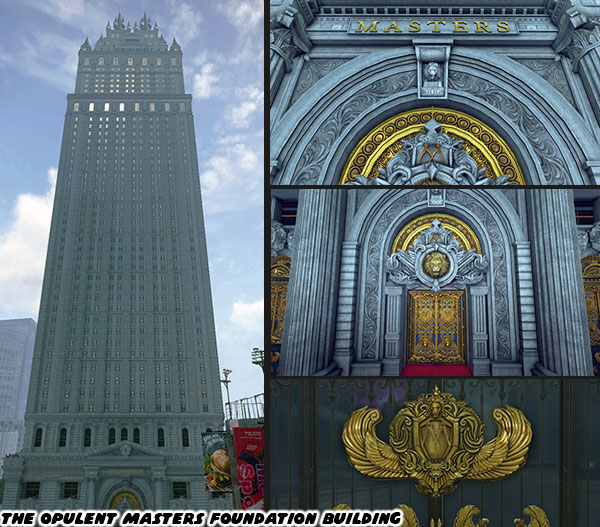
The developers weren’t just fleshing out gang-controlled parts of the city, but adding landmarks that would become central to the plot of the World Tour. These were places that were safe to visit at any time. One of the most impressive additions to Metro City was a cornerstone of the financial district. The Masters Foundation (as in Ken Masters) had a gorgeous skyscraper right next to the Grace Marina. The architecture for the various buildings were distinct. None of them looked as important as the Masters Building. It was layered with the reliefs carved out of stone, iron, and gold. The classic lines reflected the Art Deco style, similar to the Empire State Building, and Chrysler Building in NYC. The top of the building was very distinct. It looked like a castle, adding a regal element to the already elegant skyscraper.

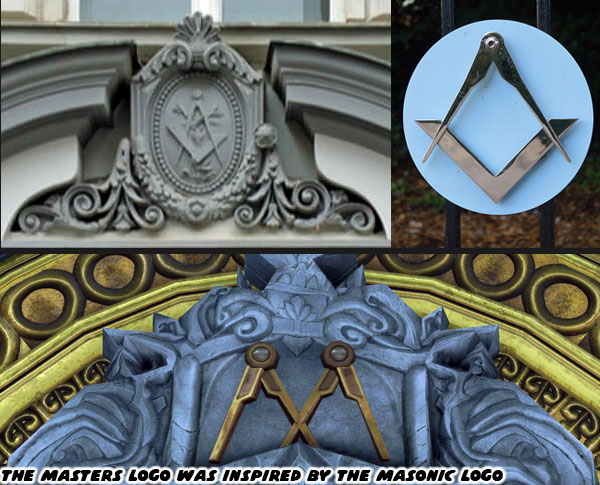
A lion bust was used on the archways, and doors of the Masters Building in order to represent power. The Masters logo itself was quite unique. The monogram “M” was made up of two compasses. This was done very deliberately. The Freemasons were a centuries-old organization that was connected to money, and power all around the world. They existed before the founding of the US. The group designed, and built a number of the Washington D.C. buildings, and monuments. Several US Presidents were also members of the Masonic order. They had temples, and lodges around the country where they performed secretive rituals. On those buildings you could find the traditional symbols of masonry; the compass, and square. These items had a meaning according to Duncan's Masonic Monitor of 1866; "The square, to square our actions; The compasses, to circumscribe and keep us within bounds with all mankind.” By using familiar symbols Capcom was inferring that the members of the Masters family were not only wealthy, but well connected in society, and politics. These details would come into play through the events of the story.

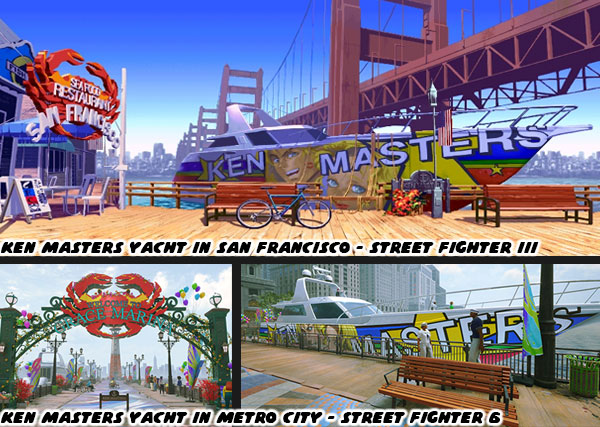
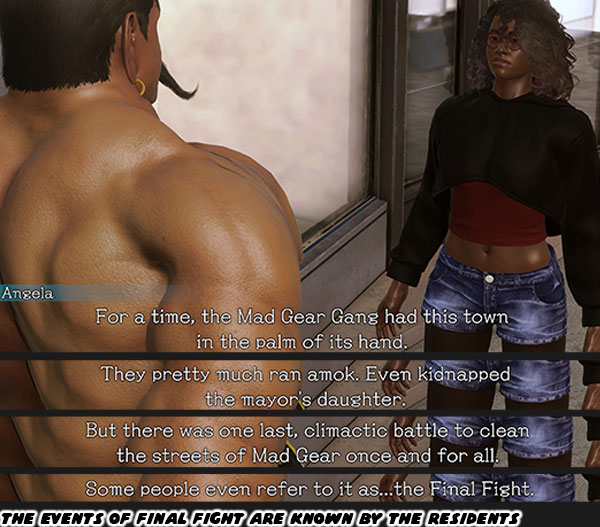
The developers included nods to earlier games in the franchise. They added these details more than just for the sake of hiding an Easter egg, but rather to establish a certain level of narrative consistency. The game did not have any throwaway details, but instead had carefully constructed elements that honored the legacy of earlier teams. An example of this was the inclusion of Ken’s yacht. The flashy boat, featuring a painting of himself, and his wife Eliza was previously seen in Street Fighter III. This was about 25 years prior. It wasn’t necessarily something that new players would know, or even care about. It did however spell out that Ken had money, and was a showoff with it. The docks themselves weren’t just for any random ships in Metro City either.The Grace Marina was dedicated to Ken Masters. His family, and his money had shaped the city. The combination of who Ken was, and the importance he had in the SF universe was amplified with these supporting details.

The details added into the canon of Metro City were done with forethought by the SF6 developers. Ken had been a star character in the franchise. He had consistently been one of the most popular fighters since the very first game. He traveled the globe like his best friend, and rival Ryu. Arguably Ken might be considered the better of the two martial artists. A side plot in the World Tour was having Ken abandon his position on the board of the Masters Foundation, avoid all tournaments, and go into hiding. He was even avoiding his family during this period. It was a shock to long time fans, and something that new players would learn about. Audiences that were new to the game were not told the plot, but shown it through different character interactions. Everyone that spoke about Ken said kind things about him. How well respected he was, what a tremendous fighter he was, what a loving family man he was. When you finally found out where he was hiding just about everything you heard about him seemed true. Ken was humble, but troubled by the accusations that were being leveled on him, and the Masters Foundation. He was willing to teach you his moves because he could see that you were as determined as he was at a young age.

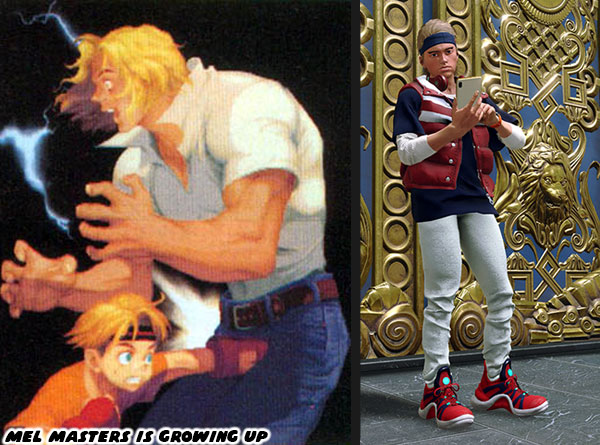
As the game progressed you discovered that a bombing happened during a tournament on the other side of the world. Ken was in attendance, and was implicated in the plot. He fought Luke whose company was working security at the time. Ken managed to get away, resign from his position with the Foundation, and went into hiding. You were trusted to keep Ken’s location a secret until he could clear his name. As the game progressed you caught a glimpse of Mel Masters, Ken’s son. He was waiting outside of the Masters Building, trying to get his father on the phone. He understood that Ken had a reason for going into hiding, but was hoping to contact his father. It was heartwarming to see how much he had grown since his appearance in SFIII. It was also heartbreaking that you couldn’t tell him where his father had gone. I had no idea that the subplots in the game would be tied together with the main plot. Again, the developers working on SF6 were not putting locations, and NPC encounters without some forethought. As I stated in the very first blog in the series this was a master class in game design. In the next blog I will talk about how a single stage in the original Final Fight helped connect Metro City to the future of the franchise. I hope to see you back for that. If you are a long time fan of Final Fight, or Street Fighter then I would like to hear your impressions of SF6. If you have never played any game previously then tell me your experiences in the comments section please. As always if you would like to sponsor me please visit my Patreon page and consider donating each month, even as little as $1 would help make better blogs and even podcasts!
follow the Street Writer on Patreon!

Wednesday, August 16, 2023

Street Fighter 6: A master class in game design, part 8

Street Fighter 6 worked incredibly well because of how deeply it was connected to the history of the SF universe. The game was saturated with multiple callouts to the cast, and story of Final Fight. One of my favorite bits came from an NPC resident named Charles. He said; “Park in a place like this, and you’re practically begging for someone to smash it to pieces. Cars are pretty disposable here in Metro City. I mean, hey, the former mayor himself used to go around smashing cars with a steel pipe. Comes with the territory.”
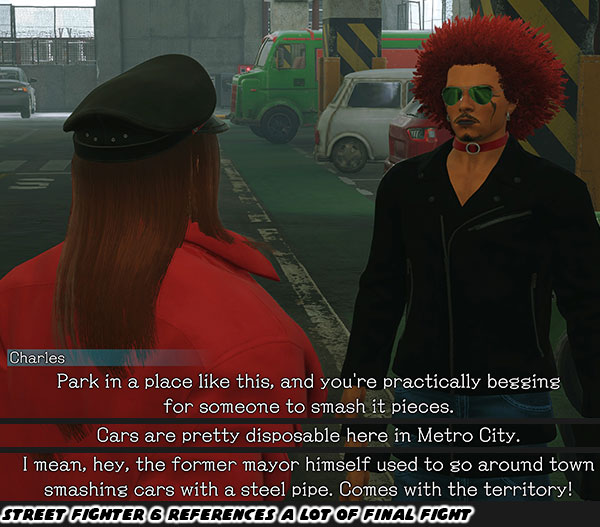
The bonus stage in Final Fight started a trend that would pop up in the Street Fighter series. For some unknown reason players were rewarded by destroying a car in the middle of Metro City. When my best friend, brother, and I played through Final Fight at the Cal State Long Beach arcade we were thrown off by this random stage. The one thing we never forgot was the look on the Mad Gear member as he fell to his knees, yelled out loud “OH! MY GOD!!” and started crying. We lost our minds at the delivery of that line. We quoted it over, and over on the bus ride back to high school, laughing hysterically each time. To this day my brother, and friend still cracked up when one of us said “OH! MY GOD!!” As odd as the bonus game was the story behind it was actually based on a dark period in US history.
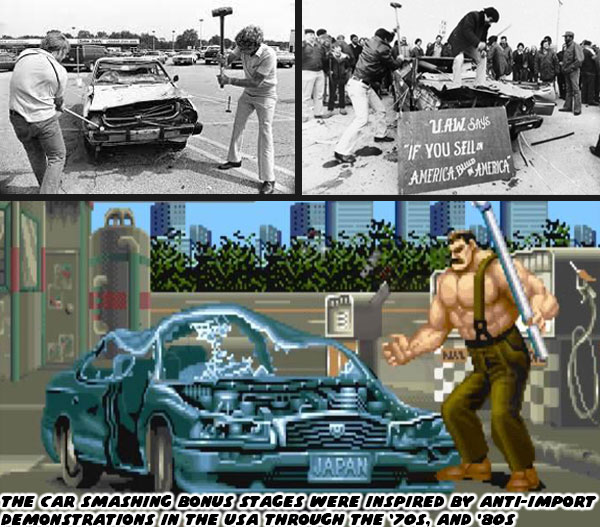
Capcom wanted to do everything in their power to appeal to western players. That was why Final Fight featured big, muscular characters solving their issues through violence. That was why Metro City was covered in graffiti, had roving gangs, crooked cops, and corporate overlords. It was a reflection of our culture, our values, and our dark underbelly. At least it reflected the things that the Japanese developers saw thanks to popular media. They were keenly aware about the stories of Japan flooding the US with inexpensive cars in the 1970’s. This lead to United Auto Workers (UAW) employees going on strike, and trashing Japanese cars in protest. They were being undercut by cheap imports, and losing their jobs by the hundreds. The sentiment carried on through the ‘80s, especially in Detroit, Michigan.
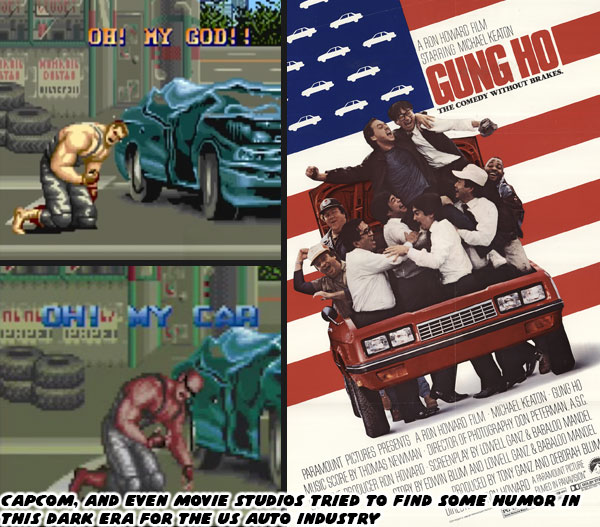
Capcom tried to find some humor in this social commentary, that was why the car in the FF bonus stage had a license plate that read JAPAN. It was also the reason that the Mad Gear member was crying hysterically. A minor change in the bonus stage caught my brother, and friend off guard was when the game came to home consoles. We were furious that it was a two-player game on the Super Nintendo, and that Guy was missing. Moreover that the crying man said “OH! MY CAR!!!” when he fell to his knees. It was one of the many things we would notice had been censored. It didn’t matter too much as my friend Robert got the Sega Genesis CD version of Final Fight for a more authentic experience.
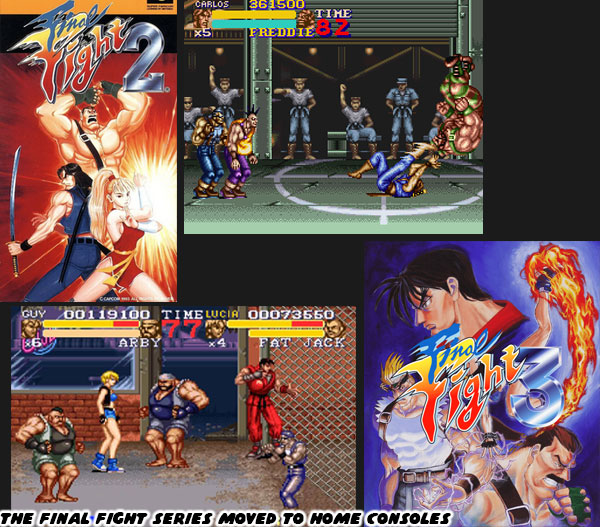
Like most from our generation we became die-hard fans of the fighting game genre thanks to the release of Street Fighter II. I remained a lifelong fan of the Final Fight sequels that were developed for the SNES. I loved everything about those games. The new heroes, the character designs, the stages, the villains, and updated game play were all perfect in my book. I poured through the details Capcom crammed into the worlds on each play through. Seeing Chun-Li, and Guile turn up in the backgrounds of FF2 for example got me hyped. To this day I went through the Final Fight trilogy at least once a year thanks to emulation. We were delighted that Capcom never forgot the franchise despite the runaway popularity of SFII. Seeing Mike, and Jessica turn up in the Muscle Bomber / Saturday Night Slam Masters for example was an awesome callout.
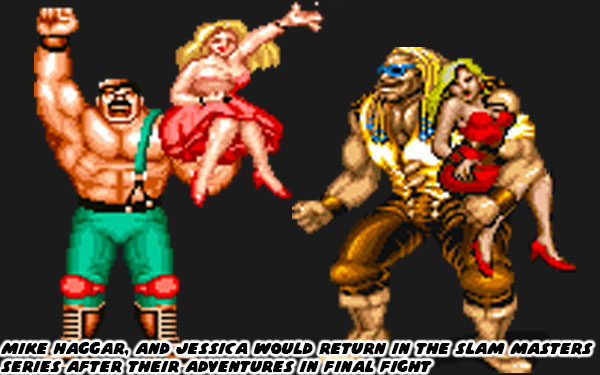
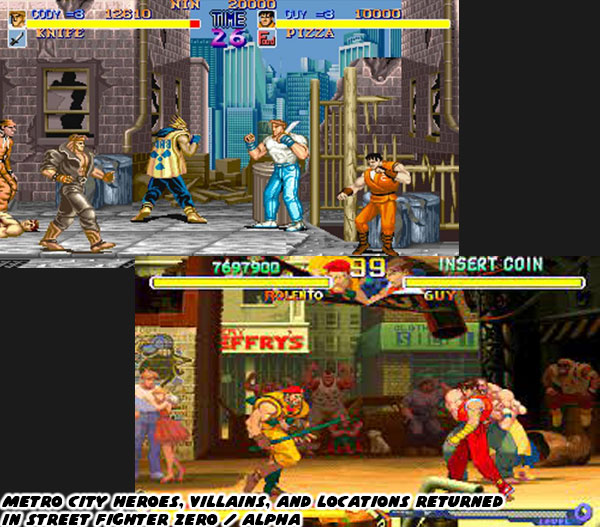
Each time the studio managed to incorporate a nod to their FF characters in other games we celebrated. There was no bigger surprise for FF fans than with the release of Street Fighter Zero. A couple of familiar names, and Metro City locations would be canonized as being a part of the SF universe. Players would finally know if Guy was a better fighter than Ryu, was Sodom going to rally the Mad Gear gang around him, or if Rolento had earned his reputation as the top Mad Gear boss? Would the power vacuum in Metro City be addressed with the death of Belger? Would we see a war take place within the Mad Gear organization? Or did the events in SFZ take place before the events of FF?
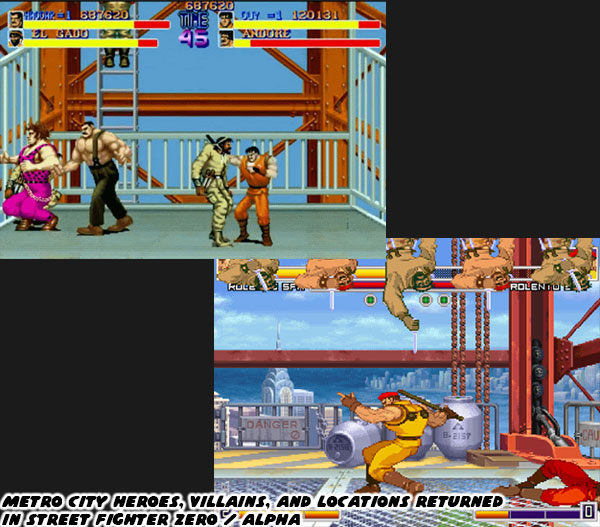
It turned out that SFZ took place chronologically after the original SF, well before FF, and before SFII. Street Fighter Zero 2 took place about a minute before the events of FF, but still before SFII. Street Fighter Zero 3 took place after Belger was defeated, and just before the events of SFII. Cody had been jailed for murder, but was an escaped prisoner. It appeared as if the crooked officer Edi E. had tried to kill him while in jail, which would explain his breakout. In turn Guy was trying to get Cody to surrender so that he wouldn’t be murdered while on the run. The idea that time was passing quickly between the games was engrossing. It made the series stand out in the glut of arcade fighters. It also gave a lot of material for fans of the FF series as well.
The Street Fighter Zero series came out after my brothers, and I graduated from high school. We played the Sega Saturn versions at home, and would join our friends on weekend trips to the arcades. We played at just about every arcade in the greater LA area, and even parts of Orange County as far south as Irvine. We made a lot of new friends thanks to the arcade community, and stayed friends with many of them to this day. Some of our friends were exceptional fighting game players. People like Elbert aka EGO was a local legend. As a teen he moved to Long Beach from Missouri. His natural talent for fighting games earned him respect in every arcade, and liquor store he visited. These including those in rough towns. From Carson, Compton, Torrance, Huntington Beach, and Long Beach he was well known as a top-level player. We became fast friends thanks to SFII, as well as our mutual love for Hokluto No Ken / Fist of the North Star, and Dragon Ball Z. We were such good friends he asked me to be the best man at his wedding. It was something that could have only happened thanks to fighting games.
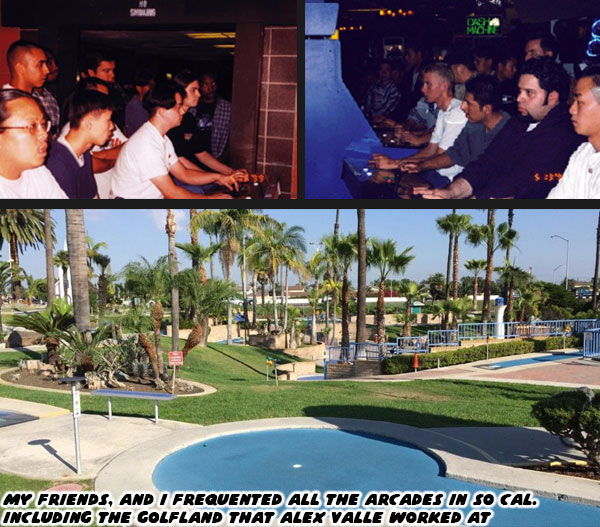
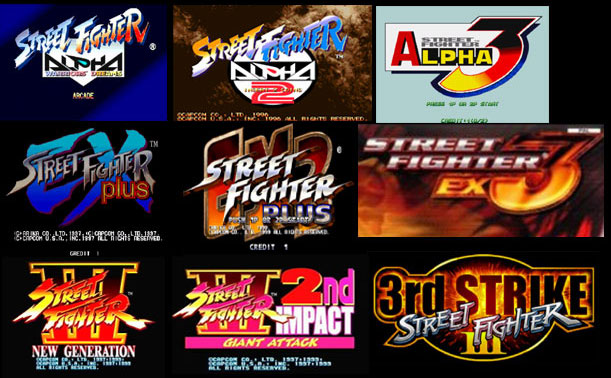
EGO, and a few other friends like Dante (think of Chris Tucker if he was good at Marvel vs Capcom) competed in local tournaments. I was pretty good at the SF series, but like I said previously I hated competing against strangers so I steered clear of contests. Just the thought of playing a bunch of strangers would make me nauseous. One of the places we frequented had become a hotspot for tournament players. The Golfland arcade was a little bit down the road from us. It was the same place that legend, and commentator Alex Valle worked at when he wasn’t racking up tournament wins. When I visited the arcade I always wondered if he owned any tee shirts. It seemed like he only wore tank tops. As the ‘90s rolled on we saw the writing on the wall. Little by little arcades were starting to close down. Publishers were focusing more on the newer generations of consoles, and less on arcades, even Capcom was following the trends. Street Fighter III was the last hurrah for the company. As the 1997 gem gave way to the final update in 1999. Street Fighter III: 3rd Strike was the end of an era. We just didn’t realize it.
Past the year 2000 the only thing we had to remind us of the places we used to visit were the tokens. We had several from our favorite arcades, including the former Yaohan Plaza in Little Tokyo. The arcade imported games directly from Japan. It was the place where I played possibly the rarest Sonic the Hedgehog game ever. Waku Waku Sonic Patrol Car, a kiddie game set inside a tiny fiberglass cop car. With my friends witnessing I stuffed my 6’7” 300+ lbs. frame into the tiny cockpit to get the whole experience. Would not recommend if you were claustrophobic. Time went on. My friends, brothers, and I were growing up, and spending less time gaming together. Such was life. Many years later I met a very special woman, with a lovely daughter. We realized that we complimented each other so well that we decided to get married. We didn’t have a big budget for a wedding, or reception but we wanted to incorporate the things we loved, our hobbies. This included Disney, and video games. My wedding band was NiGHTS, from NiGHTS into dreams… it was a custom sculpt from our friends, retired jewelry instructor Marcia, and her husband retired cabinetry instructor Larry. My wife, and I walked back up the aisle to the song Dreams, Dreams from the same game, as arranged, and performed by my friend Kevin.
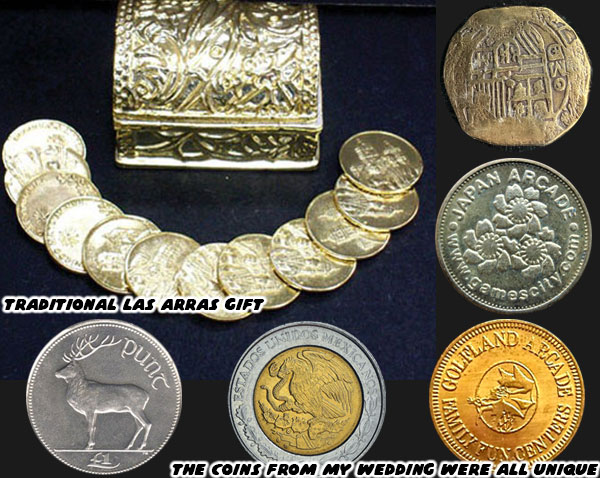
A detail that almost nobody saw from the ceremony was when I presented my bride with Las Arras. This was a symbolic exchanging of coins from the husband to the wife. Where I demonstrated that I would be the main earner, and my wife would handle the budget. Trust me, it was symbolic as we both had to work to survive in this economy. The exchange was a wedding coin tradition that went back to the Roman era. You could get a box of little silver coins from almost any Catholic gift shop for the ceremony. Since we were going above, and beyond with the details we decided that each of the 13 coins would be unique. Some were collected from our friends, and family. One coin was from my brother’s trip to Ireland. A family member from Mexico gave us a peso, my father-in-law had a coin from Scotland. My mom donated an actual doubloon from Disney’s Pirates of the Caribbean. My fiancĂ© had a Yen coin from her trip to Japan. The rest were at least one coin from the places we had visited as kids. Tokens from arcades no longer with us including the Golfland, Aladdin’s Castle, and Japan Arcade. There was one coin that I thought would be the rarest of them all. I had to ask Capcom for it, and hope that they were listening.
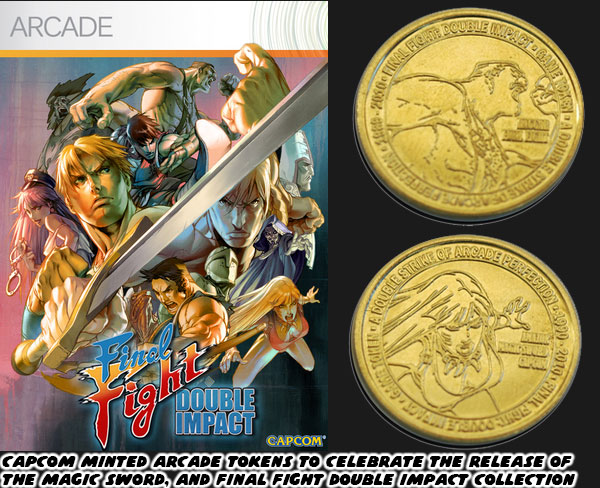
Capcom minted some arcade tokens in 2010 to celebrate the release of Final Fight, and Magic Sword for the Xbox Live Arcade. The Double Impact collection featured Mike Haggar on one side of the token, and the Amazon on the other side. They had a giveaway contest for the coins. I made an appeal on the old Capcom-Unity forums. I told the story about my trip to Cal State Long Beach, and the day my brother, and I became fans of Final Fight. I also mentioned that if I got a token I would make sure to include it in our game-themed wedding ceremony.
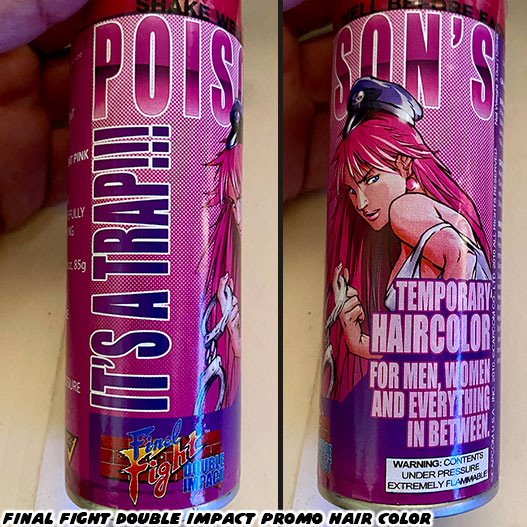
An admin was kind enough to send tokens to me, and my fiancé. They also included a can of temporary hot pink hair color. Needless to say that the "trap" line on the can had aged poorly. To say I would remain a die-hard supporter of the Capcom brand was nonetheless an understatement. The amount of love that I had for the Final Fight series seemed to be shared by the SF6 developers. They did an insanely deep dive when fleshing out Metro City. We will explore this on the next blog. I hope to see you back for that. If you are a long time fan of Final Fight, or Street Fighter then I would like to hear your impressions of SF6. If you have never played any game previously then tell me your experiences in the comments section please. As always if you would like to sponsor me please visit my Patreon page and consider donating each month, even as little as $1 would help make better blogs and even podcasts!
follow the Street Writer on Patreon!

Monday, August 14, 2023

Street Fighter 6: A master class in game design, part 7

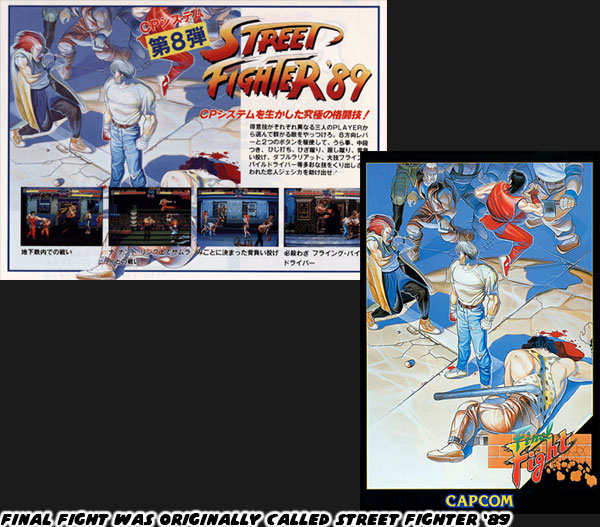
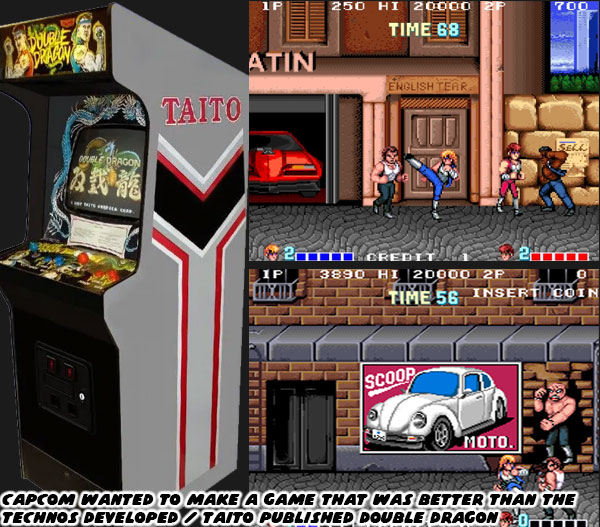
The game that arguably influenced the development of Street Fighter II more than any other title was from a rival studio. In 1987 Technos developed, and Taito published Double Dragon for the arcades. It was a smash hit, getting a number of sequels, and home adaptations over the following 30+ years. In the game players took control of Billy, and Jimmy Lee, as they chased a gang that had kidnapped Billy’s girlfriend Marian. Players fought wave after wave of the Black Warriors gang members across an entire city. The plot certainly sounded familiar to long-time brawling fans. You can also probably guess where I was going with the story. Capcom learned a few lessons that year. The original Street Fighter also came out in 1987, and didn’t see half the success of Double Dragon. Capcom saw the beginning stages of a new genre. They needed to cash in on it. So they started development on a new game that was designed to be better than Double Dragon in every regard. This meant better graphics, better controls, better stage designs, better enemy types, and better heroes. What many people might not know was that the game was originally called Street Fighter '89. Guy was meant to replace Ryu, Cody meant to replace Ken, and a large wrestler named Haggar would add some color to the lineup.

Arcade owners liked the idea, but were clamoring for something closer to the original Street Fighter. They saw an interest in fighting, more than just video boxing games. They wanted a title that created the action of martial arts movies. Spartan-X aka Kung-Fu Master by IREM was a start, it was essentially a version of the final Bruce Lee movie Game of Death. It was fun, but the 2D game play was limiting. Fans, and arcade operators wanted something more robust. Double Dragon could definitely be seen as the first brawler that played like an action movie. Technos had actually developed Nekketsu Kouha Kuniou-Kun aka Renegade, which was published by Taito in 1986 as, a year before Double Dragon. This game would make its way to the NES home console a couple of years later, where it was better known as River City Ransom. The animation, control, and enemy design were rough around the edges, but the template for all future brawlers was definitely there.

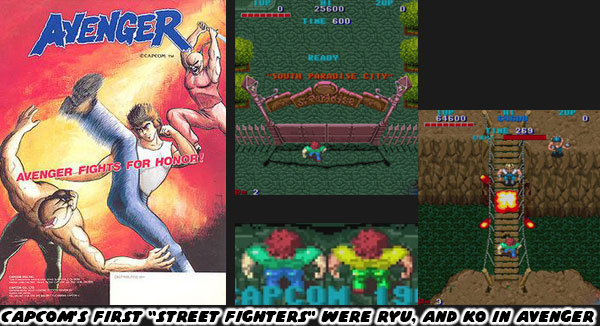
Interestingly enough Takashi Nishiyama the guy that created Kung-Fu Master was the same person that would design the first Street Fighter. The thing that many arcade, and fighting game historians fail to mention was that Mr. Nishiyama had designed a game for Capcom that was as old as Renegade. Hissatsu Buraiken aka Avengers by Capcom came out in 1986, and was an overhead street brawling game. Capcom had a string of overhead games across different genres. It was a format that the studio knew how to work with. The space shooter Vulgus, the western Gun Smoke, the post-apocalyptic car game Led Storm, and war game Commando were all overhead titles. Mr. Nishiyama created a brawler using a similar mechanic.

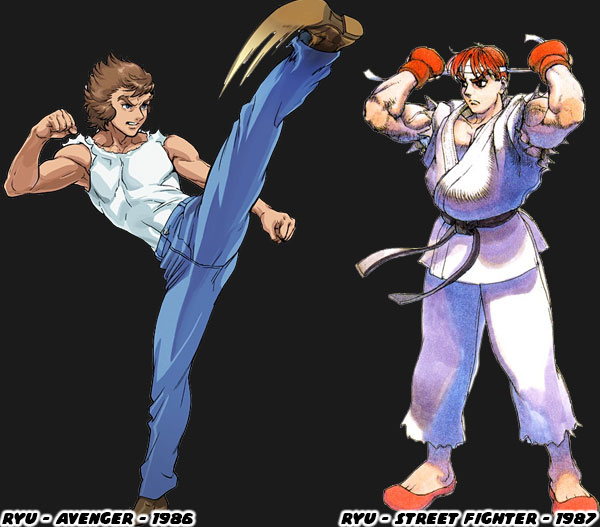
Players traveled through Paradise City (a full year before before the popular song with the same name by Guns n' Roses came out) freeing women that had been kidnapped by the evil gang leader Geshita. Although the game wasn't acknowledged by the masses, it was nonetheless important because it was teaching Capcom what worked, and what didn't in the genre. The other thing of note was that this game probably inspired the development of one of Capcom's greatest heroes. Ryu was the name of one of the Avengers. The other was Ko, predating Ken even. They wore white tee shirts, and jeans. Not at all the same costumes of Ken, and Ryu. What connected the Ryu's, aside from their names, were the red hair.

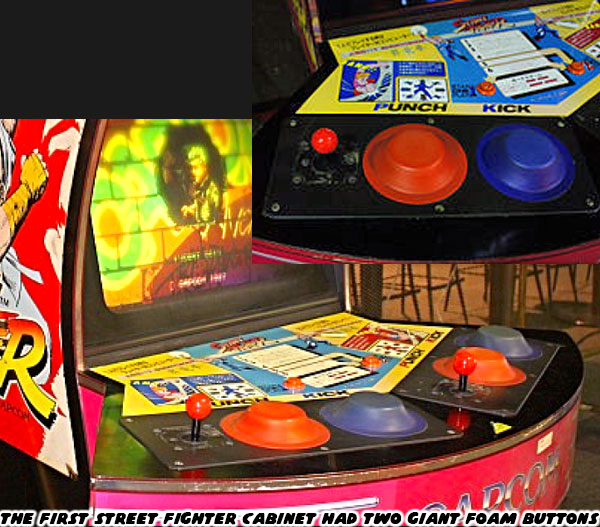
Fans of SF often forget that Ryu had red hair in the original game. Not that it mattered because with all due honesty that the original Street Fighter was not a popular game. At least it wasn't in the arcades that I visited when it came out. Mr. Nishiyama was taking bold chances with the control of the title. He convinced the bosses at Capcom to create foam-filled pads instead of buttons for the inputs. His thinking was that the jab, medium, and fierce strikes could be activated depending on how hard you hit the pads. He also "hid" special attacks in the game, and hoped that audiences were willing to shell out their quarters trying to figure out the secrets to the fireball, dragon punch, and hurricane kick. I distinctly remember playing the game, and having a hard time getting the moves to happen. Also the foam buttons were very stiff, they were not as forgiving as the foam used in Nerf products. You really had to strike them hard to get them to register fierce attacks. One arcade visitor taught me the best way to hit the buttons was with a hammer fist. He said if you tried punching them you might break a finger, or roll your wrist. I never forgot that advice. After playing it a few times I decided to stick with games that were much more enjoyable, like Double Dragon. Arcade operators seemed to like Street Fighter, but they hated having to repair, or replace the foam controls. They were simply too awkward for audiences to use. So Capcom developed the six-button kit to replace them. The standard for fighting game controls was essentially set from that moment on.

The evolution of the fighting game genre moved quickly as I transitioned through school. The earliest games that came out involving fighting, like Yie Ar Kung-Fu, and Kung-Fu Master happened when I was in grade school. When they started getting more refined like Street Fighter, and Double Dragon I was in Jr. High / Middle School. The format came into maturity when I was in high school. I was a senior in high school when the game that forever changed my life came out. The year was 1991, and Street Fighter II was just on the horizon. It had not yet been released. The game that actually blew my mind was Final Fight. I heard rumors that there was an arcade game that was better than Double Dragon. I just never saw it in the arcades that I visited. It was starting to frustrate me that after two years I had yet to see it. My family journeyed to shopping malls all over the southland; the Carson Mall, Lakewood Mall, Del Amo Fashion Island, and Long Beach Plaza were all in rotation, there were at least six different arcades between them. None of them had this mystery brawler. All of that changed during a senior field trip to Cal State Long Beach.

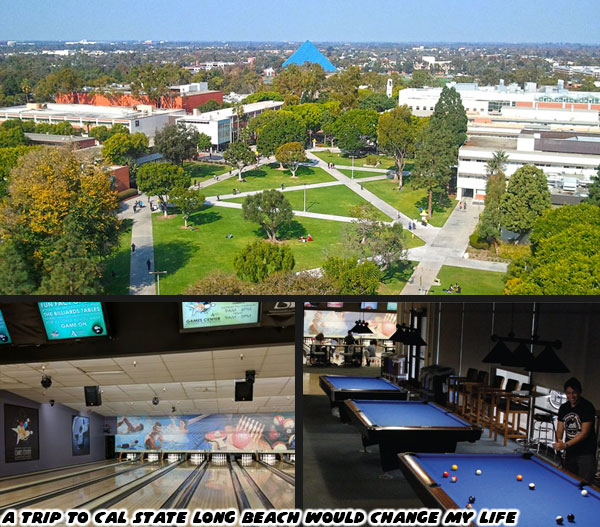
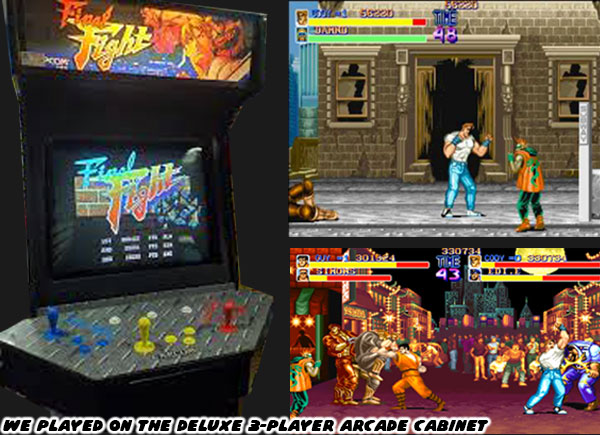
My friends, big brother, and I were all on the trip. It was a very low key affair. The weather was overcast, and drizzly all day. We got a chance to do a very casual tour of the campus. We attended a few presentations, heard from some speakers, and students. We were allowed to wander the student union, and see how sweet college life could be. The school had a food court, bowling alley, and several tv rooms with big screens, and comfy couches. A handful of students were watching cartoons, possibly Animaniacs in the middle of the afternoon. You could guess how jealous we were of the college life. My friends found the arcade, it was empty at the time. They had all of the typical things you would expect to find, the foozeball table, and air hockey table, and an assortment of arcade cabinets. I was surprised that almost every title was brand new. They even had a few that weren't even available at my local arcade. That was when I was introduced to that life-changing game. I spotted the massive cabinet by Capcom with three controls. That was one more controller than just about every other game, including Double Dragon had. I instantly knew that this must be the title that I had been hearing about. I realized that I might get just one chance to play through it so I got $5 worth of quarters, and started playing. My big brother knew that it was supposed to be lunch money, but he joined in as well. As did our best friend Robert. Although I would later become a Haggar main, my first play through was with the blindingly fast Guy.

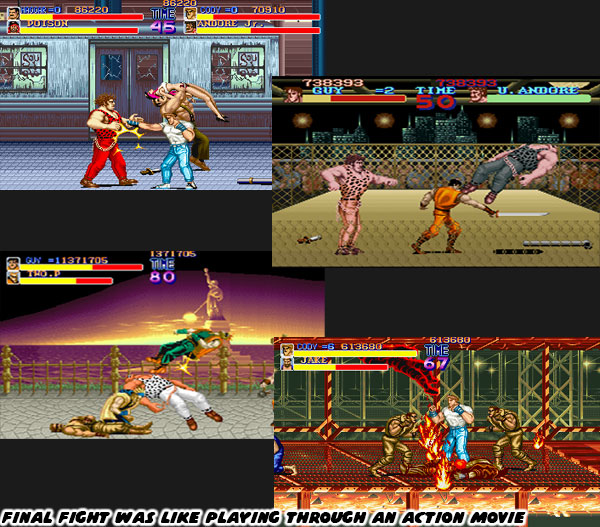
Over the next 45 minutes the three of us went on an epic journey. It was nonstop mayhem as we fought wave after wave of Mad Gear gang members. This place called Metro City certainly reminded us of New York City. The skyscrapers, the subways, the harbor, and Statue of Liberty told us that the studio essentially added a sixth borough to the NYC map. We did our best to absorb every detail. Learn the best strategies, and try to get as far as we could. If we started to run low on lives we would slip a dollar to one of our friends so they could get change from the machine. You couldn’t imagine how many close calls we had where two of us were running for change, while one of us was fighting off the gang all by themselves. We were no stranger to arcade games, but this adventure just seemed to keep going, and going. One of the actual CSULB students checked in on us, and he said as far as he knew nobody had ever beaten the game. Normally action games lasted 20 or 30 minutes at the most. After a half hour we were starting to wonder if the game even had an ending. We had no idea how long Final Fight was going to last, but it didn’t matter. We were enjoying every second of it.

Mind you we started playing over what was supposed to be our lunch break. We had an hour to eat, and then get back to our bus. Our friends would stop by between bites of their lunch to watch the action. They cheered us to keep going as we cleared level, after level. Others got worried about the time, and started heading back to the bus drop off. We were worried about missing the bus, and catching hell from our teachers, and parents. At the same time we were in too deep, and had to get through to the end. There was so much frenetic energy that day that it was clearly palpable. The last battle against Belger was the highest stakes encounter you could imagine. I discovered that Guy was fast enough to punch the crossbow arrows out of the air. I would parry those while my partners would circle him for a counter attack. As we backed him against the glass I managed to kick him through the window. We went crazy at the ending as it played out. Our celebration was short lived. We had about 8 minutes to get lunch, and get back to the bus. We managed to grab our pre-packed subs, and drinks, and run to the parking lot. The bus driver said that food wasn’t allowed onboard so we stuffed our mouths in the rain. Not that potentially choking to death, or severe indigestion mattered. We were glowing with success.

We didn’t remember anything the guest speakers told us that day. We didn’t remember anything that our teachers said, or what the recruiters promised if we committed to CSULB. The only thing we remembered was the feeling of accomplishment. We went on an adventure together, we fought a battle together, and ultimately we won the war together. Final Fight absolutely brought my best friend, brother, and myself closer. That was a memory that could never be replaced. Street Fighter 6 immortalized Mike Haggar, and his war on Mad Gear through the design, and resident encounters in Metro City. Seeing those multiple callbacks in the game filled me with tremendous emotions. I was proud, nostalgic, and even a little bit melancholy as I went through SF6. After 30+ years I didn’t need to be told the legend by the citizens. I was there, we were there, we had taken part in that history. I played Capcom games for years before FF, but I didn’t fall in love with a series until that moment. When I got married almost 20 years later there was a Final Fight connection to the ceremony. I’ll explain it in the next blog. I hope to see you back for that. If you are a long time fan of Final Fight, or Street Fighter then I would like to hear your impressions of SF6. If you have never played any game previously then tell me your experiences in the comments section please. As always if you would like to sponsor me please visit my Patreon page and consider donating each month, even as little as $1 would help make better blogs and even podcasts!
follow the Street Writer on Patreon!

Friday, August 11, 2023

Street Fighter 6: A master class in game design, part 6

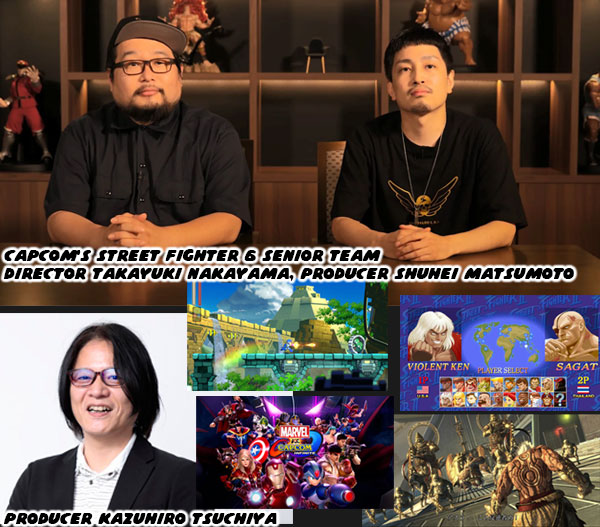
Street Fighter was a series that had hundreds of people working on it for over three decades. Although it was not the first fighting game created, it certainly was the most influential. The roadmap to Street Fighter 6 took a lot of turns, and had a lot of detours. There were senior people that left Capcom, and created their own fighting titles. There were some that returned to help produce the more recent games as well. It was essential for Street Fighter 6 Director Takayuki Nakayama, Producers Kazuhiro Tsuchiya, and Shuhei Matsumoto, and Designer Yusuke Hashimoto to know exactly what came before, what worked, and what didn’t when setting the direction for the franchise. The series started with an employee that would become an industry legend. He could be credited for inventing the brawler aka the beat ‘em up, as well as the modern fighting game.

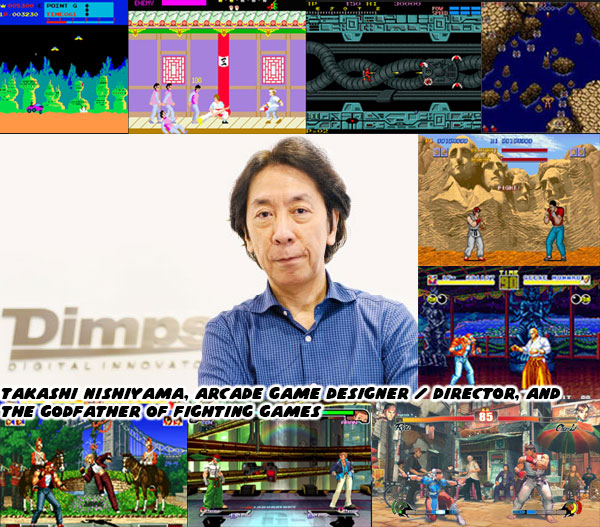
Takashi Nishiyama started at IREM before moving to Capcom. His first two titles before changing companies were arcade hits. These were two of the earliest arcade games I remember playing; Moon Patrol, and Kung-Fu Master. The latter being a precursor to the brawler. At Capcom he helped direct, and produce a number of their classic hits; Section Z, Trojan, Legendary Wings, Avenger, Street Fighter, and Mega Man. He left the company to join arcade rival SNK. Once there he directed, and produced a library of fighting games, and their sequels including Fatal Fury, The King of Fighters ’94, Savage Reign, Kizuna Encounter: Super Tag Battle, Shinsetsu Samurai Spirits BushidĹŤ. Once established as one of the premier developers he formed his own studio DIMPS, and continued developing fighting gems including Demolish Fist, the Rumble Fish, Street Fighter IV, Dragon Ball Xenoverse, and Soulcalibur IV.

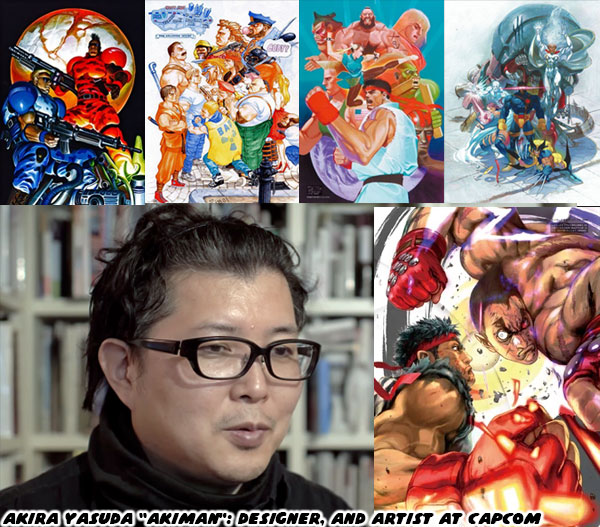
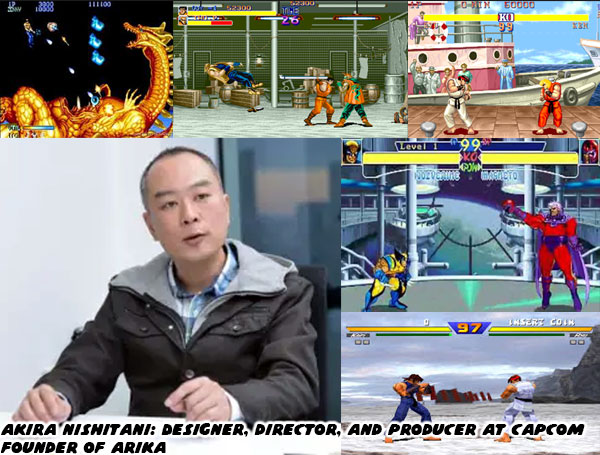
The people that worked alongside Mr. Nishiyama essentially developed the entire Capcom arcade legacy, and some of the biggest console hits as well. The name you might be most familiar with was Akira “AKIMAN” Yasuda. He was known as the father of Chun-Li. At Capcom he was a designer, and artist that worked on Forgotten Worlds, Final Fight, Street Fighter II, Captain Commando, The Punisher, Darkstalkers, X-Men: Children of the Atom, Star Gladiator, Red Earth, Street Fighter III, Power Stone, Final Fight Revenge, and the concept work for Red Dead Revolver. His co-worker was the other “Akira” at the studio Akira Nishitani. Mr. Nishitani worked his way up the company, and learned the ropes doing a little bit of everything. He was a designer, planner, director, and producer. His heart was definitely in fighting games, specifically Final Fight, Street Fighter II, Street Fighter II’: Champion Edition, Street Fighter II’ Turbo: Hyper Fighting, and X-Men: Children of the Atom. He left Capcom in the early ‘90s to form his own studio ARIKA. That was where he developed the Street Fighter EX with Capcom, Fighting Layer with Namco, and the independent Fighting EX Layer.

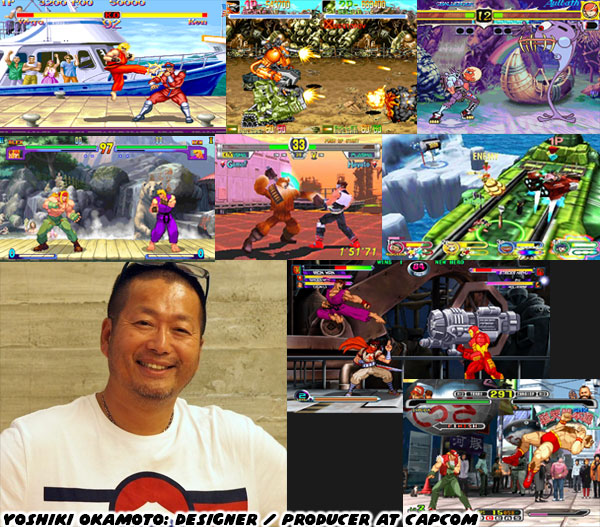
Both of the Akira’s at Capcom worked closely with Yoshiki Okamoto. He was a senior member, working on classics like Time Pilot, Gyruss, 1942, SonSon, Black Tiger, Willow, U.N. Squadron, and Magic Sword to name just a few. Arguably his biggest role was producer on Street Fighter II. Of all the team members he was the one that was said to have been very specific on the changes, and improvements that SFII would have over the original game. He had a hand in a bunch of other arcade, and console hits including Resident Evil 2, Dino Crisis, Breath of Fire IV, and Devil May Cry 2. Again, just to name a few hits that he produced. Like many of his colleagues he also eventually left Capcom to form his own studio called Game Republic.

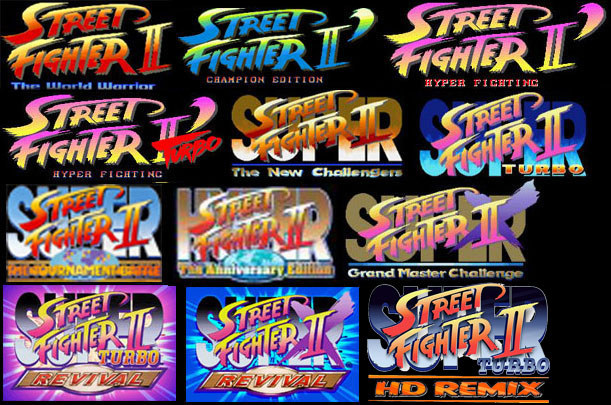
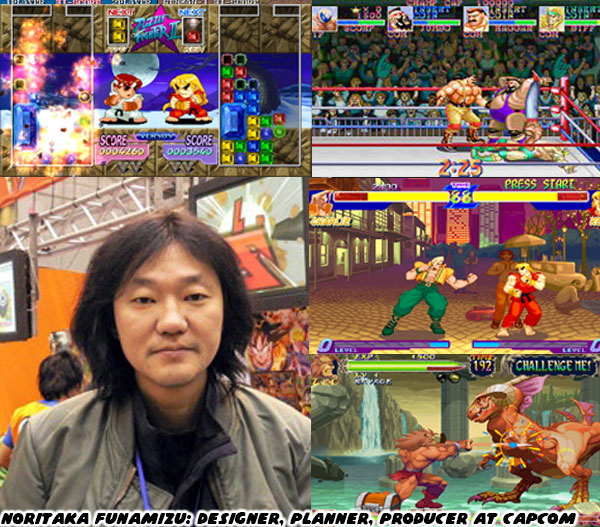
Of all the directors, and producers to work at Capcom I don’t think Noritaka Funamizu gets enough respect. He had been with the studio since 1985 starting with Gun Smoke. He also worked on 1943: The Battle of Midway, Forgotten Worlds, U.N. Squadron, Nemo, Street Fighter II, The Punisher, Star Gladiator, and X-Men vs Street Fighter to name just a few. What he did that was so important to the history of SF was create Street Fighter Zero / Alpha. Directing a new game seemed like an impossible challenge. The reason why was because a good number of the Street Fighter II team were feeling burned out by management. The bosses insisted on developing upgrade, after upgrade for arcade owners because SFII was a global phenomenon. The team did as they were told, cranking out the Champion Edition, Turbo, and Super updates within months of each other. The downside was that the team was not being given proper time to create an actual Street Fighter III. Many resigned in protest, and joined SNK, or left to form ARIKA.

Mr. Funamizu knew there was no way he could develop a proper SFIII with many of his best team members gone. He knew that if his sequel was sub-par it might very well tank the franchise, and cost him his job. What he did was nothing short of genius. He decided to approach the next game as a grand experiment. Completely redo the art, aesthetic, and direction of the franchise. He would use the next game to connect the characters, and events of Street Fighter, Final Fight, and Street Fighter II. Since the game was a prequel of sorts he wouldn’t be in trouble if it didn’t fulfill what the fans expected to see in SFIII. He knew that a proper third title would need a new engine, and much longer development cycle. What he did for Capcom was buy them time. His team accomplished the task in 10 months. For the quality of the game that was delivered it seemed four times longer in development, and ten times the number of employees.

Street Fighter Zero / Alpha was another smash hit, and right away the team went into developing a sequel for it. They managed to add all the little details, and characters they had originally planned for the first. Without hyperbole I called Street Fighter Zero 2 the greatest fighting game of all time. It kept the franchise alive, shifted the genre, influenced an entire generation of developers, and cement the legacy of the studio. Street Fighter III, IV, and V were good games, but they were far from capturing the magic of either SFII, or SFZ. In my write up of SF Zero 2 I said; “I doubt that I will live long enough to see a better fighter.”

Thankfully I was proven wrong. Twenty six years later the studio was in some very capable hands. The mix of new faces, and long-time employees gave Street Fighter 6 a fresh perspective. Starting with director Takayuki Nakayama. He had worked as director on Street Fighter V, and previously JoJo's Bizarre Adventure: Golden Wind. Producer Kazuhiro Tsuchiya had been with Capcom since 1992. He produced Asura’s Wrath, and was the lead Producer on the Mega Man series since 2018. Co-Producer Shuhei Matsumoto was the most well versed in fighting game development he had produced Street Fighter: 30th Anniversary Collection, Marvel vs. Capcom: Infinite, and Ultra Street Fighter II: The Final Challengers.

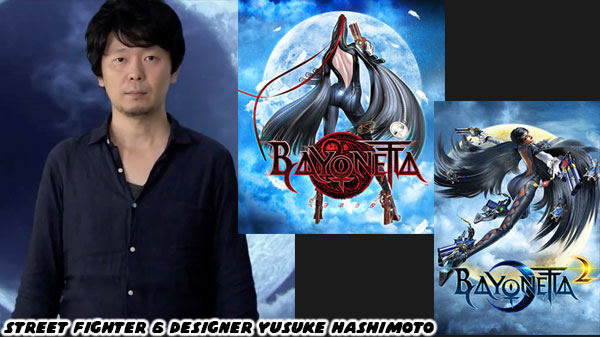
One of the things that had irked me the most about the previous two SF games were the new characters, and art direction. I felt that director / producer Yoshinori Ono was introducing silly characters that didn’t really fit into the series. All of a sudden in SF6 we have characters that appear like re-do’s of the SF IV, and V characters that didn’t work. Such as Manon replacing Abel, Marisa replacing Hakan, A.K.I. replacing F.A.N.G., and Jamie fulfilling the unused notes for King Cobra. The updated costumes for the World Warriors, and overall new aesthetic was thanks to designer Yusuke Hashimoto who produced Bayonetta, and directed Bayonetta 2. His sense of color, and costuming worked well for the SF cast, and could appeal to international audiences. This collection of senior talent worked surprisingly well. The way they captured the magic of all the previous SF games was amazing. Moreover the love they had for the franchise was palpable. I could tell because of the work they had put into Metro City. I hadn’t been that hyped on revisiting the location in more than 30 years. In the next blog I’m going to share a very personal story with you. I hope you return for that. If you are a long time fan of Street Fighter then I would like to hear your impressions of SF6. If you have never played any game previously then tell me your experiences in the comments section please. As always if you would like to sponsor me please visit my Patreon page and consider donating each month, even as little as $1 would help make better blogs and even podcasts!
follow the Street Writer on Patreon!

Wednesday, August 9, 2023

Street Fighter 6: A master class in game design, part 5

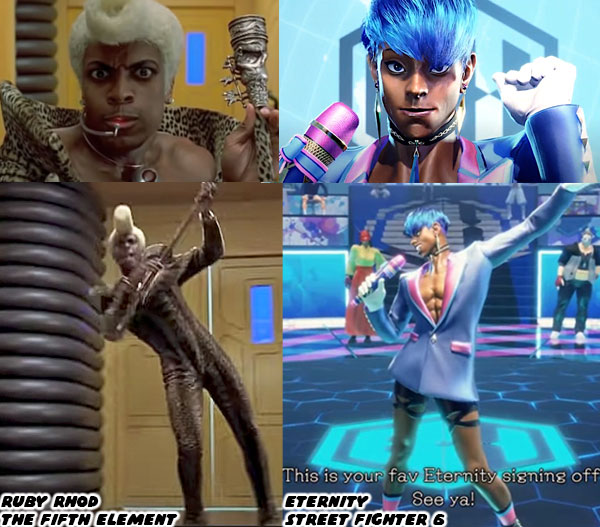
Street Fighter 6 could be a shock to many fighting game players. Over the past decade the genre had been saturated with very dark, and gritty titles. The Mortal Kombat, and Injustice series by Netherrealm Studios were more brutal, and violent than any fighting game had ever been. They were definitely onto something as Mortal Kombat 11 sold 15 million units to Street Fighter V’s 7 million units in around the same time. That signaled to Capcom that something was not working with their franchise. Not that Street Fighter was catering to the same audience, but many players expected the series to become more adult in tone. This was especially true since the Gen-Xers most familiar with the franchise were now middle-aged adults. Perhaps they expected to be following a grizzled, worn down Ryu as he made his way through a new tournament. Instead SF6 went in an entirely different direction. It was fresh, and unique, and reflected through a very flamboyant personality. The first person we saw in the game was a blue-haired online host known as Eternity. Their job was to introduce the Battle Hub, as well as World Tour to audiences. It was fair to say that people made comparisons for Eternity to the over-the-top announcer Ruby Rhod from the movie the 5th Element. It was obvious that this was not going to be like any other game in the series, let alone what any other studio was working on.

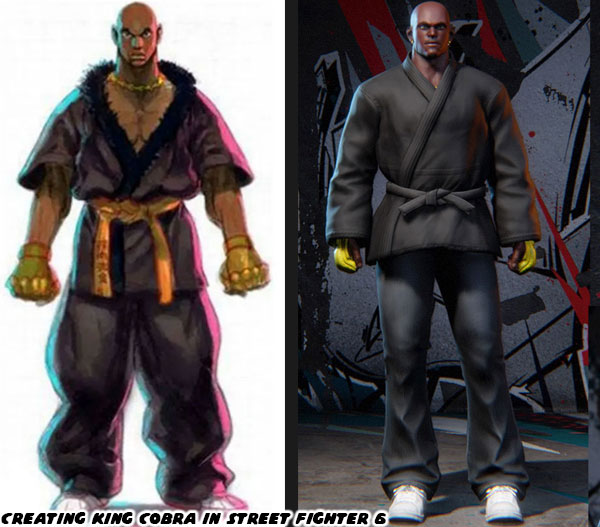
Instead of following one of the classic, or newer SF characters it was the player that would become the focus of the game. Audiences had to create their own avatar. This would be who they used to navigate the Battle Hub, and carry them through the story in the World Tour. The character editor was fairly robust. You could set height, weight, skin tone, texture, facial features, hair types, scars, body markings, tattoos, etc. There were many examples of silly, weird, or outright strange characters that people had used in game. I had decided early on that I would do my best to put King Cobra into the game. I felt that the character had been robbed of his opportunity to appear in Street Fighter IV circa 2010.

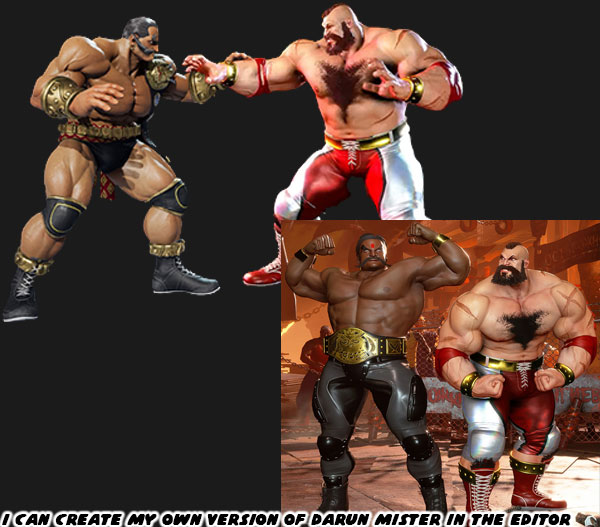
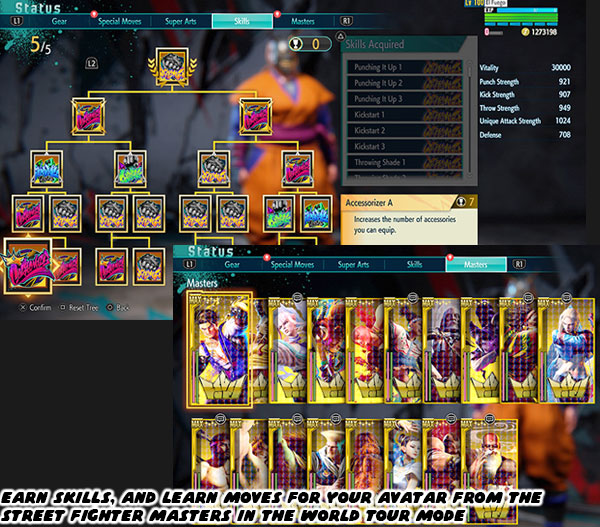
The good thing was that the avatars were not set in stone. You were allowed to edit their look, change their costume, and even rename them at any point through the story. For example the game began with Luke as your mentor. Your basic, and special attacks were mirrored from him. As you progressed through the story you made new masters, and learned their techniques as well. You were free to mix, and match the different moves that you learned through the game. Based on the early design notes from Capcom I figured that King Cobra would have a mix of the moves of Luke, Jamie, and Ken. Later in the game I reached Zangief, and earned his grappling moves. At that point I wanted to switch out King Cobra for my favorite Indian grappler Darun Mister. He had appeared in the Street Fighter EX, and Fighting EX Layer games. So I gave him moves from Zangief, and Marisa as well. If ARIKA, and Capcom had no plans to create a Street Fighter EX 4, then at the very least I could put my own modern version of Darun in SF6.

Completing missions, earning new masters, and doing part time jobs were the key to leveling up your character. This gave you more energy, stronger attacks, and of course taught you how to use the main SF cast. As I had mentioned in the previous blogs the game was an introduction to the genre. It taught you how to play, and specifically how to use classic characters as well. You tracked your progress on a smart device the character carried. It allowed you to select your gear, view a map, take pictures, check the status on missions, and even order food to replenish your energy. If you played a certain way you could earn points to level up specific Skills. These were also managed in the smart device. For example if you were a grappling player then you could spend points to increase your health, make your throws stronger, and recover your drive meter faster. This would help you get through particularly tough encounters, or level the playing field when fighting boss characters. You could also read up on the history of the various masters in the series on your device. They would even message you from time-to-time. People that had never played SF could find out what made Ryu tick, why Cammy was obsessed with cats, and even why Blanka was green.

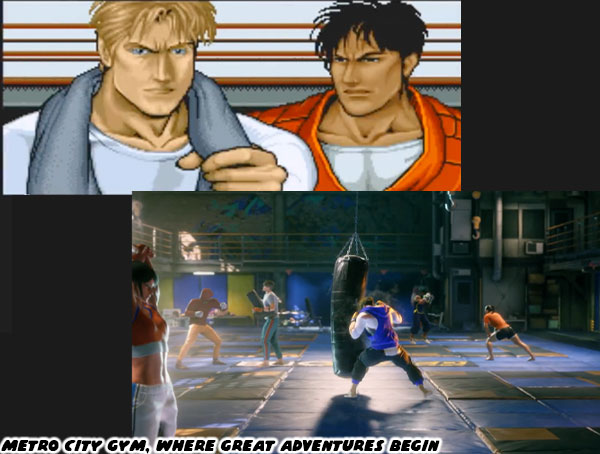
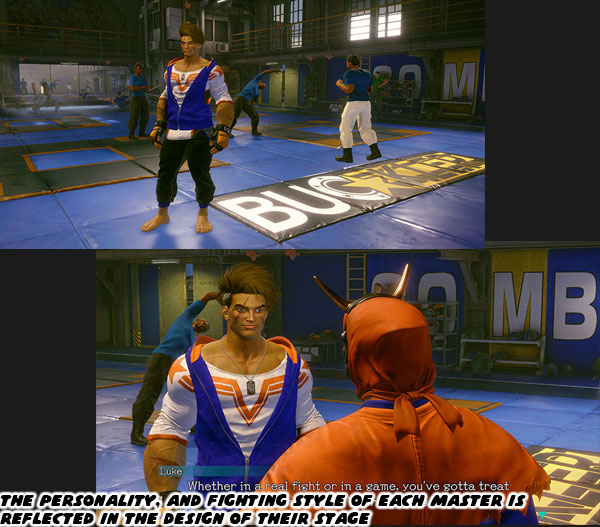
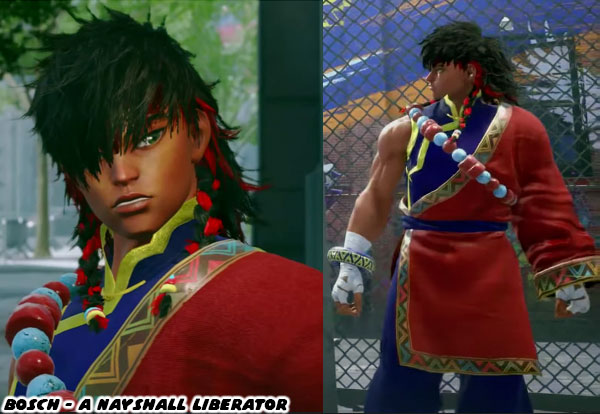
Of course the Street Fighter universe would not be complete without some sort of rival. They might be friendly like Ken, and Ryu, or bitter like Chun-Li, and Juri. In either case it was the symmetry between the cast that had made the series work so well. Capcom introduced us to a young fighter named Bosch. He appeared in Luke’s gym, and made his presence known by starting a fight with you during your training. The locations, and stages where you met, and practiced with each master greatly reflected their personality. In the case of Luke he was training his PMC recruits in hand-to-hand combat. His company Buckler had a warehouse on the edge of Metro City. It was inferred that this might have been the same gym featured in the intro cinema of Final Fight. It was where Cody, and Guy were training when Haggar told them that his daughter had been kidnapped.

The building was filled with gym equipment, weights, punching bags, and sparring mats. These details reflected Luke’s design, costume, and personality. He was very casual. He focused mainly on training when he wasn’t playing video games. He was not as serious as Ryu when he fought. He approached every encounter casually. That was why he was barefoot, and dressed in loose fitting attire. Everything down to the stripes on his shirt reflected his brand. By comparison Ryu was wearing a kasaya or Buddhist robe, he was mindful, and quiet while meditating under a massive sakura tree in Japan. Guile was wearing a flight suit, and working on the deck of the Byron Taylor aircraft carrier. You could tell that he was serious about his role, and his mission. There was definitely thought, and purpose applied by the SF art team when they were framing the masters.

Bosch seemed like a fighter out of place. At first I didn’t know what to make of Bosch’s design, but it steadily grew on me. I had no idea where he came from, what his style of fighting was, or his motivation. All of these things would be revealed little by little during the course of the game. We would discover that he came from a place called Nayshall. We didn’t know it then but he was a member of the resistance. A group of people that were trying to liberate Nayshall from a bunch of NGOs that had moved into the country. These people, and their corporate ties asserted influence over the royal family. Luke insisted that you, and Bosch hit the streets, and create your own paths. It would help make you a better fighter. Bosch was determined to be the strongest.

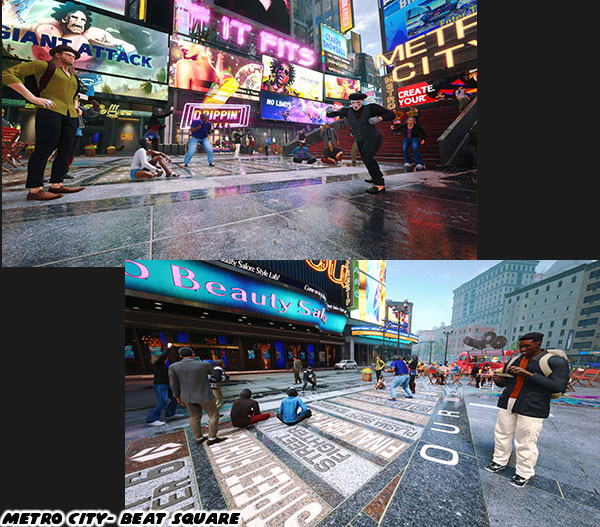
The same care that the Capcom art team put into the stage designs for each SF character was expanded 1000 times when they created Metro City. The reveal of downtown could not prepare me for the amount of work that went into the rest of the world. Beat Square was essentially the Capcom equivalent of Times Square in New York City. These included electronic billboards, posters calling out classic characters, and ads plastered on the sides of shops. There were vendors, street performers, a store to buy, or modify costumes, as well as a place to change the physical appearance of your character. The same level of care that went into NPC pedestrians in other games, such as Spider-Man, and Arkham Asylum, was here as well. People were conversing, sitting down, eating, sightseeing, or just relaxing. Social media influencers were filming themselves, businessmen were rushing from meeting to meeting. It felt like a living, breathing environment.

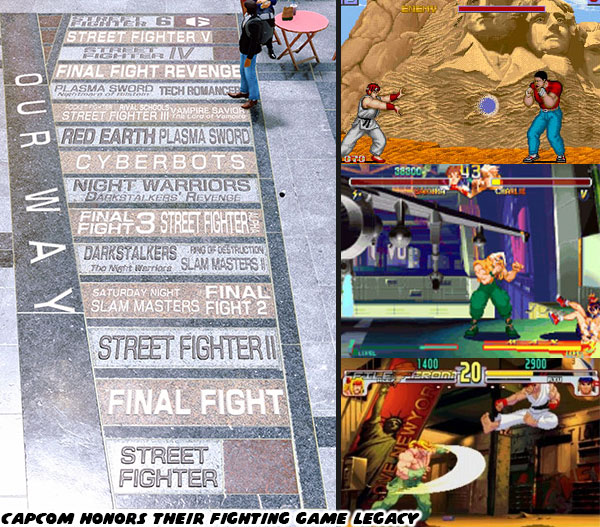
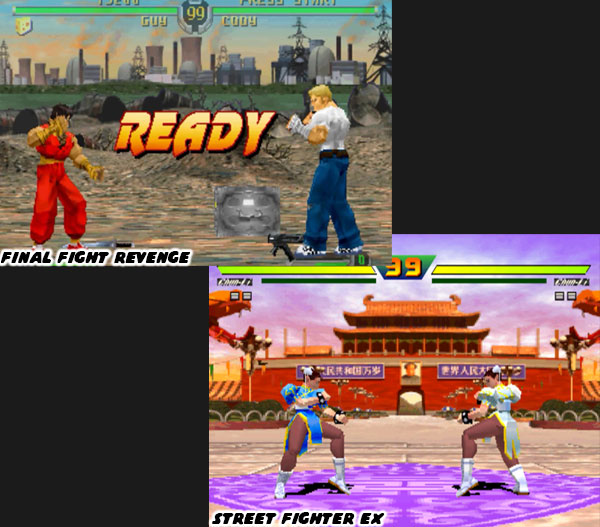
I took a few moments just walking back and forth absorbing the details. That was when I spotted some marble tiles on the ground. Capcom had literally cemented their fighting game legacy in the heart of the city. More than that they listed every title in order of release, minus of course the Turbo, Super, and Ultra versions of the games. Starting with Street Fighter in 1987, and going all the way to Street Fighter 6 in 2023. There were titles that I am sure a lot of people in the US had never even heard of, let alone played. Thanks to Capcom releasing the Arcade Stadium collection an entirely new generation of fans were discovering worlds they never new existed. Something that surprised me was a game listed, and another that was left off the sidewalk.

Final Fight Revenge was an arcade game built on the Sega Saturn arcade hardware. This made it easy for the studio to publish copies for the Saturn home console as well. The game was in Japanese arcades in 1999, and there were plans to bring a version out on the Sega Dreamcast in 2000. Sadly the game was poorly received. It was slow, clunky, with 3D graphics that were dated compared to the work of rival studios like Namco. Even though Street Fighter EX had simple polygons as well, it played much better than Final Fight Revenge. Not to mention that EX got a couple of sequels. Unfortunately SFEX was developed by ARIKA, and only published by Capcom. The ARIKA employees were former Capcom staffers that had worked on SF II before leaving to form their own company. Final Fight Revenge was developed by Capcom USA ( which would later be called Capcom Production Studio 8), and published by Capcom. The designs, and art in the game were decidedly Japanese, but the models, and programming were mainly handled by the US team.

The World Tour could have started in a million different ways, and a million different locations. The choice to start in Metro City was done with tremendous forethought. The development of SF6 would not have been possible if they excluded the Capcom legacy games. Street Fighter 6 Director Takayuki Nakayama, Producers Kazuhiro Tsuchiya, and Shuhei Matsumoto, and Designer Yusuke Hashimoto were familiar with the teams that came before. They were able to connect the dots, and build on the work of industry giants. In the next blog we are going to look at the contributions of the previous SF teams on the evolution of SF6. If you are a long time fan of Street Fighter then I would like to hear your impressions of SF6. If you have never played any game previously then tell me your experiences in the comments section please. As always if you would like to sponsor me please visit my Patreon page and consider donating each month, even as little as $1 would help make better blogs and even podcasts!
follow the Street Writer on Patreon!