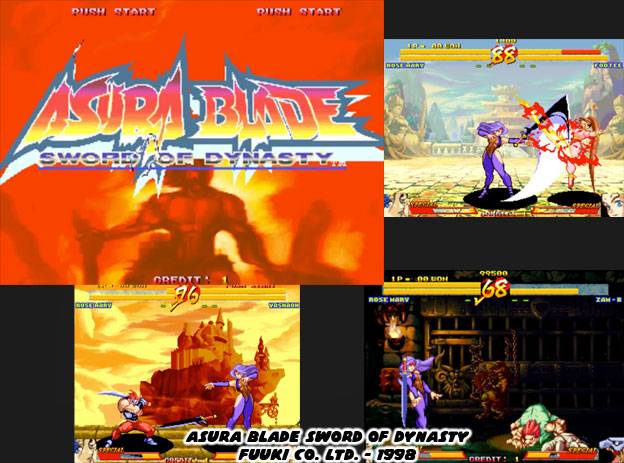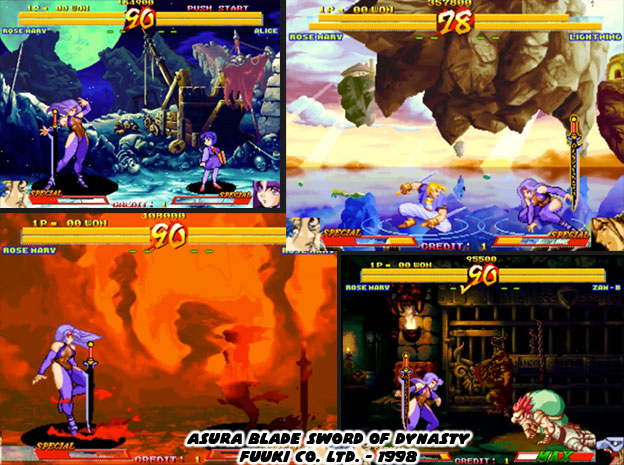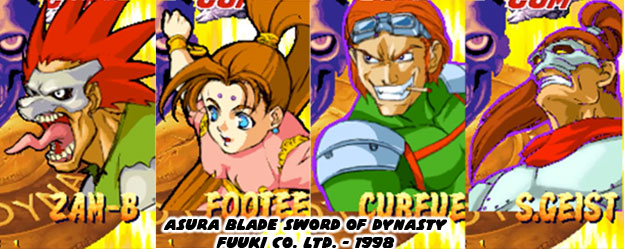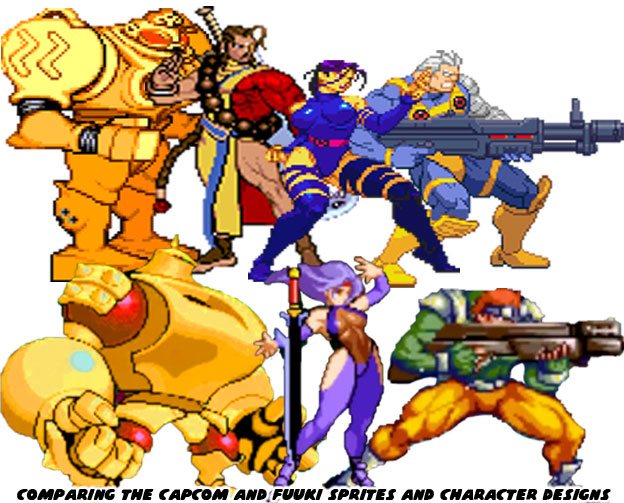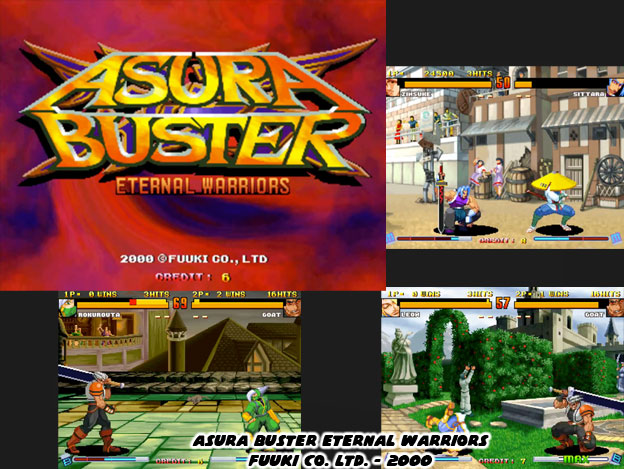
Many of the stars from the first game returned in the sequel. Their costumes and color palettes were in-line to the designs from the first game. The sprites, animations, moves and balance were completely redone. I don't know why the studio decided to do this but I'm glad they did. Many developers added a few new characters and stages to the existing engine and had the audacity to label it a sequel when it was essentially an upgrade kit. Fuuki Co. was breaking from tradition and actually redoing everything from scratch. This approach would have eaten the budget for several games if Capcom tried to do the same thing in a Warzard sequel.
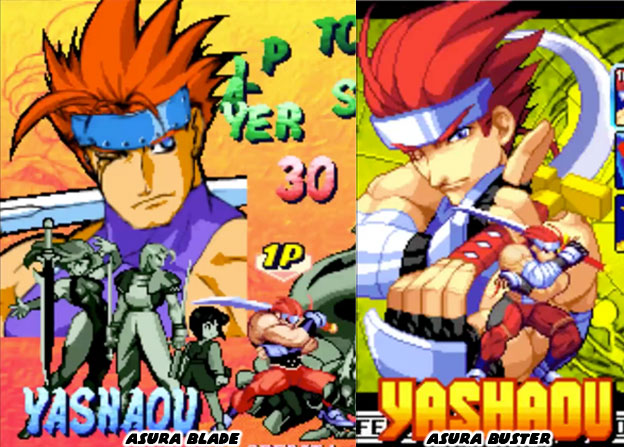
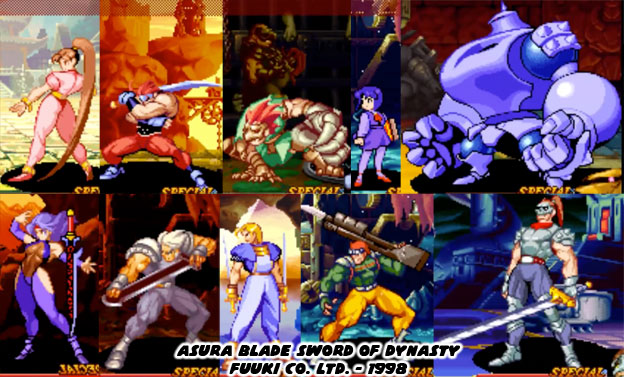
The new sprites seemed slightly more detailed than the previous batch. The colors were brighter and more colorful than they had appeared in the first game. A few new faces joined in. Fuuki picked up some of the game design elements they missed the first time around. Yashou was the star character he didn't really have a rival in the original game. A new swordsman was added, from the same clan even, to be his rival. Sittara was a much darker character, not unlike Iori or Genjuro from the King of Fighters and Samurai Shodown games respectively. He was a good balance in the game.
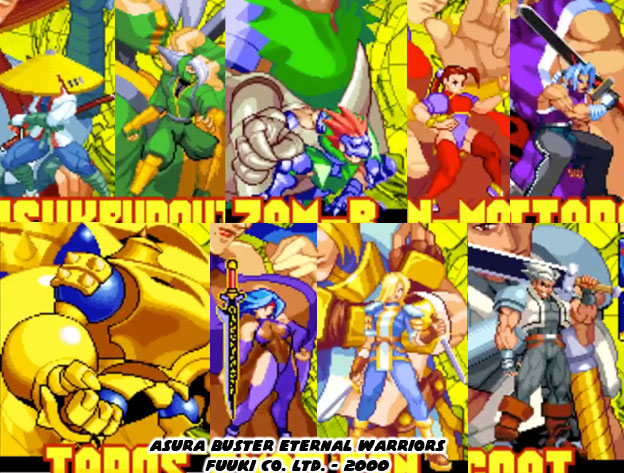
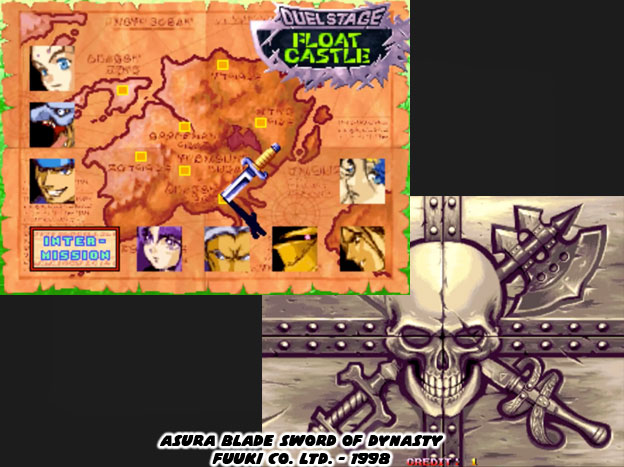
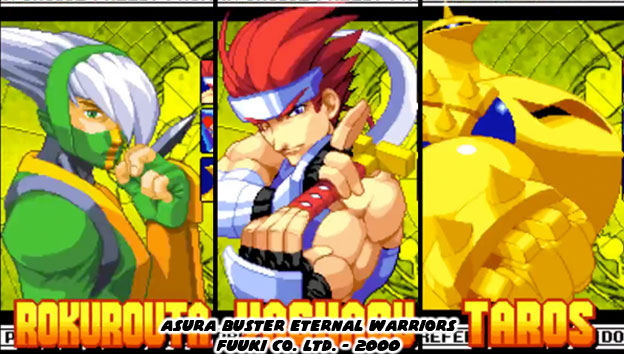
The new fighters were very much rooted in Asian history, with a new Chinese-style martial artist Chen-Mao who was the understudy of Footee from the original game, a new samurai named Zinsuke and even ninja character named Rokourouta joining the ranks. The previous game wasn't as focused on the Asian martial arts as much as its sequel. This was fine however because the new game was really delving much deeper into the fantasy world that the studio had created. There were entirely new kingdoms vying for power. There were new locations to explore. This was apparent on the entirely new stages and world map presented to audiences.
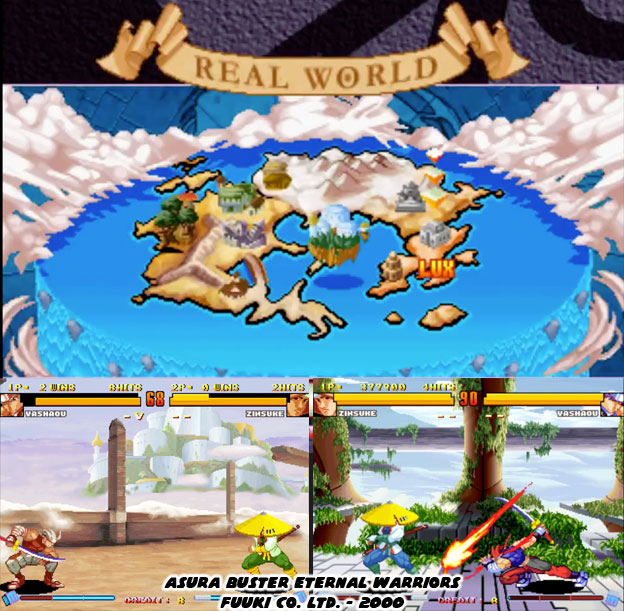
Asura Buster had levels that were every bit as unique as the original title. Floating castles, oceans made of sand, opulent palaces and even the city rooftops were all memorable places for a battle. Fuuki added something that was missing in the original title, a bonus game. Fighting games used to have bonus games, the rule was not observed by every publisher, but most of the biggest franchises did have a version of the classic mini game. Perhaps there was a breaking demonstration, a chance to punch up a car or parry a basketball. Each game often had a purpose for the mini games. Some were a score booster but others were trying to get audiences to learn new techniques or master the range for each character. Asura Buster had a little bit of the latter.
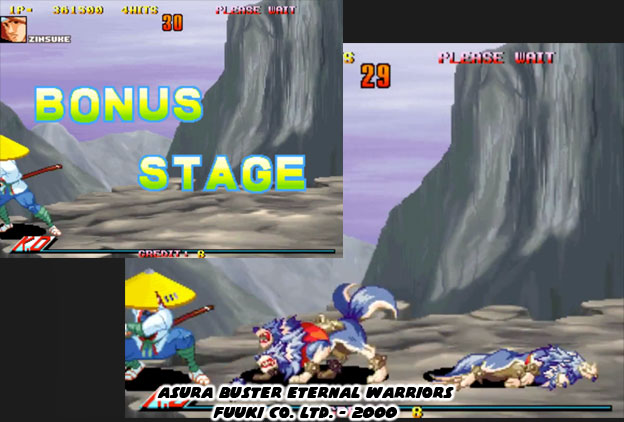 The bonus game had players fighting off wave after wave of two-headed wolves. Some ran at opponents, some leaped at opponents and some even dropped in from the sky. Players had to react quickly, a single strike was enough to beat most of them. Players couldn't die while facing the mini-cerberus, if hit the player would fall over while the dogs trampled them. Players mostly missed out on bonus points for a poorly timed session. Asura Buster was also memorable for a new sub-boss character. A large, pink, triangular, shapeshifting creature named Vebel waited for opponents in a darkened cave.
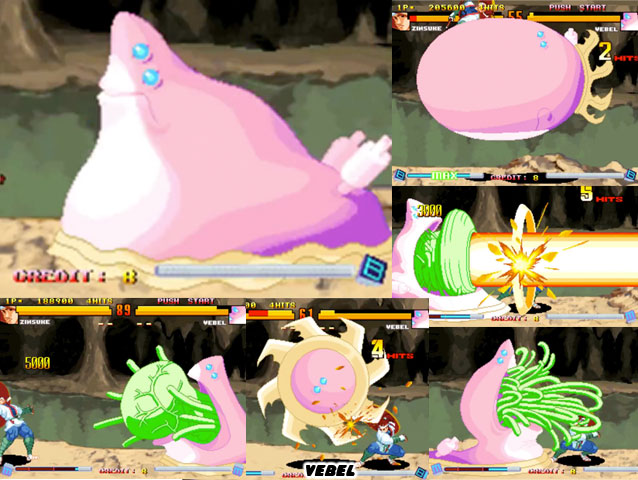
Vebel was a very odd character. It moved around in a very fluid manner, like it was made out of pink Jello, but could also inflate like a balloon. It could lash out with its fins, or by spitting out its internal organs. It also had a beam that it could shoot across the entire screen. This was easily one of the strangest characters ever featured in a fighting game. It broke the concept of what makes for a good character but it did not break the design going into Asura Buster. This was a fantasy game, any sense of realistic character designs went right out the window. It was a rule that made the monster designs work in Warzard and even the unreleased Dragon's Heaven. Vebel was also memorable for the sheer scale of the character. It took up a large portion of the screen, there were few fighting game characters that had as much presence. I can only think of a handful of characters that were as big, colorful and possibly influenced the development of Vebel.
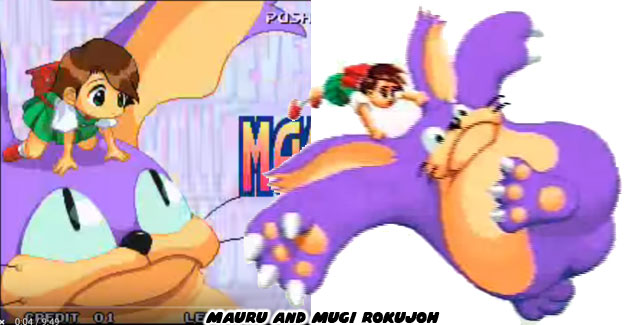
The first massive influential character I think was Maururu. It was a giant magical creature that carried a little girl named Mugi on his back. He appeared in the game Waku Waku 7, a fighting game by Sunsoft. The game was released in 1996, it was a spiritual successor to Galaxy Fight: Universal Warriors. I had mentioned Galaxy Fight previously on my blog because it featured a hidden character that was modeled after an elder Ryu / Ryo from Street Fighter / the Art of Fighting respectively. Sunsoft used a lot of humor in their fighting games and they weren’t afraid to poach ideas from other fighters or even anime shows.
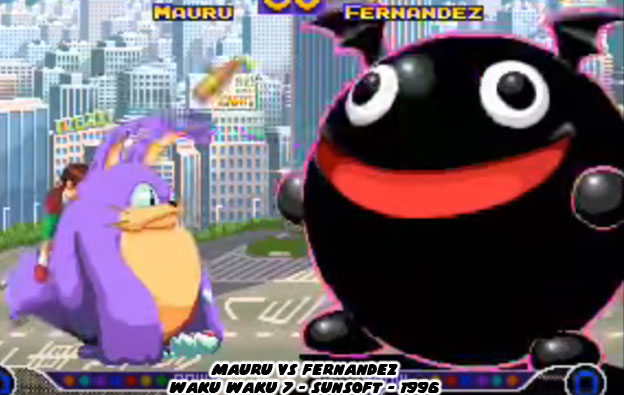
As you may have figured out Mauru was a send-up of the titular character from the Hayao Miyazaki film My Neighbor Totoro. Totoro and the littlest girl in the film Mei Kusakabe debuted in 1988. Mauru was among the bigger characters in any game but the boss character, Fernandez took up almost half the screen. Vebel was simply another character that fit this unusual mold. The bright pink color helped it pop off the background. The strange assortment of moves, and its fluid animations ensured it would never be forgotten. Also, in case anyone had the feeling that they had seen the archetype before you would be right.
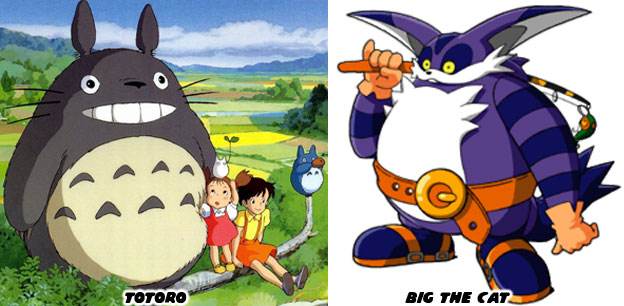
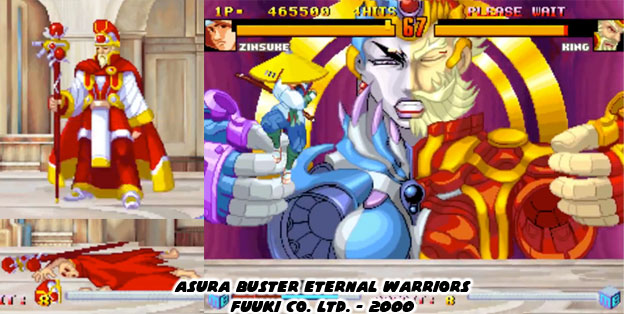
Another oversized character with the ability to get caught up in a bigger plot 10 years after Totoro. Big the Cat debuted in 1998 in Japan and 1999 in the USA in Sonic Adventure. Big was a lovable character with a certain innocence to him. but let’s recognize that Mauru appeared a year earlier. Vebel wasn’t the only case of deja-vu that Asura Buster gave fighting game afficionados. The final boss of the game was an evil king. This character didn’t fight you like other traditional boss characters. Instead the King turned into a giant that was half male and half female. The red and blue color scheme assigned to each half was reminiscent of Gill from Street Fighter III. Of course this was if Gill was 60-feet-tall. Many arcade players had seen a giant boss character in the Capcom “vs” titles.
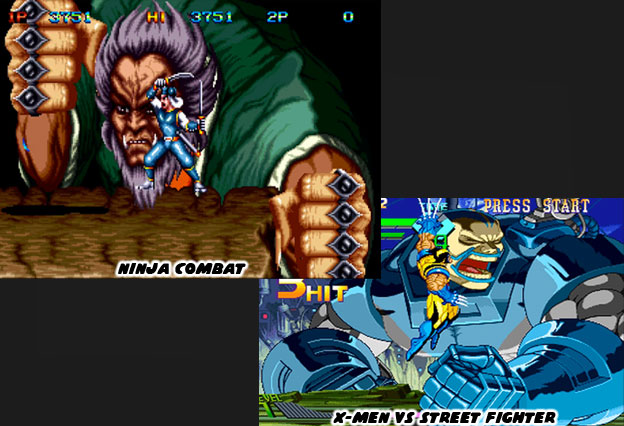
Audiences expected larger-than-life characters in the Capcom crossover games. Many of the villains in the Marvel comics were known for their shape-whiting ability. A character like Apocalypse, a villain from the X-Men comics for example, could become gigantic. He fit right in with the story of the games and appeared in the 1996 game X-Men vs Street fighter. It was a perfect match for the Capcom when other Marvel giants, like Galactus, began appearing in their fighting games as well. Yet hardware in the early to mid ‘90s was not powerful enough to render sprites that were several screens tall. The studio got around this by only animating parts of the character, such as the head and arms. It wasn’t the first time a studio had used this approach. In 1990, before Street Fighter II appeared, ADK had developed a game called Ninja Combat for the Neo Geo arcade system. The final villain in the game was an evil sorcerer named Genyousai. At the end of the game he transformed into a giant and players had to chop off his hands and eventually head. Ninja Combat was a brawler, and not a fighting game but the seeds were planted for the King in Asura Buster.
The addition of a new story, new characters, including some hidden characters, a bonus game and a new villain made Asura Buster really stand out from the original game. Also unlike most fighting games where everything wraps up after the villain was defeated this game allowed players to unravel a piece of the story by fighting another main character at the end. It was unique to the genre and helped add more dimension to the fantasy world that Fuuki Co. Ltd. had created. The company still exists however they have made no mention about a new Asura game. It would be nice to see this ported over for the consoles and Steam if we won’t get a third entry.
Asura Buster was not the last fantasy fighting game worth mentioning. In the next post we will look at a fantasy fighter that was co-developed by Japan and South Korea but with design elements from one of the oldest British tabletop gaming studios. I hope to see you back for that. As always if you enjoyed this blog and would like to sponsor me please visit my Patreon page and consider donating each month, even as little as $1 would help make better blogs and even podcasts!