Showing posts with label thps. Show all posts

Friday, April 15, 2022

My skate game history, and coming up with ideas for a 720 sequel...

I’ve always wondered what a sequel to 720° would have been like, assuming that it had as much effort put into it as the original. Atari didn’t often make sequels in the arcade, those tended to pop up on home consoles under license from a third-party developer. Their quality was never guaranteed. Playing the original game on the Xbox One S over the past few months has given me lots of ideas. There is still a lot of replay value in it, and at the same time lots of room for improvement. Skate games, as you may know have evolved greatly since 1986. I talked previously about Sega’s Top Skater was the catalyst that helped spark the Tony Hawk’s Pro Skater franchise. I had a hand in helping shape the THPS series, but from outside the company. I was the west coast correspondents to PlanetTonyHawk.com (PTH), which was a fan page dedicated to the THPS series. It was launched in 1999 while the game was a demo, and had yet to be released.

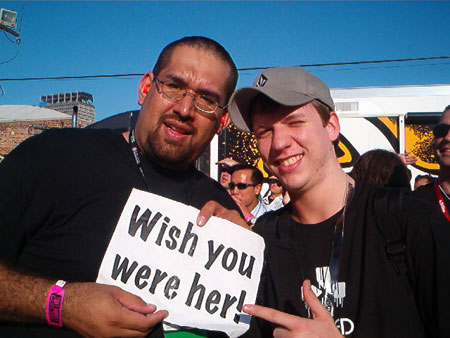
In 2000 I was a finalist in the THPS2 World Championships. Activision flew me, and 11 other people up north to enjoy the X-Games in San Franciso, and compete in the game tournament. It wasn’t much of a contest as essentially we watched Ben Addair, Sean Fontenot, and “THPSAndy” Gentile fight for the top spot. In 2001 I came in 4th Place, Twin Galaxies THPS2 Best-Combo World Championship. So I could play the game very well, but at the same time I enjoyed trying to figure out ways to make it better. Neversoft, and Tony himself welcomed my feedback given my relationship with PTH, and the World Championships. I would write detailed game design documents, and provide feedback on the series as a whole. Some of these were sent directly to the team, other ideas were posted on the PTH forums. My years of playing games in the arcade, PC, and consoles, as well as being a big fan of skateboarding helped translate the elements that I thought would be great fits for the series.
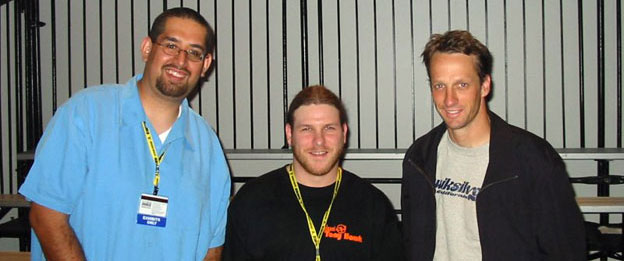
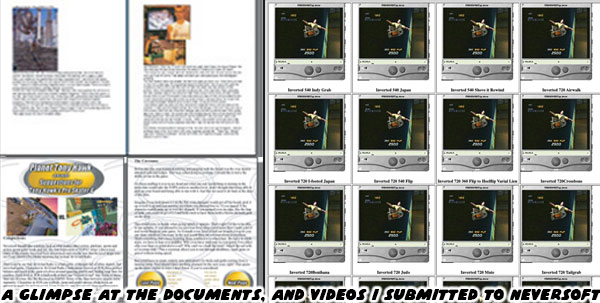
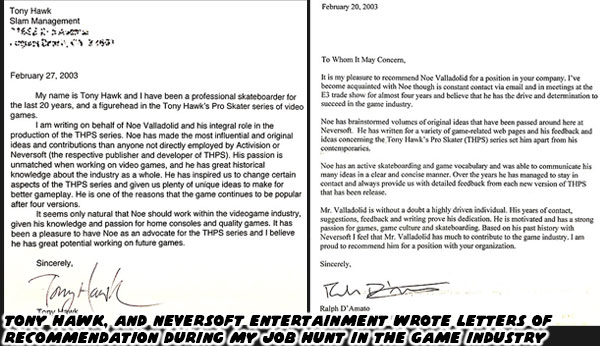
I went so far as to exploit glitches in the THPS games, and record videos so I could get my ideas across. I would upload these, and show the team ways to change the control scheme. I pitched the ideas of being able to perform wall plants, reverts, and caveman tricks to expand the combo system. I talked about locations like Skateopia, and Japan as perfect settings for new levels. Many people on the PTH forums noted how many of my suggestions seemed to influence the finished versions of THPS3, 4, Underground, and Underground 2. I never so much as received an in-game credit, or thank you. Still the game studio acknowledged my contributions. They sent me a free copy of the games as they were released, and even managed to get me into the E3 on a couple of occasions. All the while I hoped that Neversoft, or another studio might be willing to take a chance on hiring me. I asked Tony, and Ralph a producer at Neversoft if they would be willing to write me letters of recommendation. They obliged, and said some very nice things about my contributions.
I thought about getting an entry-level job in QA, based on my ability I thought I’d be a good fit. THPSAndy was beyond gifted as a player, and had been picked up by Neversoft after the world championships, and later absorbed into Activision Blizzard to become a designer. As a fellow finalist I didn’t seem able to get my foot in the door. Neversoft was receptive to my feedback, but they didn’t have plans to add me to their team. I applied at Activision, Capcom, Disney Interactive, and a few other studios for over a decade, but never got so much as a call-back. It was a bummer having my ideas help shape skateboarding’s biggest franchise, but not being considered for a job. I did manage to find work at JPL for a few years, which as any science nerd would say was a dream come true. Part of me still hopes to get a chance to develop games.
With that said let’s figure out how I would approach a sequel to 720°. What types of graphics would it have, what sort of aesthetic, or theme would it take? How would the control be when compared to all the other skate games in recent memory? Activision flooded the market with THPS sequels just about every year for almost a decade. This ensured that they would hold the monopoly on the genre, while at the same time burning rivals out from trying to compete. This seemed to be their approach with the Guitar Hero franchise as well. Thankfully Electronic Arts, the company that gave us Skate or Die, was willing to take on a fresh approach when they released Skate in 2007. EA Montreal actually floated the idea of flying me, and the PTH webmaster Trevor Esposito, up to Canada to get our take on Skate while in development. It would have been nice, but the studio couldn’t get the okay from the higher-ups to do that. Skate, and games that came after like Skater XL were focused on more accurately reflecting the process, and even look of modern skateboarding. The control was very unlike the Hawk series, with making the analog sticks act like legs, and feet to control the board. Performing tricks, and combinations, was not super easy as it was in the THPS series. The challenge of accurate skating was also the reward of playing. The game even took the camera POV directly from skate videos.
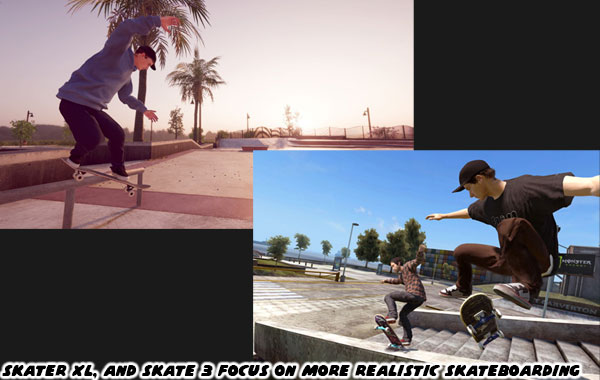
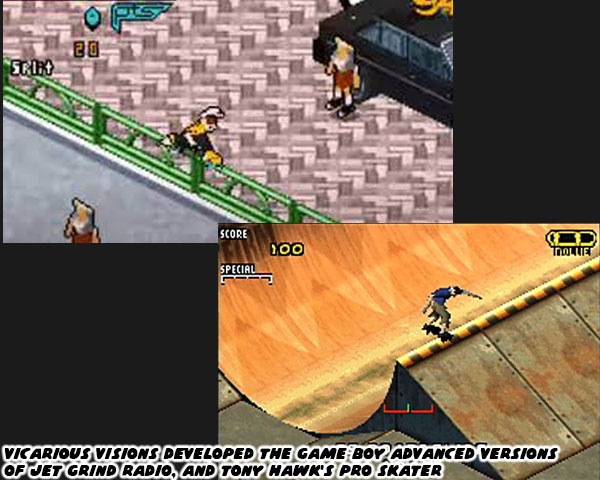
I would not use the THPS, or Skate 3 formats for a 720° sequel. The Atari classic had its own look, and feel, which would be lost if it went into the format employed by the current crop. It had to be in an isometric perspective. There were examples where isometric games actually worked well for the genre. Vicarious Visions established themselves as great developers when they adapted Jet Grind Radio, and the THPS series for the Game Boy Advance. Using this perspective could still work well in an action sports title, as long as all of the other control, and design elements played in its favor. Bright neon colors, bold patterns, checkerboards, and other stylistic clashes are often what we think about when it comes to ‘80s art, music, and fashion. From an aesthetic point of view a 720° sequel should play right into all of that. Every stage, location, character, should feel heavily influenced from the 1980s.
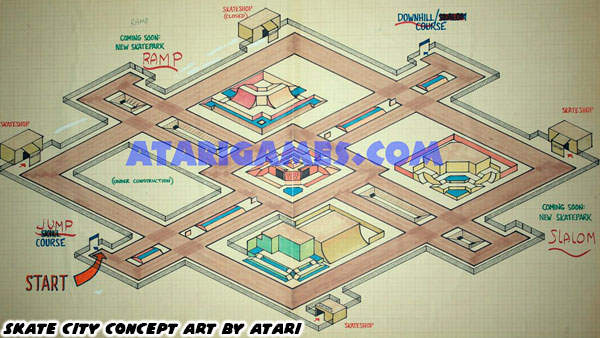
Skate City was the dream place to skate in the original 720°, but if you remember there was a timer that prevented players from exploring the city. You were forced to rush from contest, to contest without actually getting to enjoy all the ramps, and skateable features scattered throughout the city. A timer was also used in the early THPS games, and that really hampered the experience if you weren’t going after a high score run. Exploration, and pushing your abilities in the stages kept players coming back. Skate, and more modern games understand that open world games are liberating. Players can go through these games at their own pace, for their own enjoyment. I would do the same for Skate City, but purposefully fence off areas of it. These portions wouldn’t be accessible unless you completed objectives, or found secrets throughout the game. These were some of the ideas that Atari actually had in mind for the original game. Yet imagine a map 100 times larger, and more detailed than anything Atari could have ever produced with 1980s technology.
I would sprinkle in homages to actual places, and ramps of yesteryear in the game. It would be easy to find ways to make them fit within the context of the environment. Skate City is not designed with pedestrians in mind. The architecture is all created to be ridden on, through, and over. The whole place was meant to be thrashed by some radical kids. Yes we would still feature shops in the shapes of respective skate gear, but wedges, and transitions would be built into fast food restaurants, schools, and other buildings. There would also be rails, and ledges that could be grinded. Street skating had not gone in that direction when 720° came out. It is not impossible to design a level in a strict isometric POV. Atari managed to do it in ’87. The studio got around buildings, or ramps that would have obscured the main character by using transparency. For example in the Ramp contest the far walls are wood, but the closer transitions, and deck are lexan, a clear plastic. This was a detail pulled from real life.
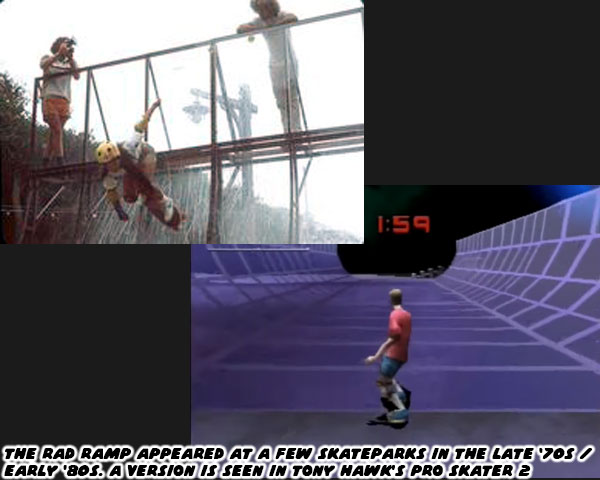
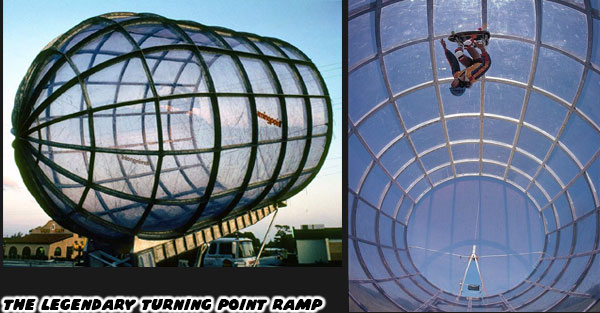
Plexiglass ramps, sometimes referred to as Rad Ramps, were portable halfpipes. They could set up at skate parks, parking lots, and even inside malls for demos. Although difficult to skate on they helped shape the future or ramp design. They were instrumental in pushing the boundaries of what was possible on a skateboard. Tracker Trucks worked with Firestone to create the first portable clear ramp. A version of this was featured in THPS2. The first skateboard loop, the “Death Loop” accomplished by Duane Peters, was done on a plexiglass ramp. Then there was the Turning Point ramp. It was purpose-built full-pipe-with-cradle that could be adjusted to different angles. It was used in the early boom of skateboarding for contests, and to get many skaters used to the idea of being inverted while on the board. These types of ramps, and building construction would be sprinkled throughout my version of Skate City.
Then there is the question of the contests, and the main character. How would they be different? Keep visiting the blog, and I’ll do a complete break down in the next few days. If you would like to sponsor me please visit my Patreon page and consider donating each month, even as little as $1 would help make better blogs and even podcasts!

follow the Street Writer on Patreon!

Wednesday, April 13, 2022

Top Skater, Air Trix, and Ollie King, the Sega skate trilogy...

After 1987, for years, and years there weren’t any truly great skateboarding games in the arcade, or at home. This was possibly due to the sudden drop in popularity of skating. Skateboarding has risen, and fallen in popularity before. The first boom went from the late ’60s through the mid ‘70s. Then it dipped for a few years and grew again in the mid ‘80s to the end of the decade. Movies like Back to the Future, and its skating lead Marty McFly helped expose skating to the mainstream. In the early ‘90s street skating was taking prominence, and vert skating disappeared overnight. Legends like Tony Hawk, and Christian Hosoi seemed to fade as well. It wasn’t cool to be a skater during a time when rails, ledges, and flip tricks were progressing rapidly. Then like clockwork skating was beginning to rise again near the end of the ‘90s. A decade after 720°, and Skate or Die an entirely new company decided to enter the arena. Sega was founded in 1960, it was even older than Atari, and based out of Tokyo Japan. They were known for all sorts of innovations in the arcade, and consoles. They had hits in multiple genres; including sports, racing, fighting, and shooters. They had no experience with skateboarding, but you wouldn’t be able to tell thanks to the success of their 1997 hit Top Skater.

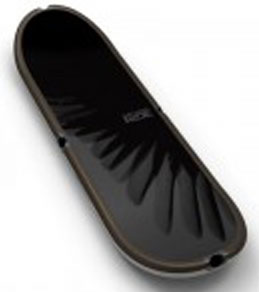
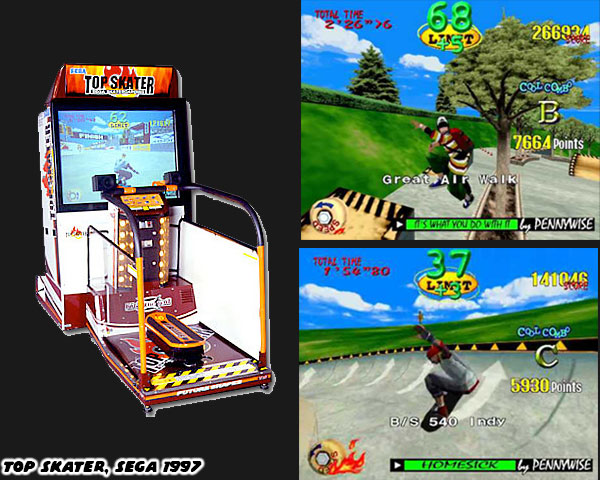
Director Kenji Kanno, and his team put together the only arcade skating game that was superior to 720° in every regard. First off the cabinet was enormous, with a display far bigger than most machines. The reason for this was because you stood on a plastic skateboard, the first of its kind, in order to control the characters. This put the players in the point of view of a pro going through a downhill skatepark. It was as close to simulating the experience as had ever been seen. The skateboard was not a clumsy set up. It was fairly intuitive to turn, ollie, and nollie off of the ramps. Sega was also showing off the advances in their 3D engines. Sprite-based graphics had fallen by the wayside. Polygons replaced pixels, blocky graphics at first, but little by little became more lifelike. Top Skater used the Model 2 engine, which was the backbone of their other hits including Daytona USA, Virtua Cop, Virtua Fighter 2, Virtual-On, and The House of the Dead. Top Skater featured fairly accurate skate tricks, both street flip tricks, grind tricks, and vert aerials. While staring at the giant screen it was possible to get a sense of vertigo as the characters flipped through the air.

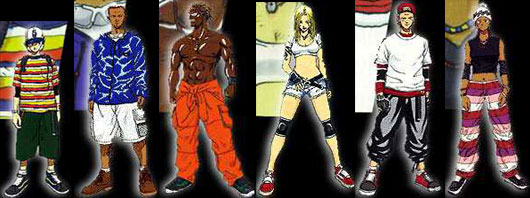
Speaking of characters, Sega created a library of skaters, male, and female from around the world. They even included hidden characters, that accurately reflected the culture. They wore the right style, and even shoes of the time. Each character actually had their own library of tricks. They even had their own stances, regular vs goofy. In addition to providing a great game experience the adherence to the actual culture won over lots of fans. The game featured an amazing soundtrack that I still listen to. A mix of songs from four different Pennywise albums would play. Pennywise was a Southern California punk band whose music was closely associated with the skate scene. The high energy music perfectly framed the experience that Sega was trying to capture. To be fair Director Kanno was exceptionally good at creating fast paced games with western soundtracks. His follow-up game Crazy Taxi was even more chaotic, and featured the music of the Offspring. Sadly Top Skater was never adapted for home consoles. Sega did create a spiritual successor in 2001 with a game called Air Trix.

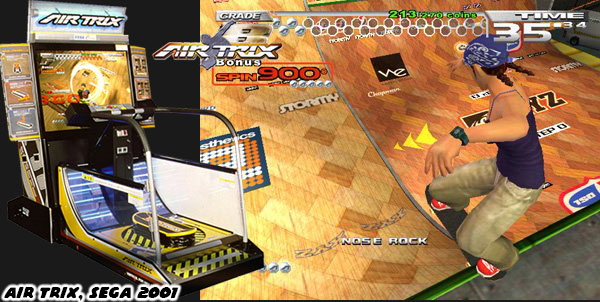
Air Trix was produced by Hisao Oguch, and Directed by Shinichi Fujii. The team at Hitmaker introduced an entirely new cast of skaters, and although the cabinet, and control were similar to Top Skater, the focus of the game was more of a vert simulation. It lacked the charm, and pace of Top Skater. Although the studio focused on getting characters wearing the right clothes, and shoes, it missed the magic of the earlier title. Mr. Kanno learned during the development process that Top Skater shouldn’t focus on racing with skateboards, because players would completely disregard performing tricks. At the same time he didn’t want players to solely focus on vert tricks, so the game nudged them in a general forward direction. Although it looked like you were going downhill, both tracks in the game were actually giant loops. Air Trix didn’t have a soundtrack, as players were expected to perform a series of back-to-back tricks on vert in a timed format. It was an exhausting experience, and although it was very accurate to vert skating, it wasn’t as fun to play as the earlier game. Sega went back to the drawing board, and took notes from their greatest action sports game.

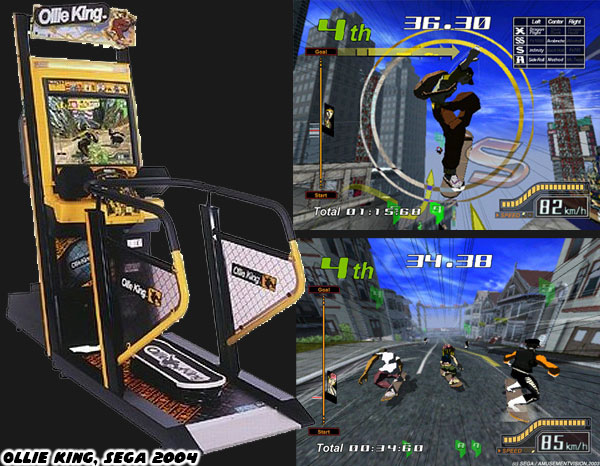
In 2003 the company released Ollie King. This game was directed by Masayoshi Kikuchi, and produced by Osamu Sato. A new development team from Amusement Vision got to work on it. The game also created their own cast of characters, each with accurate clothing, and gear. The soundtrack was created by Hideki Naganuma, who was known for his work on the Jet Set Radio series. In fact this game is considered to be part of the Jet Set universe, as the engine is cel-shaded, and features remixes of a couple Jet Set songs. Unfortunately the game came out during the sharp decline to arcade games in the US. Not to mention that the focus was more on downhill racing with some big air tricks thrown in. While it was very stylish, it didn’t seem heavily grounded in reality. It never received a home adaptation, and was relegated to the footnotes of skate history. Most of the people reading this know that Neversoft developed the undisputed champ of skateboarding games, the Tony Hawk’s Pro Skater series in 1999. They were heavily influenced by Top Skater, and would play it at a pizza shop not far from their studio. Tony himself also confirmed how influential is was during the development of the original. He would eventually get Activision to release a version that used a skateboard as a controller called Tony Hawk RIDE in 2009.

I’ve been playing skateboarding games since 1986, some bad, but many great. The release of Tony Hawk’s Pro Skater 1+2 by Vicarious Visions in 2020 was met with great success. The first two games helped shaped several generations of skaters, and gamers alike. The HD remake was absolutely brilliant, and I certainly enjoyed spending lots of time with it. I felt it was missing a few things that I enjoyed. I went back and replayed the original releases to see how the control, and game play changed between versions. It even got me playing rival games like Evolution Skateboarding, and Grind Session as well. There were some fantastic things in the earlier Playstation, and Playstation 2 games that weren’t really captured in the latest version. Credit where credit was due, Vicarious Visions should be proud of their work. They proved that a great game could withstand the test of time. It actually got me thinking about 720°. Now that I was playing through it on the Xbox One S, and enjoying the experience I wondered if we should revisit The Godfather of skate games. I started thinking of how I would approach a sequel, and what would it feature. If you’d like to read my process then please come back for the next entries. Did you have any favorite skateboard games? Did you start skating because of the Tony Hawk games, or other skate games? I’d like to know. If you would like to sponsor me please visit my Patreon page and consider donating each month, even as little as $1 would help make better blogs and even podcasts!
follow the Street Writer on Patreon!