Showing posts with label imagineering. Show all posts

Wednesday, January 31, 2024

The Dream Suites, part 4, the Pirates of the Caribbean Suite - A 1UP classic from July 21, 2011

Yo ho, yo ho it's the Pirates of the Caribbean Suite for me! This installment of the Disneyland Dream Suites brings us to the last in the series. What has been considered the greatest dark ride ever built has one of the nicest hotel suites even sharing the name. Pressing the doorbell queues up the song from the attraction. Past the heavy wooden doors guests are greeted by a poster from the most recent pirates movie.

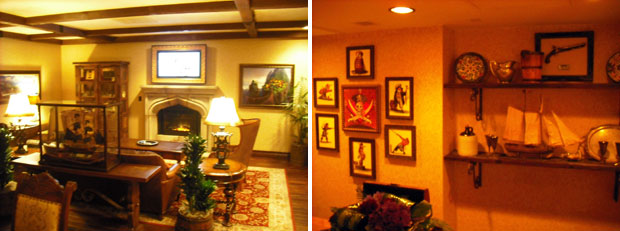
The living room is ship shape, pardon the pun. The entire suite is layered with details from both the attraction and movies that shared it's name. A model of the Wicked Wench sits inside a glass case, this was the ship before it was turned into the Black Pearl. Other props, models and replicas from the movies and ride adorn the walls.

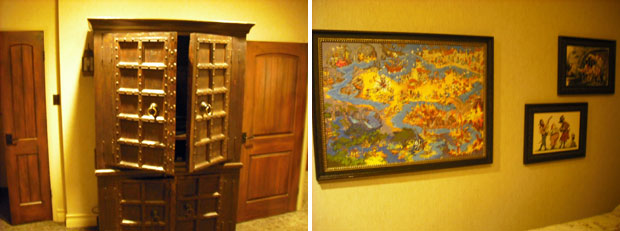
There is nothing dainty about the rooms. Wood and iron rule the furnishings just like they did the old ships from legend. A classic pirate map from Disneyland designed by Xavier Atecio, whom served as the voice of the pirate at the start of the ride, as well as the script writer and lyricist for the Pirates and Haunted Mansion attractions was featured in the guest room. Character designs from Marc Davis were also featured in the rooms.

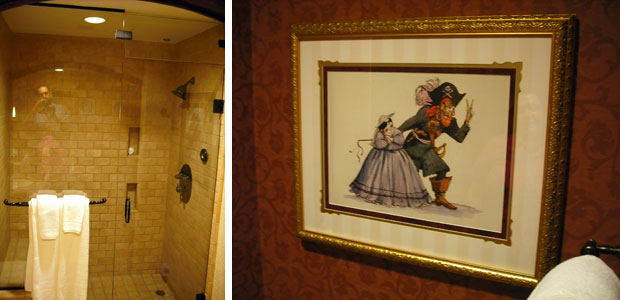
Just like the other rooms in the Dream Suite the bathrooms all tell a story. Take the shower that looks like a bricked archway that could be found in New Orleans.

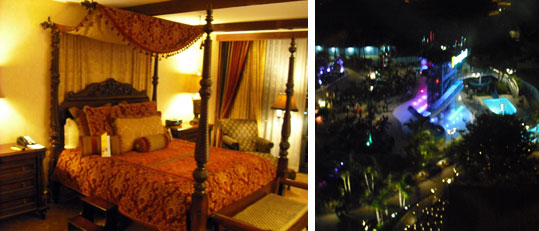
Each room in the Dream Suite, with the exception of the Mickey Mouse Penthouse, had a view of the newly refurbished courtyard complete with view of Trader Sam's, Tangaroa Terrace, the pool area and water slide.

I consider Adventureland the best of the Dream Suites but visiting each room was a treat in and of itself. I hope that my Disney friends get a chance to spend some time in the park and hopefully even spend time in these rooms. As always if you would like to sponsor me please visit my Patreon page and consider donating each month, even as little as $1 would help make better blogs and even podcasts!

follow the Street Writer on Patreon!

Monday, January 29, 2024

The Dream Suites, part 3, the Adventureland Suite - A 1UP classic from Jul 14, 2011

Hello friends, we have made it to another Friday and another look at the Disneyland Dream Suites. Today we feature the Adventureland Suite, the one which I consider the best of all the Dream Suites.

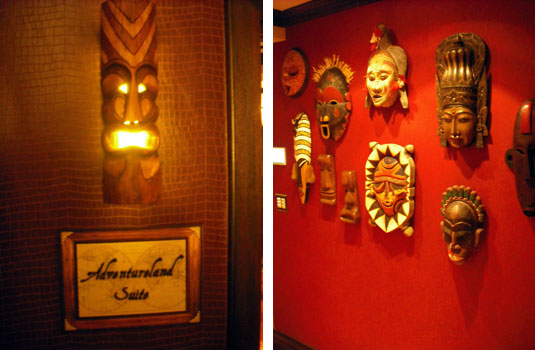
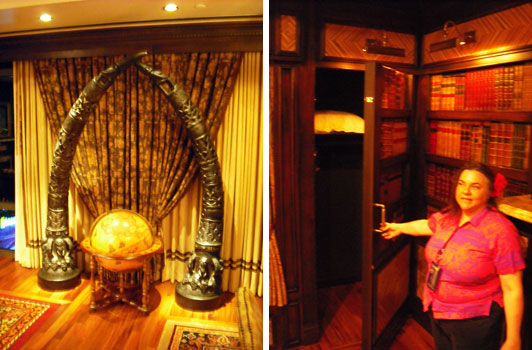
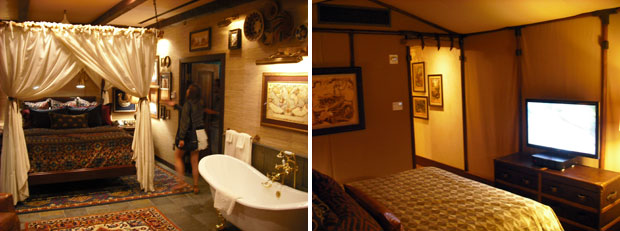
Like the other rooms featured thus far there is a unique sound when you press the doorbell. For Adventureland there is a sound of beating war drums. When you open the door there is a short red hallway with masks from around the world lining the walls. This hallway leads right to the living room. The centerpiece for this room are enormous ornamental carved tusks surrounding a vintage globe. Also, like the other rooms featured thus far this room is supported by details helping ground visitors into some exotic far off location. There are paintings, maps, trophies and artifacts mounted on the walls and sitting on tables.

There is a nook layered with comfy pillows recessed into a wall in the living room. A closet hidden behind a faux bookcase is right next to it.

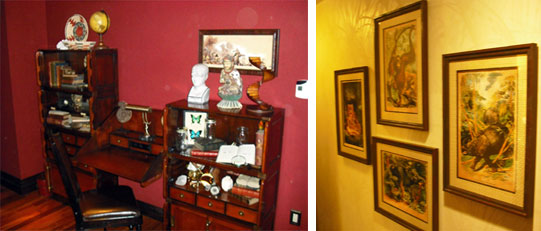
Each room contains a writing desk that is appropriately themed as well. Imagine the artifacts hiding in the drawers of this desk. Plus some of the paintings in the rooms are based on the Disneyland attractions the rooms are themed after. Such as the Jungle Cruise and the Enchanted Tiki Room.

The master bedroom and guest bedrooms were works of art. The master bedroom had a floor of tiles with ornate rugs over it and a fully functional bathtub! Talk about living in the lap of luxury! The guest bedroom was decorated as if it were built inside a tent. The walls and ceiling were covered in canvas and held up by tent posts. The cabinets looked like stacks of steamer trunks and the only element that broke the illusion of roughing it in a lost jungle was a flat screen TV.

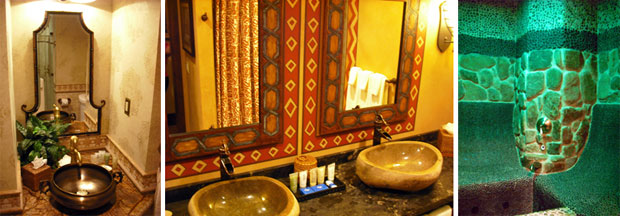
As if the bedrooms were not amazing enough, each bathroom was breathtaking. Both had showers but the master bathroom had a sauna big enough to fit four people easy! The sauna was made up of smooth tiny stones. Talk about exotic!

If I ever win the lottery this will be a suite I'd love to spend a week in. What do you think? As always if you would like to sponsor me please visit my Patreon page and consider donating each month, even as little as $1 would help make better blogs and even podcasts!

follow the Street Writer on Patreon!

Wednesday, January 24, 2024

The Dream Suites, part 2, the Mickey Mouse Penthouse - A 1UP classic from July 8, 2011

Today brings us another look at the Disneyland Dream Suites. This blog will feature the Mickey Mouse Penthouse.

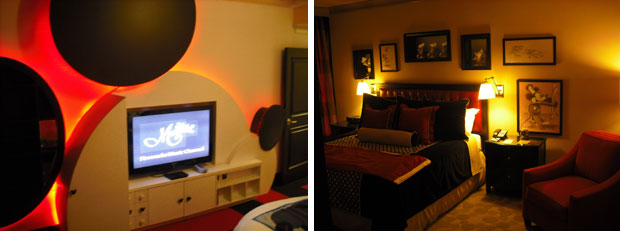
The colors and themes in this suite are very animated. With lots of pop styling and bright, bold colors symbolic of the iconic character. Forget about searching for "Hidden Mickey's" in this room as even the furniture itself is a nod to the character.

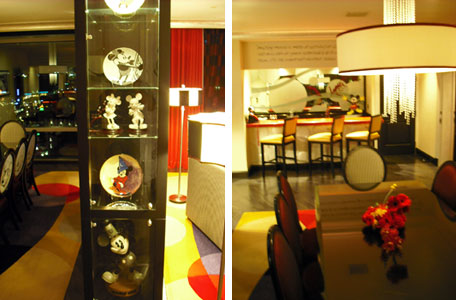
Each room is filled with figures, art and memorabilia celebrating Mickey and Minnie Mouse. Some of the items are rare collector pieces and others are original works of art.

Inspirational quotes from Walt Disney are painted into the walls.

The master bathroom is very classic and luxurious. There is even a television behind the mirror! The guest bathroom is more colorful and playful.

The guest room is themed with kids in mind. In addition to the flat screen television in the room there is also a light table in the room for budding artists and animators. The master bedroom on the other hand is nothing but class. Easily one of the nicest rooms in any Disney hotel. If you ever fall into some big money and want to treat yourself or your family to a weekend stay at Disneyland might I suggest the Mickey Mouse Penthouse? As always if you would like to sponsor me please visit my Patreon page and consider donating each month, even as little as $1 would help make better blogs and even podcasts!

follow the Street Writer on Patreon!

Monday, January 22, 2024

The Dream Suites, part 1, welcome to Big Thunder - A 1UP classic from July 1, 2011

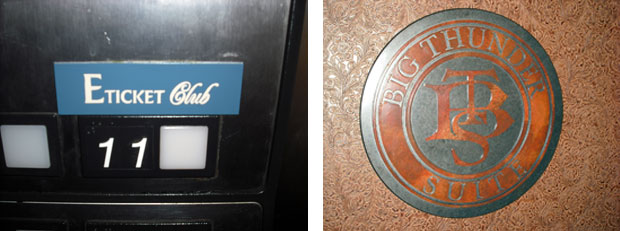
Hello friends, are you ready to start this long 4th of July weekend? Thankfully I had the previous two days off so I actually get a 5-day-weekend. Which is nice when you have to work 12-hour days. For every Friday in the month of July I’d like to highlight something special from the Disneyland hotel. The hotel is actually three separate towers. Adventure, Frontier and Fantasy are the names of these towers. Inside the Adventure Tower Disney has just completed a massive renovation to the top floors. The resort hosted an event to show off a collection of “Dream Suites.” Today we shall look at the Big Thunder Suite.

Each room has a theme with appropriate signage and effects. For example, each of the rooms that I will be highlighting over the following weeks has a doorbell that plays a different sound. Guests that press the doorbell at Big Thunder will hear a coyote howling in the distance. Right from the get-go the company wants visitors to expect that the suites have the same attention to detail and spirit as the attractions that inspired them.

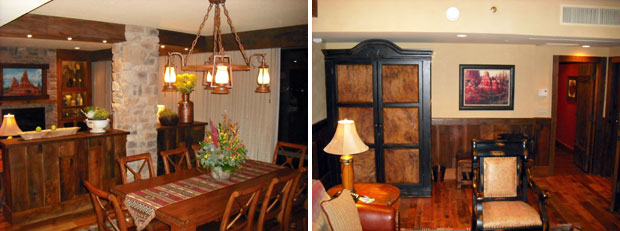
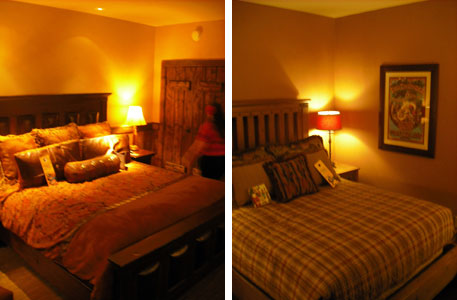
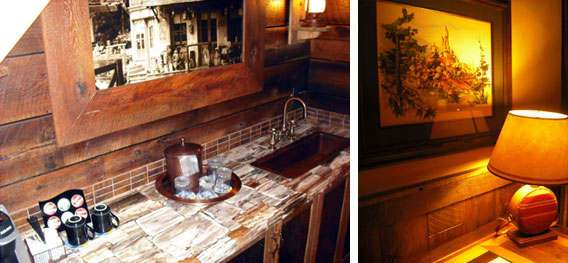
All of the furniture and architecture in the suites and rooms are appropriate for the theme. Since the Big Thunder suite is based on the mythical western setting from Frontierland then there was plenty of hard wood, petrified wood, suede, leather and stone set into the furniture and counter tops. Each Dream Suite had a main entertainment room, a dining area, kitchenette, bar and master and guest bedroom. Each bedroom had its own bathroom.

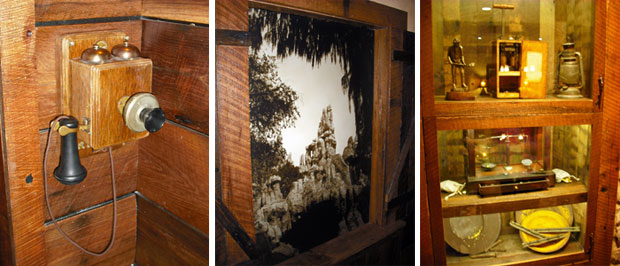
Several of the decorations were authentic western and mining materials and the classic phone in the hallway was still functional even!

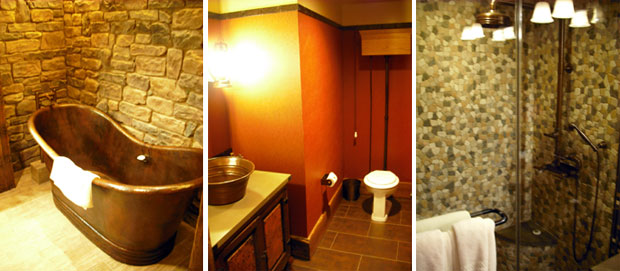
I think what made each of the suites spectacular were the accompanying bathrooms. The theme for each room carried all the way through. Fixtures, sinks, plumbing and even the bathtub were hammered copper. The sinks were basins, washtubs with hot and cold running water. The shower looked rustic and antiquated but that was a cover for the modern shower heads and extending shower wand.

As I stated previously, each suite had a master and guest bedroom. For the most part the guest bedroom was modestly themed while the master bedroom went all-out for guests. Classic Disney photographs, posters, blueprints and concept sketches were framed and placed throughout each suite.

It was truly an honor to get a chance to visit each room and document the work that went into each Dream Suite. In case you are wondering each room in the Dream Suite series runs about $3700 a night! I anticipate these rooms are more likely to be rented by companies for parties or when they want to impress clients. I don’t know how many mega-rich people are die-hard fan enough of the park to fork over that kind of money on a consistent basis. Hopefully the hotel is looking for volunteers to try out the room for a night. I know I wouldn’t mind spending more time in any of the suites. As always if you would like to sponsor me please visit my Patreon page and consider donating each month, even as little as $1 would help make better blogs and even podcasts!

follow the Street Writer on Patreon!

Monday, April 13, 2020

Disney in China, Episode 2

In this episode we look at how the Disney company turned around the underperforming Hong Kong Disneyland park. With help from plans created for Paris Disneyland, as well as two entirely new themed areas!


If you would like to sponsor me please visit my Patreon page and consider donating each month, even as little as $1 would help make better blogs and even podcasts!
follow the Street Writer on Patreon!

Tuesday, July 1, 2014

The Sega / Namco Rivalry, final part...

SCUD Race and Daytona USA 2 introduced the art of storytelling to arcade racers. Prior racing games had a mix of design concepts. Whether the course was based on a real location or was entirely a work of fiction there were elements that would come up again and again. Circuit based courses, those that required players to do laps, often had some interesting scenery along the way. Perhaps it was some skyscrapers or a bridge off in the distance that drivers would eventually go through. The various points along the course were sprinkled with unique touches, Perhaps a racer would drive past a gas station, small village or windmill. Namco had done an exceptional job of creating these types of circuits in the Ridge Racer series. The details they put into each course helped ground the racer into the world that the studio was trying to create.
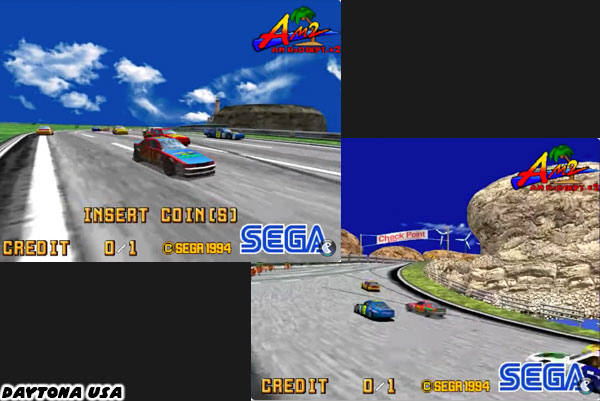
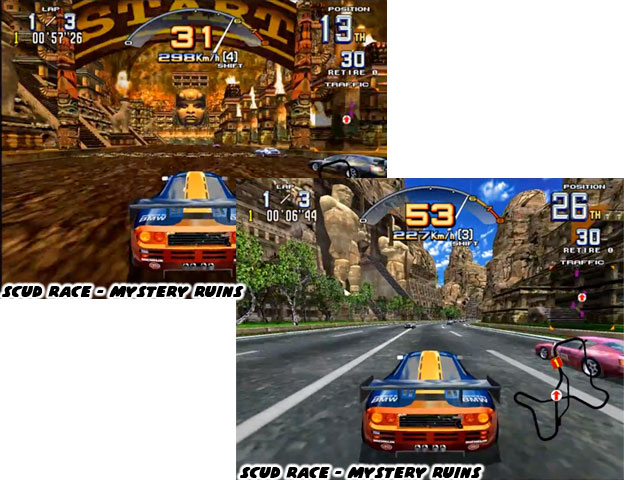
Then there were the racing games that were stage based and had cars going for distance, like OutRun or Dirt Dash. These games had rapidly evolving landscapes and sometimes terrain to constantly challenge the driver. These places might feature actual landmarks or invent virtual ones. Each stage on the course was like a mini circuit. All of the supporting details would help create a theme for each stage. Just as soon as the player got settled into one location however they would be entering an entirely new one. This kept racers engaged more than most circuits but from a design and a development standpoint they were also more difficult to pull off. What Sega did was strike a balance between circuit design and stage design. It was presented very well in SCUD Race and Daytona USA 2. In the previous blog I highlighted how the 90's Arcade Racer was an homage to these types of games. Earlier 2D and 3D racing games often did feature strong cohesive themes and dynamic scenery but none could match the splendor of the games built on Sega's Model-3 hardware. The Mystery Ruins in SCUD Race told a story. It was the next logical step for race game design.
The teams at Sega were tasked with coming up with convincing 3D worlds and in order to do that they had to learn the art of storytelling. The game had to communicate an idea as a player approached it. The shape of the cabinet, graphics used, colors assigned to it had to be done with some forethought. If a cabinet were painted in bold colors with racing stripes and sponsor stickers then there was no doubt what the game was about. If a cabinet had minimal color and no logos and players did not see a steering wheel right away then it could be about anything. The game itself then had to continue the narrative. The types of cars a game featured, the types of courses players could choose from all worked into the theme.
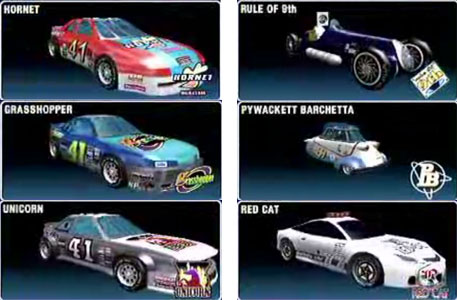
Even without saying a word many racing games left indelible marks on the art of storytelling. The Mystery Ruins for example were a sort of impossible circuit that worked within the context of the game. My brothers commented that it would be the type of a course that an Indiana Jones racing game would feature. No nation on Earth would actually allow super cars to race within ancient temples. Yet within the game there were no grandstands, no adoring fans and no cheerleaders on any course. AM2 wanted to create a pure experience between driver and course. Every turn on the course shed a little more light on the world of the Super-GT cars. The ruins were on the edge of an old town, far from prying eyes. Yet these ancient locations had roads paved through them to connect the villages. The racers were welcome to drive through the course as fast as they could.
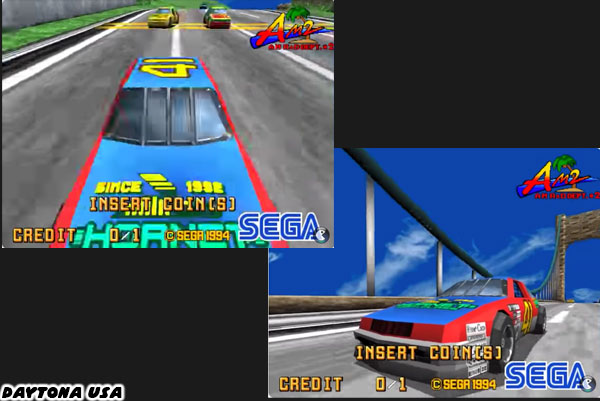
The developers at Sega had become comparable to the Disney Imagineers. Those were the artists, engineers, programmers and composers that dreamed up the attractions and helped execute the ideas in the theme parks and cruise lines. What many teams in the game industry did was very similar, except they were creating virtual theme parks for gamers to enjoy. Instead of a theme park attraction players could visit an arcade where they would sit inside deluxe cabinets that sometimes moved as well. Many of the best designers at Sega were tasked with creating theme park experiences in the Joypolis arcades which Sega ran. Many of the attractions that they created were like interactive dark rides. They carried the experience of attractions back to their arcade hits. The studio discovered that racing games were perfect tools to help create a narrative.
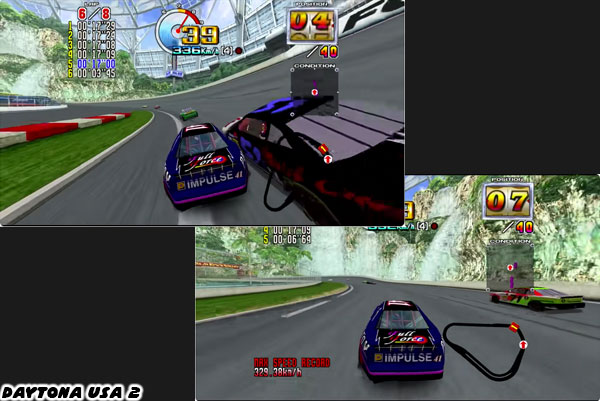
A racing car was like the Disney "Omnimover." It was a dark ride on a track that pointed audiences in the direction of a scene. It would turn and continue pointing riders at the next scene in the narrative of a particular attraction, like the Haunted Mansion. For Sega the challenge was in creating an interesting scene on every part of a racing course. The team at AM2 learned to use buildings, tunnels and scenery to block out parts of the course until it was the right time to reveal them to players. In this way something could always "pop out" at the right time. Each course was built with so many unique elements that several laps was not always enough time to catch all the details. Just like a great dark ride there was always a reason to keep going back.
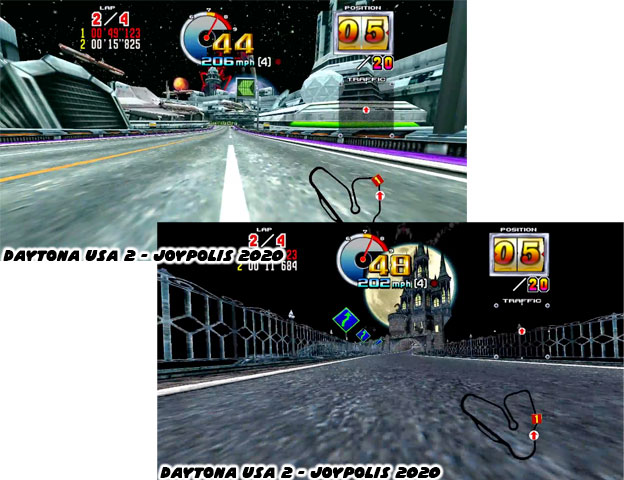
The Joypolis 2020 track featured in Daytona USA 2 could be considered one of the best, if not THE BEST racing circuit ever created. Who else but the team at Sega would think to put a racetrack through an active theme park? Note that I said Theme Park rather than Amusement Park. There was a notable difference between the two. An amusement park could have a collection of thrill rides, dark rides and games that did not necessarily fit together. A theme park featured the same ride elements however they all shared a particular theme. Even the gift shops and restaurants in a particular area held closely to the theme. With multiple distinct areas Disneyland would be a perfect example of a theme park whereas a Six Flags Magic Mountain was a collection of roller coasters that did not always complement each other, hence making it an amusement park. The Joypolis 2020 stage featured multiple themed areas including a haunted house, space port, western canyon and arctic exhibit. The stage was gorgeous and the eye candy that Sega provided would influence countless racers, even those that did not feature cars, like Hydro Thunder and H2Overdrive.
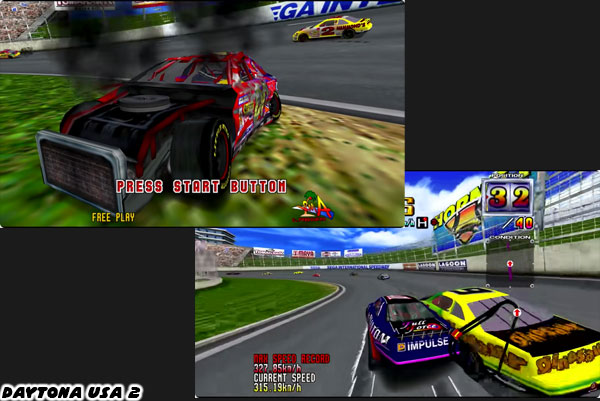
It wasn't simply superb graphics, car type, gameplay or course layout that made the Sega games memorable. It was all of those elements combined by a narrative that propelled players forward. The right car on the right track at the right time tuned the arcade racer into a cinematic experience. No words needed to be said, no plots needed to be laid out. The machine and the driver were united, the car had replaced the mascot in the best games. It was experience that could be enjoyed universally without relying on words to tell the story. Just as the arcade racer had reached a creative peak however it would soon disappear. The home console had been leeching players away from the arcade for years. When home consoles began the shift from 2D to 3D graphics engines in the mid '90s it would only be a matter of time before visiting an arcade would become a thing of the past. The racing genre was a staple for every generation and many of the early 3D console hits were ports from the arcade. There was one series of racing games that seemed destined for the consoles. It did so well that it would outlive the competition. Interestingly enough that series did not belong to Sega. The next chapter in this blog goes through the evolution of a series, starting from scratch. I hope to see you back for that. As always if you would like to sponsor me please visit my Patreon page and consider donating each month, even as little as $1 would help make better blogs and even podcasts!
follow the Street Writer on Patreon!