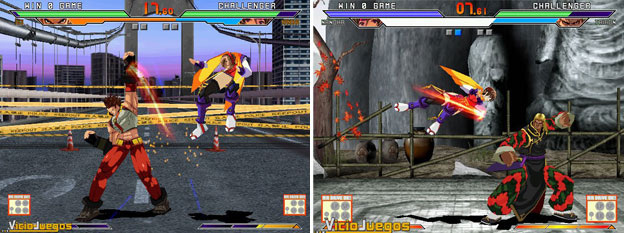
Today we are going to talk about a game that was announced for the arcade, and home consoles. It was previewed in the magazines, tested in arcades, and then vanished into thin air. Ken-Ju was a 3D fighting game scheduled for release in 2005. This was during an era where fighters were few, and far between. Namco should be given credit for their efforts. Tekken 4 came out in 2001, Tekken 5 in 2004, and Tekken 6 in 2007. As far as Capcom was concerned the genre wasn’t worth it. Street Fighter III: 3rd Strike, the last sprite-based fighter from the studio came out in 1999. Street Fighter IV wouldn’t debut until 2008. If it weren’t for Yoshinori Ono being passionate about rebooting the franchise many fans would be out of luck today. This is the only thing I’ll give him credit for. His enthusiasm for the series was genuine, but his sense of direction was too silly.
Ken-Ju was going to be published by Sammy. The company was no stranger to the genre. There were former Capcom employees that worked there. The studio released Survival Arts, The Rumble Fish, Guilty Gear X, and Battle Blaze to name a few. The developer of Ken-Ju was Dream Factory. While you may not be familiar with the studio, you should know that they contributed a lot to the fighting, and brawler genre. The studio developed Tobal No. 1, and Ehrgeiz: God Bless the Ring. Those were two highly-influential 3D fighting games for the console, and arcade. Most notably they proposed the idea that fighting game mechanics could cross over well with dungeon crawlers. While working alongside Square they also released The Bouncer on the Playstation 2. It was the first brawler for the console, and it gave exposure to the designs from the artist Tetsuya Nomura. The main character in the Bouncer, a kid named Sion, influenced the creation of Sora in the game Kingdom Hearts. The rest as the say is history…
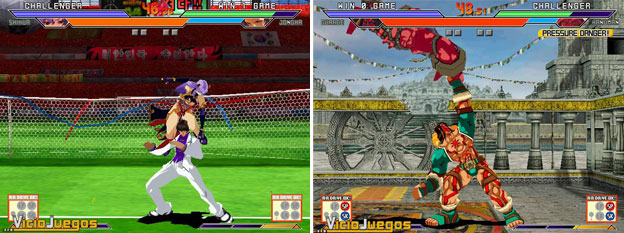
The hardware that Dream Factory was building on was the Atomiswave. This was developed by Sega, and it was designed to help port arcade titles to the Sega Dreamcast. There were a number of new features that would have been featured for the genre. Ken-Ju would support net-play. Audiences would be able to find competition regardless of what arcade they visited. Not only that they would be able to keep track of their character, and progress in online leaderboards. Gamers could unlock clothing, costumes, and accessories to customize their fighters. The studio was ahead of the curve, as similar things would be featured in the Tekken series as well.
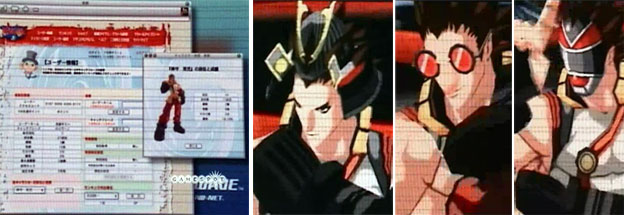
People had recorded matches while the game was testing in a few arcades. This hand-cam footage had been uploaded to game forums, and YouTube. It was the only way to see it in action for over 15 years. All of that changed in early 2021 when
a kind sole dumped the file online, and people quickly got it working on Dreamcast emulators. For the longest time it was assumed that if a build managed to get ripped it would prove the game was incomplete. That the animations, stages, and control would be unfinished. Those that had been playing through the game, and its various characters could all attest that the game felt complete. Every character had a single player story. The balance seemed to be there with multiplayer matches.
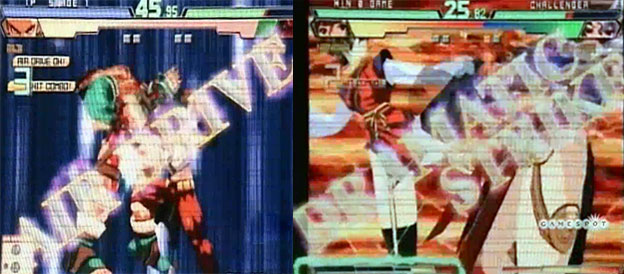
So then the question became why did the game never get published formally? I don’t have an answer to that, as the developer, and publisher haven’t given a formal explanation. Perhaps it was determined that publishing an arcade game in the early ‘00s was bad for business. The arcades had just about all dried up in the US. To make matters worse the Dreamcast was losing the console war, so publishing it might not make any return on the investment. So the studio just scrapped the project. Which was a sad thing for fans of the genre. Dream Factory had been pushing their own version of fighting game mechanics. They had three things they wanted to highlight. Fist awakening, was what they called a Super attack. It could be used when “the Breacher Gauge” reaches maximum. They also had Impact Defense, which was a parry system that worked on directional attacks as well, so long as the player moved the joystick at the critical moment. Lastly they had a Boost Special Move. Street Fighter fans would know this as an EX move, a stronger version of a special attack.
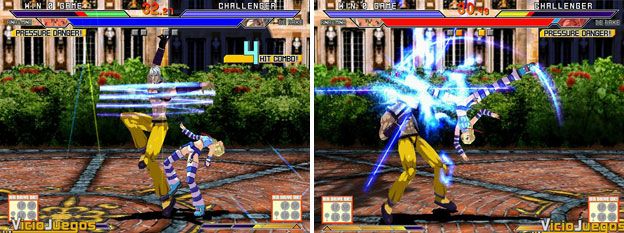
There were short character profiles in the game, but most players didn’t really have their backstory. I actually had the issue of Arcadia magazine where the game was profiled. I scanned in a few of the pages, and did some rough translations for those interested in the cast. The two oddest characters that I could identify were Rina and Mina (Malicious Twin Agents) they were 12-years-old. I believe they are the youngest, and lightest fighting game characters ever featured in the genre. I think the only other character that comes close is Momo Karuizawa from Project Justice. You fighting game historians out there can remind me of who was younger. Anyhow, according to Rina, and Mina’s bio they were “Innocent twins who always act together. Formerly circus performers that enjoy fighting with acrobatic techniques.” The two girls don’t fight at the same time, although it would be fair given the size of their opponents. Players could press four attack buttons to tag in the other sister. It was an interesting mechanic for sure, especially since each sister played slightly different.
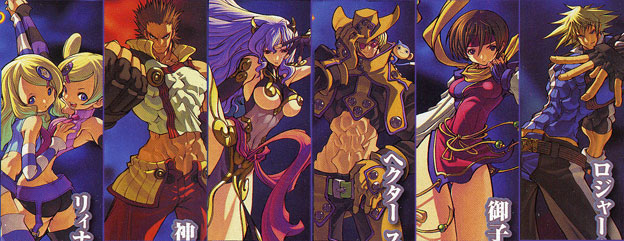
The star of the game the “Ryu” essentially was Eiji Kammori (Free-spirited Brawler). His bio says “High school student that fights with the Kammori style “Sky Hand.” Then there was the standard sexy lady Shihua Fumika (Oblivion fugitive). “She is an amnesiac that rejects others, she feels she is being chased by someone.” What made her unique was that she was the only one in the cast that could attack while moving forward. I can’t think of another fighting game where a character could attack, and advance at the same time. Then there was a character that could only be described as Indiana Jones from the Guilty Gear universe. Hector Slayman (Know the Truth Explorer). He’s “An archeologist, and explorer. He fights with a mix of jujitsu, and Muay Thai.” He also has an adorable money on his shoulder. You can’t have a decidedly Japanese fighting game without the next character. Mikoshiba Nanaba (Kunoichi Schoolgirl). She’s “A high school girl trained in ninjitsu following the death of her parents.” Then of course a game with a “Ryu” needs a “Ken” as well. Enter Roger Barnes (Elite warrior advocating justice). He was “Born in a well-known family, and master of various martial arts that he learned at an early age.” Like I said, every Ryu needs a Ken.
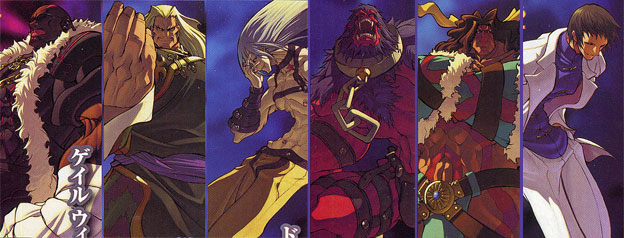
The Black guy in the game was a boxer (surprise!) Gale Williams (Greedy Puncher) the “Former world-ranked boxer who was banished from the ring by a max-fixing match.” Then there was a classic kung-fu villain. Liu Tailong (Mysterious god of war).
“He is willing to sacrifice everything for the purpose of attaining power. He invented Formula 88 Bajiquan which is based on multiple Chinese martial arts.” No good fighting game is complete without a vain pretty-boy. De-rake (Those who rule beauty). He is “A narcissist who loves himself, and beautiful things. He selects techniques that make him look beautiful.” No fighting game would be complete without an oddball. This was without a doubt a new take on Blanka. Hanuman (Revived wild). He was literally “A monkey whose abilities have been enhanced by experiments. He fights with techniques created by his rampaging animal instincts, and not martial arts.” Then you have to have your big wrestler. This one is a bit T. Hawk-meets-Zangief-meets-Necalli. The Mexican was named Guarde (Jewel keeper). He is a “A guardian who protects a temple in a certain country. He currently makes a living as a professional wrestler.” Last but not least is the handsome I Jongha (Koreas leading superstar). He is “A popular actor, and professional soccer player. He fights to protect Seafore using his foot technique which is a mix of taekwondo, and soccer skills.”
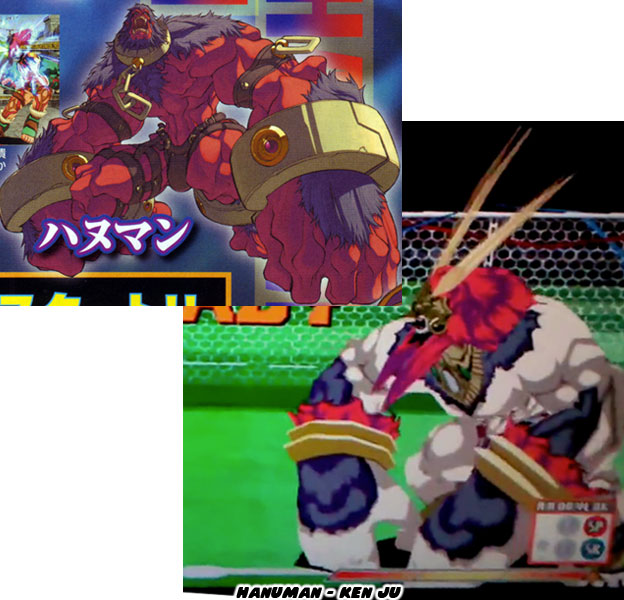
For the most part I really enjoyed the character designs, and their style which falls between Bengus’ work on Street Fighter Zero / Alpha, and Daisuke Ishiwatari’s work on Guilty Gear. Moreover the characters actually have an entirely different outfit for Player 2. Normally fighting games have a pallet swap, a slightly different color of the main costume. Ken-Ju had radically different looks for their cast. The wild Hanuman went from appearing like an escaped beast to a god in disguise. Others like I Jongha actually showed up in their soccer kit. Gale Williams was the first striker that I saw wearing a rashguard top with pants, his alternate look predated the makeover that Ken received in Street Fighter V more than a decade later. Imagine that, a game studio simply putting in entire outfits that were unlocked from the get-go, plus the ability to earn other costume upgrades!
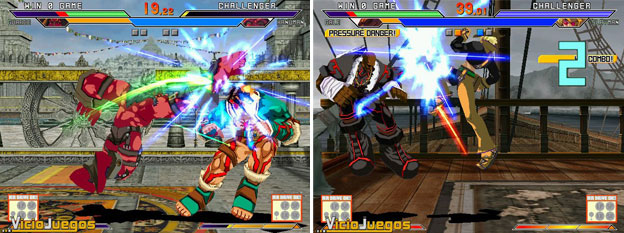
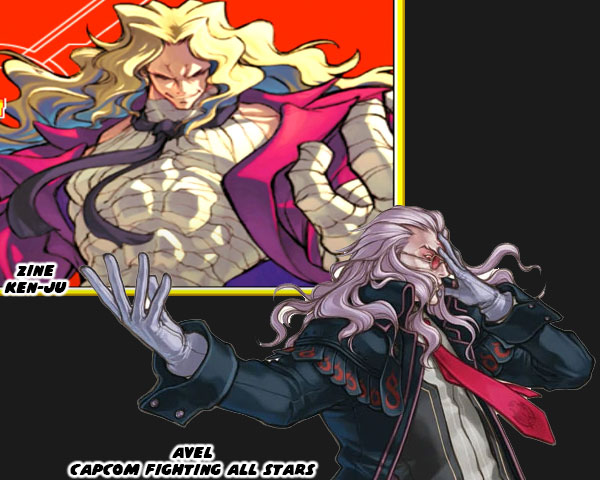
Visually the game had an anime, almost cel-shaded look. It worked well for the cartoon style that Dream Factory was going for. The studio was good at recreating the aesthetic of the lead artists. This was especially true for the Akira Toriyama (Dr. Slump, Dragon Ball) designs in Total No. 1. This adherence to character stylization would be a graphic format used by DIMPS, and Arc System Works on their franchises as well. All games need a boss character, and this one was as unique as the cast. His name was Zine. He sported long blonde hair, and a red suit. His torso was wrapped as bandages. The character floated around the stage like a vampire. If I could compare him to another villain I’d say he was similar to Avel AKA Code Death from the
unreleased Capcom Fighting All Stars, and the despot
Vold Ignicio from Fighting Layer. The game also featured a secret time-release character. The title lacked a traditional karate fighter until Sekishusai popped up after the game had been running for a few weeks. The 75-years-old “Kagamiryu Karate Master” was as memorable as the rest of the cast.
Maybe the game wouldn’t have been a commercial success, but then again, maybe it could have sold enough copies to warrant a series. Sadly we may never know how. The good thing is that we have emulation letting the most die-hard fighting game fans enjoy the experience. Would you like to see a studio bring this game to modern consoles? Do you think it would be an interesting addition to the Xbox, or Playstation libraries? Do you think game studios should make more experimental fighting games, rather than sequels to established franchises? I’d like to hear your take in the comments section. Thank you for reading this entry. If you would like to sponsor me
please visit my Patreon page and consider donating each month, even as little as $1 would help make better blogs and even podcasts!